A Practical Guide to Overlanding in the American Southwest
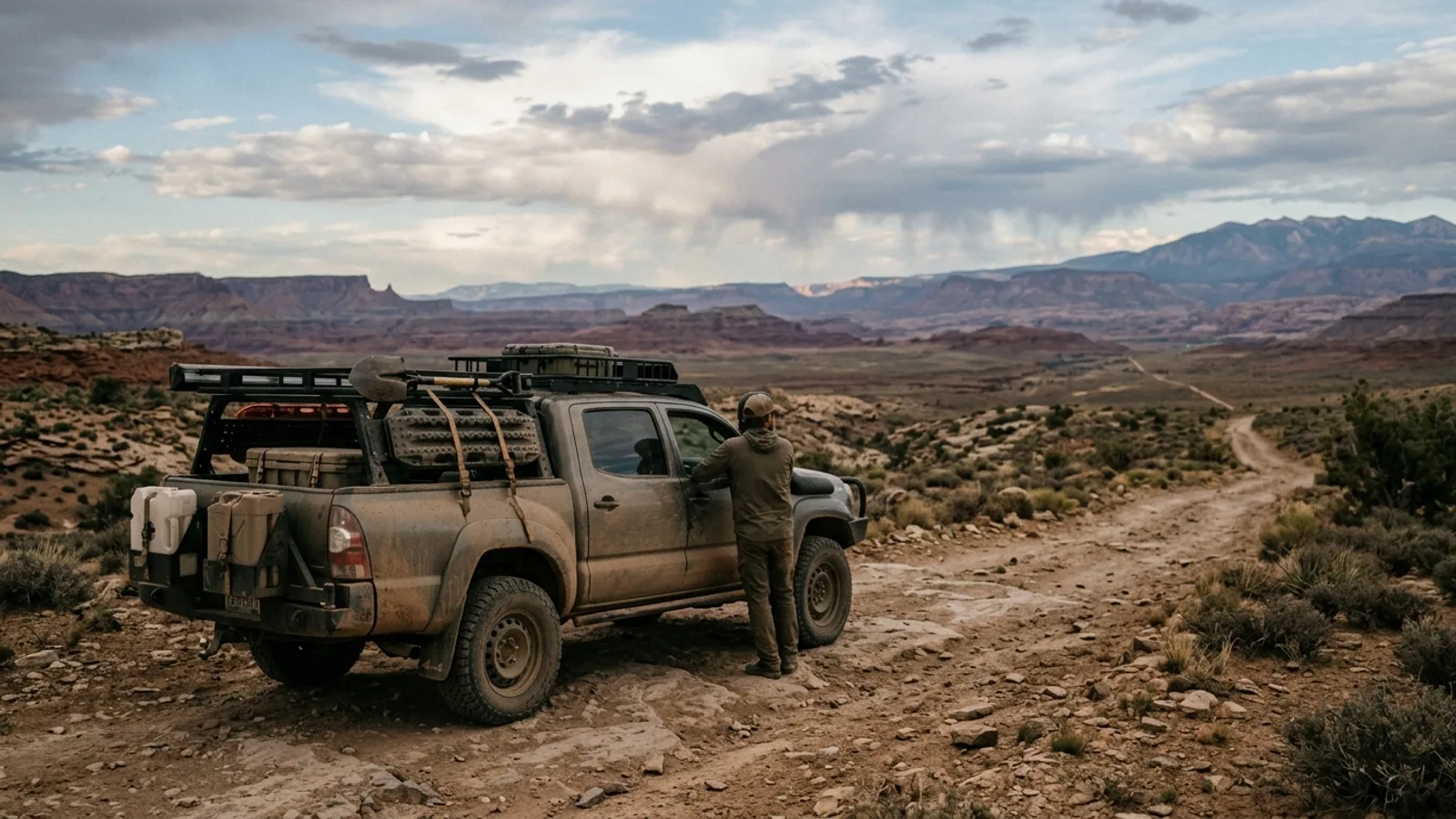
What Overlanding Actually Involves
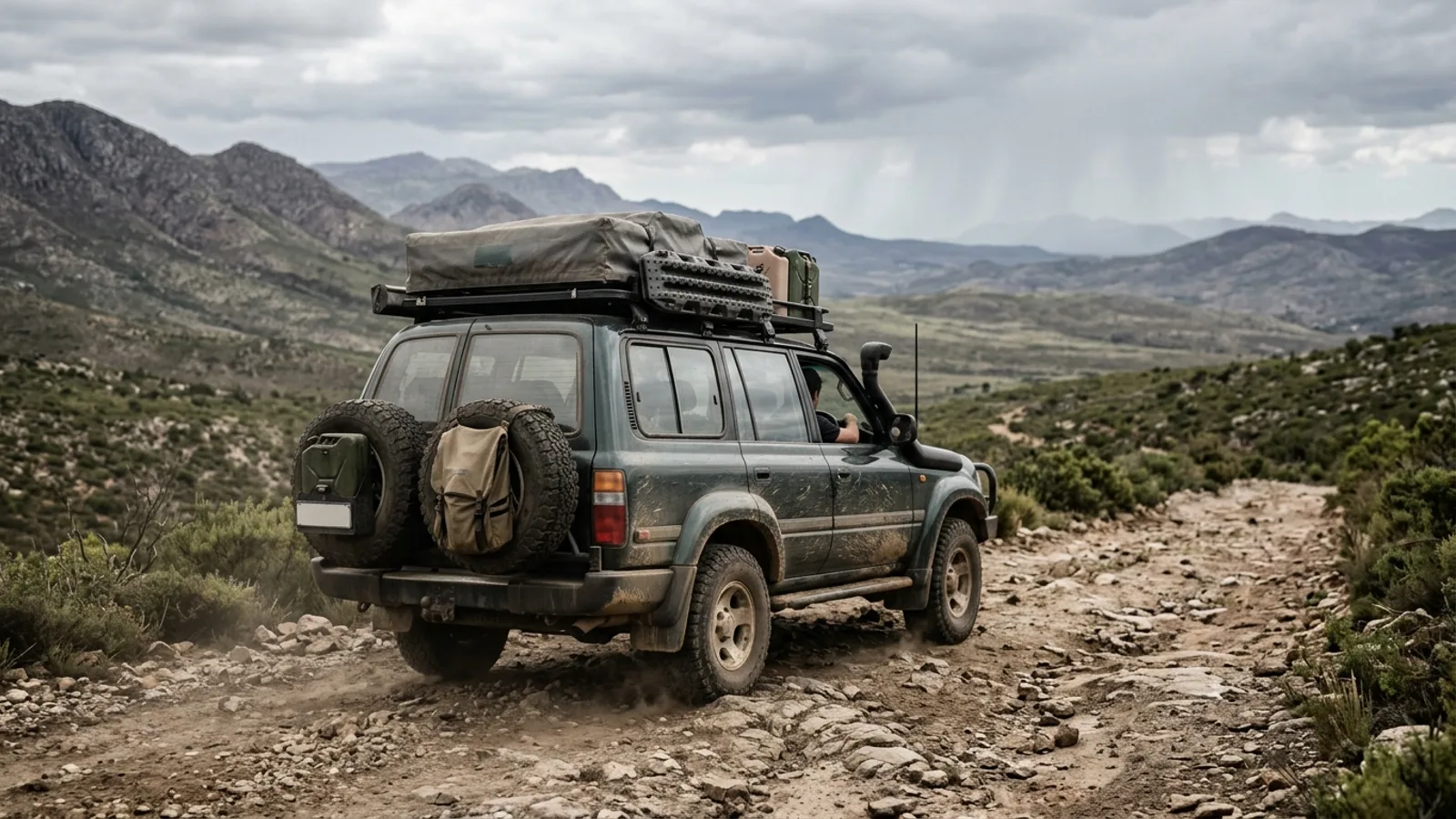
Overlanding is self-supported vehicle travel that emphasizes the journey over the destination. Unlike a typical road trip, it usually means multi-day routes on unpaved roads, carrying your own food, water, fuel, and shelter, and being prepared to handle mechanical or navigational problems without nearby help. It sits somewhere between backcountry camping and off-road driving.
The appeal is access: overlanding routes reach landscapes that pavement never touches, from high alpine passes to remote desert canyons. The tradeoff is responsibility. You're often hours from cell service, a tow truck, or a hospital, so preparation matters more than horsepower.
Types of Routes You'll Encounter
Backcountry discovery routes are long, multi-day corridors — sometimes hundreds of miles — that link forest roads, ranch tracks, and public land trails across an entire state or region. They vary widely in difficulty from segment to segment, so a route rated "easy" overall can still include a rough or exposed stretch.
Mountain pass routes climb through alpine terrain, often above treeline, and are only open a few months a year once snow clears. These tend to be the most scenic and the most technical, with narrow shelf roads, loose rock, and steep grades.
Desert routes cross open basins, slot canyon country, or dry lakebeds. They're often less technical in terms of terrain difficulty but demand more attention to water carrying capacity, heat, and navigation across landscapes with few distinct landmarks.
Historic trade and wagon routes follow paths used for centuries by Indigenous peoples, traders, or settlers. These often pass through culturally significant sites and abandoned structures — worth slowing down for, and worth treating with care.
Vehicle and Gear Basics
A high-clearance, four-wheel-drive vehicle is the baseline for most serious overlanding routes. All-terrain tires are usually sufficient for graded roads and moderate rock; more technical routes may call for more aggressive tread or lower gearing.
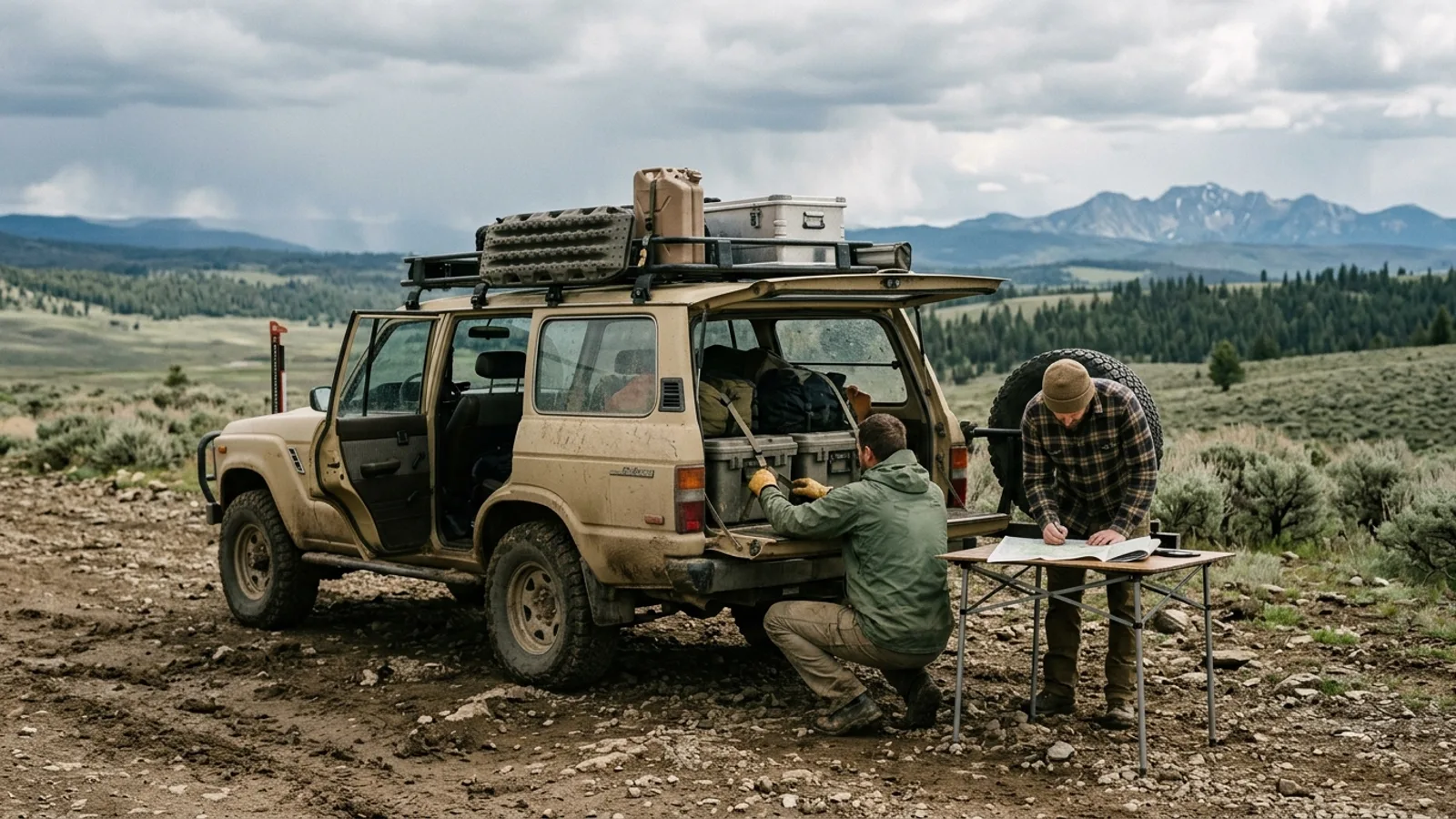
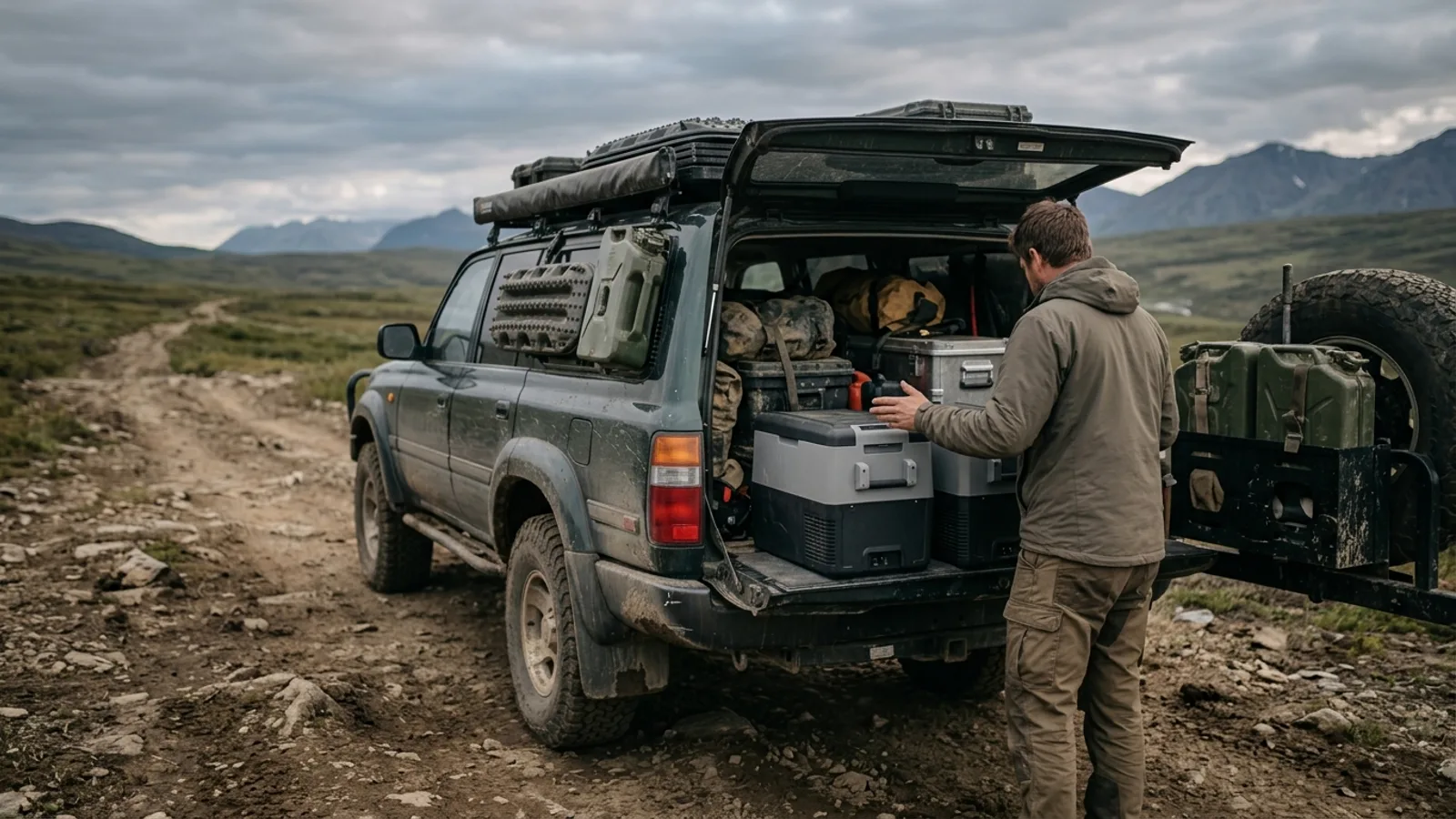
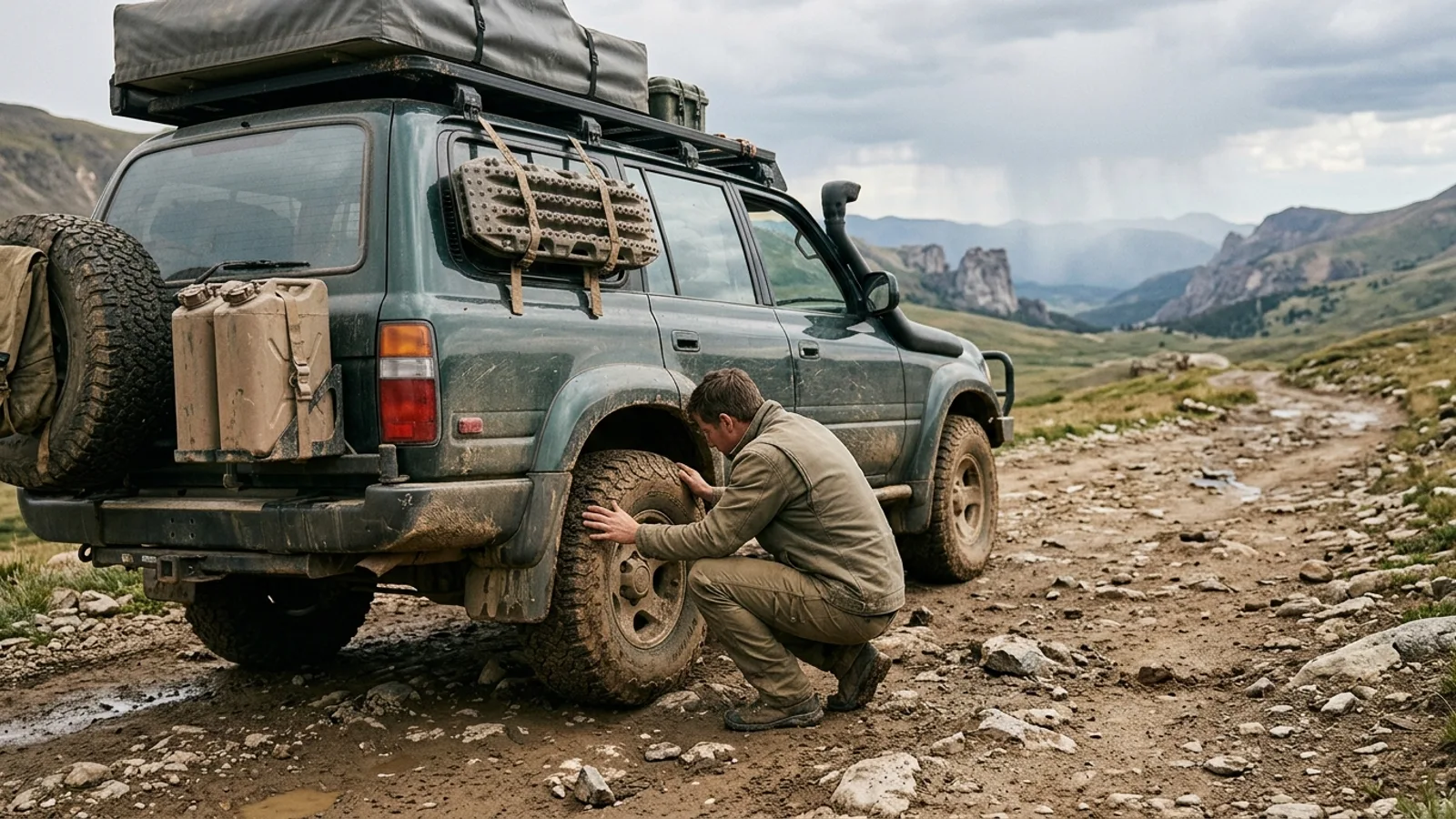
Carry more water than you think you'll need, plus a way to purify more if you find a natural source. A basic recovery kit — traction boards, a shovel, a tow strap — covers the most common ways vehicles get stuck in sand or mud. A physical map or offline GPS is essential, since cell coverage disappears quickly outside towns.
Tell someone your route and expected return before you go. In remote areas, a satellite communicator or personal locator beacon is worth the investment; it's often the only way to call for help if you're injured or stranded.
Reading Terrain and Difficulty Ratings
Route difficulty ratings aren't standardized across sources, so treat any rating as a starting point, not a guarantee. A trail described as suitable for a stock 4x4 with all-terrain tires can still have a single obstacle — a water crossing, a sand pit, a rock ledge — that's harder than the rest of the route.
Water crossings deserve particular caution. Depth and current can change dramatically after rain or snowmelt upstream, even if conditions look calm where you're standing. If you can't see the bottom or gauge the current, it's safer to turn back than to guess.
Sand and loose gravel reward momentum and lower tire pressure over raw power. Steep, technical rock sections reward patience and a slow, deliberate line more than speed.
Timing and Conditions
High mountain routes are typically only accessible from early summer through early fall, once snow has cleared from the highest passes; check current conditions before committing, since weather at elevation shifts fast and can strand vehicles in mud or snow outside that window.
Desert routes are best avoided in peak summer heat, when vehicle breakdowns become genuinely dangerous. Spring and fall generally offer the most comfortable temperatures and the most stable road conditions in low-elevation desert terrain.
Always check for recent closures, fire restrictions, or seasonal access rules with the land management agency responsible for the area before departing — conditions can change with little advance notice.
Leave No Trace and Local Respect
Stick to established routes rather than creating new tracks, especially in desert environments where soil crusts and vegetation can take decades to recover from a single set of tire tracks. Pack out all trash, including food scraps, and use a portable toilet system or established facilities where available.
Many overlanding routes pass through or near land with deep cultural and historical significance to Indigenous communities. Treat archaeological sites, rock art, and structures as off-limits to touch or removal, and follow any posted guidance about which areas are open to visitors.
Where routes cross private or tribal land, stay on the public right-of-way and respect any posted boundaries or closures.
Planning a Trip
Start with a route that matches your vehicle and experience, not the most dramatic photos you've seen online. Beginner-friorientedfriendly routes with easy access to pavement and fuel are a better first outing than a remote multi-day trail.
Build in extra time beyond the minimum needed to complete a route. Side trails, scenic stops, and unexpected obstacles all take longer than planned, and rushing is when mistakes happen.
Finally, travel with at least one other vehicle if possible on remote routes. A second vehicle can provide a recovery point, extra supplies, and a way to get help if something goes wrong.