What to Wear Camping: A Season-by-Season Clothing Guide
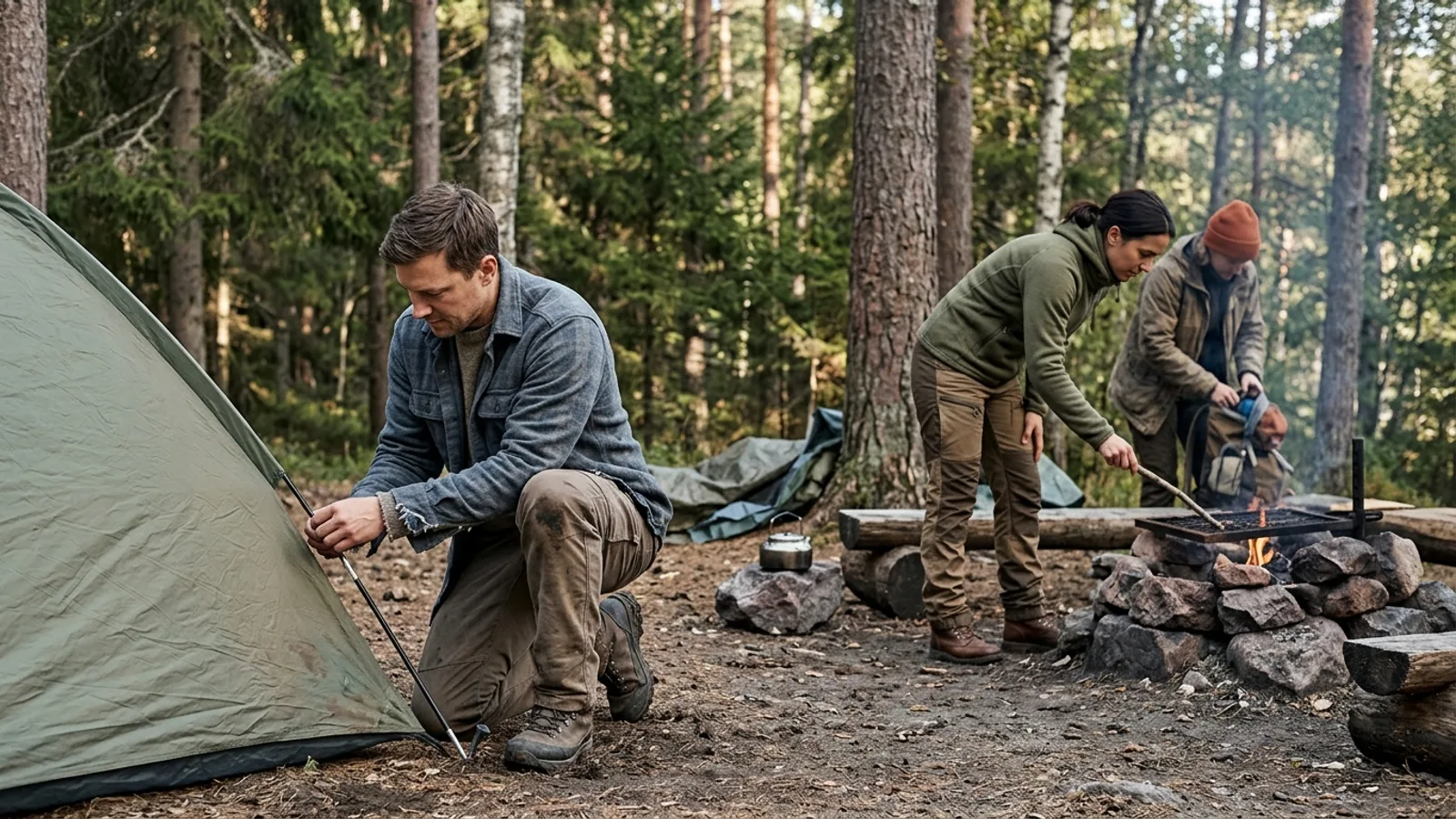
Why Clothing Choices Matter for Camping
Weather at a campsite can shift faster than in town, especially near mountains, deserts, or large bodies of water. The right clothing keeps you comfortable through temperature swings, protects your skin from sun and insects, and holds up to dirt, water, and rough surfaces. Getting this right has more to do with layering and fabric choice than with owning a lot of gear.
The Layering System
Layering works in any season because it lets you add or remove warmth as conditions change throughout the day.
- Base layer: sits against the skin and moves sweat away from your body. Synthetic fabrics or wool work well here; cotton does not, since it holds moisture and stays cold and clammy once wet.
- Mid layer: traps warmth. A fleece, wool sweater, or lightweight insulated jacket falls into this category.
- Outer layer: blocks wind and rain. Look for something breathable so sweat can escape rather than condensing inside the jacket.
In warm weather you may only need the base layer during the day and a mid layer for cool evenings. In cold weather, all three layers work together, and you adjust by adding or removing pieces rather than swapping your entire outfit.
Fabric Choices That Hold Up Outdoors
Synthetic fabrics like polyester and nylon dry quickly and wick moisture, making them a solid choice for both hiking and sleeping. Merino wool has the added benefit of resisting odor over multiple days of wear, which matters when laundry isn't an option. Cotton is comfortable but slow to dry and loses its insulating value when wet, so it's best avoided for anything worn during activity or in unpredictable weather.
Warm-Weather Camping
In hot months, the goal is staying cool during the day and being ready for cooler nights.
- Lightweight, moisture-wicking shirts and shorts or pants that breathe well
- A wide-brim hat or cap for sun protection, along with sunglasses
- Long sleeves and pants for evenings, when bugs are often more active and the sun is less of a concern
- A light jacket or sweatshirt for cooler nights, even in summer
- Sturdy closed-toe shoes for hiking or uneven ground, plus a second pair of sandals or camp shoes to give your feet a break and to wear around water
- A swimsuit if you'll be near a lake, river, or pool
- A bandana or light scarf, useful for sun protection, wiping sweat, or as an improvised cooling cloth when wet
Sun protection matters as much as temperature. Tightly woven fabrics and long sleeves can be cooler in direct sun than bare skin, since they block UV rays and reduce sunburn risk.
Cold-Weather Camping
Cold-weather trips call for more insulation and closer attention to how layers work together.
- A snug base layer top and bottom made from wool or synthetic material
- An insulating mid layer such as fleece or a puffy jacket
- A windproof, water-resistant outer shell
- An insulated hat or beanie, since a significant amount of body heat is lost through the head
- Insulated gloves or mittens, ideally with a thin liner glove underneath for tasks that require dexterity
- Wool socks, with a dry backup pair kept for sleeping
- Insulated, waterproof boots if snow or wet ground is likely
Avoid overdressing during active periods like hiking or setting up camp — sweating heavily and then stopping to rest can leave you colder than if you'd shed a layer earlier.
Rain Gear
Wet weather can happen in any season, so a waterproof, breathable jacket is worth packing regardless of the forecast. Waterproof pants are useful if rain is likely for an extended trip. Pack a dry bag or waterproof stuff sack to keep a spare set of clothes dry, since staying dry overnight matters more for comfort and safety than staying dry during the day.
General Packing Tips
- Choose versatile pieces that layer well together rather than single-purpose items.
- Pack at least one complete dry outfit that stays sealed away and untouched until you actually need it, such as for sleeping.
- Check the extended forecast before you leave, but pack for a wider range of conditions than predicted — mountain and desert weather in particular can change quickly.
- Closed-toe shoes are safer around a campfire and on rocky or uneven trails than sandals.
- Bring a hat for both sun and cold — one for shade and ventilation, another for warmth — since headwear does double duty in almost every season.