What Flamingos and Pineapples Mean in Campground Culture
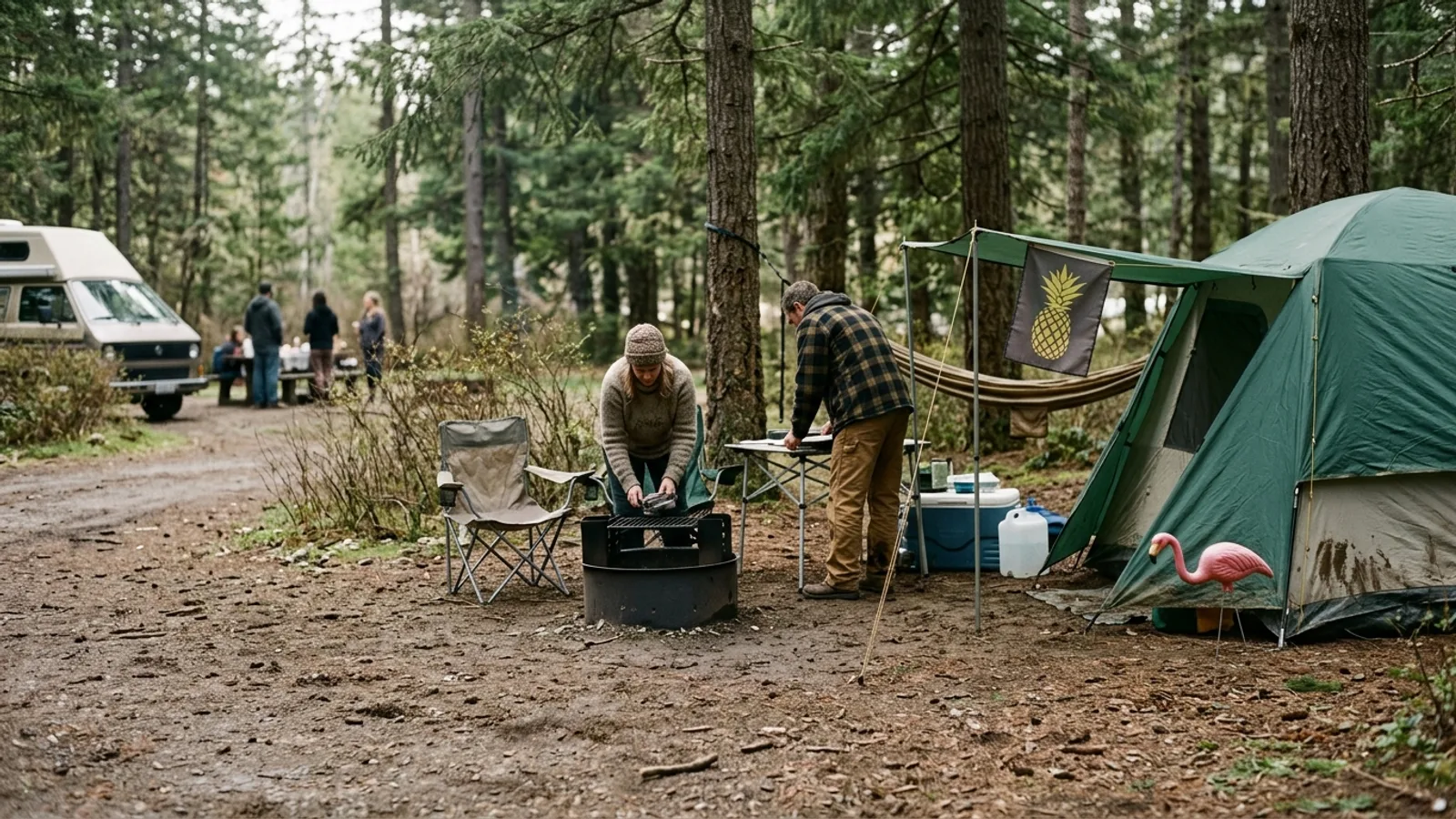
Walk through almost any campground or RV park and you'll spot flamingo yard ornaments and pineapple motifs on flags, mats, and string lights. Most of the time they're just cheerful decor. But in some camping communities, these symbols carry an additional, more private meaning, and it's worth understanding both sides so you can read a campsite accurately without jumping to conclusions.
The Traditional Meaning of Pineapples
The pineapple has long been used as a symbol of hospitality, welcome, and generosity. That association goes back centuries, when the fruit was rare and expensive outside the tropics, and displaying one signaled that a host had gone out of their way for guests. That general meaning of "welcome" is why you'll see pineapple imagery on porches, doormats, and campsite decorations with no hidden intent at all. For the overwhelming majority of campers who hang a pineapple flag or set out pineapple-print cushions, this traditional meaning is the entire story.
The Adult-Lifestyle Meaning of an Upside-Down Pineapple
In certain camping and RV circles, an upside-down pineapple has been adopted as a discreet signal associated with the swinging or open-lifestyle community. This usage is informal, not universal, and mostly known within specific social networks and adult-oriented campgrounds rather than the camping world at large. A right-side-up pineapple almost never carries this meaning; it's specifically the inverted version that some people use as a quiet identifier. Even within communities that recognize this signal, there's no formal registry or rulebook, so interpretations can differ from one region or campground to the next.
Flamingos as a Campground Symbol
Pink flamingo decorations are a long-running fixture of campy, retro outdoor style, and for the vast majority of people who put one out, that's the whole story: a bright, playful lawn ornament with roots in mid-century kitsch. In some subcultures, flamingos have also been used as a friendly, welcoming symbol, including within parts of the LGBTQ+ community, and in a smaller subset of adult-lifestyle circles, sometimes alongside the pineapple. None of these meanings cancel out the others; a flamingo can simply be a flamingo, a subtle nod to community, or both at once depending on who placed it and why.
Why You Shouldn't Assume Based on Decor
Because these symbols circulate informally and mean different things to different groups, seeing a flamingo or an upside-down pineapple at a neighboring site tells you very little on its own. The person next to you might be referencing a niche subculture, or they might just like flamingos. Awareness of the less common meanings varies a lot by region, by campground, and by how much time someone spends in online RV and camping communities versus how much they simply enjoy the decor.
Treat campsite decorations the way you'd treat any ambiguous social signal: as information, not proof. Don't assume intent, and don't make comments or approach someone based solely on what's displayed outside their rig or tent. A single object rarely tells the whole story about the people camping next to you.
Campground Etiquette Around These Symbols
- Respect privacy. If a symbol does indicate something personal, the person displaying it is generally not looking for public attention or commentary from strangers.
- Don't make assumptions out loud. Asking a fellow camper to explain their lawn decorations, or hinting that you've "figured out" what they mean, is intrusive and often unwelcome.
- Keep decor choices neutral in shared spaces. If you're displaying decorations with a specific subcultural meaning, understand that not everyone around you will recognize or share that context, and plan accordingly for family-oriented or general-audience campgrounds.
- Extend the same courtesy you'd want. Most campers are simply decorating for fun. Approach ambiguous symbols with curiosity rather than suspicion, and let people keep their privacy if they choose to.
- Let children's questions be a cue for simple answers. If a child asks about a decoration, the traditional meaning of hospitality or a simple appreciation of color and whimsy is always a safe, accurate response.
The Bottom Line
Pineapples and flamingos are, first and foremost, popular camping decorations with cheerful, welcoming associations that long predate any subcultural use. A smaller, informal subculture has attached additional meaning to the upside-down pineapple and, to a lesser extent, flamingos, but that meaning isn't universally known or intended by everyone who displays them. When in doubt, enjoy the decor for what it is, resist the urge to read too much into a neighbor's yard ornaments, and let your fellow campers keep their own reasons to themselves.