What to Eat While Camping: A Practical Meal Guide
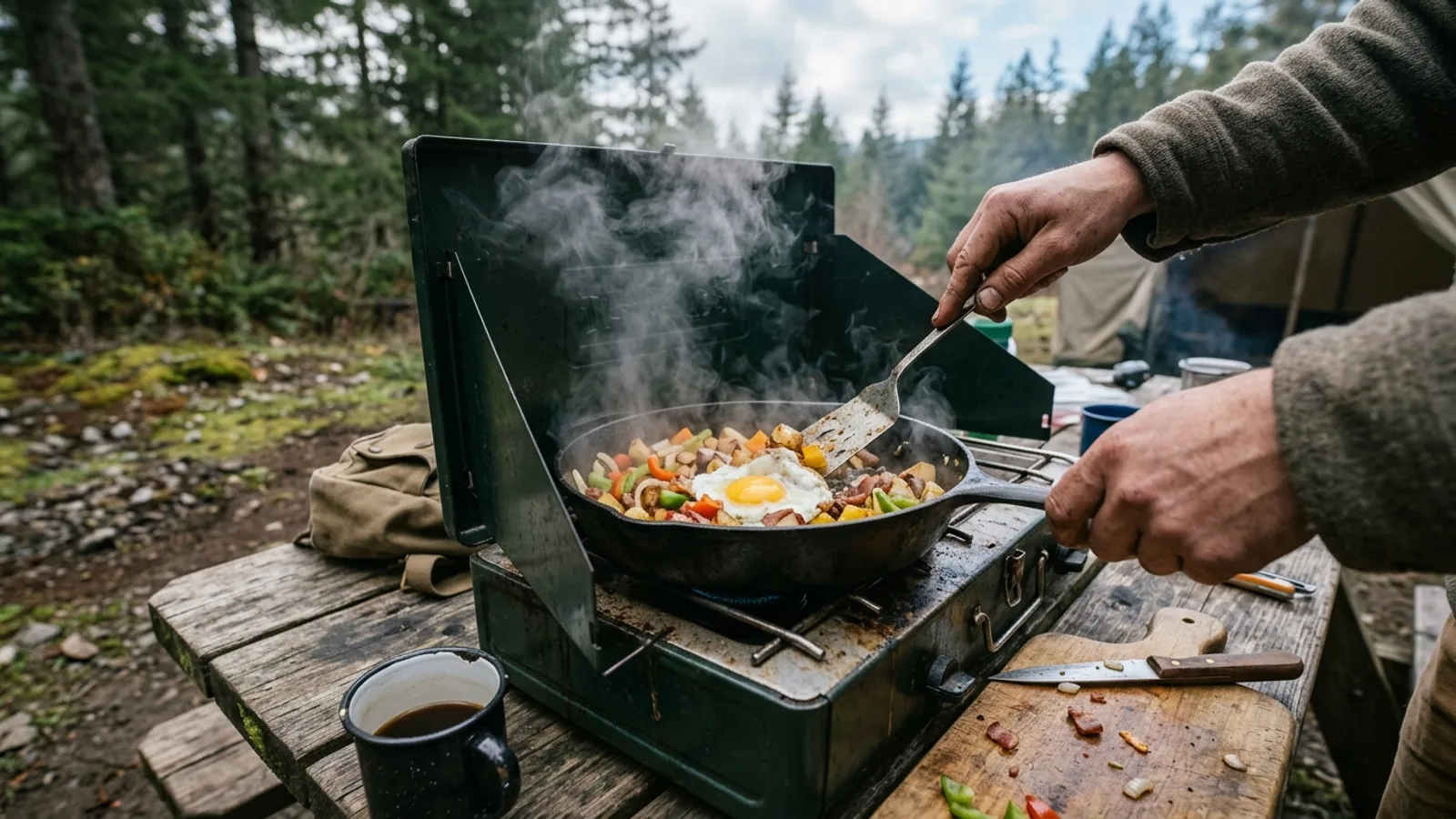
Good camping food comes down to three things: minimal cleanup, minimal cooking equipment, and ingredients that hold up without refrigeration for at least a day or two. Planning meals ahead of time, rather than improvising at the campsite, is what actually makes this work.
Planning Your Camping Meals
Write out a meal-by-meal list before you shop. This avoids both under-packing and the common mistake of bringing far more food than you can eat or carry. For each meal, ask how much cooking it actually needs, how many pots or pans it dirties, and whether the ingredients need to stay cold.
Pre-chop vegetables, pre-portion spices into small containers, and marinate meats at home before you leave. Anything you can prep in your own kitchen is one less task at the campsite, and one less thing that requires clean water and counter space you won't have.
Pack food in the order you'll use it, with the first day's meals easiest to reach. Keep raw meat sealed and stored at the bottom of a cooler, below produce and ready-to-eat items, so any leakage doesn't contaminate other food.
Breakfast
Mornings go smoother with food that needs little more than hot water or a few minutes on a stove.
- Instant oatmeal or grits: add hot water, then customize with nuts, dried fruit, or a spoonful of nut butter.
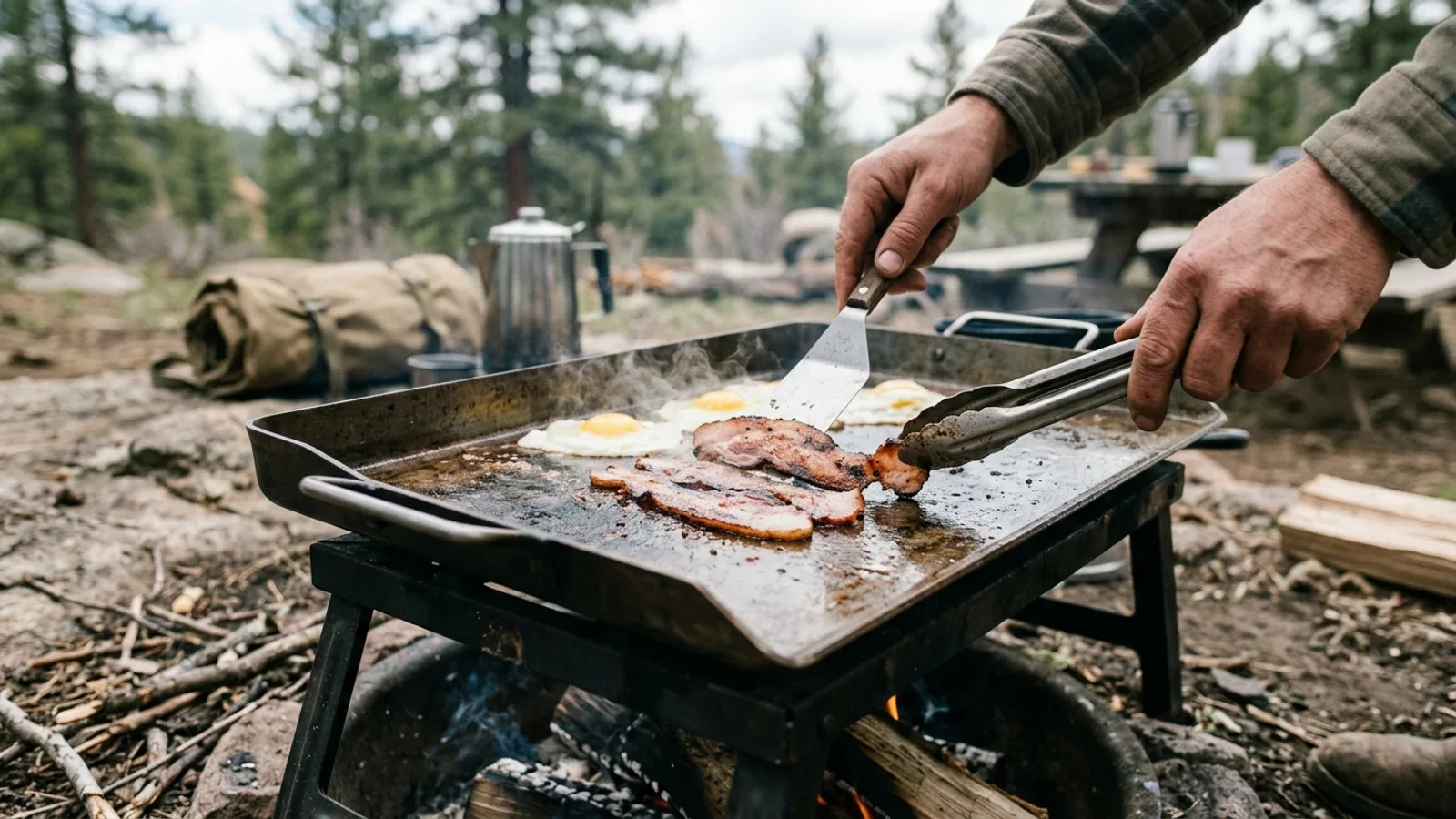
- Eggs: scrambled or fried on a portable stove; pre-crack and whisk eggs into a sealed container at home to save a step and cut down on packed weight from shells.
- Breakfast sandwiches: fried eggs with cheese between toasted bagels or English muffins.
- Pancake or waffle batter: mix dry ingredients at home in a sealed bag, then add water or milk at the campsite.
- Granola or muesli with shelf-stable milk: no cooking required, and it packs down small.
- Breakfast bars: a reliable backup for early starts when you want to be on the trail before cooking anything.
Keep breakfast simple on mornings when you want an early start, and save more involved cooking, like pancakes, for slower days.
Lunch and Snacks
Lunch while camping is usually eaten away from the site or between activities, so it should require little to no cooking.
- Sandwiches and wraps: built with deli meat, cheese, or nut butter; assemble just before eating so bread doesn't get soggy.
- Tuna, chicken, or egg salad: pre-made and packed in a sealed container, eaten with crackers or bread.
- Hard cheeses, cured meats, and crackers: hold up well without refrigeration for a few hours and make an easy no-cook lunch or shared spread.
For snacks, prioritize things that survive heat, jostling, and a day in a pack:
- Trail mix: a mix of nuts, dried fruit, and something sweet.
- Jerky: dense in protein and shelf-stable without a cooler.
- Whole fruit: apples and oranges travel better than soft berries.
- Energy or granola bars: a compact backup for long hikes away from camp.
Dinner
Dinner is usually the meal where campers want something more substantial, and it's worth matching the method to your setup and energy level.
Foil Packet Meals
Wrap meat, vegetables, and seasoning in foil and set the packet directly on hot coals or a grill grate. This method needs almost no cleanup and lets each person customize their own packet. The main skill is managing heat: coals that are too hot will scorch the outside before the inside cooks, so aim for coals that have burned down to a steady glow rather than an open flame.
One-Pot Meals
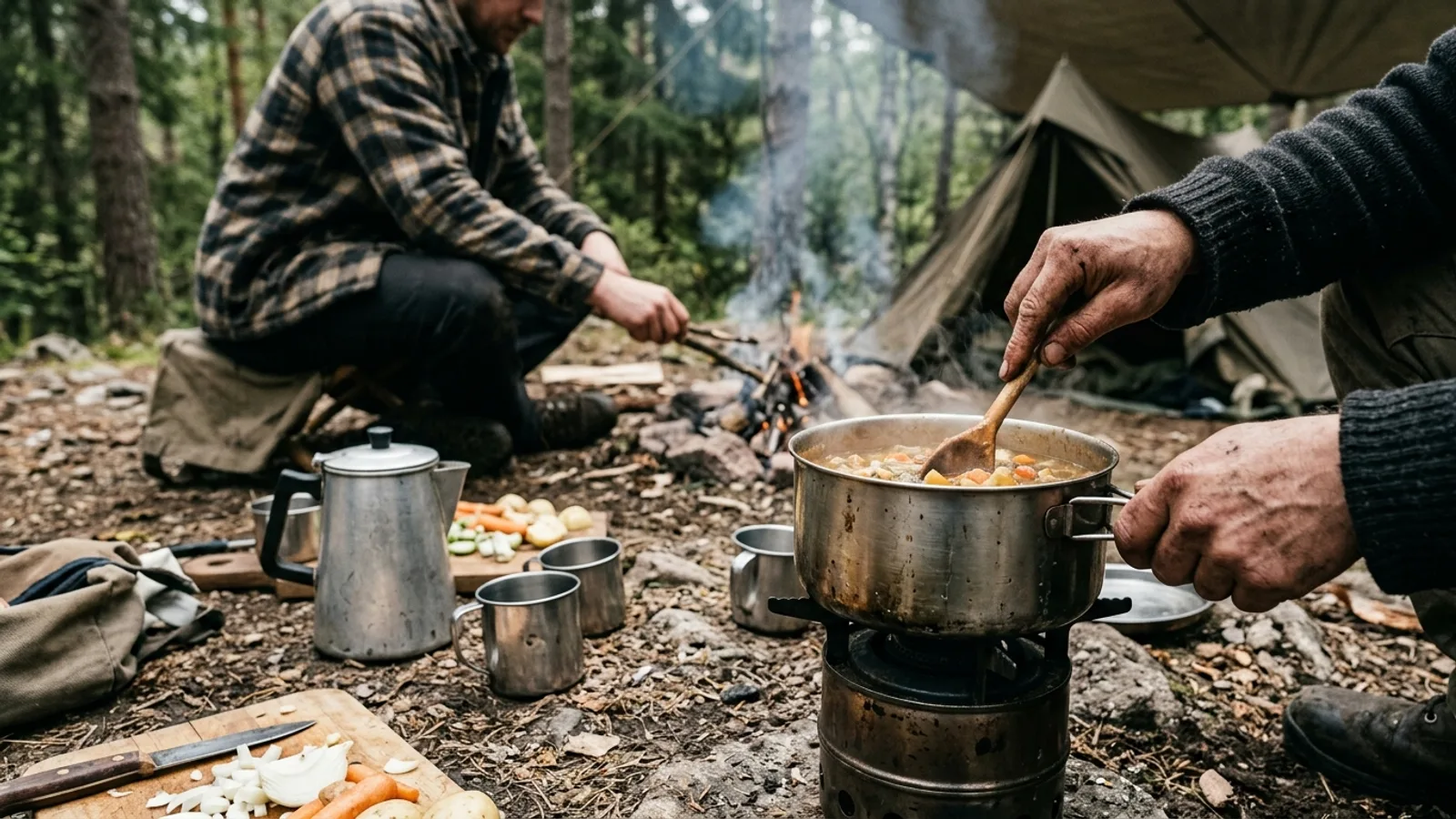
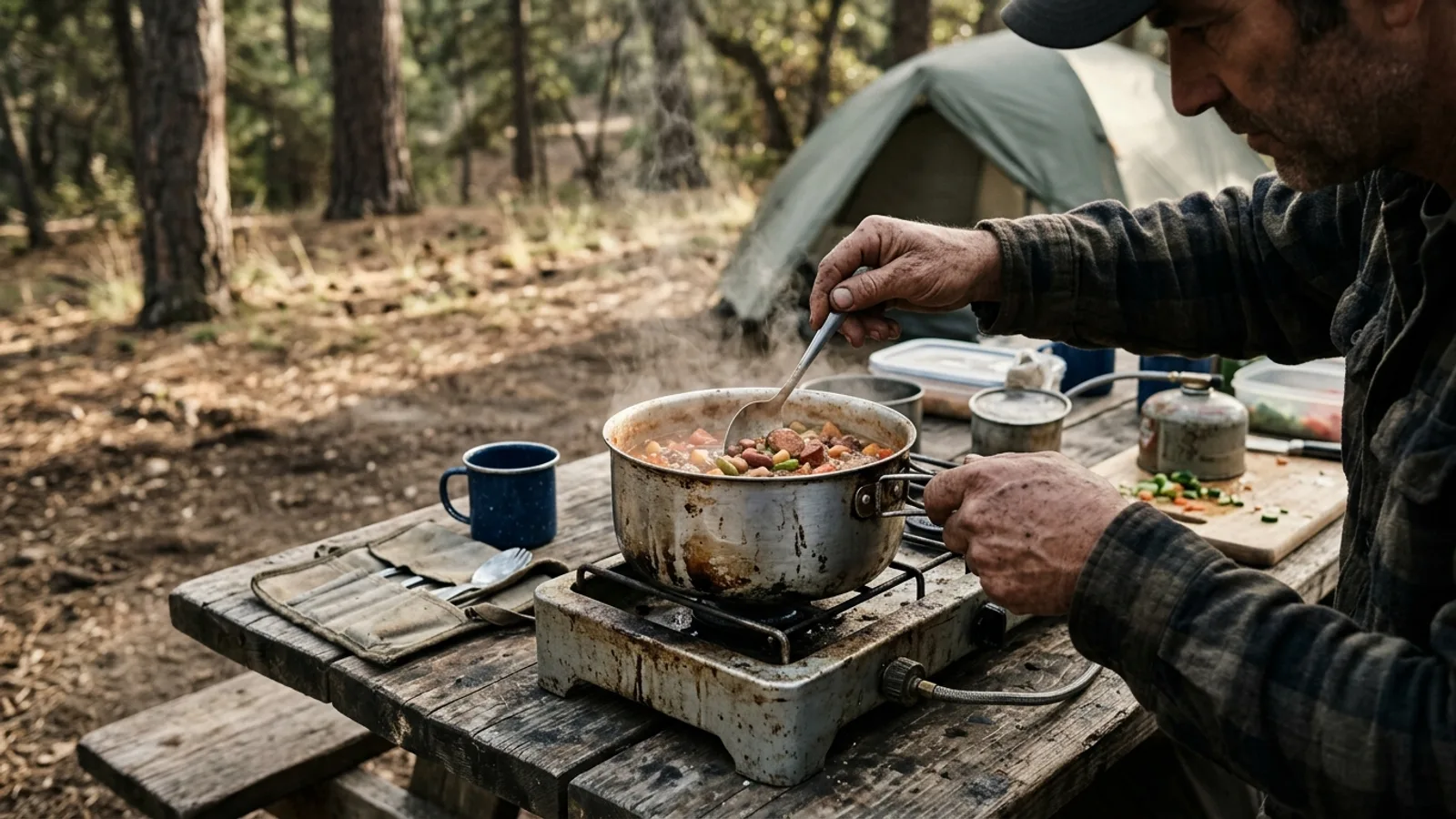
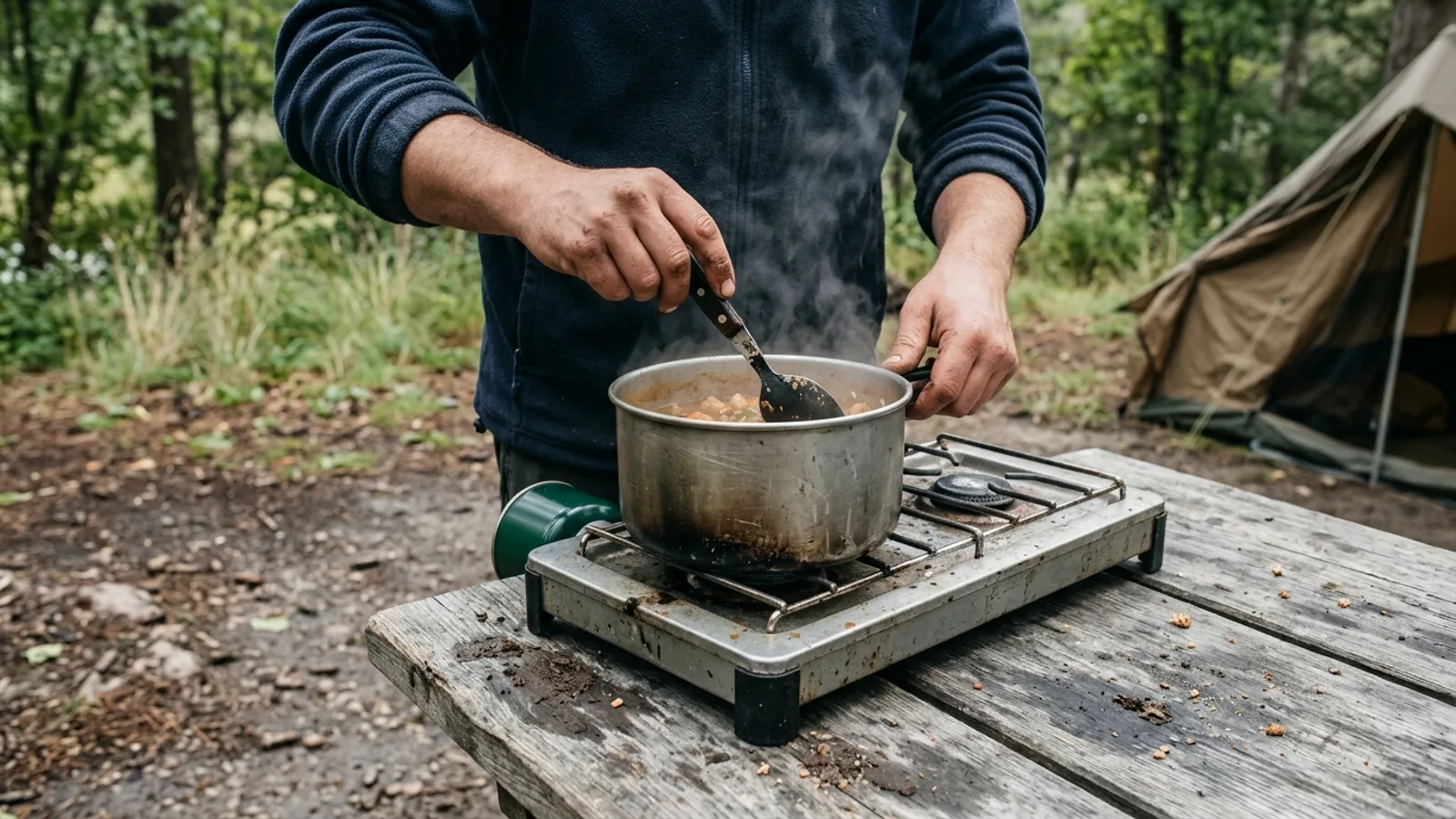
Stews, chilis, and pasta dishes cooked in a single pot or Dutch oven cut down on the dishes you'll wash with limited water. These are also forgiving: ingredients can be added in stages and cooking times adjusted without much risk of ruining the meal.
Grilled Meats and Vegetables
A simple grill grate over a fire, or a portable stove, handles sausages, burgers, and skewered kebabs well. Skewers let you mix meat and vegetables so everything cooks in one pass. Pack condiments and buns separately to keep them from getting crushed.
Soups and Chili
These are well suited to cooler evenings and can be started ahead of time in a pot, then simmered slowly while you set up camp. They also reheat well the next day if you make extra.
Skillet Meals: Fajitas, Stir-Fries, and Similar
A single skillet with marinated meat or vegetables, served with tortillas or over rice, gives a lot of flavor for one pan. These come together quickly once the prep work is done, which is why marinating and chopping at home pays off.
Food Safety Basics
Keep raw meat cold until it's ready to cook, and use a separate cutting surface for raw meat versus produce if possible. Wash hands or use sanitizer before handling food, since campsite water for washing is often limited. Cook meat until it's no longer pink in the center and juices run clear, and don't judge doneness by color alone for ground meat or poultry. Perishable leftovers should go back in the cooler promptly rather than sitting out.
Desserts and Warm Drinks
S'mores remain the standard campfire dessert: toasted marshmallow and chocolate between graham crackers. A pie iron can be used to make a grilled sandwich-style dessert with pie filling or chocolate spread pressed between bread and cooked directly over coals.
For drinks, instant coffee, tea bags, or cocoa mix only need hot water and pack down to almost nothing. A kettle or a pot dedicated to boiling water makes mornings and evenings easier without dedicating extra gear to it.
Packing Tips
- Use a cooler with a reliable seal and pack ice or ice packs densely; a full cooler stays cold longer than a half-empty one.
- Store food in secure, labeled containers to prevent leaks and to keep track of what you have.
- Keep all food and scented items sealed and stored away from your sleeping area to avoid attracting wildlife, and follow any food storage rules posted at the campground or trailhead.
- Bring basic cooking tools: a stove or grill grate, one or two pots, a spatula, tongs, and a knife. Fewer tools mean less to clean and less to carry.