Camping Food Guide: Meal Ideas, No-Cook Options, and Safe Food Storage
Planning Camp Meals That Actually Work
Good camp food comes down to three things: minimal perishables, minimal cleanup, and minimal cookware. Before you think about recipes, think about how many meals you actually need to cook versus assemble. The fewer steps a meal takes at the campsite, the more you'll enjoy making it after a long day outside.
Campfire Cooking Basics
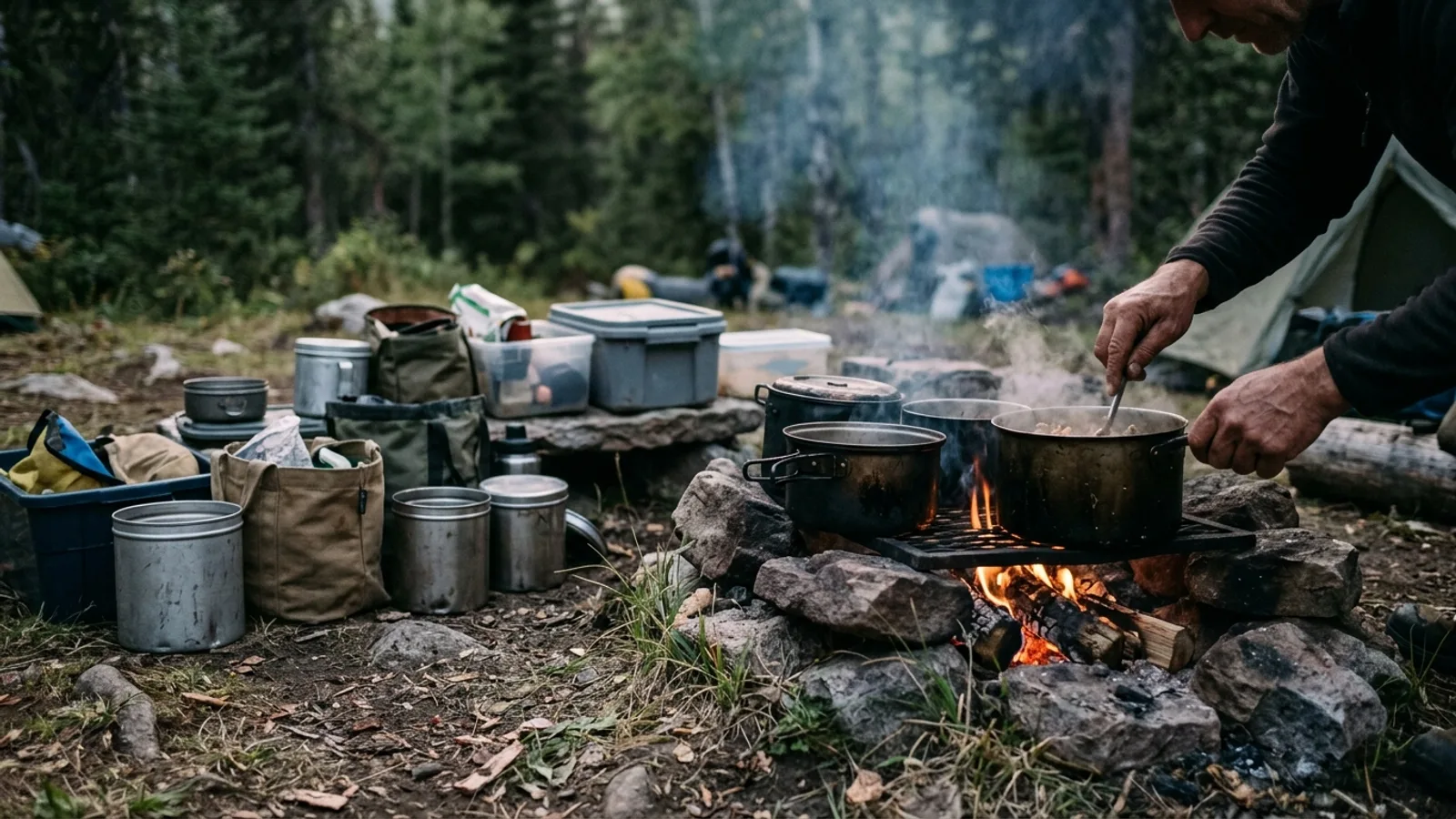
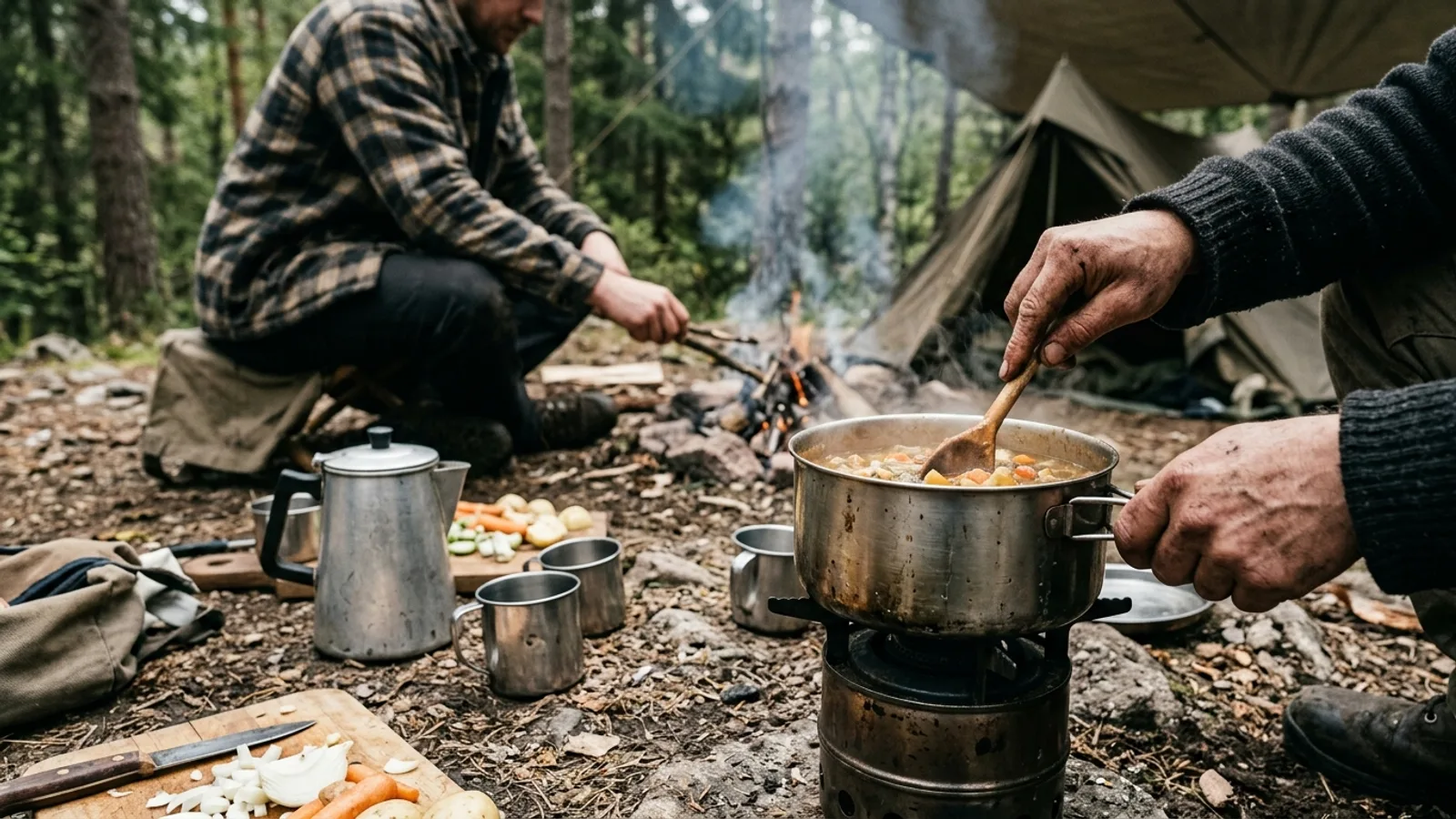
Cooking over a fire is different from cooking on a stove. Flames are uneven, so build a bed of coals rather than cooking directly over open flame — coals give you steadier, more controllable heat. A grate set over coals works well for skewers, foil packets, and anything you'd normally cook in a skillet.
Foil packets are one of the most forgiving campfire methods: wrap protein and vegetables together with a bit of oil and seasoning, then nestle the packet into the coals and rotate occasionally. Skewers of marinated meat and vegetables cook quickly and are easy to portion. Anything wrapped in bacon or cooked low and slow, like sausages or bologna, tolerates the uneven heat of a fire better than delicate items.
Keep a heat-safe surface nearby for setting pots and packets down, and have a plan for putting the fire out completely before you leave it unattended.
Foods That Don't Need Refrigeration
A cooler isn't always practical, especially on backpacking trips or multi-day car camping without ice access. These foods hold up well without refrigeration:
- Powdered or dehydrated eggs — lightweight, shelf-stable, and useful for scrambles or as a baking ingredient.
- Hard cheeses — waxed or vacuum-sealed hard cheeses last several days unrefrigerated if kept out of direct sun and heat.
- Whole fresh fruit — apples, oranges, and other thick-skinned fruits travel well; slice them only when you're ready to eat.
- Canned beans and vegetables — heavy but reliable, and useful as a protein base for multiple meals.
- Tortillas — more resilient than bread, and versatile enough for breakfast, lunch, and dinner.
- Nut butters, dried fruit, and nuts — dense calories that don't spoil and pack easily into any bag.
Simple Food Storage Habits
A few habits make a real difference in keeping food fresh and organized:
- Use airtight containers or resealable bags to keep moisture and pests out.
- Store food in shade, away from direct sun and away from your tent.
- Pre-portion meals at home so you're not sorting through loose ingredients at the campsite.
- Keep snacks in easy-open containers you can grab without unpacking your whole kit.
- Leave items in original packaging when possible — it's usually designed to keep the contents fresh longer.
Easy Lunches for Camp
Lunch should take the least effort of any meal, since it usually happens mid-activity. A few reliable options:
Tacos travel well because the fillings can be prepped ahead and stored separately from the tortillas. Seasoned beans, cooked meat, or roasted vegetables all work; just warm the tortillas over a stove or fire when you're ready to eat.
Grain or bread salads, like a panzanella-style mix of stale bread and chopped vegetables, are flexible with whatever produce you're carrying and don't require heating at all.
Quesadillas are quick to cook and simple to customize — cheese plus any pre-cooked filling, folded and crisped in a pan over heat.
Grilled sandwiches built around marinated meat, pickled vegetables, and a sturdy roll or baguette hold up well since the components can be prepped separately and assembled at camp.
Mac and cheese, whether from a box or made from scratch in a single pot, is filling and easy to dress up with vegetables or ground meat if you want a heartier version.
No-Cook Meals
Skipping cooking altogether is sometimes the best move, especially on hot days or short trips where you want to avoid extra gear.
Breakfast
- Overnight oats — combine oats, milk or a milk alternative, and toppings in a sealed jar the night before.
- Bagels with spread — simple, filling, and no prep required.
- Yogurt with granola and fruit — layered in a container for an easy grab-and-go breakfast.
- Hard-boiled eggs — cook them at home before your trip.
- Fresh fruit — quick energy with no prep at all.
Lunch and Dinner
- Hummus, pita, and raw vegetables — light, filling, and easy to portion.
- Sandwiches and wraps — endlessly adaptable with deli meat, cheese, and condiments.
- Charcuterie-style spreads — cured meats, cheese, nuts, and dried fruit with bread on the side.
- Caprese-style plates — tomatoes, fresh mozzarella, and basil with a drizzle of oil.
- Pre-cooked rotisserie chicken with rolls and a packaged salad for a low-effort dinner.
Storing Food Safely Around Wildlife
In bear country, food storage isn't just about freshness — it's about keeping both people and animals safe. Bears and other wildlife that learn to associate campsites with food become a repeated problem for everyone who camps there afterward, and it rarely ends well for the animal.
Use a bear-resistant canister, a metal storage locker if the campsite provides one, or a properly hung bear bag suspended well away from your tent and cooking area. Store all scented items this way, not just food — that includes trash, toiletries, and cookware that still smells like a meal. Cook and eat away from your sleeping area, and pack out all food waste rather than burying or burning it.
Local land managers usually post specific storage requirements for the area you're visiting; checking those rules before your trip is the most reliable way to know what's expected.