How to Keep Food Cold While Camping
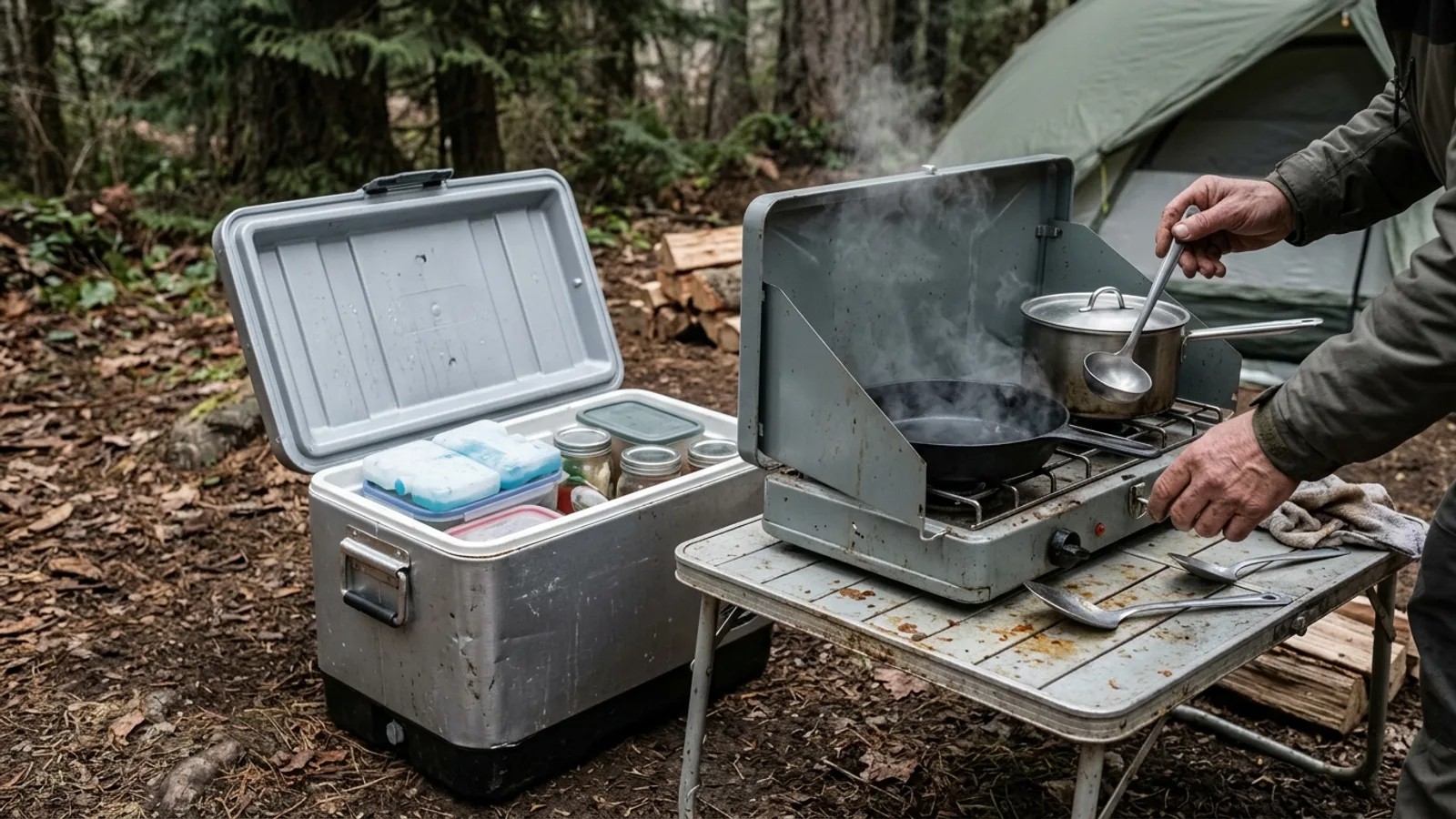
Start Cold, Stay Cold
The single biggest factor in how long a cooler stays cold is how cold everything is when you close the lid the first time. Pre-chill the cooler itself by filling it with ice or cold water for an hour or two before loading it. Chill drinks, meats, and containers in a refrigerator or freezer beforehand rather than loading room-temperature food and expecting the ice to catch up.
Pack food and drinks solid, with little airspace. A full cooler holds temperature far longer than a half-empty one because there's less air to warm up every time you open it. If you don't have enough food and ice to fill it, add extra ice, frozen water bottles, or a folded towel to take up space.
Choosing and Using a Cooler
Insulation quality matters more than size. Thicker walls and denser insulation hold cold longer, which is worth prioritizing over having extra capacity you don't need. A cooler that's the right size for your trip, packed full, will consistently outperform an oversized one that's mostly empty.
Two coolers work better than one for multi-day trips. Use a smaller one for drinks and snacks that get opened constantly, and a larger one for meat, dairy, and other perishables that only need to be opened at mealtimes. This keeps warm air out of the food cooler and lets it hold its temperature for the whole trip.
Inside the cooler, put items you'll need last or that spoil fastest at the bottom, in direct contact with the ice, and put things you'll grab often near the top. Take a moment to think through your meal order before you pack, so you're not digging past raw meat to find breakfast on day two.
Ice, Ice Packs, and Dry Ice
Block ice melts more slowly than cubed ice because it has less surface area, so it's the better choice for keeping a cooler cold over several days. Cubed or crushed ice cools faster and is more convenient for chilling drinks quickly.
Freezing water in reusable bottles or jugs is one of the most useful tricks in camp cooking. As the ice melts, it becomes clean drinking water instead of a puddle at the bottom of your cooler, and it won't dilute or waterlog your food the way loose ice can.
Dry ice keeps items solidly frozen for much longer than regular ice, which is useful if you're camping for an extended stretch or want food to stay frozen rather than just cold. It requires some care: never handle it with bare skin, keep it away from direct contact with food you plan to eat without cooking, and only use it in a cooler that has some ventilation, since it releases carbon dioxide gas as it sublimates. Never store dry ice in a sealed cooler inside a vehicle cabin or tent.
Keep the Lid Closed
Every time a cooler opens, cold air spills out and warm air rushes in. Minimizing how often and how long the lid is open does more for food safety than almost any other habit. Decide what you need before you open it, grab it, and close the lid right away.
Draining meltwater periodically helps too, unless you're relying on frozen jugs instead of loose ice, in which case there's nothing to drain. Standing water inside a cooler speeds up temperature rise once the ice is mostly gone.
Location Matters
Where you put the cooler at camp affects how hard it has to work. Set it in shade for the entire day, not just when you set up, since the sun's angle changes and a shady spot in the morning may bake by afternoon. A tarp, tree cover, or the shadow of a vehicle all help.
Keep coolers away from campfires, grills, and other heat sources, and off surfaces that absorb and radiate heat, like bare rock or pavement. Placing a cooler directly on the ground, especially on grass or dirt, can also help keep it slightly cooler than placing it on a hot vehicle bed or picnic table.
Plan Meals to Reduce Risk
Build your menu so the most perishable foods get eaten earliest in the trip, before repeated cooler openings and gradually melting ice raise the internal temperature. Save shelf-stable meals for the final days.
Pre-cooking or partially preparing meals at home reduces how much raw food you need to keep cold and cuts down on handling at the campsite. Chopping vegetables, marinating meat, and portioning ingredients into sealed bags ahead of time also means less time with the cooler open while you cook.
Always pack some non-perishable backup food that doesn't depend on refrigeration at all. If a cooler fails, ice runs out early, or a trip runs longer than planned, having shelf-stable options on hand means you're not stuck deciding whether questionable food is safe to eat.
When in Doubt, Throw It Out
Perishable food that has been above a safe refrigeration temperature for an extended period should not be eaten, even if it looks and smells fine. If you're ever unsure how long something has been warm, or whether your cooler kept its temperature, treat caution as the safer choice over the taste or cost of the food.