Camping Food Storage: How to Keep Meals Fresh and Safe from Wildlife
Why Food Storage Matters
Food storage while camping serves two purposes: keeping your meals safe to eat, and keeping wildlife away from your campsite. Animals that learn to associate campsites with food become a hazard to themselves and to future campers, so how you pack, cool, and secure your food matters even if you never see an animal come near it.
General Principles
A few habits apply whether you're at a drive-up campground or deep in the backcountry.
- Keep perishables cold. Bacteria multiply fastest in the range between refrigerator temperature and body temperature, so the longer meat, dairy, and cooked leftovers sit warm, the greater the risk. Pack these items last, keep the cooler out of direct sun, and open it as little as possible.
- Separate raw and ready-to-eat foods. Raw meat, poultry, and fish should be sealed and packed below or apart from foods you won't cook again, such as cheese, bread, or leftovers. This prevents juices from raw food contaminating anything else.
- Use airtight, sturdy containers. Rigid or heavy-duty resealable containers protect food from moisture, crushing, and insects, and they contain odors far better than thin bags. This also makes cleanup easier and reduces trash that can attract animals.
- Plan portions ahead of time. Pre-measuring ingredients at home cuts down on packaging you'll carry, reduces leftovers, and makes cooking at camp faster and less messy.
Storing Food at a Campground
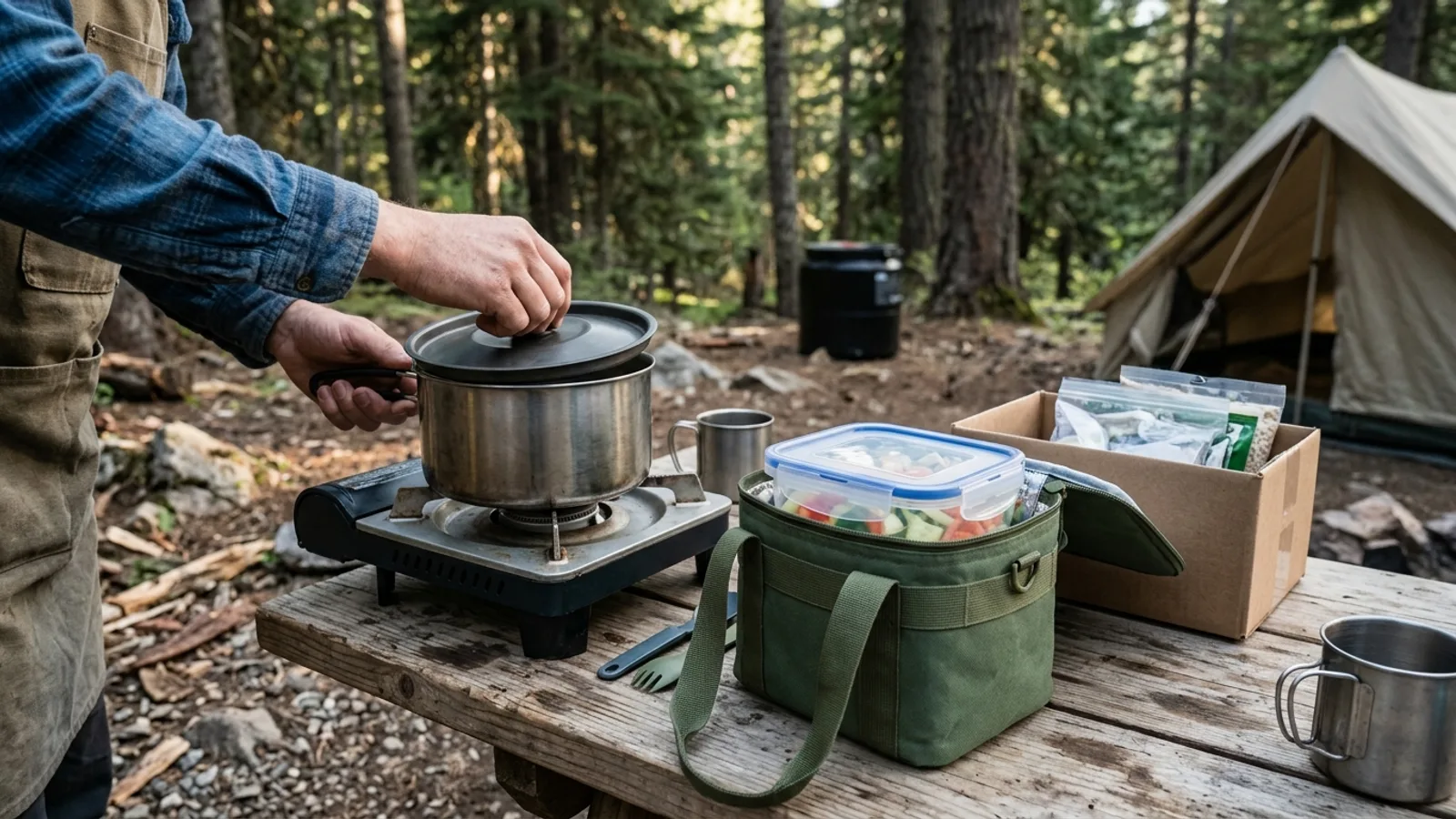
Established campgrounds usually allow coolers and camp kitchens, which makes food storage more flexible, but the basics still apply.
Coolers and Cold Storage
A well-insulated cooler with a good seal will outperform temperature control far longer than an open-top or poorly insulated one. Pack it with ice or reusable ice packs, and consider freezing water bottles beforehand — they double as drinking water once they thaw. Keep the cooler in shade and covered with a blanket or tarp to slow ice melt during the day. Check periodically that contents still feel cold, and never let perishable food sit out for extended periods, especially in hot weather.
Organizing Meals
Label meals by day so you're not digging through the whole cooler at every meal. Keeping raw proteins in a separate sealed bin or bag from produce and cooked food reduces the chance of contamination and keeps the cooler more organized as ice melts and space shrinks.
Wildlife at Campgrounds
Even developed campgrounds can have raccoons, rodents, or larger animals looking for an easy meal. Store all food, trash, and scented items in a vehicle or provided food locker overnight, and never leave a cooler unattended and unsecured, even a closed one — many animals can open latches or chew through soft-sided coolers.
Storing Food in the Backcountry
Without a cooler or vehicle to fall back on, backcountry food storage requires more deliberate planning.
Choosing Foods
Dehydrated meals, nuts, dried fruit, jerky, and other shelf-stable foods reduce spoilage risk and weight. These don't need refrigeration and hold up well over multi-day trips.
Bear Canisters and Bear Bags
In areas with bears, a hard-sided bear canister is generally the most reliable way to protect food, since it resists both smell and force. Many parks and wilderness areas require them and can advise on current regulations. Where canisters aren't required or practical, a bear-resistant bag, used correctly and stored away from your tent, is another option.
Hanging Food
Where required or appropriate, hang food using a counterweight or similar method so it hangs well above the ground and away from the trunk of the tree, and away from your sleeping area. This technique takes practice — try it at home or a trailhead first so you're not learning it in the dark.
Check Local Rules
Backcountry food storage regulations vary by park and region, and rangers or visitor centers can tell you what's currently required and what wildlife is active in the area. Following local guidance protects both you and the animals that live there.
Food Handling Basics
Good hygiene matters as much as good storage.
- Wash your hands with soap and water before cooking or eating, and again after handling raw meat.
- Use separate utensils and cutting surfaces for raw and cooked food, or wash them thoroughly between uses.
- Cook meat and fish to a safe temperature and reheat leftovers until they're steaming hot throughout.
- Pack out all food scraps, wrappers, and cooking water; never bury or burn food waste, since it can attract animals long after you've left.
Final Tips
Food storage is one of the simplest ways to make a trip safer, both for you and for local wildlife. Taking a few extra minutes to keep food cold, sealed, and secured pays off in fewer spoiled meals, fewer unwanted animal visitors, and a cleaner campsite for whoever comes after you.