How to Pack and Cook Eggs While Camping
Eggs are one of the most versatile foods to bring camping, but they're also fragile and perishable. A little planning around how you pack, store, and cook them makes the difference between a great campfire breakfast and a mess in your cooler.
Packing Whole Eggs
The simplest approach is to bring eggs in their shells, packed so they can't shift around or take a direct hit.
- A rigid, hard-sided container works better than the original carton, which crushes easily under other gear. Some campers use a dedicated hard-plastic egg carrier with individual molded slots.
- If you're improvising, wrap each egg individually in a cloth or paper towel, then pack them snugly in a small hard container so they can't roll or knock together.
- Keep the container upright and place it somewhere in your cooler or pack where it won't get crushed under heavier items.
Whole eggs packed this way can be fried, scrambled, or hard-boiled once you reach camp, giving you the most flexibility for cooking.
Packing Pre-Cracked Eggs
Cracking eggs into a leakproof container before you leave home saves space and eliminates the shell-breakage problem entirely.
- A wide-mouth, leakproof bottle or a screw-top jar works well. Crack the eggs in at home, seal tightly, and pack it cold.
- Give the container a shake before cooking if you want the eggs already beaten for scrambling.
- Pre-cracked eggs are best used within a short time and should stay cold the entire trip — treat them the same as any raw egg product for food safety.
- Label the container clearly so it isn't mistaken for a beverage.
This method is especially convenient for scrambled eggs, omelets, or as an ingredient in pancake or biscuit batter at the campsite.
Packing Powdered Eggs
Powdered (dehydrated) eggs are the most durable option for longer trips or backcountry travel where refrigeration isn't practical.
- They don't need to be kept cold before rehydration, which makes them ideal for backpacking or multi-day trips far from a cooler.
- Rehydrate by whisking the powder with water according to the ratio on the package, then cook as you would fresh scrambled eggs.
- Powdered eggs work well mixed into hash, stirred into pancake batter, or used as a binder in campfire baking.
- Keep the powder in a sealed, moisture-proof bag or container, since it will clump if it absorbs moisture from the air.
- The texture and flavor differ somewhat from fresh eggs, so it's worth trying a batch at home before relying on them for a trip.
Cooking Eggs at Camp
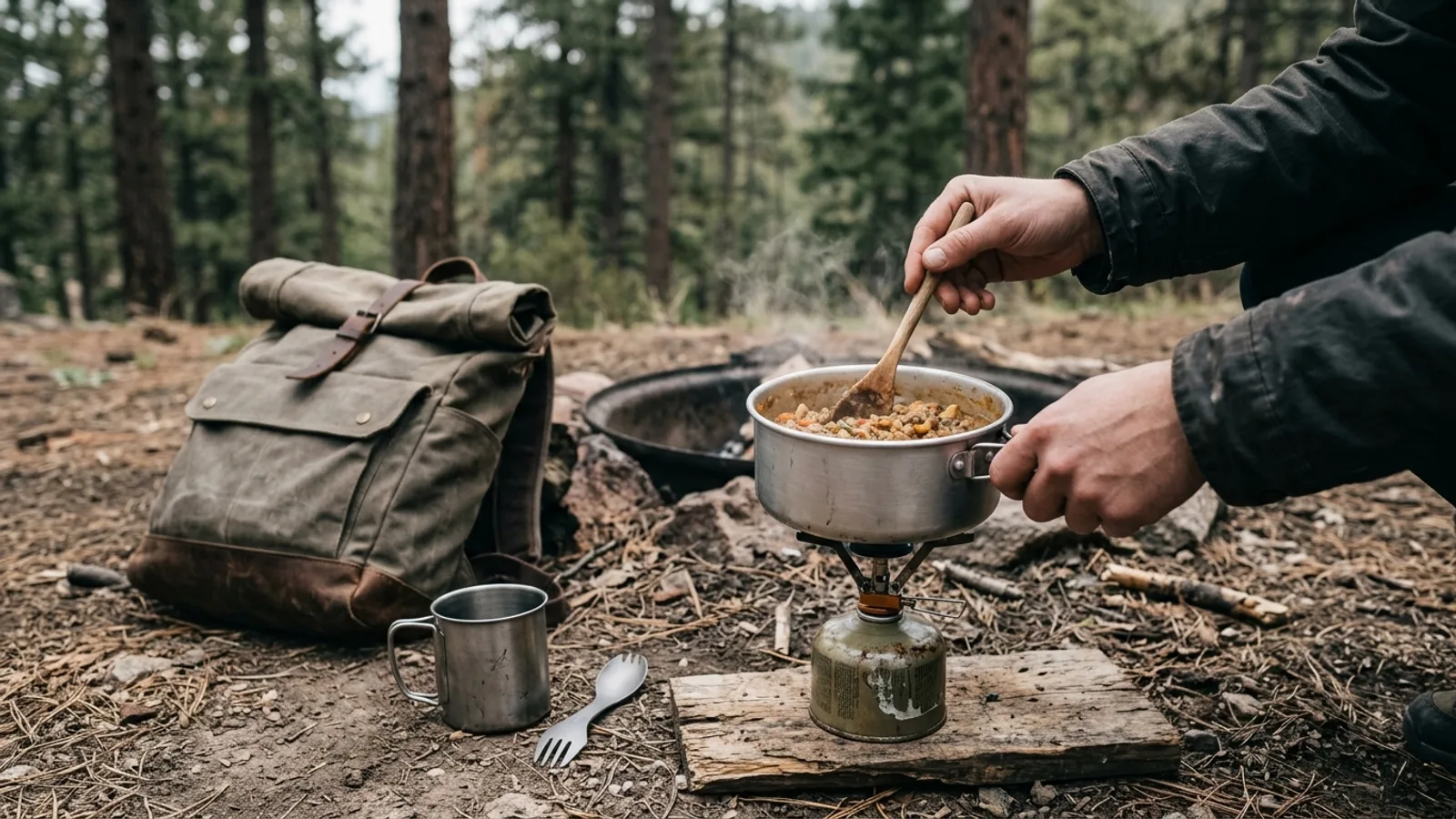
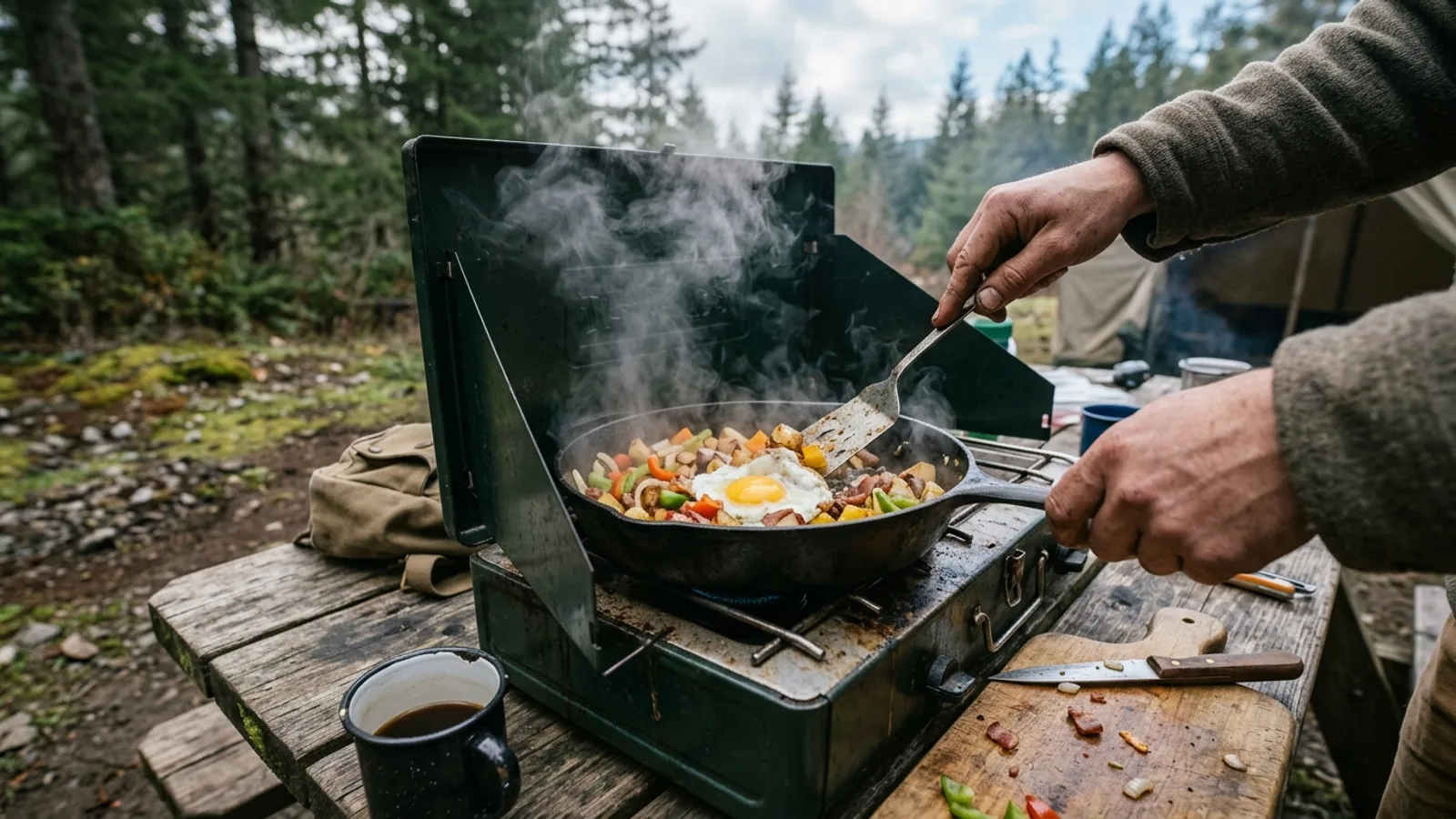
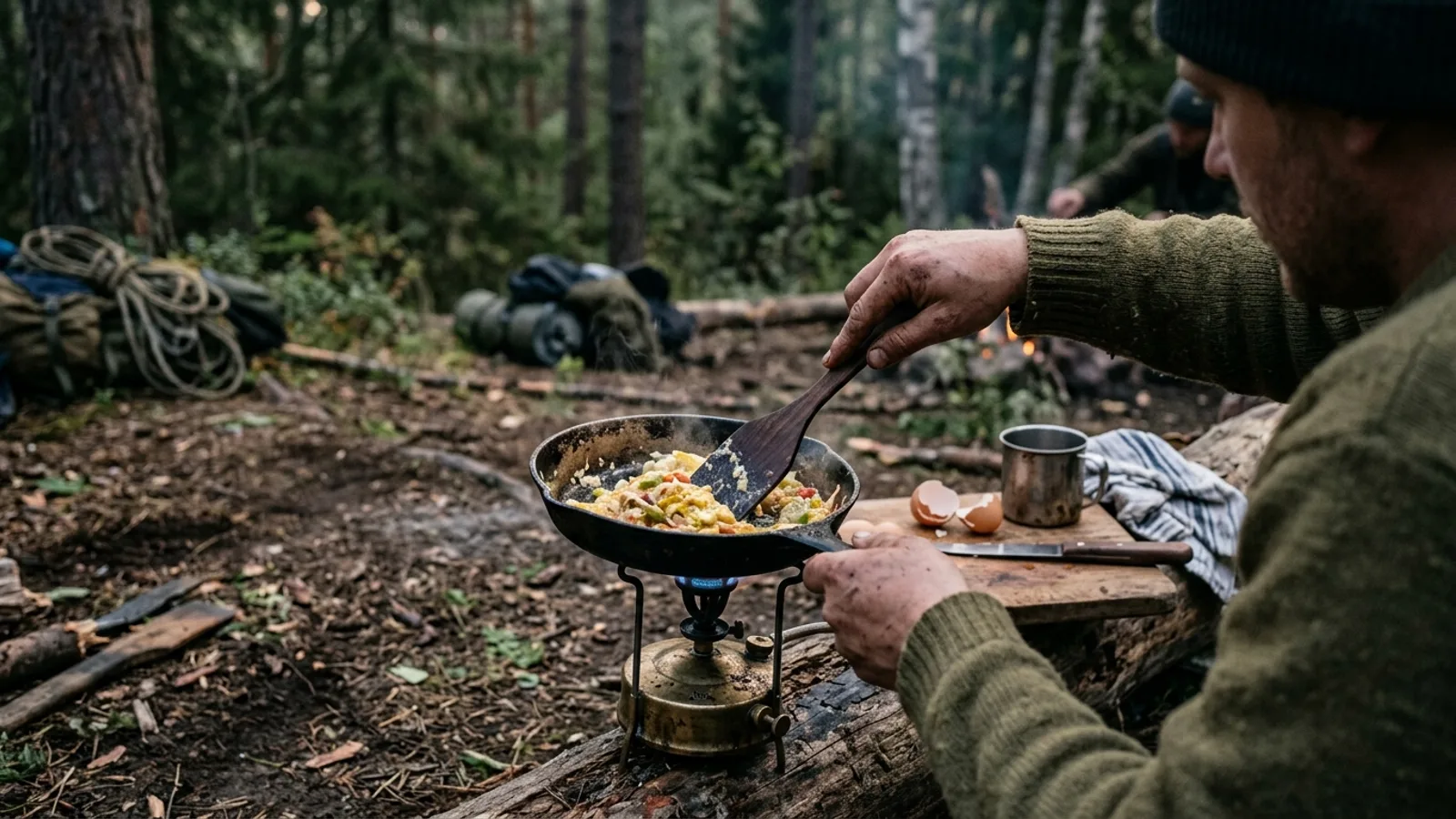
Whole eggs can be fried directly in a pan with a bit of oil or butter, or hard-boiled in a pot of water over a camp stove or fire. Cracked or rehydrated eggs cook fastest when the pan is preheated to medium heat and the eggs are stirred gently and often for a soft scramble.
A simple egg sandwich — fried egg, toasted bread, and whatever toppings you're carrying — is a fast, filling option that doesn't require much cleanup. For a heartier meal, scrambled eggs mixed with pre-cooked, shelf-stable meat and chopped vegetables make a solid one-pan breakfast.
Food Safety and Storage
Raw eggs, whether whole or cracked, need to stay cold. Pack them in a cooler with enough ice or reusable ice packs to keep the interior consistently cold throughout the trip, and avoid opening the cooler more than necessary in warm weather.
Keep raw eggs separated from ready-to-eat food to avoid cross-contamination, and use clean utensils and hands when handling them. Wash your hands or use sanitizer before and after cooking with raw eggs, and wash any surfaces or utensils that touched raw egg before reusing them.
Cook eggs until both the whites and yolks are firm unless you're confident in the source and freshness and accept the higher risk of eating them softer.
Cleanup and Leave No Trace
Pack out eggshells rather than leaving them at the campsite or burying them — they take a long time to break down and can attract animals in the meantime. A small resealable bag in your kitchen kit makes this easy.
Bring a small amount of biodegradable soap and a way to heat water for washing pans and utensils that have had raw egg on them. Dispose of dishwater well away from any water source, following the general food-waste disposal practices for the area you're in.