Choosing an Outdoor Griddle for Camping: A Practical Guide
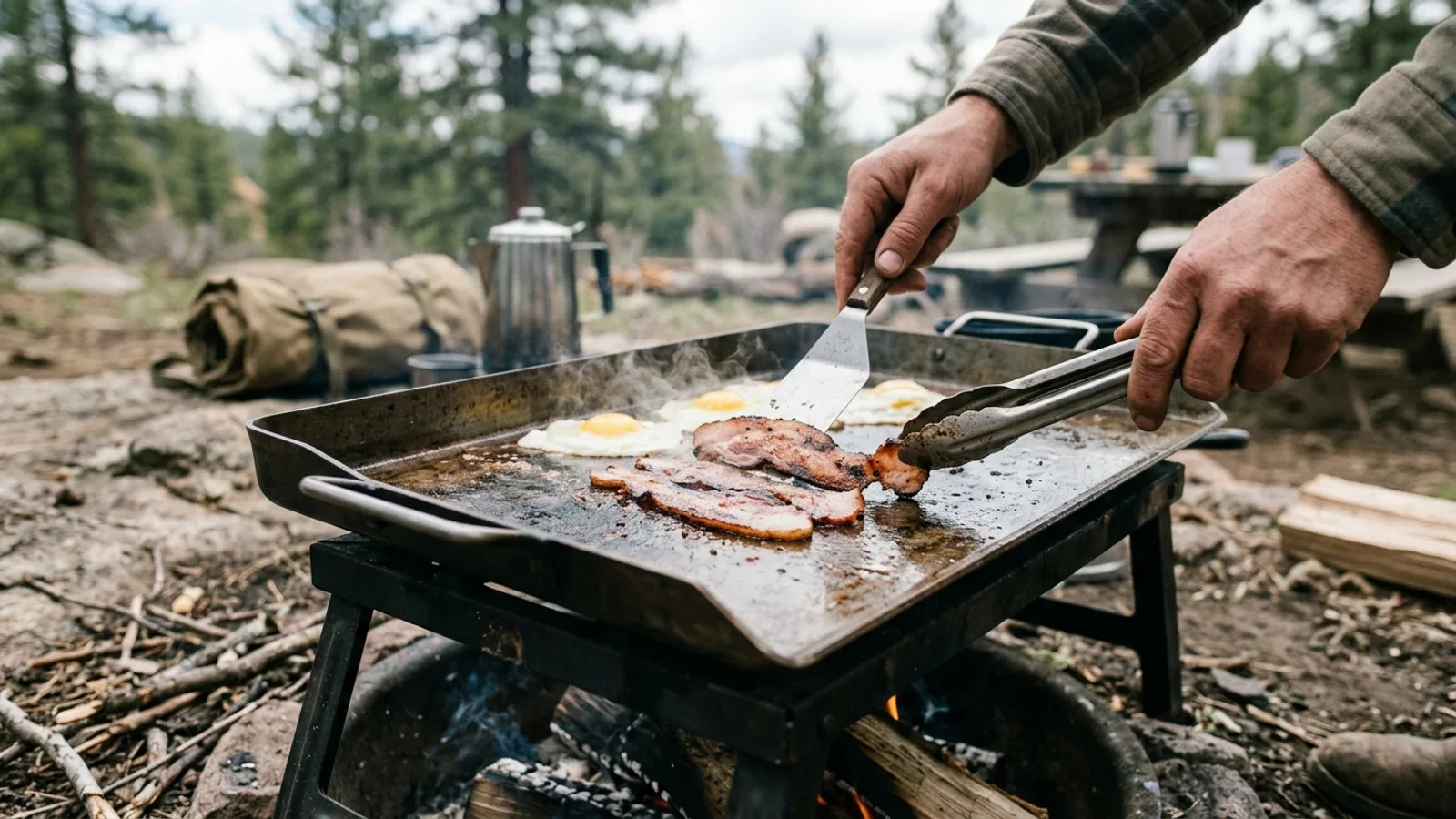
A flat-top griddle turns a campsite kitchen into something closer to a diner line. Eggs, pancakes, burgers, stir-fried vegetables, seared fish — all of it works on one flat surface, and cleanup is often simpler than juggling multiple pots and pans. Picking the right one comes down to a handful of practical trade-offs rather than any single "best" model.
Size and Weight
Griddle size is usually measured by cooking surface area, and it's worth matching that to how you actually camp. A compact griddle with a smaller surface is easier to fit in a trunk or truck bed and heats up faster, but it limits how much food you can cook at once. A larger surface lets you cook breakfast for a full group in one pass, at the cost of added weight and bulkiness in storage.
If you're car camping or setting up at a fixed site, weight matters less. If you're packing gear in and out frequently, or have limited vehicle space, a lighter and more compact unit will get used more often than a heavy one that stays in the garage.
Material and Build
Most camp griddles use either rolled steel or cast iron for the cooking plate, sometimes with a porcelain or enamel coating.
- Rolled steel heats quickly, is relatively light, and responds fast to temperature changes, but it needs regular seasoning and a light coat of oil after cleaning to resist rust.
- Cast iron holds heat longer and cooks more evenly once hot, but it's heavier and slower to heat up.
- Coated or enameled surfaces resist sticking and are easier to wipe clean, though the coating can chip over time with metal utensils.
The frame and legs matter too. Look for sturdy, corrosion-resistant legs that stay stable on uneven or soft ground, since a wobbly griddle full of hot grease is a real hazard.
Heat Distribution
Even heat across the surface is one of the biggest differences between a good griddle experience and a frustrating one. Griddles with multiple independent burners let you run different heat zones at once — high heat for searing on one side, a low simmer for keeping food warm on the other. Single-burner griddles are simpler and lighter, but expect some hot spots directly above the burner and cooler areas near the edges.
Preheating for several minutes before cooking, and moving food around rather than leaving it in one spot, helps compensate for uneven heat regardless of which style you use.
Cooking Surface
A raised edge or perimeter lip helps contain grease and liquids rather than letting them run off onto the burner or ground. A built-in grease trap or removable grease cup makes disposal easier and cuts down on flare-ups. Before your first cook, season a bare steel or cast iron surface with a thin layer of high-smoke-point oil to build a nonstick coating and protect against rust — and re-season periodically, especially after cooking acidic foods.
Fuel Source
Propane is the most common fuel for portable camp griddles. It lights quickly, offers adjustable heat, and small canisters are widely available, though you'll need to track how much fuel you're carrying on longer trips. Some griddles can run off a larger refillable propane tank with the right connection, which is more economical for extended use but adds weight and bulk.
A few griddles use electric heating elements, which only work where you have reliable power — useful for RV or car camping with hookups or a generator, but not an option for backcountry or dispersed sites.
Setup and Care Tips
- Set the griddle on level, stable ground, away from tents, dry brush, and low branches.
- Check propane connections for leaks before each use by listening and smelling for gas, or using a soapy water test on the fittings.
- Let the surface cool before scraping off residue, then wipe it down and apply a thin oil coat before storing to prevent rust.
- Pack a dedicated scraper and a lidded container for used grease so cleanup doesn't rely on paper towels alone.
- If you're combining a griddle with a separate stand or table, confirm its weight rating and footprint match your griddle before relying on it in the field.
Griddle vs. Grill for Campsite Cooking
Griddles excel at foods that would fall through grill grates — eggs, pancakes, rice, chopped vegetables, thin cuts of meat — and they make cleanup and grease management more contained. Grills are better suited to foods where you want char marks, rendered fat dripping away, or the option to cook over direct flame. Many campers find that a flat-top griddle covers more of their day-to-day cooking needs, while a grill remains better for the occasional steak or whole cuts that benefit from open flame.