Easy Camping Meal Ideas: What to Eat When Camping
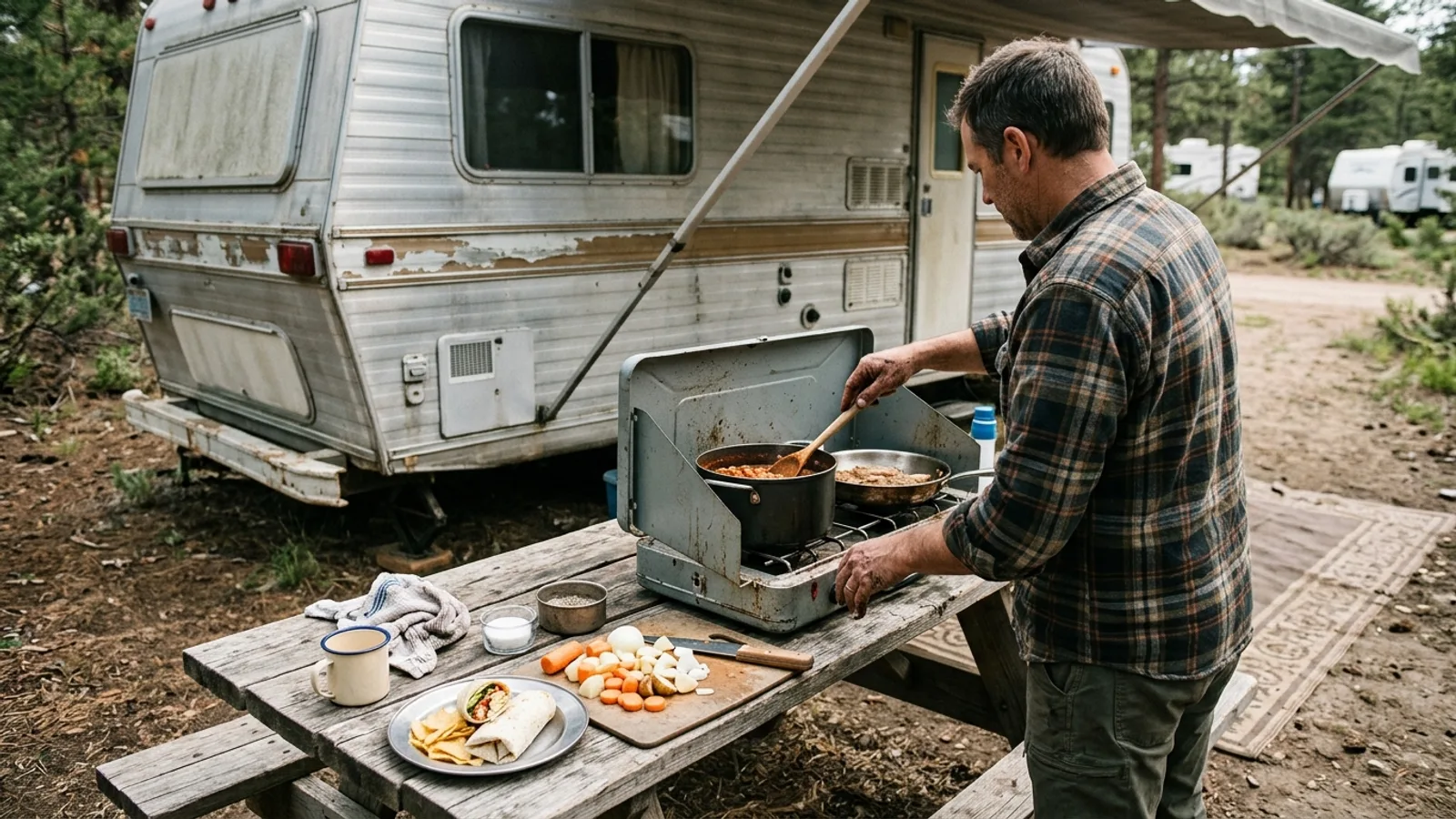
Good camping food doesn't need to be complicated. The best camp meals rely on a short ingredient list, one pot or a sheet of foil, and prep you've already done at home. Below are reliable meal categories and techniques rather than rigid recipes, so you can adapt to whatever cooler space, stove, or fire ring you actually have.
Plan Before You Go
Most of the stress in camp cooking comes from figuring things out on site. Avoid that by doing the following at home:
- Chop vegetables, marinate proteins, and portion spices into small bags or containers before you leave.
- Make a meal-by-meal list and pack ingredients in that order, so the first night's dinner is easy to find.
- Bring a bit more shelf-stable food than you think you'll need — weather or fatigue can change your plans.
- Keep raw meat separate from ready-to-eat food in the cooler, and pack the cooler so raw items can't drip onto anything else.
One-Pot and Foil-Packet Dinners
A single pot or a foil packet keeps cleanup simple and works well over a campfire, camp stove, or grill grate.
- One-pot pasta: Cook pasta directly in a seasoned broth or sauce with chopped vegetables, so the starch thickens the sauce as it cooks. This avoids a separate pot for draining.
- Foil packets: Wrap sliced vegetables, a protein, and a bit of oil or butter tightly in heavy-duty foil, then set it on coals or a grate. Turn occasionally and check for doneness by opening one packet carefully — steam escapes quickly, so use tongs and keep your face back.
- Dutch oven meals: A cast iron Dutch oven holds heat evenly and works for stews, grain dishes, or baked casseroles. Coals can be placed both under and on top of the lid for more even cooking.
- Grilled corn or vegetables: Charring vegetables directly over open flame adds flavor without extra equipment. Turn frequently so they cook through without burning.
Healthy, Energy-Sustaining Options
Camping usually means more physical activity than a normal day, so meals that combine protein, complex carbohydrates, and some fat will keep energy steadier than sugary, low-protein options.
- Grain and legume bowls (rice or quinoa with beans or chickpeas) travel well and reheat easily.
- Hearty salads with grains, roasted vegetables, and a vinaigrette hold up for a day without refrigeration if kept cool and dressed just before eating.
- Eggs, whether scrambled, in a hash, or hard-boiled ahead of time, are a compact protein source for breakfast or lunch.
- Nut butters, whole-grain crackers, and dried fruit make a solid base for snacks between meals.
Cooking with Kids in Mind
Simple, familiar shapes and flavors tend to go over best with children at a campsite, where appetites and patience can both be unpredictable.
- Breakfast sandwiches with egg and cheese on a roll are easy to assemble and eat with hands.
- Foil-packet meals let each person customize their own combination of ingredients before it goes on the fire.
- Pre-portioned snack bags reduce mess and make it easy to track how much everyone has eaten.
- Letting kids help with safe tasks — stirring, wrapping foil, spreading toppings — makes mealtime part of the activity rather than a wait.
Vegetarian Camping Options
Plant-based camping meals hold up well because beans, lentils, and grains are shelf-stable and satisfying.
- Bean or lentil chili can be made ahead and reheated in one pot.
- Foil-wrapped sweet potatoes, cooked directly in coals, make a filling side or main with minimal cleanup.
- Curries built on canned coconut milk and chickpeas keep well in a cooler and reheat quickly.
- Grilled or marinated tofu and vegetable skewers work well over an open flame.
Portable Snacks
Snacks matter more while camping than at home, since meals are spaced further apart and activity levels are higher.
- Trail mix: Combine nuts, dried fruit, and a small amount of chocolate or pretzels. Portion into individual bags at home so snacking doesn't turn into rationing decisions on the trail.
- Campfire banana boats: Split a banana lengthwise without cutting all the way through, tuck in chocolate and a few marshmallows, wrap in foil, and warm it near the coals until soft and melted.
- Toast-based snacks: Mashed avocado or nut butter on toasted bread, topped with whatever protein or fruit you have, makes a fast and filling option any time of day.
- French toast sticks: Dip bread strips in an egg-and-milk mixture and cook on a griddle or skillet; they're easy to eat by hand and reheat well if made ahead.
Lunch Ideas
Camp lunches work best when they need little to no cooking, since midday is often the time you're away from the site.
- Tacos or wraps: Pre-cooked protein, shredded cheese, and toppings packed separately let everyone build their own.
- Build-your-own snack plates: Sliced meat or cheese, crackers, and cut vegetables or fruit require no prep at the table.
- Bread salads: Cubed bread, chopped vegetables, and a vinaigrette make a lunch that travels well and doesn't need reheating.
- Plant-based sandwiches: Shredded jackfruit or a bean-based filling seasoned ahead of time makes a satisfying sandwich with minimal on-site work.
General Food Safety Reminders
- Keep coolers packed with enough ice or ice packs to stay cold throughout the trip, and avoid opening them more than necessary.
- Cook meat, poultry, and eggs until they reach a safe internal temperature, and use a food thermometer if you're unsure.
- Store all food, trash, and scented items in animal-resistant containers or vehicles overnight, especially in bear country.
- Wash hands or use sanitizer before handling food, since campsite water and surfaces aren't always as clean as a kitchen.