Fifth Wheel vs. Travel Trailer: How to Choose the Right Towable RV
What Makes a Fifth Wheel Different
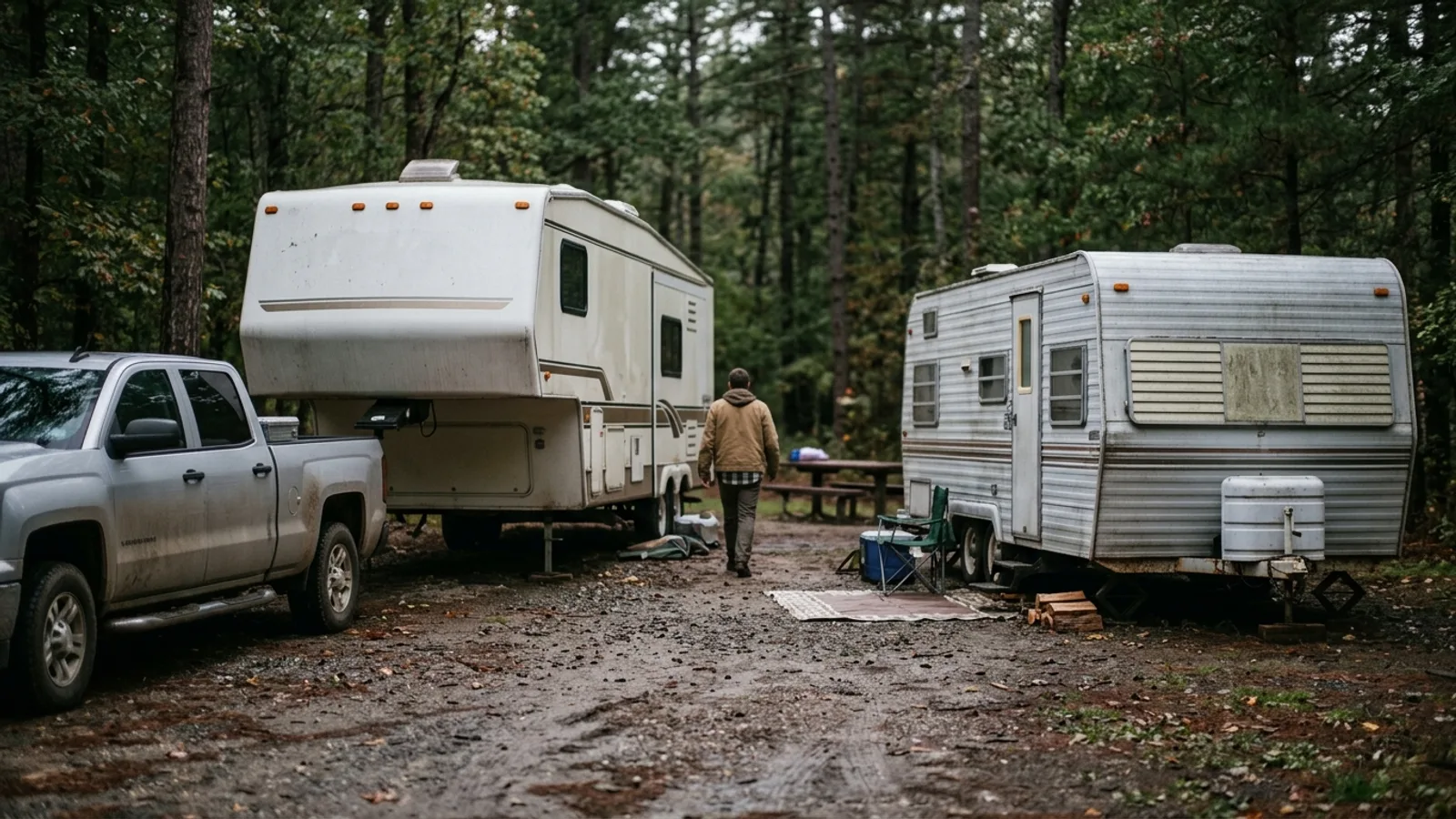
A fifth wheel is a towable camper that connects to a special hitch mounted in the bed of a pickup truck, rather than to a hitch at the rear bumper. The hitch sits over or just ahead of the truck's rear axle, and the front portion of the trailer extends forward over the bed in a raised section often used for a bedroom.
This hitch placement is the defining feature. It changes how the trailer tows, how much it can carry, and what kind of vehicle you need to pull it.
How the Hitch Design Affects Towing
Because the pivot point sits above the truck's rear axle instead of behind the bumper, weight is distributed more directly over the tow vehicle. This generally makes fifth wheels tow with less sway and more stability than bumper-pull trailers of similar size, particularly in crosswinds or when being passed by large vehicles.
That stability comes with a requirement: you need a truck with a bed long enough and a frame strong enough to accept the hitch, plus sufficient payload capacity to carry the pin weight (the portion of the trailer's weight that rests on the hitch itself). Pin weight is typically a meaningfully higher share of total trailer weight than the tongue weight on a travel trailer, so towing capacity and payload rating both matter and should be checked against the specific trailer's loaded weight, not just its advertised base weight.
Interior Space and Layout
Fifth wheels tend to offer more livable square footage than travel trailers of similar overall length, because the raised forward section adds a separate level, often used for a bedroom, and keeps that space clear of the main living area. Multiple slide-out sections are common, which can open up room for full kitchens, dedicated dining areas, and sometimes a second living space.
The tradeoff is that this interior space is separate from the tow vehicle's cab. Every stop that requires using the bathroom, grabbing food, or resting means getting out of the truck and into the trailer, which isn't the case with a motorhome.
Storage and Setup Considerations
Fifth wheels generally have less built-in exterior storage than travel trailers, since much of the underside space is taken up by the frame and hitch structure. Owners often rely on interior storage or roof-mounted racks for gear.
When not in use, a fifth wheel needs enough space to store both the trailer and, if you're not using your truck daily, the tow vehicle. Height is also a factor: many fifth wheels are tall enough that garage or covered storage isn't an option, so plan on outdoor storage or a storage facility that accommodates the height.
Travel Trailers as an Alternative
A travel trailer connects to a standard hitch at the rear of a tow vehicle, which means it can be pulled by a wider range of vehicles, including many SUVs and mid-size trucks, depending on the trailer's weight and the vehicle's rated towing capacity.
Travel trailers keep the truck bed free for gear, coolers, bikes, or anything else you want to bring along, since there's no hitch hardware occupying that space. They also tend to come in a wider range of smaller, lighter models, which can make them easier to maneuver on narrow park roads or into smaller campsites.
The main handling drawback is sway. Because the hitch point is behind the tow vehicle's rear axle rather than over it, travel trailers are more susceptible to fishtailing in wind or from passing traffic. Proper weight distribution, a well-matched hitch setup, and loading cargo correctly (heavier items low and toward the front of the trailer) all help reduce this.
Matching the RV to Your Vehicle
Before comparing floorplans, check what your current tow vehicle can actually handle. Look up its towing capacity and payload rating, and compare those figures against the loaded weight of any trailer you're considering, not just the empty or "dry" weight listed by the manufacturer. Water, propane, gear, and passengers all add up quickly.
If you don't already own a truck capable of towing a fifth wheel, factor that into your decision. A travel trailer that fits your existing SUV or half-ton truck may be the more practical choice, even if a fifth wheel would otherwise suit your space needs.
Matching the RV to Your Camping Style
Consider how you'll actually use the camper:
- Frequent short trips with day excursions: A setup where you can unhitch and drive off in a separate vehicle, or where the tow vehicle itself can run errands, adds convenience. This favors either a fifth wheel with a truck you're comfortable driving solo, or a smaller travel trailer.
- Full-time or extended living: The extra layout options and separate levels in a fifth wheel can make daily life more comfortable over long stretches.
- Tight or remote campsites: Smaller, lighter travel trailers generally maneuver more easily into compact or unpaved sites.
- Minimizing towing anxiety: The added stability of a fifth wheel hitch can be reassuring for newer tow vehicle drivers, though a well-matched, properly loaded travel trailer can also tow predictably.
Practical Steps Before You Buy
Walk through any camper you're considering in person if possible. Photos and floorplans rarely convey how a space feels, especially ceiling height in the raised bedroom section of a fifth wheel, or how much usable counter and storage space a particular layout actually offers.
Ask about loaded weights, not just base weights, and get real numbers for your specific tow vehicle's payload and towing capacity. If you're buying the tow vehicle and trailer together, work out the combined weight math before committing to either one.
Consider where you'll store the unit between trips, including height clearance, and factor in the towing setup itself, such as hitch type and any weight-distribution equipment a travel trailer might need.
Bottom Line
Fifth wheels generally offer more stable towing and more interior living space, at the cost of requiring a capable truck, offering less exterior storage, and separating driving space from living space. Travel trailers are towable by a broader range of vehicles and free up the truck bed, but require more attention to sway control and often offer less overall room. The right choice comes down to what vehicle you have or are willing to buy, how you plan to use the RV, and what kind of campsites you expect to visit.