Choosing the Right RV Cooler or 12-Volt Fridge
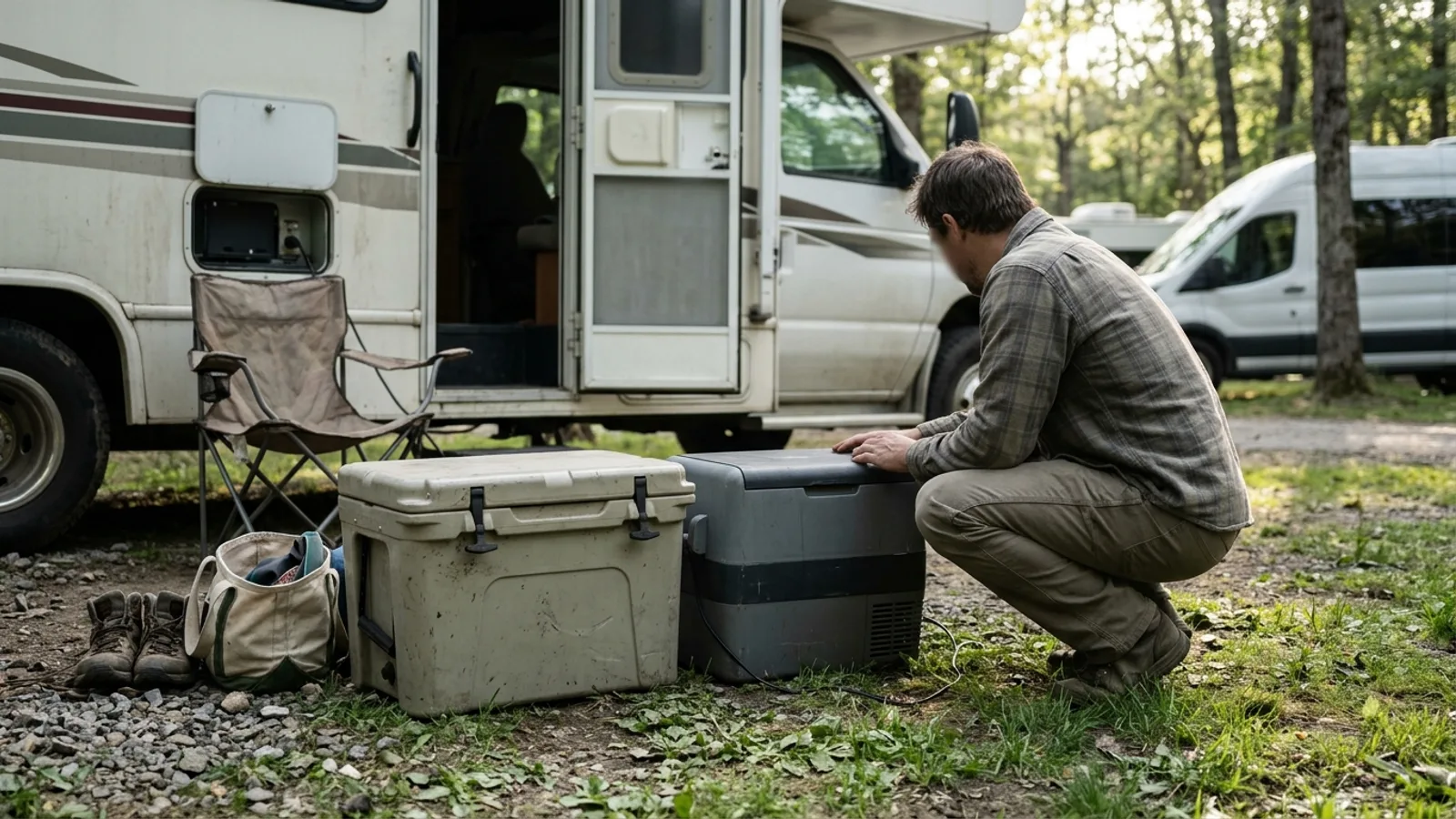
Keeping food cold in an RV is a different problem than keeping it cold at a campsite with a cooler and a bag of ice. You have a power system to work with, limited storage space, and a vehicle that vibrates and jostles everything inside it. The right choice depends less on brand and more on how you travel: how long you're off the grid, how much you need to store, and what power source you can rely on.
Compressor Coolers vs. Thermoelectric Coolers
Portable RV refrigeration generally falls into two categories.
Compressor-based coolers work like a small version of a home refrigerator or freezer. They can cool well below what's needed for food safety, hold their temperature even in hot weather, and keep working regardless of the outside air temperature. They draw more power in short bursts but cycle on and off, so average power draw is often lower than people expect. They also tend to be less tolerant of being tipped or laid on their side, so check orientation requirements before travel.
Thermoelectric coolers use a solid-state system to move heat rather than a compressor. They're generally lighter, quieter, and less expensive, but they can only cool a set number of degrees below the surrounding air temperature. On a hot day, that may not be cold enough to keep food safely chilled. These are better suited to drinks and short trips than to perishable food storage over multiple days.
Sizing It to Your Trip
Capacity is usually measured in liters or quarts, but the more useful question is how many days you'll go between resupply stops and how many people you're feeding. A cooler that's too small means constant grocery runs; one that's too large eats into living space and can draw more power than necessary to keep all that extra air cold. Many RVers do well with a mid-size unit for everyday food and a separate smaller cooler for drinks, so the main fridge isn't opened constantly.
Power Source and Draw
Most portable RV refrigeration units run on 12-volt DC power, which lets them draw from your RV or vehicle battery system, often with a second, larger AC power option for shore power. If you'll be running a cooler off battery power for extended periods without driving or hookups, pay attention to how the unit manages low-voltage cutoff — a built-in low-battery protection feature prevents the cooler from draining your battery below a safe level and leaving you unable to start your vehicle or run other systems.
If you plan to dry camp for multiple days, think about your total power budget: solar input, battery capacity, and what else you're running off the same system. A cooler that cycles frequently in hot weather will draw more than the same cooler in mild conditions.
Durability and Placement
An RV cooler needs to handle the vibration and occasional hard bump of being driven down real roads, not just carried to a picnic table. Look for solid latch mechanisms on the lid, a sturdy housing, and a design that won't shift during travel — many RVers strap or wedge units in place rather than relying on weight alone. If the unit will live in a cabinet or under a counter, check that there's enough clearance for the compressor's heat exhaust and appropriate airflow, since these units generate heat as a byproduct of cooling and can overheat or run inefficiently if boxed in too tightly.
Food Safety Basics
Whatever cooler you choose, the underlying goal is the same as any refrigerator: keep perishable food consistently cold enough to slow bacterial growth, and avoid letting the unit warm up for extended periods when the door or lid is open frequently. A built-in thermometer or temperature display is genuinely useful here — it takes the guesswork out of whether the unit is actually holding a safe temperature, especially in hot weather or after long drives where the compressor has been working harder than usual.
If you lose power for an extended stretch, treat the situation the same as a home refrigerator outage: minimize how often you open the lid, and use judgment about how long perishable food remains safe once temperatures start climbing.
Useful Extras
Beyond core cooling performance, a few features make day-to-day use easier:
- Interior lighting — helpful for finding items in a dark cabinet or at night without opening the RV's main lights.
- Dual-zone or divided storage — lets you separate raw food from ready-to-eat items, or keep drinks away from food that shouldn't be crowded.
- External temperature display or app connectivity — lets you check on the unit without opening it, which itself helps maintain a stable internal temperature.
- Handles or wheels — worth having if you plan to move the cooler in and out of the RV for use at a picnic table or campsite.
Maintenance Habits Worth Building
Compressor units generally need little maintenance, but a few habits extend their working life: keep the exterior vents free of dust, avoid packing the interior so tightly that air can't circulate around the cooling plate, and let the unit reach temperature before loading it with a full trip's worth of groceries. If yours has a manual defrost cycle, don't let ice buildup accumulate to the point that it blocks airflow or strains the door seal.