RV Water Pump: When to Use It and When to Turn It Off
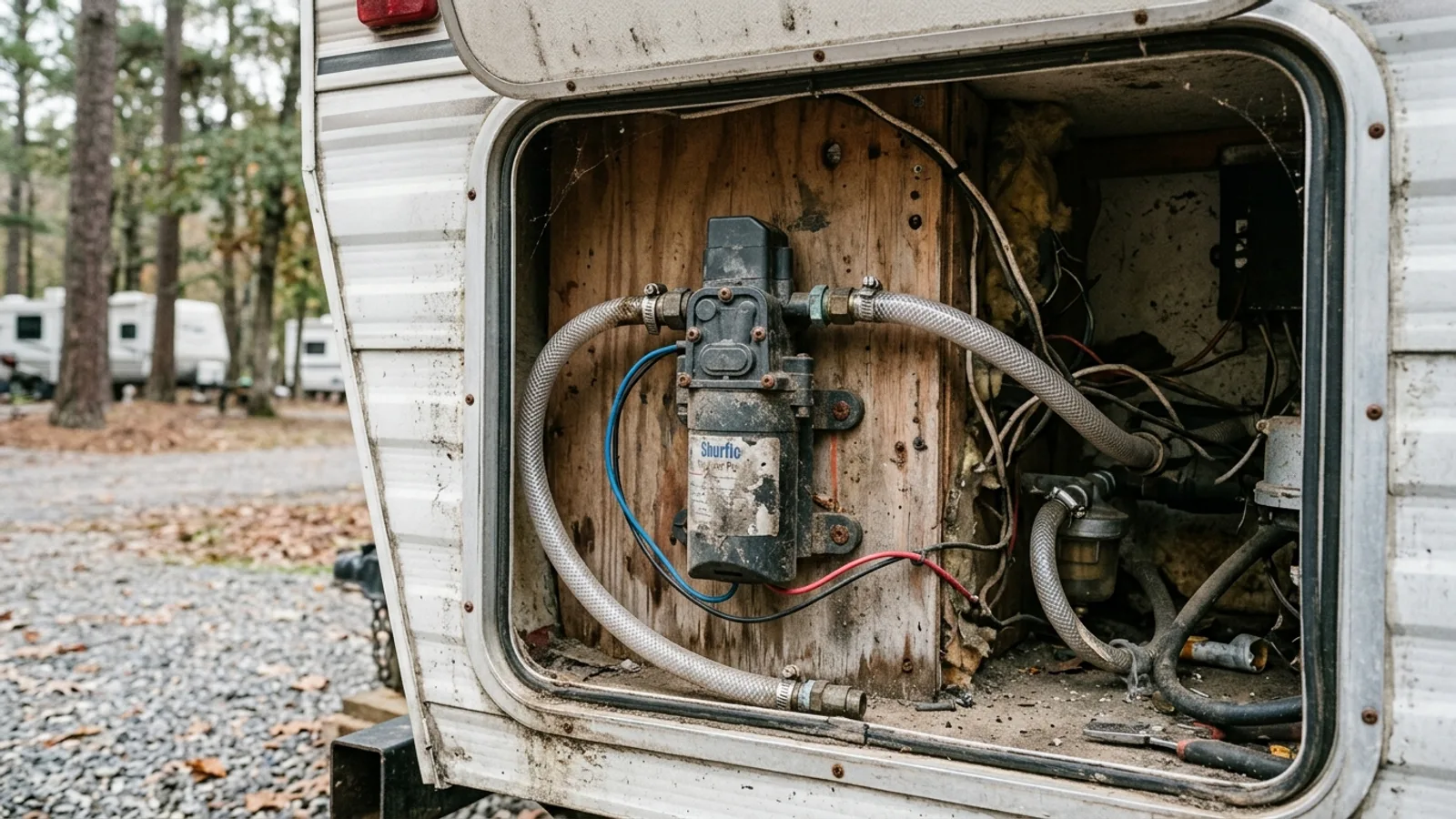
How the RV Water Pump Works
An RV freshwater pump is a demand pump. It sits between your freshwater tank and your plumbing, and it activates automatically whenever you open a faucet, turn on the shower, or flush the toilet, then shuts off once the pressure in the lines is satisfied. Its job is to pull water from the onboard tank and push it through the system with usable pressure.
When you're hooked up to a pressurized city water connection at a campsite, that outside pressure does the work instead. The pump has no role in that setup because water is already flowing into your plumbing from an external source.
Do You Need the Pump on City Water?
No. When connected to a city water hookup, leave the pump switched off. The incoming water pressure supplies your faucets, shower, and toilet directly, so the pump would just sit idle or, in some cases, cycle unnecessarily if left on.
Turning the pump off in this situation also protects it from wear, since demand pumps are built to draw from a tank rather than sit against a pressurized line. It has the added benefit of saving battery power, since the pump draws from your house battery when active.
When you disconnect from city water and rely on your onboard tank, switch the pump back on before you need water. It will then cycle normally as you open and close fixtures.
When to Turn the Pump Off
While Driving
Turn the water pump off before you get moving. Vibration and motion from the road can jostle faucet handles or fixtures enough to trigger a demand pump, which can drain your freshwater tank into the plumbing or overflow the grey water tank without your noticing. Switching the pump off before departure is a simple habit that prevents this.
When Leaving the RV Unattended
If you're stepping away for an extended period, or leaving the rig unoccupied for days, turn the pump off at the switch. This limits the damage a hidden leak or a stuck valve could do, since a running pump with an open line can drain a tank or, in a worst case, contribute to water damage inside the vehicle. It also removes one more parasitic draw on your battery while you're away.
In Freezing Conditions
Cold weather calls for its own approach. Rather than relying on the pump to keep water moving as a defense against freezing, most RVers winterize the plumbing system entirely when temperatures are expected to stay below freezing: draining tanks and lines and adding RV antifreeze to traps and low points. Running a pump continuously is not a substitute for proper winterization and can mask a freeze-related problem rather than prevent one.
Other Practical Considerations
- Noise: Demand pumps can be noticeably loud, especially in a small interior. Mounting the pump on vibration-dampening padding and securing all its fittings can reduce rattling and noise transmission through the floor or walls.
- Leaks: A pump that runs when no fixture is open is a strong sign of a leak somewhere in the system. Track it down and address it rather than letting the pump compensate for lost pressure.
- Manufacturer guidance: Follow the specific instructions that came with your RV or pump for switch locations, priming steps, and any model-specific quirks.
Maintaining Your Water Pump
A little routine care keeps a water pump reliable for years:
- Inspect regularly. Check visible water lines and fittings near the pump for drips, corrosion, or wear at least once a season, and before long trips.
- Clean or replace the inline filter. Most systems have a strainer or filter between the tank and the pump. Sediment and debris here can restrict flow and strain the pump if it's neglected.
- Sanitize the freshwater system periodically, particularly after the RV has sat unused for a while. This helps prevent buildup inside the tank and lines that can eventually affect pump performance and water taste.
- Test before you travel. Turn on the pump and run each fixture briefly before a trip to confirm steady pressure and catch any unusual noise or hesitation early.
Troubleshooting Common Problems
Pump Won't Start
Check the battery charge first, since a demand pump needs adequate voltage to run. Also check the pump's power switch and inspect the wiring and fuse for loose connections or damage.
Pump Runs Constantly
A pump that never fully shuts off, even with all fixtures closed, typically means there's a leak somewhere in the pressurized lines or fittings. Inspect connections methodically, starting near the pump and working outward, until you find the source.
Pump Runs but No Water Comes Out
This usually points to an empty or very low freshwater tank, an unprimed pump, or a loose connection on the intake side. Confirm the tank has water, then check that the pump housing is properly primed and its fittings are tight.
Pump Cycles Rapidly or Pulsates
Rapid on-off cycling, sometimes called pulsation, often traces back to the pressure switch inside the pump being out of adjustment. Some pumps allow you to adjust this setting; if yours doesn't, or if adjustment doesn't resolve it, the pump may need service or replacement.
Choosing Between Pump Types
RV water pumps generally fall into a few broad categories, each with tradeoffs worth understanding rather than a single "best" choice:
- Constant-speed pumps run at one speed regardless of demand. They're mechanically simple and easy to troubleshoot, though water pressure can feel less consistent as multiple fixtures are used at once.
- Variable-speed pumps adjust their speed to match demand, which tends to produce steadier pressure and quieter operation, particularly when only a trickle of water is needed.
- High-volume pumps move more water per minute, which suits larger rigs or households running multiple fixtures simultaneously, at the cost of higher power draw.
Whichever type you have, the core habits are the same: switch it off on city water and during travel, keep the system clean, and address leaks or unusual noises promptly.