How RV Slide Outs Work: Mechanisms, Operation, and Maintenance
What a Slide Out Does
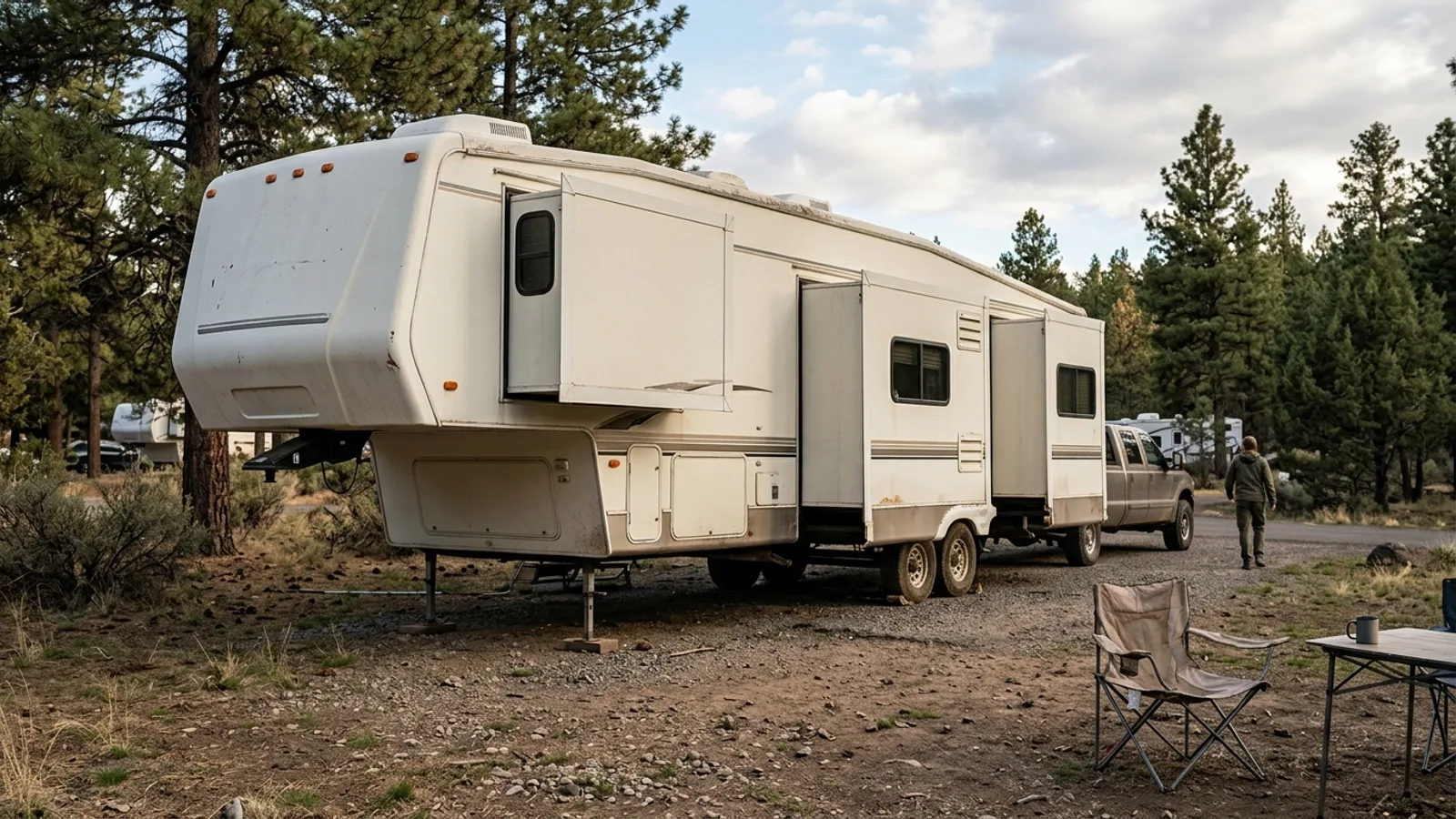
A slide out is a section of an RV wall, floor, and roof that moves outward once the vehicle is parked, expanding interior space for a living room, kitchen, or bedroom. When retracted, it sits flush with the RV body for driving. When extended, it adds usable floor area without changing the vehicle's road width.
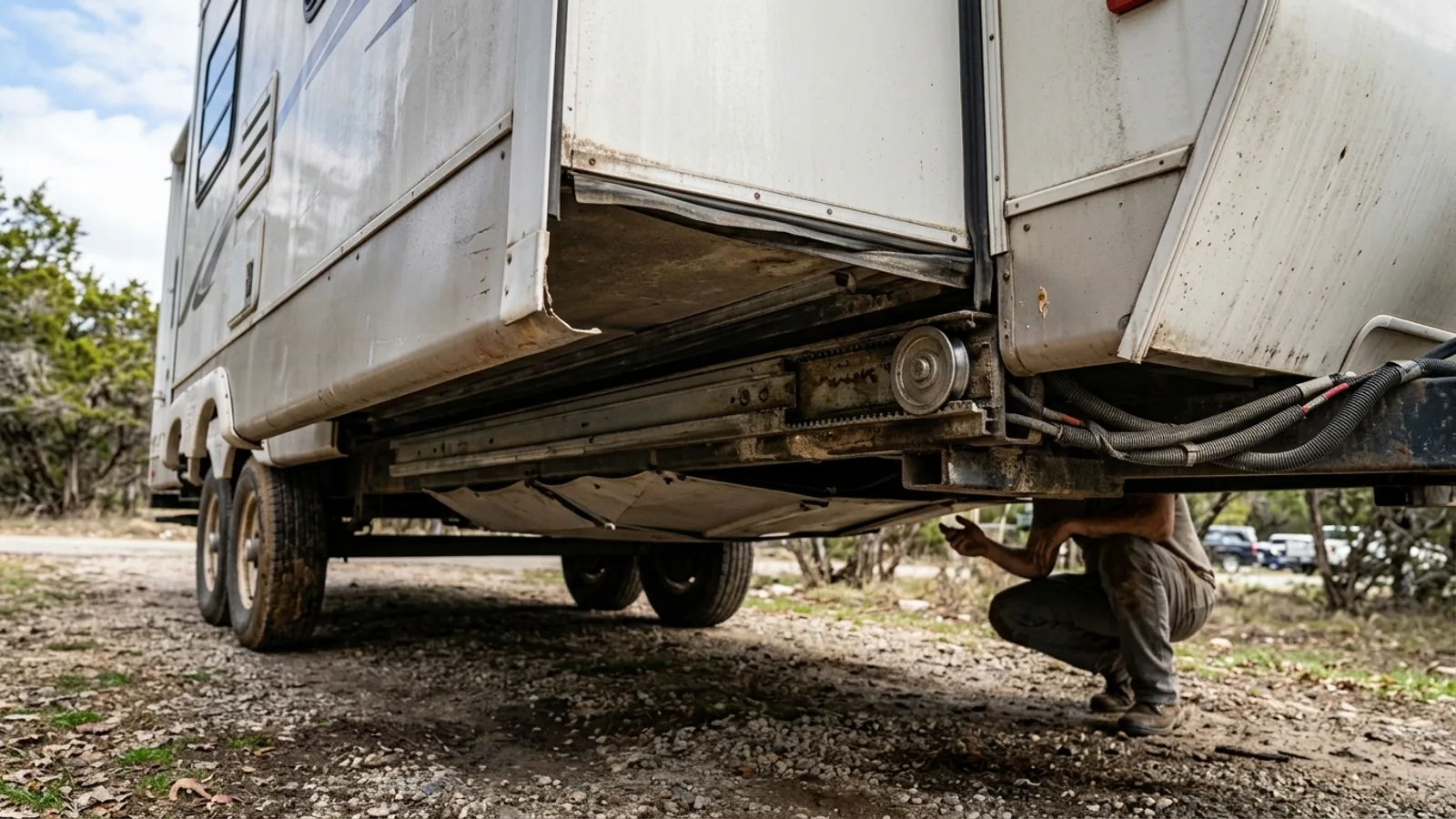
The room itself rides on a drive mechanism mounted underneath or alongside it, which pushes and pulls the room in and out. Seals around the perimeter keep out water, dust, and insects when the slide is extended, and supports underneath help carry the added weight and keep the floor level.
Main Components
- Slide-out room: the moving section itself, built as a self-contained box with its own floor, walls, and often a partial roof.
- Drive mechanism: the motor, gears, cables, or hydraulic components that move the room in and out.
- Seals and wipers: rubber or synthetic gaskets around the opening that block water and air infiltration when the room is extended.
- Controls: a switch or panel inside the RV, usually near the slide, that runs the extend and retract cycle.
- Supports and stabilizers: structural elements that bear weight and reduce flex once the room is out.
- Toppers: optional awnings mounted above the slide opening that shed leaves and rain runoff.
Common Slide Out Mechanisms
Electric (Motor-Driven) Slides
An electric motor turns gears or a screw mechanism that pushes the room in and out. This is the most widely used approach because it is compact, reasonably quiet, and straightforward to operate. Within this category, a few different gear arrangements are used—some rely on a gear moving along a fixed track, others on compact geared units tucked into the wall cavity—but all are ultimately driven by an electric motor.
Hydraulic Slides
A hydraulic pump pressurizes fluid that drives cylinders to extend and retract the room. Hydraulic systems can move heavier slide-out sections with high force and tend to operate slowly and steadily. They're more common on larger or heavier units. Because they involve fluid, pumps, and cylinders, they can have more parts to maintain than a purely electric system.
Cable Slides
A cable-and-pulley system pulls the room in and out along a track. This design is simple and rugged, with fewer parts that can fail, but the cables themselves need periodic inspection since fraying or misalignment can cause binding.
Operating Slide Outs Safely
- Park on level, stable ground before extending. Slides are designed to move on a level chassis; extending on a slope adds strain and can cause uneven wear.
- Check clearance on all sides. Look for trees, posts, picnic tables, or neighboring vehicles before extending, since the room needs a clear path to move fully.
- Use leveling blocks or built-in jacks first. A level RV reduces stress on the mechanism and helps seals close evenly.
- Never extend a slide while the vehicle is moving. Slides are only meant to operate when parked; moving with one extended risks major mechanical and structural damage.
- Account for the shifted weight. An extended slide shifts weight to one side of the RV, which can affect stability, especially in wind.
- Retract fully before towing or driving off. Confirm the room is flush and locked before moving the vehicle.
Maintenance That Prevents Problems
- Inspect mounting hardware periodically. Look for loose fasteners or visible wear where the mechanism attaches to the frame.
- Check seals and gaskets regularly. Cracked or brittle seals let in water and cold air; catching this early prevents interior damage.
- Condition rubber seals. A seal conditioner made for RV use keeps gaskets flexible and slows cracking from sun and cold exposure.
- Keep tracks and cables clean. Dirt and grit accelerate wear on any mechanism with moving metal parts.
- Listen for changes. Grinding, unusual slowness, or uneven movement usually signal a mechanical issue worth addressing before it worsens.
Troubleshooting Basics
If a slide behaves oddly, start with the owner's manual for your specific mechanism, since remedies differ between electric, hydraulic, and cable systems. Many manufacturers also publish troubleshooting guidance for their own components. If the issue involves the drive motor, hydraulic pump, or structural supports, it's generally safer to have a qualified RV technician diagnose it rather than attempting repairs without the right tools or replacement parts.
Protecting Cables and Lines
On cable-driven slides, and on any slide where cables or hoses cross near the moving mechanism, keeping those lines properly routed matters. Pinched or misaligned cables can bind, fray, or interfere with electrical and water lines running through the slide-out wall. Cable guides or channels keep these lines on a fixed path so they aren't crushed as the room moves. Routine inspection for fraying, kinks, or loose fittings catches problems while they're still minor and cheap to fix.