RV Driver's License Requirements: What You Can Drive on a Regular License
Most people who rent or buy a motorhome never need anything beyond the driver's license they already carry. But the rules aren't identical everywhere, and the deciding factors are usually weight, vehicle class, and whether a trailer is involved. Here's how to think through it before you get behind the wheel.
The General Rule: Weight Matters More Than Size
Licensing agencies typically care less about how long or tall a vehicle looks and more about its weight rating. Many states set a threshold somewhere around 26,000 pounds gross vehicle weight (or gross combination weight, if you're towing). Vehicles under that threshold, driven for personal, non-commercial use, are usually fine on a standard license.
Once a motorhome or a motorhome-plus-trailer combination crosses into heavier territory, a state may require an upgraded license class or a special non-commercial endorsement. The exact cutoff, the terminology used, and whether an endorsement or a full commercial license is required all vary by state.
Because these rules differ and change at the state level, the only reliable way to confirm what applies to a specific vehicle is to check directly with the motor vehicle agency in your home state before you drive.
Class A Motorhomes
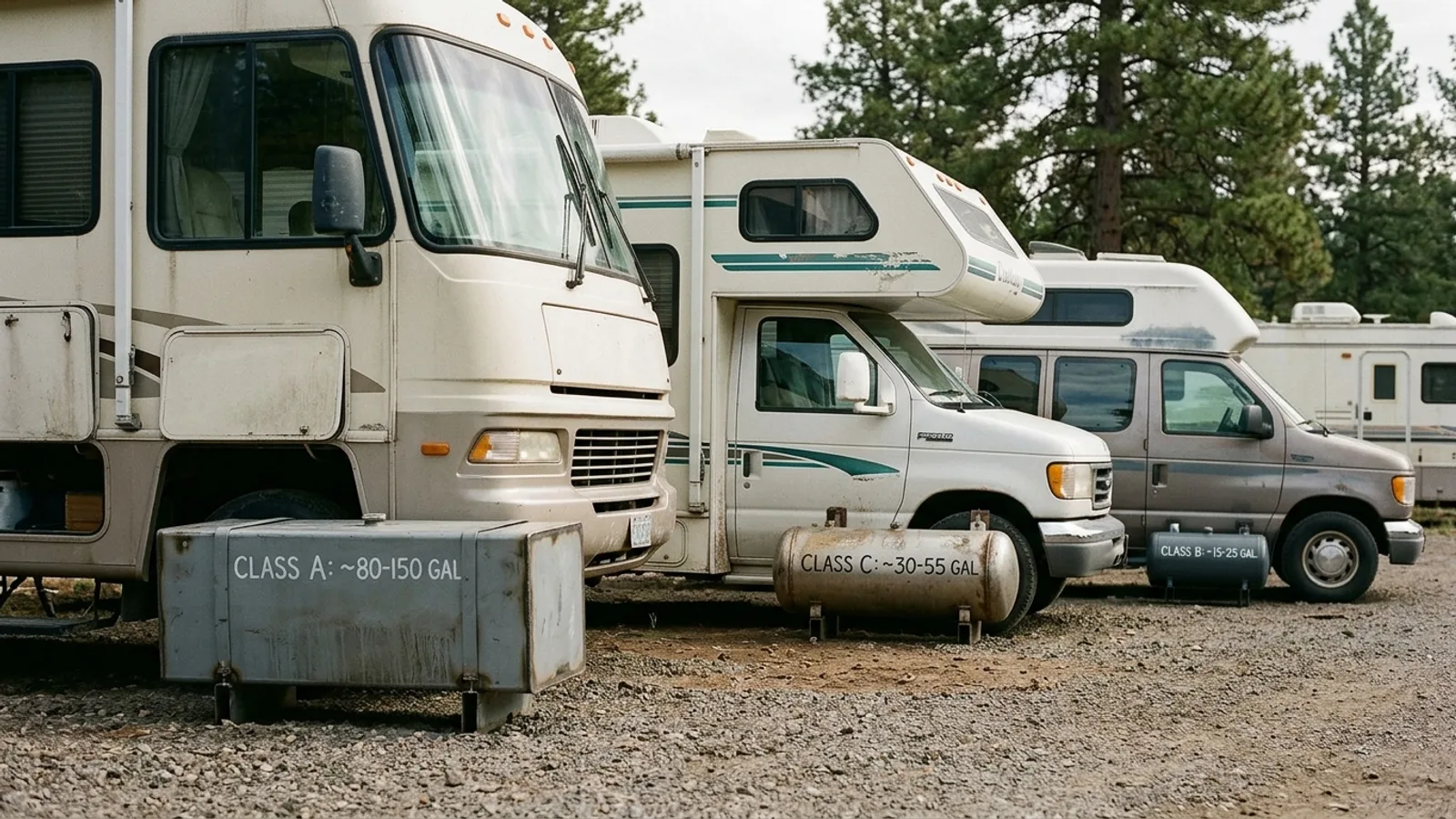
Class A motorhomes are the large, bus-shaped rigs built on a heavy commercial-style chassis. They are the most likely of the three classes to approach or exceed weight thresholds that trigger extra licensing requirements, simply because many of them are built heavy enough to need it.
Whether a specific Class A rig requires anything beyond a standard license depends on its actual weight rating and the state's rules. Lighter Class A models may fall under the standard-license threshold; heavier ones may not. Check the vehicle's weight rating (found on the manufacturer's data plate) against your state's limit rather than assuming based on appearance alone.
Class B Motorhomes
Class B motorhomes are camper vans built on a standard van chassis. They are generally the lightest of the three motorhome classes and almost always fall well under the weight thresholds that require special licensing. A standard license is typically sufficient.
Their smaller footprint also makes them easier to park, maneuver in tight campground loops, and drive on narrow roads, which is part of why many first-time RV drivers gravitate toward them. That ease of handling is a separate issue from licensing, but it's worth factoring in if you're choosing between motorhome types.
Class C Motorhomes
Class C motorhomes are the ones with the distinctive over-cab sleeping area, built on a truck or van chassis. They sit between Class A and Class B in size and weight, and most fall under standard weight thresholds, meaning a regular license usually covers them.
As with the other classes, actual weight is what determines this, not the class label itself. A larger Class C model with extra slide-outs or a heavier chassis could push closer to a state's threshold, so it's worth checking the weight rating rather than assuming.
Towing a Trailer Behind an RV
If you're towing a trailer, travel trailer, or fifth wheel behind a motorhome or truck, the combined weight of the tow vehicle and trailer is usually what matters, not just the trailer alone. Some states apply different rules to fifth-wheel trailers specifically, since they distribute weight differently and are hitched over the bed of a truck rather than behind it. Before towing, check your state's combined weight threshold and any trailer-specific rules. It's also worth checking whether your driver's license needs an added endorsement for towing, since some states handle this separately from the base license class.
How to Confirm What Applies to You
- Find the gross vehicle weight rating (GVWR) on the manufacturer's data plate, usually located near the driver's door.
- If towing, add the GVWR of the tow vehicle and the trailer to get the combined weight.
- Contact your state's motor vehicle agency and ask specifically about non-commercial licensing thresholds for recreational vehicles.
- If you'll be crossing state lines regularly, confirm that your home state's license is recognized the way you expect; reciprocity rules can vary.
- Recheck before upgrading to a larger or heavier RV, since crossing a weight threshold can change what license you need even if your previous rig didn't require anything special.
Beyond Licensing: Practical Considerations
Even when a special license isn't legally required, driving a large motorhome is a different experience than driving a car. Stopping distances are longer, blind spots are bigger, and turning radius is wider. Many new RV drivers benefit from practicing in an empty parking lot, taking it slow on the first few trips, and researching routes in advance to avoid low clearances, tight mountain switchbacks, or roads with weight restrictions.
If you're renting rather than buying, the rental company can usually tell you upfront whether the specific unit you're booking requires anything beyond a standard license.