How to Choose the Right Size Generator for Your RV
Picking a generator for your RV comes down to one question: how much power do your appliances actually need, both to start up and to keep running? Once you know that number, choosing between generator types and sizes becomes much simpler.
Portable vs. Built-In Generators
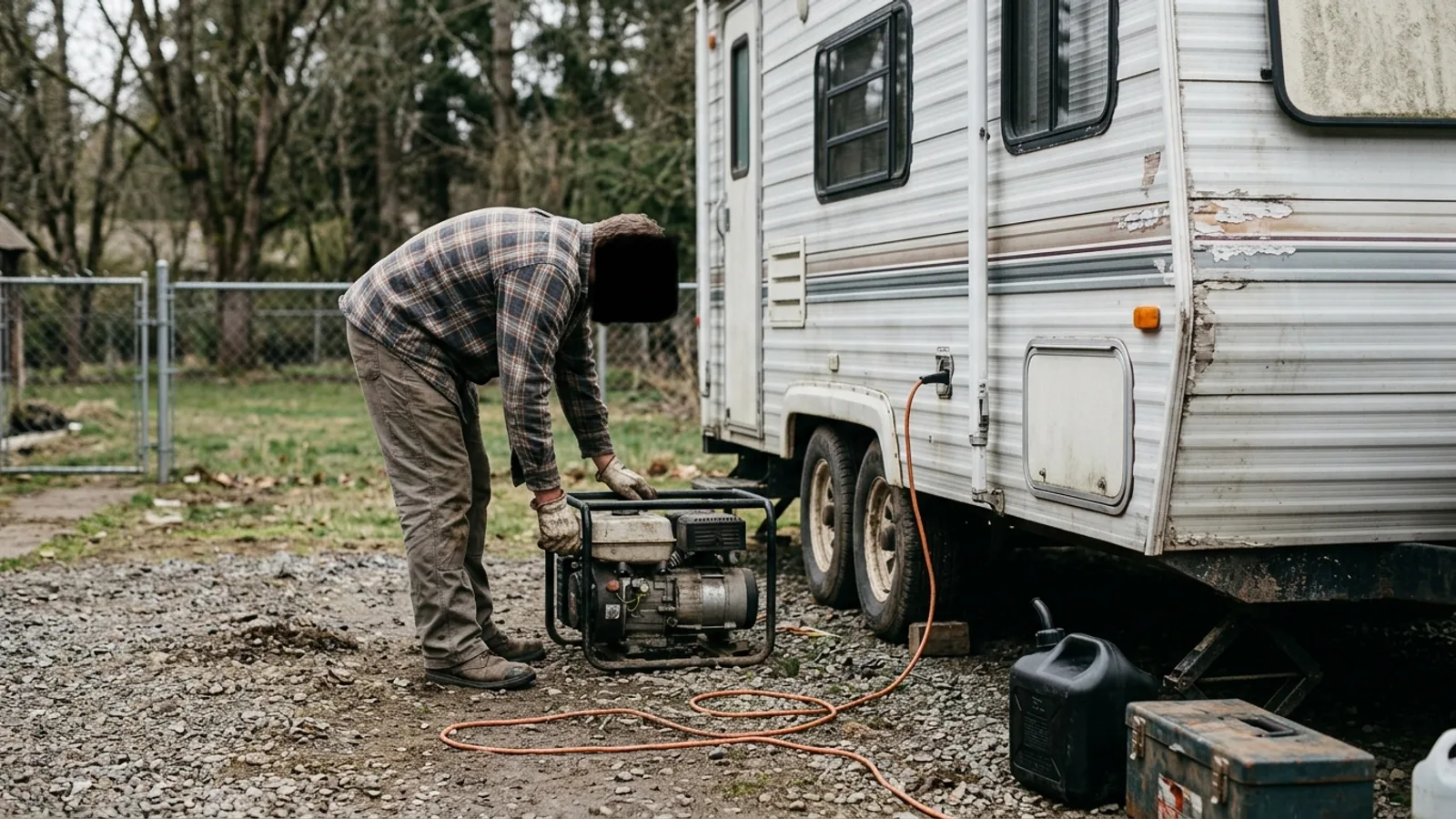
Portable generators sit outside the RV and connect through a cord or transfer switch. They're easier to service, can be moved away from the living area to cut down on noise, and can be upgraded or replaced independently of the RV. The tradeoff is storage space, the hassle of setup at each campsite, and the need to manage fuel separately.
Built-in (or onboard) generators are mounted permanently, usually in a compartment under or behind the RV, and are wired directly into the electrical system. They start with the flip of a switch, often draw from the same fuel tank as the vehicle, and are common on larger motorhomes and travel trailers. They cost more to install or repair and are harder to upgrade later, since replacing one is a bigger job than swapping a portable unit.
Neither option is universally better. Weekend campers who want flexibility often prefer portable units; those who camp frequently in a larger rig tend to prefer the convenience of a built-in system.
Calculating Your Power Needs
Every electrical device has two power ratings that matter: running watts (what it needs to operate continuously) and starting watts (the brief surge needed to switch on, which is often much higher). This gap matters most for anything with a compressor or motor — air conditioners, refrigerators, microwaves, and power tools all draw a surge at startup that can be two to three times their running wattage.
To estimate your needs:
- List every appliance and device you might run at the same time.
- Find the wattage rating for each — usually printed on a label on the appliance itself, or in its manual.
- Note which items have motors or compressors, since these will need extra starting power.
- Add up the running watts for everything you'd realistically use simultaneously.
- Add the highest single starting-watt figure on top of that running total — this accounts for the moment one more appliance kicks on while others are already running.
This total is a reasonable working estimate for your minimum generator capacity. Building in some headroom above this number is wise, since running a generator at its absolute maximum for long stretches shortens its lifespan and leaves no margin if you add a device later.
How Camping Style Affects Your Needs
If you camp mostly in campgrounds with electrical hookups, your generator is a backup for outages or for dry camping occasionally — you may be able to size it more conservatively. If you camp off-grid regularly, your generator (or a generator paired with solar and battery storage) needs to cover everything: refrigeration, climate control, cooking, and charging, often for consecutive days. Boondockers generally benefit from sizing up and prioritizing fuel efficiency and quiet operation, since the generator will run longer and more often.
Matching Generator Size to RV Type
Smaller trailers and campers running a handful of essentials — lights, a fan, device charging, maybe a small refrigerator — can often get by with a modest portable generator. Once air conditioning or larger appliances enter the picture, power needs rise substantially, since AC units alone can require a large share of a mid-sized generator's total output just to start.
Larger motorhomes with multiple air conditioning units, residential refrigerators, and other high-draw appliances typically need the higher capacity that built-in systems provide, since running several large appliances at once quickly adds up.
Your RV's electrical service rating (commonly 30-amp or 50-amp) is also a practical ceiling: an undersized generator won't be able to deliver what your system is wired to handle, while a generator that's needlessly oversized adds weight, fuel consumption, and expense without benefit. Matching generator output to both your appliance load and your RV's electrical service gives the most reliable result.
Fuel Sources: Gas, Propane, and Solar
Gas and diesel generators are widely available and generally offer strong power-to-size ratios, but require carrying and periodically refilling fuel, and produce exhaust and engine noise.
Propane generators burn cleaner than gasoline, store well over long periods without degrading, and are convenient if your RV already uses propane for cooking or heat. They're still combustion engines, so expect similar noise levels and the need for adequate ventilation.
Solar generators — a battery bank charged by solar panels — run silently and produce no exhaust, making them well suited to quiet campgrounds and places with generator curfews or restrictions. Their output depends on sunlight availability and panel size, so they suit lighter loads (lighting, device charging, small appliances) better than heavy continuous draws like air conditioning, unless paired with a substantial battery bank and ample panel capacity.
General Safety Notes
Never run a fuel-burning generator inside an enclosed space, including a garage or RV interior, due to carbon monoxide risk. Keep exhaust pointed away from windows and vents. Follow the manufacturer's guidance for clearance, grounding, and fuel storage, and check whether your campground or park has specific rules about generator use, including quiet hours.