Keeping Mice Out of Your RV: A Practical Guide
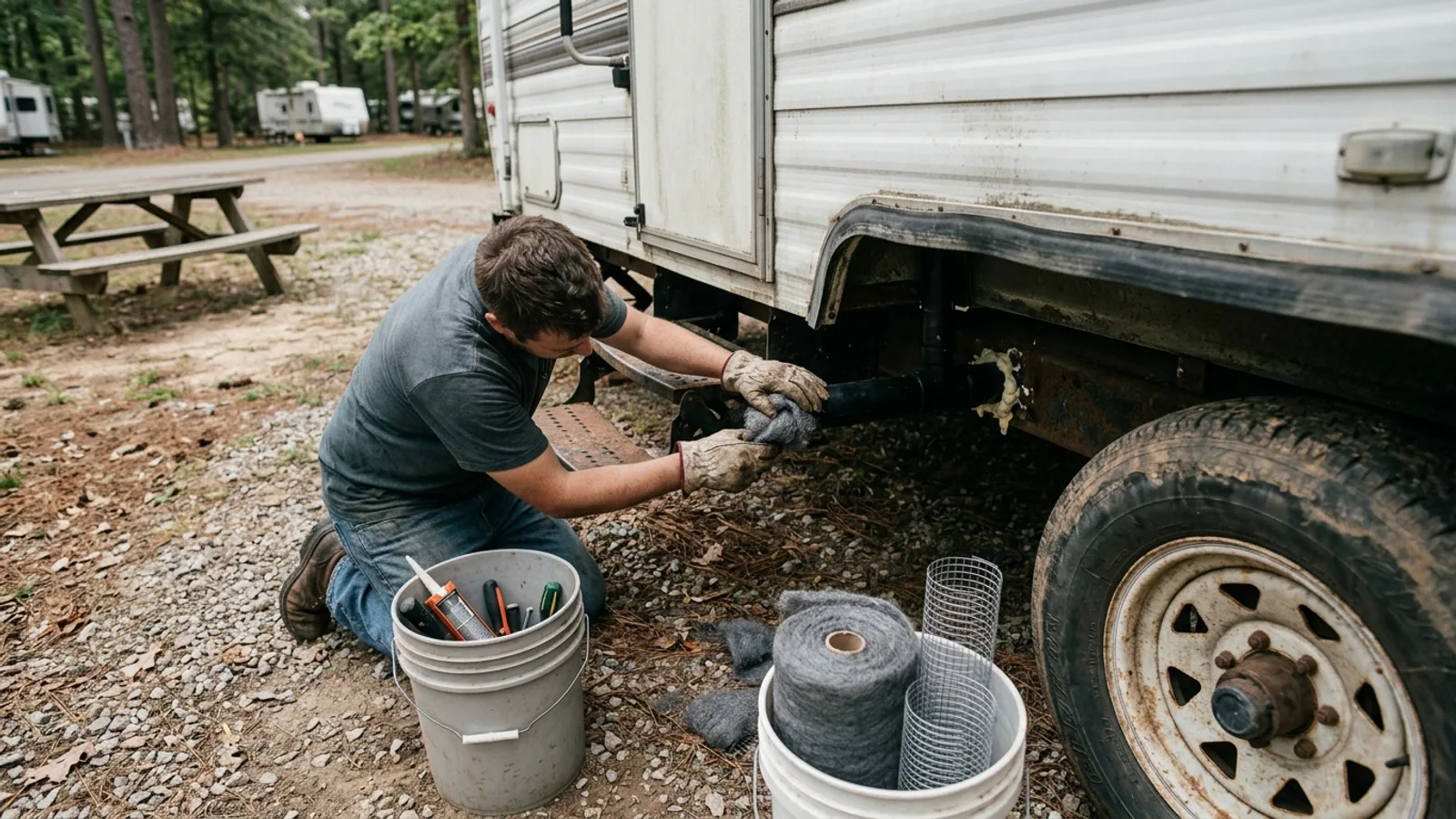
Mice are one of the most common problems for RV owners, especially during storage. A mouse can squeeze through a gap the size of a dime, and once inside, it can chew through wiring, insulation, upholstery, and stored food. Dealing with an infestation after the fact is far harder than preventing one, so most of the effective strategy happens before mice ever get close to your rig.
Why RVs Attract Mice
RVs offer everything a mouse wants: shelter from weather and predators, warmth, quiet, and often lingering food smells from past trips. Storage lots and campgrounds near fields, woods, or tall grass are especially high-risk. An RV parked for weeks or months without activity is an easy target because there's no human presence to discourage nesting.
Seal Entry Points First
No repellent works as well as physical exclusion. Walk the exterior of your RV and check for gaps around:
- Pipes, cables, and wiring where they pass through the floor or walls
- Slide-out mechanisms and their seals
- Door and window seals, especially at corners
- Vents, including furnace, water heater, and roof vents
- The area around the axle and undercarriage where lines enter the cabin
Steel wool, copper mesh, or metal flashing are effective for sealing small gaps because mice generally can't chew through them. Foam sealant alone is not reliable, since mice can gnaw through it, but combining foam with metal mesh gives a durable barrier. Check these areas seasonally, since sealant can degrade or shift as the RV flexes on the road.
Remove What Attracts Them
Before storing your RV, clear out all food, including pantry items, pet food, and anything in sealed containers that still carries a scent. Wipe down counters and crumbs from floors and under cushions. Empty the trash completely. Nesting material matters too: remove paper products, cardboard, and soft fabric items that aren't needed while the RV sits idle, since mice use these to build nests.
Deterrents: What They Can and Can't Do
Scent-based deterrents, such as peppermint oil sachets or sprays, can make an RV less appealing to mice by masking food odors and irritating their sense of smell. They are not a substitute for sealing entry points, and their effectiveness fades over time as the scent weakens, especially in areas exposed to airflow or temperature swings. If you use them, refresh them regularly and concentrate them near likely entry points rather than spreading them thin throughout the vehicle.
Ultrasonic devices claim to repel rodents with high-frequency sound. Results are inconsistent: sound doesn't travel around corners or through walls well, so a single device is unlikely to protect an entire RV, and mice can sometimes acclimate to a constant frequency over time. If you try one, treat it as a supplement to sealing and sanitation, not a primary defense.
Traps remain the most reliable way to deal with mice that have already gotten inside. Snap traps and enclosed catch-and-release traps are both effective when placed along walls and in corners where mice tend to travel, rather than out in open floor space.
Storage Habits That Help
If your RV will sit unused for an extended period, consider setting traps as a preventive measure rather than waiting for signs of activity. Leaving interior lights on a timer can make the space feel less secluded, though this is a minor deterrent at best. Elevating the RV on blocks or parking away from tall grass and brush reduces easy access. Periodic visits to check on the vehicle let you catch a problem early, before mice have time to nest and multiply.
Signs of a Mouse Problem
Common indicators include droppings (small, dark, and pellet-shaped), gnaw marks on wiring or wood trim, shredded insulation or fabric used for nesting, and an ammonia-like odor in enclosed spaces such as cabinets or under seating. If you find these signs, inspect thoroughly before your next trip, since chewed wiring can create both electrical and fire hazards.
When You Find an Infestation
Ventilate the space before cleaning, since dried rodent droppings and nesting material can carry airborne particles that are best not inhaled directly. Use gloves and a disinfectant cleaner rather than sweeping or vacuuming dry debris. Remove and replace any insulation or material that's been heavily nested in, and inspect wiring carefully for damage before your next use of the RV.
Building a Long-Term Routine
The most durable solution is a combination approach: seal entry points, remove food and nesting material before storage, use scent deterrents as a light extra layer, and check the RV periodically even when it's not in use. No single product solves the problem on its own, but consistent habits make an RV a much less attractive target for rodents over time.