Why Your RV Carbon Monoxide Detector Is Beeping (And What to Do About It)
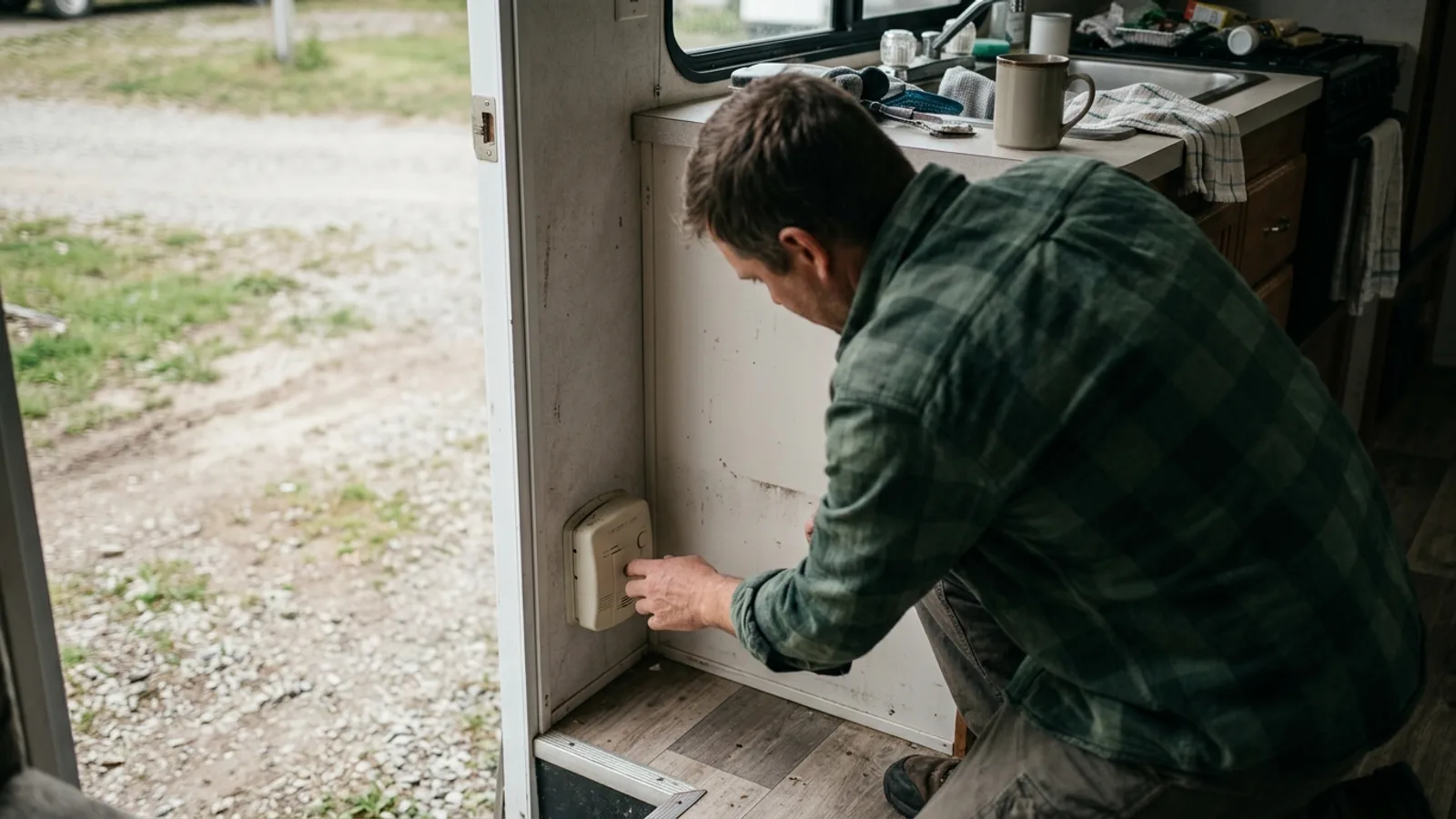
What Carbon Monoxide Is and Why RVs Are Vulnerable
Carbon monoxide is a colorless, odorless gas produced whenever fuel burns incompletely. In an RV, that means furnaces, water heaters, stoves, generators, and even a vehicle engine running nearby can all be sources. Because RVs are small, well-sealed spaces, carbon monoxide can build up quickly and reach dangerous concentrations faster than it would in a house.
Breathing it in interferes with your blood's ability to carry oxygen. At low levels it can cause headache, dizziness, and nausea; at high levels it can be fatal. Because you cannot see or smell it, a working detector is the only reliable way to know it's present.
How a Detector Alerts You
A carbon monoxide detector uses a sensor that reacts to rising gas concentration in the air. Once it crosses a threshold, the unit sounds an alarm loud enough to be heard throughout the RV, including while you're asleep. Most units also distinguish between an actual gas alarm, a low-battery warning, and an end-of-life signal by using different beep patterns — which is why it's worth learning what your specific detector's patterns mean.
Reading the Beep Pattern
Manufacturers vary in the exact pattern they use, so the details below are general guidance, not a universal standard. Always check the label on your specific detector or its manual for the exact meaning of its signals.
- A repeating pattern of several beeps followed by a pause commonly signals an actual carbon monoxide alarm. Treat this as an emergency: get everyone outside into fresh air immediately, shut off gas appliances if you can do so safely on your way out, and do not go back inside until the space has been ventilated and you're confident the air is safe.
- A single, occasional chirp (often once a minute) usually indicates a low battery. Replace the battery as soon as you notice this.
- A different, distinct chirp pattern can indicate the unit has reached the end of its useful life and needs to be replaced entirely, even if the battery is fresh.
If you're ever unsure whether a beep is a real gas alarm or a maintenance signal, treat it as real until proven otherwise. Evacuate first, investigate second.
Where Detectors Should Be Installed
Carbon monoxide is roughly the same density as air, so detectors don't need to be mounted high or low for gas-sensing purposes — but manufacturers generally recommend placement away from direct drafts, vents, and cooking appliances to avoid false readings, and close to sleeping areas so the alarm will wake occupants. If your RV has multiple separate sleeping areas or levels, a detector in each area is a good practice. Follow the placement instructions that came with your specific unit, since sensor technology and recommended mounting varies by model.
Routine Testing and Maintenance
Test your detector regularly using its built-in test button — this checks that the alarm circuit and sound work, though it doesn't verify the gas sensor itself is still accurate. Good habits include testing:
- Once a month during regular use
- Before the start of any trip
- After replacing batteries
- After any work done on gas appliances, generators, or the RV's fuel systems
Replace batteries on the schedule your manufacturer recommends, and don't disable or remove a detector's battery to stop nuisance beeping — troubleshoot the cause instead.
Detector Lifespan
Carbon monoxide sensors degrade with age and become less reliable over time, even if the unit still powers on and passes a test-button check. Manufacturers stamp an expiration or replacement date on the unit or in its documentation. When a detector reaches that date, replace it — testing alone won't tell you if the sensor has lost sensitivity.
Choosing a Replacement Detector
When it's time to replace a detector, keep a few things in mind:
- Match it to your RV's setup. Some detectors are designed specifically for RVs and account for the vibration, temperature swings, and altitude changes that travel trailers and motorhomes experience, which can affect sensor performance in ways a household unit isn't built for.
- Decide if you want a combination unit. Detectors are available that combine carbon monoxide sensing with propane/LPG detection or smoke detection. A combined unit can simplify your safety setup, but make sure each function meets the certification standard for that specific hazard.
- Look for independent safety certification. A recognized testing and certification mark on the packaging or unit means it has been evaluated against established safety standards for that device type.
- Consider extra features if they matter to you. Digital displays, battery backup, or interconnection between multiple units can add convenience, but the core job of any detector is sensing gas reliably and alarming loudly — prioritize that first.
Staying Safe on the Road
A carbon monoxide detector only protects you if it's properly placed, tested regularly, and replaced before its sensor ages out. Pair it with good ventilation habits — never run a generator or gas appliance in an enclosed space, and never idle a vehicle engine near closed windows or vents — and treat every alarm as worth taking seriously until you've confirmed otherwise.