Can You Replace an RV Toilet with a Regular Household Toilet?
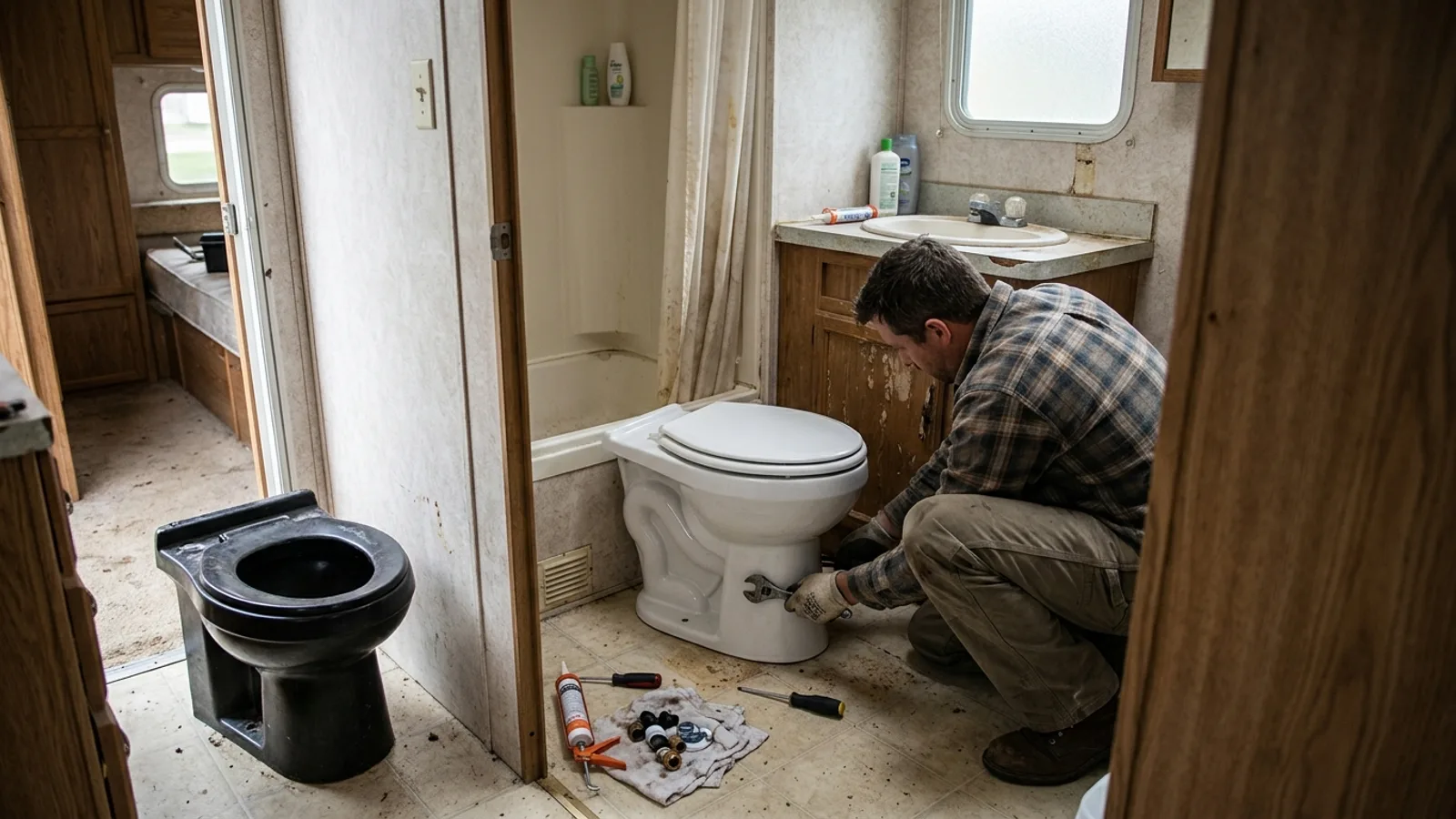
Swapping an RV toilet for a standard household model sounds like an easy upgrade, especially if you're tired of the flushing feel or the smell of a small RV bathroom. In practice, the swap runs into several physical limits that are worth understanding before you start pulling bolts.
Why a Household Toilet Usually Doesn't Fit the Job
Household toilets are built for a house: a solid foundation, an unlimited water supply, and a sewer line that carries waste away immediately. An RV has none of those things.
Weight is the first issue. A ceramic household toilet is much heavier than an RV toilet, and that weight sits high and off to one side of the vehicle. RVs are sensitive to how weight is distributed, and a heavy, poorly placed fixture can affect handling and put uneven stress on the floor structure over time.
Water use is the second issue. Household toilets are designed around a flush volume that assumes an endless supply refilled by a municipal line. RVs carry a fixed, limited amount of fresh water and have an equally limited holding tank for waste. A fixture that uses several times more water per flush than an RV toilet will drain your fresh water and fill your black tank far faster, which shortens how long you can go between refills and dump station visits.
Odor control is the third issue. RV toilets and their connected plumbing are built with seals, vents, and tank designs meant to keep sewer gas out of a small, enclosed living space. A household toilet's trap and seal assumptions are based on a home's plumbing and ventilation, not a tank sitting a few feet below the floor of a moving vehicle.
Finally, the base and mounting hardware differ. Household toilets bolt to a flat floor flange connected to rigid home plumbing. RV toilets bolt to a flange connected to a flexible waste line and a holding tank, and the whole assembly needs to tolerate vibration and movement from driving. Fitting a household toilet onto that setup usually means rebuilding part of the plumbing rather than doing a simple swap.
What RV Toilets Actually Offer
Instead of asking how to force in a household fixture, it helps to know what the RV-specific options already solve for.
Gravity Flush Toilets
This is the most common style in RVs and the closest in feel to a household toilet. A foot pedal or handle opens a valve at the base, and gravity carries waste down into the black tank below. It uses a modest amount of water per flush and works well as long as the RV is reasonably level.
Cassette Toilets
Common in smaller RVs and van conversions, these have a removable waste cassette accessed from an exterior panel instead of a large built-in tank. You empty the cassette at a dump station or suitable disposal point without needing to position the entire RV over a sewer connection, which is useful when tank space is tight.
Composting Toilets
These separate liquid and solid waste and rely on ventilation and a bulking material to manage solids rather than flushing with water. They use very little or no water, which makes them popular for boondocking and off-grid travel, but they require more hands-on maintenance and a place to dispose of the composted material.
Portable Toilets
These are freestanding, self-contained units with their own small waste and flush-water tanks. They're not plumbed into the RV at all, which makes them easy to move or store, and useful as a backup or for very short trips, though their tank capacity is limited.
Choosing Between These Options
If your goal is a more familiar flushing feel, a gravity flush toilet already gives you that without the weight and plumbing problems of a household fixture. If space or tank capacity is the real complaint, a cassette toilet or composting toilet addresses that more directly than swapping fixtures would. If odor is the main issue, check the seals, vent line, and tank sanitation routine on your current setup before assuming the toilet itself is the problem — poor odor control is often a maintenance or ventilation issue rather than a design flaw in the toilet.
The Bottom Line
It's technically possible to force a household toilet into an RV with enough plumbing modification, but the tradeoffs in weight, water use, and odor control make it a poor match for how RV systems are built. Choosing among the RV-specific toilet types and matching one to your water capacity, tank size, and travel style will almost always solve the underlying problem better than replacing the toilet with a household model.