How to Reset an RV Air Conditioner (Dometic and Similar Systems)
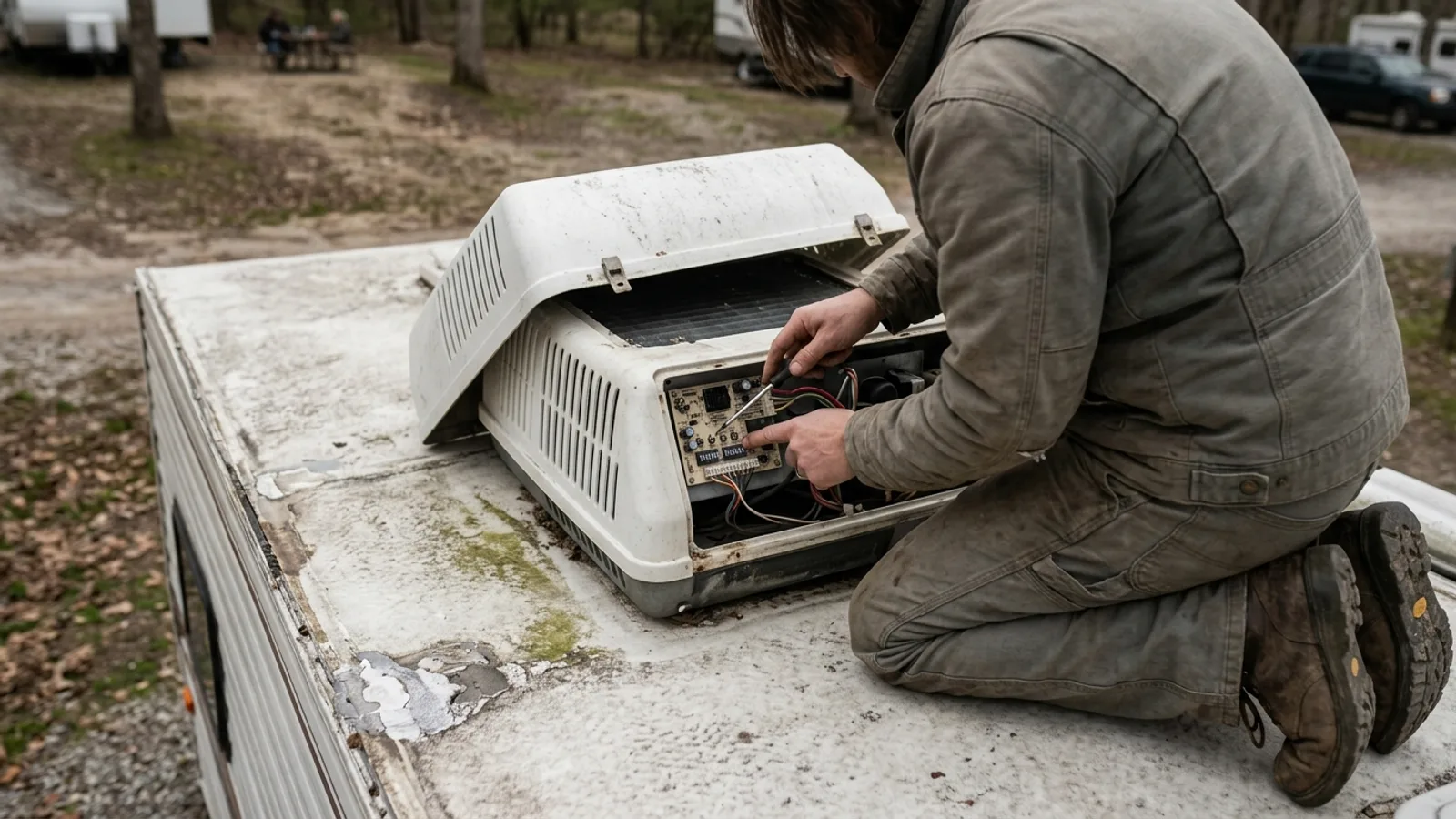
Before You Reset Anything
Most RV air conditioner problems aren't actually failures — they're the unit protecting itself or getting confused by a power blip. A reset clears that confusion. Before you touch any buttons, rule out the simple stuff:
- Confirm the RV is actually getting shore power, generator power, or has enough battery charge to run the AC. Many units won't start or will shut off mid-cycle on low voltage.
- Check your breaker panel and any GFCI outlets tied to the air conditioner circuit. A tripped breaker looks identical to a "broken" AC unit.
- Give the unit a minute — rooftop compressors often have a built-in delay before they'll restart after being turned off, to protect the compressor. What feels like a malfunction is sometimes just that delay.
General Reset Steps
The exact button sequence varies by brand and model, but the underlying process is the same across most RV air conditioners:
- Turn the unit off completely, using both the thermostat and the wall switch or breaker if your setup has one.
- Cut power at the source — unplug from shore power, or switch off the breaker feeding the AC circuit.
- Wait at least a full minute. This lets capacitors discharge and the control board fully power down.
- Restore power and turn the unit back on.
- Give it a few minutes to run through its startup sequence before judging whether the fix worked.
If your unit has a dedicated reset button on the control board or wall thermostat, holding it for several seconds while powered off (or during power-up, depending on the model) does the same job faster. Check the panel behind the thermostat or the control box on the AC housing itself — this is usually where it's located. Because button combinations differ by model and sometimes by production year, your owner's manual is the only reliable source for the exact sequence; a mismatched sequence usually just does nothing rather than causing harm.
Common Causes of an RV Air Conditioner Not Cooling or Not Starting
Insufficient Power
RV air conditioners are sensitive to voltage. Long extension cords, an undersized generator, or a weak campground pedestal can all cause the compressor to trip out or refuse to start even though the fan runs.
Dirty Filters
A clogged intake filter restricts airflow, which can cause the coil to freeze, the unit to cool poorly, or the system to shut down on a safety sensor. This is the single most preventable cause of poor performance.
Frozen Evaporator Coil
Restricted airflow or running the AC in very cool ambient temperatures can cause ice to form on the coil. Once this happens, turn the unit off and let it fully thaw — running it iced up can damage the compressor.
Thermostat Miscommunication
On units with a separate wall thermostat and rooftop control board, the two can lose sync after a power interruption, leading to a unit that runs but won't respond to temperature changes. This is one of the most common situations a reset actually fixes.
Resetting the Thermostat Specifically
If the rooftop unit runs but the wall thermostat isn't controlling it correctly, try resetting just the thermostat before resetting the whole system:
- Turn off the air conditioner at the thermostat.
- Cut power to the unit at the breaker for a minute or more.
- Restore power and turn the thermostat back on.
- Reset the desired temperature and fan mode from scratch rather than assuming previous settings carried over.
If the thermostat display is blank, unresponsive, or shows an error code, that points toward a wiring or hardware issue rather than something a simple reset will solve.
Preventing Repeat Problems
Clean Filters Regularly
Pull and rinse or vacuum the intake filter on a regular schedule, more often in dusty conditions. Let filters dry completely before reinstalling — moisture trapped against the coil encourages mold.
Protect the Power Supply
Use a properly rated cord and, where possible, a surge or voltage protector on the shore power connection. Inspect the cord periodically for fraying or heat damage, and make sure the connection at the pedestal is fully seated.
Avoid Extreme Setpoints
Trying to force the cabin to a very low temperature on a hot day makes the compressor run longer and harder than necessary, and increases the odds of coil freeze-up. A moderate, steady setpoint is easier on the system.
Give It Occasional Rest
Rooftop units are built to run for extended periods, but shutting the system off periodically — especially during cooler overnight temperatures — reduces overall wear.
When to Call a Professional
A reset and basic filter cleaning solve most everyday issues. It's time to bring in an RV-qualified HVAC technician if:
- The problem returns immediately after a reset, or resets no longer take.
- You hear grinding, buzzing, or unusual noises from the compressor.
- There's visible water leaking into the cabin rather than draining outside.
- The unit trips breakers repeatedly, which can indicate an electrical fault rather than a settings problem.
Refrigerant issues, compressor failures, and internal wiring problems require specialized tools and training — these aren't reset-button fixes, and attempting repairs beyond basic maintenance can void a warranty or create a safety hazard.