How Long Does an RV Generator Last? Runtime, Lifespan, and Maintenance
Built-In vs. Portable Generators
RVs generally rely on one of two generator setups, and the type you have affects both runtime and how you should think about maintenance.
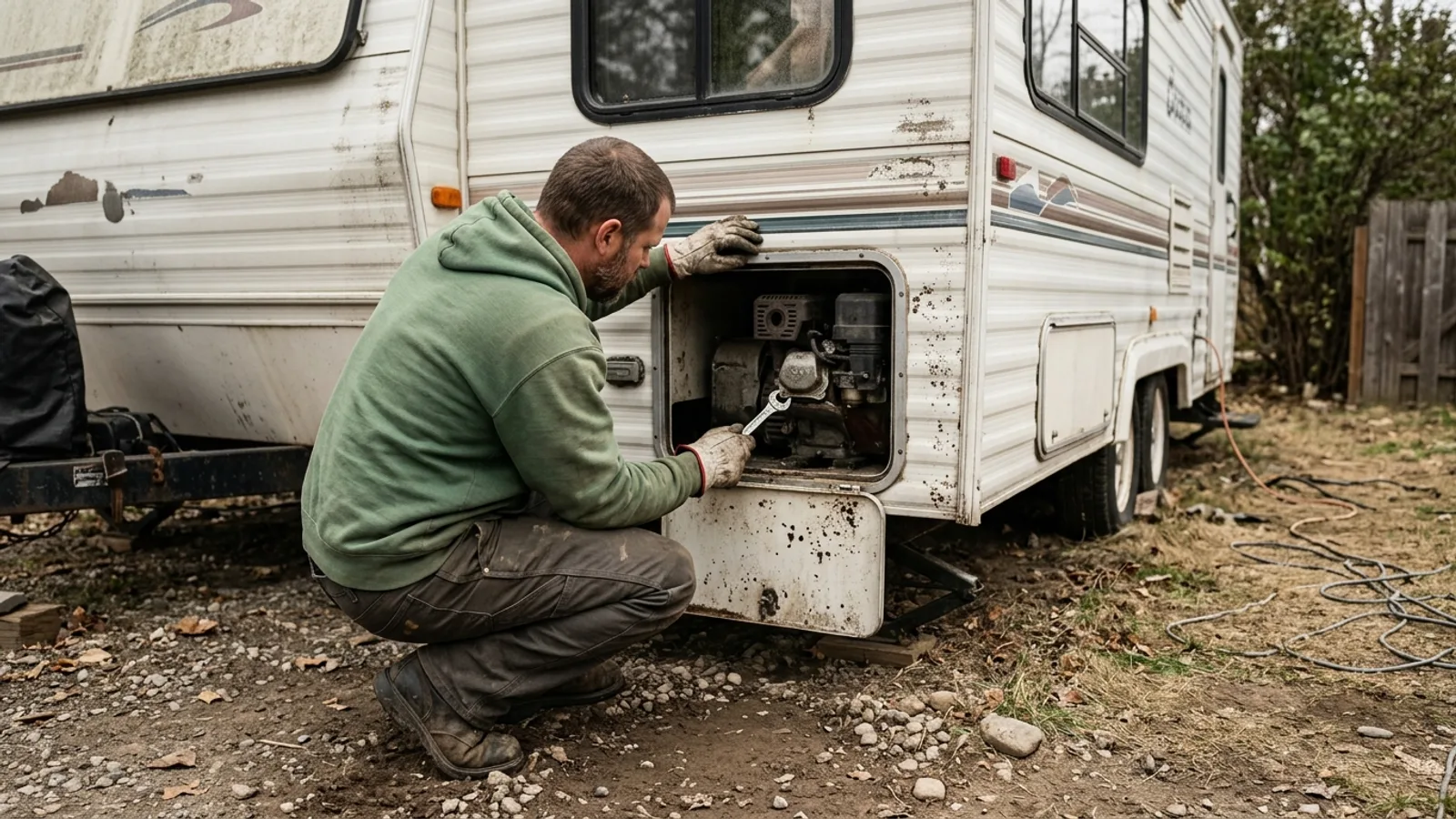
Built-in (onboard) generators are mounted permanently in the RV and typically draw fuel from the vehicle's main fuel tank, often gasoline, diesel, or propane depending on the coach. Because they share a large fuel supply with the vehicle, they can often run for many hours between refueling stops, and they start with the push of a button from an interior panel.
Portable generators sit outside the RV and carry their own fuel supply, usually gasoline or propane in a smaller tank. Runtime depends heavily on the size of that tank and how much load is placed on the unit — a generator running a few lights and charging devices will last much longer than one running an air conditioner. Portable units trade some runtime for flexibility: you can size them to the trip, move them, or use them independently of the RV.
Neither type has a fixed runtime number that applies universally. The real answer is always a function of tank size, load, and fuel efficiency at that load — covered below.
Operating an RV Generator Safely
Generators produce carbon monoxide, an odorless and colorless gas that is dangerous in enclosed spaces. Safe operation is not optional.
- Ventilation: Never run a generator inside an enclosed space, and keep exhaust outlets clear of obstructions, snow, or debris. Working carbon monoxide detectors inside the RV are essential, and it's worth testing them regularly.
- Placement: Portable generators should be run a meaningful distance from doors, windows, and vents so exhaust can't drift back into the RV or a neighboring campsite.
- Fueling: Always shut the generator off and let it cool before refueling. Fuel vapors near a hot engine or any spark source are a fire risk. Use only fuel containers designed for the fuel type in question.
- Loads: Avoid exceeding the generator's rated wattage. Overloading strains the engine and electrical components and can shorten the unit's working life significantly.
When in doubt, the operating manual for your specific generator is the most reliable source for load limits, clearances, and fuel specifications.
What Determines Runtime
Several variables interact to determine how long a generator will run on a tank of fuel or a maintenance cycle:
- Appliance load: Air conditioners, microwaves, and electric water heaters draw far more power than lighting or device charging. Running high-draw appliances simultaneously shortens runtime considerably.
- Fuel capacity and type: A larger tank obviously means longer runtime, but fuel type matters too — different fuels have different energy density and burn characteristics, which affects how efficiently a generator converts fuel into usable power.
- Generator size and efficiency: Larger generators can supply more power but don't necessarily run longer per gallon; efficiency at partial load varies by design.
- House battery capacity: A well-charged battery bank can carry lighter loads without the generator running at all, effectively extending the time between generator use.
- Usage pattern: Running a generator continuously depletes fuel faster than cycling it on and off to recharge batteries and run appliances intermittently.
Extending Generator Runtime
A few habits meaningfully stretch the time between refueling or generator use:
- Choose efficient appliances. Lower-draw appliances reduce the load a generator has to carry, which can extend runtime substantially.
- Insulate well. Heating and cooling are usually the biggest power draws in an RV. Good insulation, window coverings, and sealing drafts reduce how hard climate control has to work.
- Add battery capacity and solar. A larger battery bank paired with solar panels lets you run lights, fans, and electronics without the generator, saving it for higher-draw needs.
- Trim unnecessary draw. Turning off unused lights and devices, and switching to LED lighting, adds up over a multi-day trip.
- Keep up with maintenance. A generator that's poorly maintained burns fuel less efficiently and wears out faster, which shortens both its per-tank runtime and its overall service life.
Choosing a Generator for Your Needs
Match the generator to how you actually camp rather than to the highest wattage rating available.
- Calculate real wattage needs. Add up the running (not just starting) wattage of everything you'd realistically run at once, including a safety margin for appliances with high startup surges like compressors.
- Consider fuel type. Availability and convenience of a fuel type on the road matters as much as tank size.
- Think about noise. Quieter units are more comfortable for you and considerate of neighboring campers, which matters most in shared campgrounds.
- Weigh portable vs. built-in based on trip style. Frequent boondockers often value a built-in unit's convenience and shared fuel supply; occasional campers may prefer a portable unit they can size to the trip or leave at home entirely.
Lifespan and Long-Term Maintenance
A generator's working life is shaped far more by how it's maintained and used than by its age alone. Consistent, moderate use with proper upkeep will outlast sporadic, overloaded, poorly maintained use every time.
Core maintenance habits that protect lifespan:
- Change oil and filters on the schedule specified for your unit, and don't skip it just because usage was light — oil degrades over time, not just with hours run.
- Keep fuel lines, connections, and air intakes clean and inspected for wear or leaks.
- Store the generator properly during off-season periods, including running fuel stabilizer through the system if it will sit unused for an extended time.
- Avoid letting the unit sit with old fuel in the tank for long stretches, since stale fuel causes starting problems and can gum up internal components.
- Run the generator periodically, even when not needed, to keep seals and internal components lubricated and functioning.
Treated well, a generator can provide reliable service for many years of RV travel. The most common causes of early failure are overloading, poor ventilation leading to overheating, and neglected routine maintenance — all of which are within a driver's control.