How Long Do RV Tires Last? A Guide to Lifespan, Age, and Replacement
How Long RV Tires Typically Last
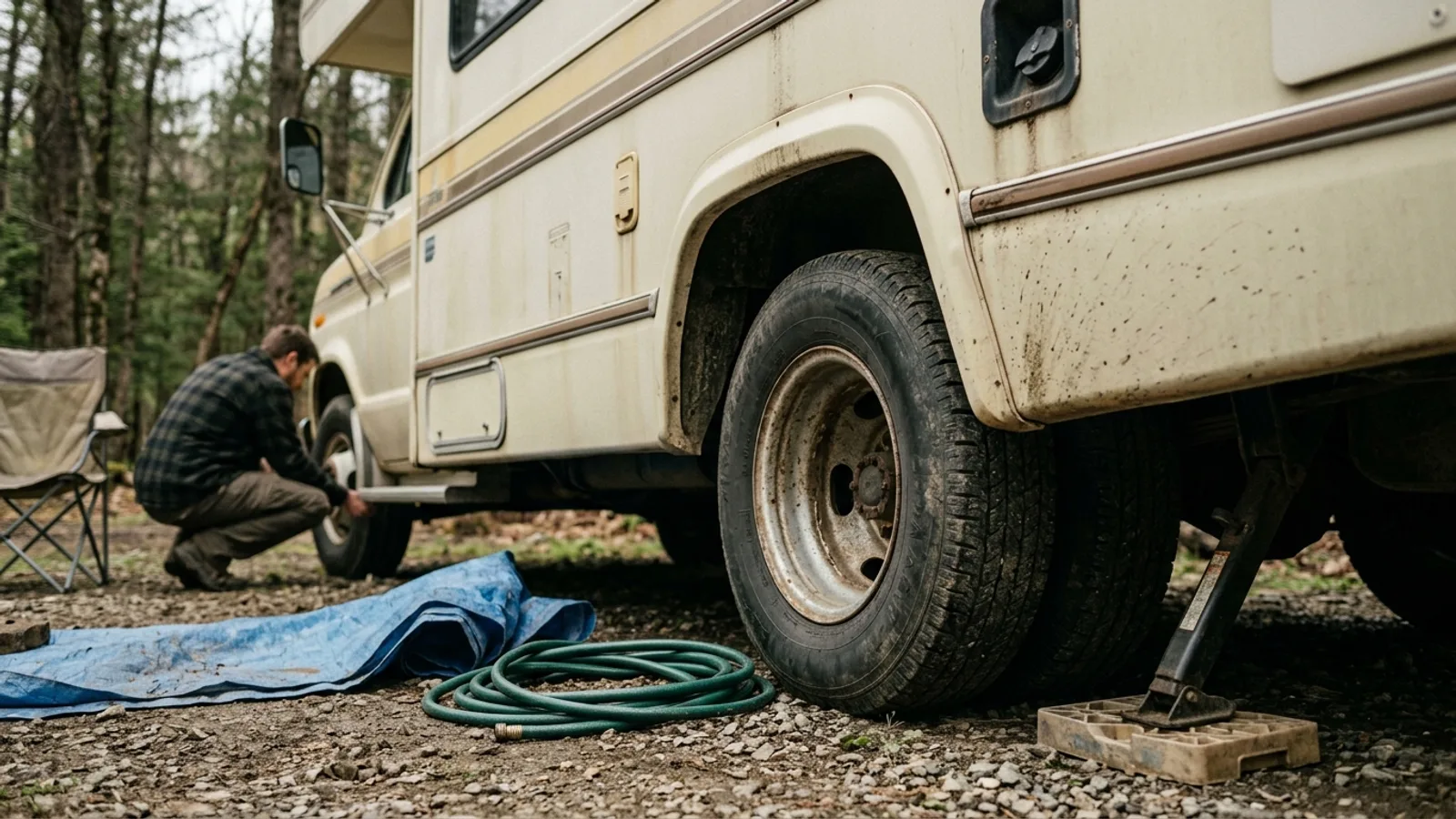
Most RV tires need replacement well before the tread wears out. Unlike a car that's driven daily, an RV often sits for long stretches between trips, and time itself degrades tire rubber even when miles stay low. As a general guideline, many tire manufacturers and RV service technicians recommend planning to replace RV tires within five to seven years of their manufacture date, regardless of how much tread remains.
Mileage, storage conditions, climate, and load all shift that window. An RV stored outdoors in strong sun and heat will age faster than one kept in a covered or indoor space. Tires that carry heavy, consistent loads or spend time on rough or unpaved roads will wear and age faster than those used lightly on smooth highways.
Why Age Matters More Than Tread Depth
Tread depth measures how much rubber is left to grip the road, but it says nothing about the condition of the rubber compound underneath. Over time, heat, sunlight, and oxygen cause the rubber in a tire to harden and lose flexibility, a process that continues whether or not the tire is ever driven on.
As this aging progresses, the tire becomes more prone to cracking, tread separation, and sudden failure — even if the tread looks nearly new. This is why a tire with plenty of tread can still be unsafe, and why checking a tire's age is just as important as checking its wear.
How to Find the Age of Your RV Tires
Every tire sold for road use carries a Department of Transportation (DOT) code molded into the sidewall. The last four digits of this code tell you when the tire was made: the first two digits are the week of the year, and the last two digits are the year.
For example, a code ending in 2219 means the tire was manufactured in the 22nd week of 2019. If you can't find the full code on the outward-facing sidewall, check the inner sidewall — some tires have the complete code only on the side facing the inside of the vehicle.
Get in the habit of checking this code on all your tires, including the spare, since spares age too even if they're never used.
Signs of Tire Deterioration to Watch For
Regular visual inspections can catch problems before they become dangerous. Look for:
- Sidewall or tread cracking: Fine lines or deeper cracks in the rubber signal that the tire is drying out and losing structural integrity.
- Bulges or bubbles: A bulge on the sidewall or tread means an internal weak spot that could fail without warning.
- Uneven or unusual wear: Wear patterns that don't match across the tread can point to alignment, inflation, or suspension issues.
- Discoloration or a brownish, dull surface: This can indicate the rubber has dried out from age and sun exposure.
Any of these signs are reasons to have the tire evaluated by a professional, even if the tread depth still looks adequate.
Risks of Driving on Old or Worn Tires
Aging or damaged tires carry real risks, especially on a vehicle as heavy as an RV. A blowout at highway speed can cause a sudden loss of control, and the added weight of an RV increases stopping distances and the difficulty of recovering from a tire failure. Reduced traction from worn or hardened rubber also makes wet or slippery roads more hazardous. Because RVs are often loaded heavily and driven at sustained highway speeds, tire failures tend to have more serious consequences than on a typical passenger car.
Maintenance Habits That Extend Tire Life
- Check tire pressure before every trip. Underinflated tires flex more than they should, building up heat that accelerates wear and raises blowout risk. Check pressure when tires are cold, and follow the pressure rating listed on the tire or in your owner's manual rather than a number stamped on the RV frame.
- Rotate tires on a regular schedule. Rotation promotes even tread wear, which helps tires last as long as their rubber compound allows. Follow the rotation pattern recommended for your specific axle configuration.
- Avoid overloading. Every tire has a maximum load rating. Exceeding it, even occasionally, stresses the tire structure and shortens its usable life. Weigh your loaded RV periodically to confirm you're within its rated limits.
- Protect tires from prolonged sun exposure. UV light breaks down rubber over time. Tire covers or shaded storage can meaningfully slow this aging process during long periods when the RV isn't in use.
- Clean with mild, water-based products. Harsh solvents and petroleum-based cleaners can strip protective compounds from the rubber and speed up cracking.
- Inspect before every long trip. A quick walk-around check of pressure, tread, and sidewall condition takes only a few minutes and can catch a developing problem early.
Choosing Replacement Tires
When it's time to replace RV tires, match the load range and size to what the manufacturer specifies for your vehicle — this information is typically found on a placard near the driver's seat or in the owner's manual. Consider how you actually use the RV: tires suited for long highway hauls differ from those built for mixed terrain or heavier, more frequent loads. A tire professional experienced with RVs can help you weigh trade-offs between ride comfort, load capacity, and expected lifespan for your specific setup.
When to Involve a Professional
A qualified tire technician can inspect for internal damage, uneven wear patterns, and structural issues that aren't visible from a quick glance. They can also confirm whether a tire showing early signs of aging is still safe for continued use or needs immediate replacement. Building a routine of professional inspections, especially before long trips, adds a layer of safety that a visual check alone can't fully replace.