Understanding Full RV Hookups: What They Are and How to Use Them
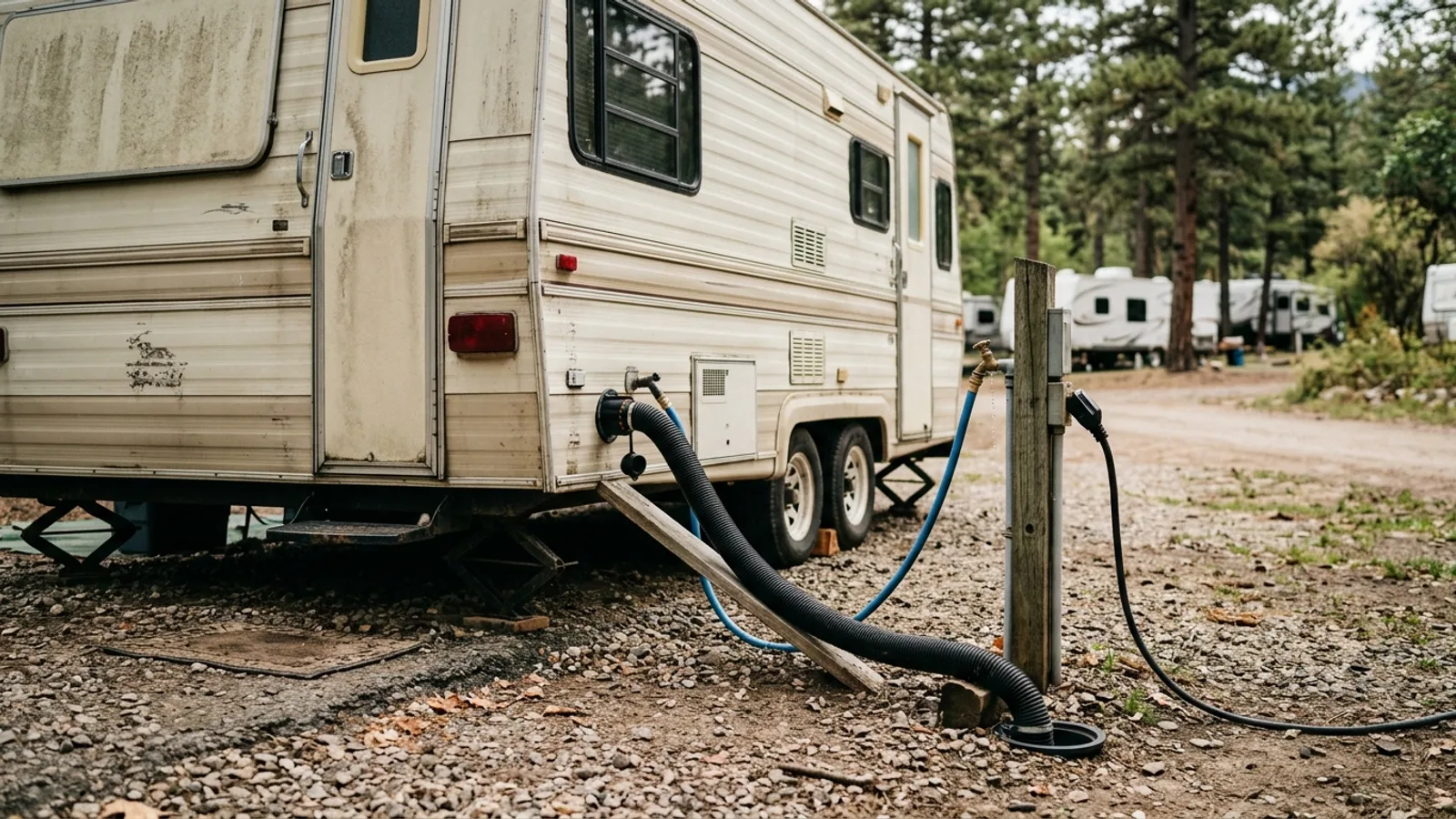
What "Full Hookup" Means
A full hookup campsite gives you three connections at your site: electricity, fresh water, and sewer. This means you can run appliances on shore power, draw clean water directly into your RV, and drain wastewater without needing to move your rig to a dump station.
Not every site, or every campground, offers all three. Many public campgrounds only offer electric, or electric and water, with a shared dump station for sewer. Private campgrounds are more likely to offer full hookups, but even among those, availability varies by site, so it's worth confirming what a specific site includes before you book.
Types of Hookup Sites
Full Hookup
Electric, water, and sewer all at the site. Best for longer stays, larger rigs, or anyone who prefers not to manage tank levels closely.
Partial Hookup
Usually electric and water, sometimes electric and sewer. You'll still need to use a dump station periodically, or rely on your onboard tanks for whichever service isn't provided.
Electric Only or No Hookups
Common in more remote or rustic settings. You run entirely on your RV's own water and waste tanks, and electric-only sites still require you to manage tank levels and conserve water.
Electric Hookups
Campground power pedestals typically offer more than one amperage option. Match the outlet to your RV's electrical system, and use an adapter if your rig's plug doesn't match the pedestal's outlet. Don't force a plug or adapter that doesn't fit the outlet — this is a safety issue, not just a convenience one.
A surge protector or voltage monitor installed between the pedestal and your RV is one of the more useful pieces of equipment you can carry. Campground wiring and voltage quality vary, and this device can shut off power to your rig if it detects a dangerous surge or a wiring fault at the pedestal.
Water Hookups
A water hookup connects your RV directly to the campground's water supply, so you're not relying on your onboard fresh tank. Use a hose rated specifically for drinking water; a standard garden hose can leach chemicals into water that's meant for consumption.
A water pressure regulator installed at the spigot protects your RV's plumbing from unexpectedly high water pressure, which varies a lot between campgrounds and can otherwise damage hoses and fittings over time.
Sewer Hookups
A sewer hookup lets you connect your RV's waste outlet to the campground's sewer line, so you can empty holding tanks without a trip to a dump station. Keep the black tank valve closed except when actively dumping — leaving it open lets liquids drain away while solids accumulate, which can lead to clogs.
Dump the black tank first, then the gray tank; the gray water helps rinse residue out of the hose. Use a dedicated sewer hose, keep the connection secure with the fittings made for that purpose, and support the hose so it slopes downward toward the drain to avoid pooling.
Finding the Right Campground
When researching a park, look for specifics on which hookups are available at individual sites rather than just the campground as a whole — full hookups are sometimes limited to certain loops or site categories. Campground websites, official park listings, and RV-specific trip-planning apps are reliable ways to check this before booking.
Full hookup sites are often the first to book up, especially around holidays and in popular regions during peak travel season. Reserving early gives you more flexibility in choosing a site with the exact hookup configuration you want.
Beyond hookups, consider site length, turning radius, and overhead clearance for your specific rig, along with the general amenities that matter to you, like laundry facilities or cell signal.
Practical Tips for Using Hookups
- Carry a small set of adapters to cover different amperages and plug configurations you might encounter.
- Use a surge protector or voltage monitor every time you connect to power.
- Keep separate, clearly labeled hoses for drinking water and sewer use — never interchange them.
- Check all connections for leaks shortly after hooking up, and periodically during a longer stay.
- Follow the campground's specific rules for hookup use; some restrict when tanks can be dumped or how items can be stored around your site.
Frequently Asked Questions
What are RV hookups?
They're the connections at a campsite — electric, water, and/or sewer — that let your RV draw services directly from the campground instead of relying solely on onboard tanks and batteries.
What counts as a "full" hookup?
All three: electric, water, and sewer, available right at the site.
Do all campgrounds offer full hookups?
No. Availability varies widely, and many public or more rustic campgrounds offer only partial hookups or none at all.
How do I confirm what a site offers before booking?
Check the specific site's listed amenities on the campground's official website or reservation system, rather than relying on general campground descriptions.
What should I bring to use hookups safely?
A surge protector or voltage monitor, a drinking-water-rated hose, a water pressure regulator, a dedicated sewer hose, and a small set of electrical adapters for different amperages.