How to Choose the Right Truck for Towing a Fifth Wheel
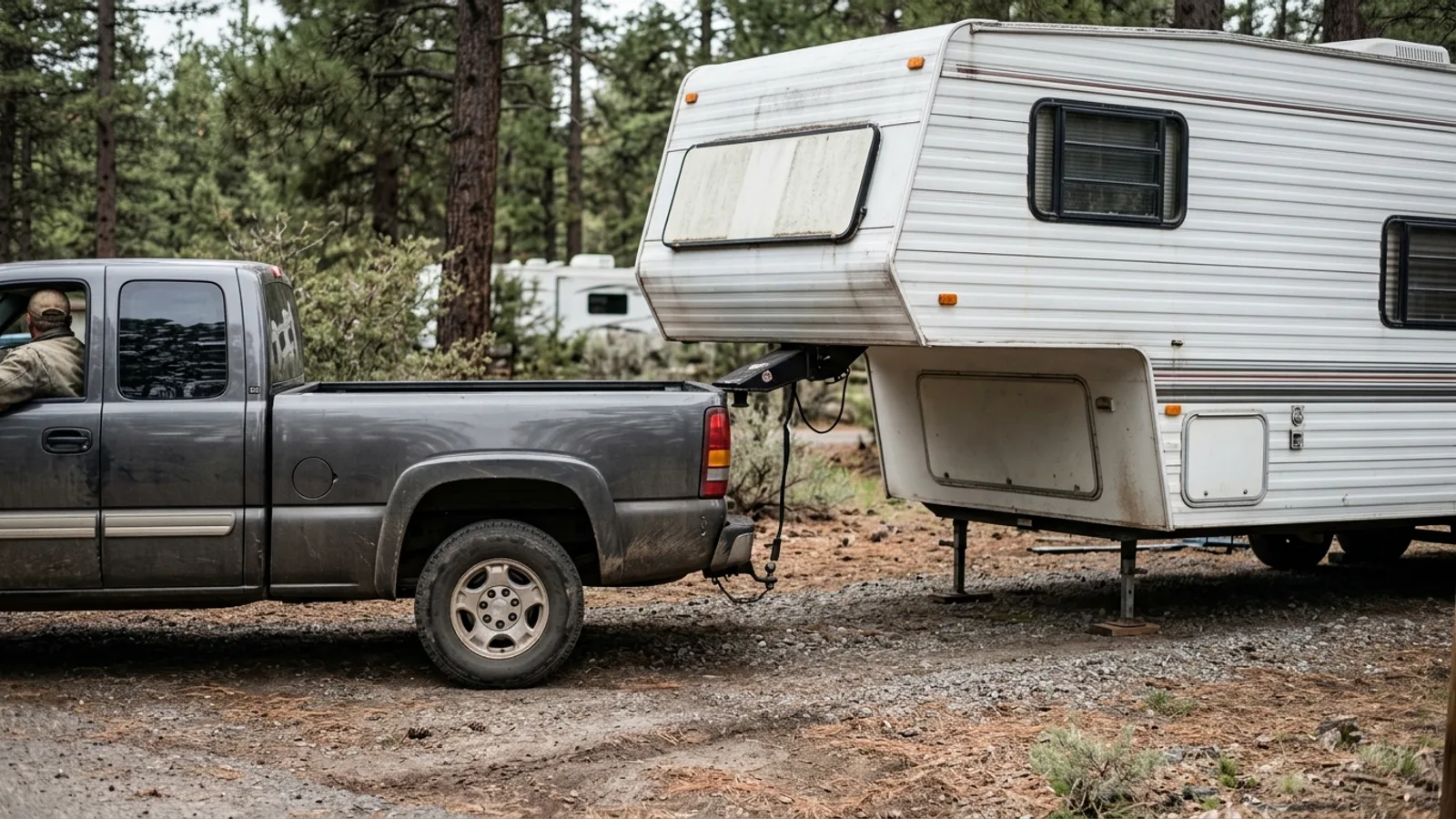
Towing a fifth wheel safely comes down to matching the truck to the trailer's actual weight, not just picking a big engine. The most important numbers are payload capacity and pin weight, and the most overlooked detail is bed length. Here's how to think through each factor before you buy or hitch up.
Long Bed vs. Short Bed Trucks
Bed length affects how the truck and trailer interact when turning. A shorter wheelbase and shorter bed mean the truck's cab sits closer to the fifth wheel's overhang. On a tight turn, the front corner of the trailer can swing toward the cab and, in extreme cases, make contact with it.
A longer bed increases the distance between the hitch point and the cab, giving more clearance during sharp turns and tight maneuvers like backing into a campsite. This is why long bed trucks are the traditional choice for fifth wheel towing.
Short bed trucks can still work, but often require a sliding hitch that repositions the pin box during turns and slides back for driving. If you're considering a short bed truck, test the turning clearance with your specific trailer and hitch combination before relying on it, and be extra cautious on tight switchbacks or parking maneuvers.
Bed length also affects cargo space. A longer bed gives you more room for gear, tools, and supplies that you don't want to carry inside the fifth wheel itself. If you tow with a shorter bed, you may need to rely more on the trailer's storage or a bed-mounted cargo box that still clears the fifth wheel's overhang.
Diesel vs. Gas Engines
Diesel engines typically produce strong torque at low RPM, which is well suited to pulling heavy loads from a stop and maintaining speed on grades without excessive downshifting. This makes towing feel less strained, particularly with heavier fifth wheels.
Diesel engines also tend to return better fuel economy under heavy load compared to gas engines of similar towing capacity, which matters on long trips. They're often built with towing-specific durability in mind, since diesel platforms are frequently paired with heavier-duty drivetrain components.
Gas engines have closed the gap in towing capability and remain a reasonable choice for lighter fifth wheels. They're generally simpler and cheaper to maintain, and modern gas engines can produce enough torque for many mid-weight trailers. If your fifth wheel is on the lighter end of the class, a well-matched gas truck can tow it comfortably.
The right choice depends on the weight of the trailer you're towing now and any larger trailer you might upgrade to later. Buying more capacity than you need isn't wasted if you plan to size up.
Matching Truck Size to Your Fifth Wheel
Truck capability is generally described using two figures: towing capacity and payload capacity. Both matter, and they are not interchangeable.
Towing capacity is the maximum weight the truck can pull. Payload capacity is the maximum weight the truck can carry in its own bed and cabin — this includes passengers, cargo, and, critically, the pin weight of the fifth wheel pressing down on the hitch.
Many trucks that appear to have generous towing capacity actually have modest payload capacity. Since a fifth wheel's pin weight rests directly on the truck rather than being distributed like a bumper-pull trailer's tongue weight, payload capacity is often the limiting factor, not towing capacity.
Manufacturers publish these figures for every configuration, and they vary by cab size, bed length, axle setup, and other options — even within the same model name. Always check the specification sheet or door-jamb sticker for the exact truck you're considering, rather than relying on a general class expectation.
Understanding Pin Weight and Payload
Pin weight is the portion of a fifth wheel's total weight that transfers to the truck through the hitch. It typically runs a meaningful fraction of the trailer's total loaded weight, and it increases as you load cargo toward the front of the trailer.
This pin weight, plus the weight of passengers, fuel, and anything else in the cab or bed, must stay within the truck's payload capacity. Exceeding payload capacity puts extra strain on suspension, brakes, and tires, and can degrade handling and stopping distance.
To calculate your safe margin: add up your truck's expected payload usage (passengers, gear, hitch hardware) and compare it against the payload capacity listed for your specific truck. The remaining allowance is what's available for the trailer's pin weight. If the fifth wheel's loaded pin weight exceeds that remaining allowance, the combination is over its safe limit even if towing capacity looks fine on paper.
Weighing the loaded truck and trailer at a certified scale is the only reliable way to confirm you're within limits. Estimates from brochures assume a lightly optioned truck and don't account for aftermarket accessories, full fuel, or a loaded trailer.
Tires and Payload
Tires carry a load rating that contributes to the truck's overall payload capacity. Upgrading to tires with a higher load range, when compatible with the truck's wheels and suspension, can sometimes increase how much weight the truck is rated to carry safely.
This isn't a substitute for choosing an appropriately sized truck to begin with, but it can provide helpful margin, especially for trucks that are close to their limit. Any tire change should be paired with a check of the truck's suspension and axle ratings, since tires are only one part of the weight-carrying system.
Key Takeaways Before You Buy
- Favor a long bed truck for better turning clearance and more cargo room, especially if you're new to fifth wheel towing.
- Diesel engines suit heavier trailers and frequent long-distance towing; gas engines can be sufficient for lighter fifth wheels.
- Payload capacity, not just towing capacity, is often the deciding factor — check the specific truck's rating, not a general class assumption.
- Know your fifth wheel's actual loaded pin weight, and confirm it fits within your truck's remaining payload allowance after passengers and cargo.
- Weigh the loaded rig at a scale before a big trip to confirm you're within all rated limits.