Gooseneck vs. Fifth Wheel Hitches: How They Differ and Which to Choose
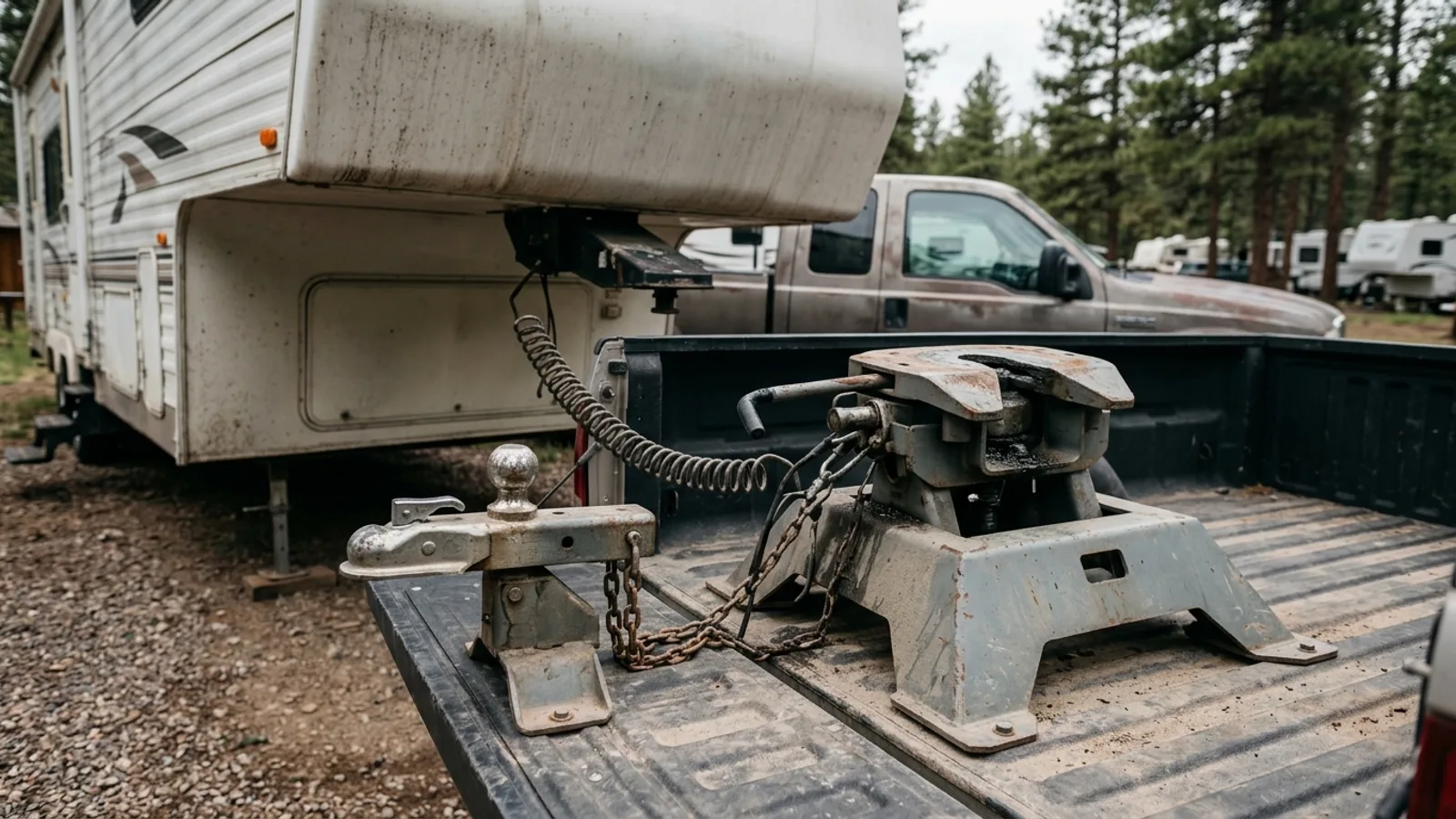
If you're towing a large trailer for camping, hauling livestock, or moving equipment, you'll likely run into two hitch styles: gooseneck and fifth wheel. Both mount in the bed of a pickup truck, both are built for heavy loads, and both outperform bumper-pull hitches for stability. But they connect differently, suit different trailers, and each has tradeoffs worth understanding before you buy.
How Each Hitch Connects
A gooseneck hitch uses a ball mounted low in the truck bed, paired with a coupler on the trailer's tongue that drops over the ball, similar in principle to a standard bumper hitch but rated for much heavier loads. The connection point sits nearly over the truck's rear axle.
A fifth wheel hitch uses a raised platform with a set of spring-loaded jaws that clamp around a kingpin mounted on the trailer. The platform sits higher in the bed, and many designs allow the head to pivot or slide, which helps on tight turns and with shorter truck beds.
Gooseneck Hitches: Strengths and Tradeoffs
Gooseneck hitches take up relatively little space in the truck bed when not in use, especially with designs that can be removed or folded down, which matters if you regularly need the bed for other hauling. They tend to be simpler mechanically, with fewer moving parts than a fifth wheel's jaw assembly, and the ball-and-coupler connection is quick to hook up and familiar to anyone who has towed with a standard hitch before.
These hitches are common in agricultural and commercial towing — livestock trailers, flatbeds, and equipment trailers frequently use a gooseneck setup. Installation usually requires drilling into the truck bed to mount the ball and frame brackets, which is a permanent modification. Because the connection point is lower and more compact, very tall trailers can feel slightly less planted at highway speed compared to a fifth wheel setup, and the exposed ball can be noisier over rough roads.
Fifth Wheel Hitches: Strengths and Tradeoffs
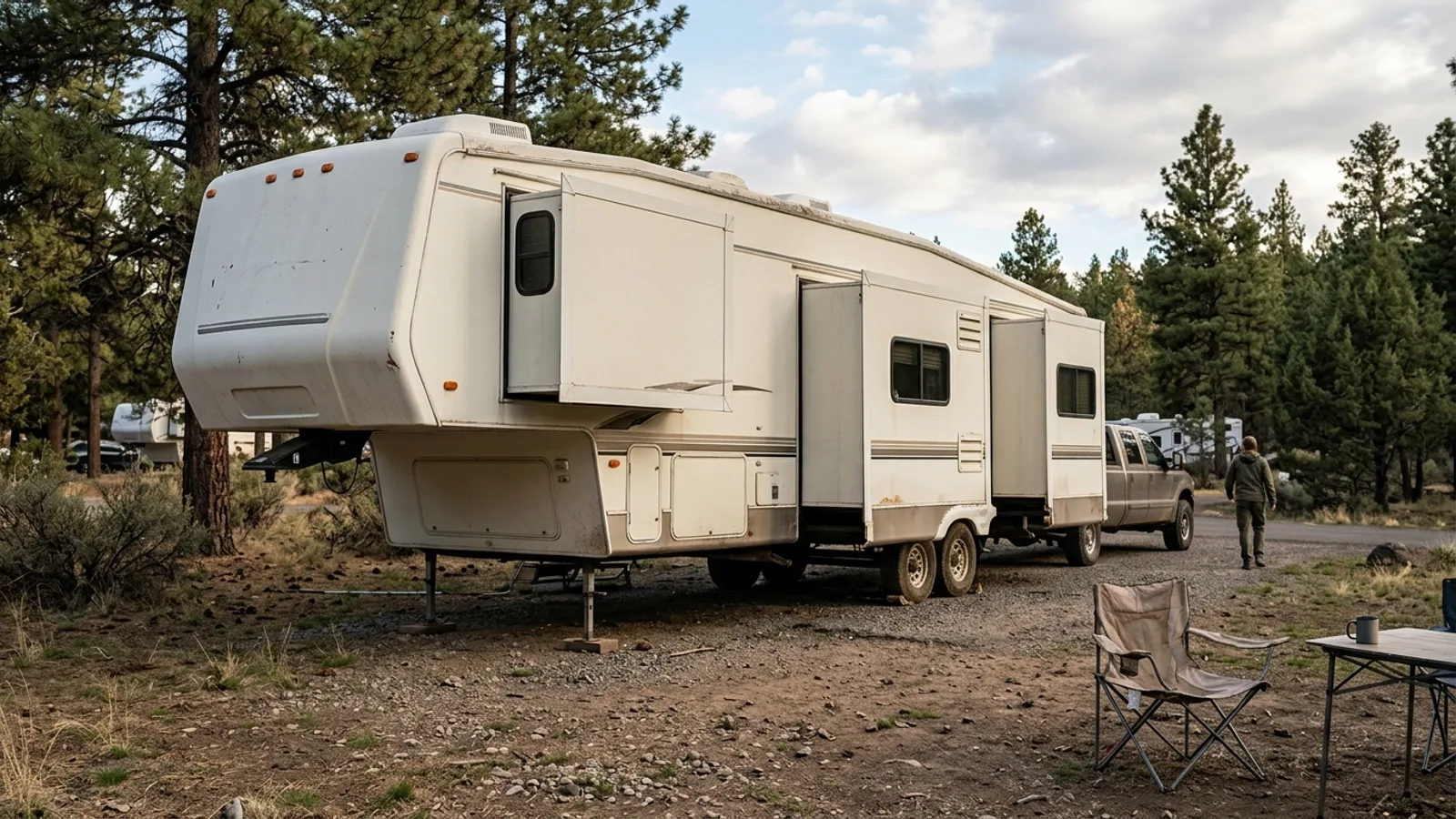
Fifth wheel hitches are the standard for towing large RV travel trailers. The jaw-and-kingpin connection distributes weight over a wider area and sits closer to the cab, which generally produces a more stable, more controlled ride, particularly in crosswinds or when passing large vehicles.
Fifth wheel hitches come in a wide range of weight ratings, so there's usually an option matched to anything from a lightweight camper to a full-size RV. The hardware is bulkier and heavier than a gooseneck ball, which means it takes up more bed space and can be harder to remove or reposition. Installation also requires permanent base rails bolted into the truck bed. Short-bed trucks often need a sliding fifth wheel hitch to avoid the trailer clipping the cab during sharp turns.
Choosing Between Them
- Commercial and agricultural hauling: gooseneck hitches are the common choice for livestock and flatbed trailers, largely due to their compact footprint and simple coupling.
- Recreational towing: fifth wheel hitches dominate for RVs and campers because of the smoother ride and broad range of weight capacities.
- Truck bed usage: if you need the bed clear for hauling other cargo between tows, a gooseneck setup generally gets out of the way more easily.
- Short-bed trucks: a sliding fifth wheel hitch or a gooseneck setup can both help avoid clearance issues on tight turns; check trailer and truck compatibility either way.
Converting Between the Two
If you already have a gooseneck hitch installed and want to tow a fifth wheel trailer, you don't necessarily need to start over. A gooseneck to fifth wheel adapter plate drops into the existing gooseneck hitch opening and provides industry-standard fifth wheel rails, letting you mount a fifth wheel hitch without redrilling the truck bed.
Alternatively, some manufacturers make fifth wheel-style hitches designed to fit directly into industry-standard fifth wheel base rails while presenting a gooseneck ball on top. This lets a truck already fitted with fifth wheel rails tow a gooseneck trailer instead.
Either approach lets one truck switch between gooseneck and fifth wheel trailers without maintaining two separate sets of hardware. Whichever setup you choose, confirm the weight rating of the adapter or hitch matches or exceeds your loaded trailer weight, and check that all connections are properly locked and secured before every tow.
Safety Basics Regardless of Hitch Type
Whichever hitch you use, verify your truck's payload and towing capacity can handle the loaded trailer weight, not just the empty weight. Inspect the coupling — ball, coupler, jaws, or kingpin — before each trip for wear or damage. Use safety chains or cables as a backup connection where required, and do a final walk-around to confirm the hitch is latched, pinned, or locked before pulling out.