How to Choose the Right Cooler Size for Camping
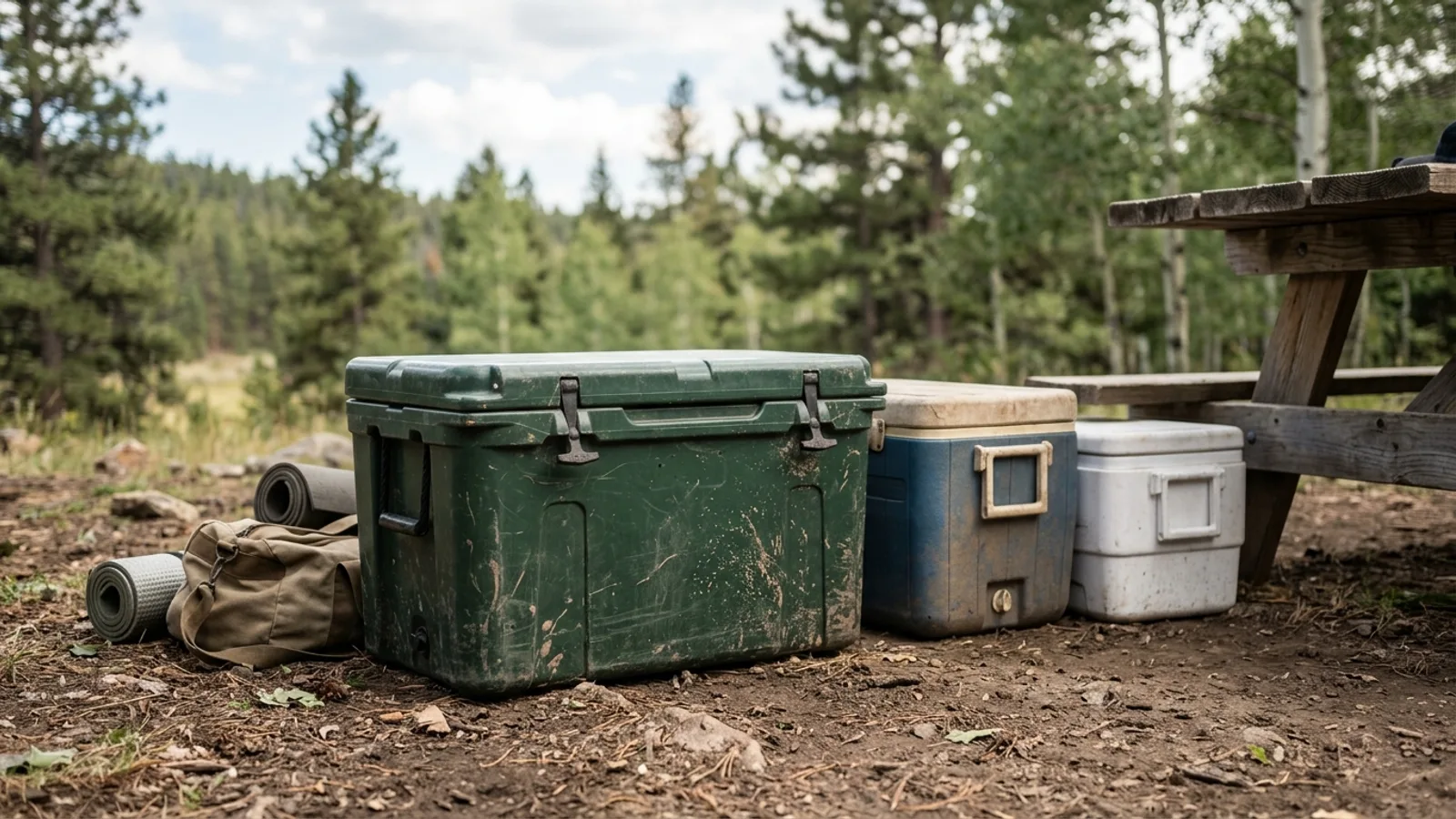
Start With Your Trip, Not the Cooler
The right cooler size depends less on a chart and more on three questions: how many people are you feeding, how many days between resupply, and how you're getting the cooler from the car to the campsite. A cooler that's too small means constant ice runs. One that's too big wastes space in your vehicle and takes longer to cool down once it's opened repeatedly.
A rough way to plan is by volume per person per day. Cold food and drinks take up more room than you'd expect once ice is factored in, so it's better to overestimate slightly than run short.
Small Coolers for Day Trips and Solo Outings
Compact coolers, roughly in the range of a few gallons up to around 15-20 quarts, work well for day hikes, picnics, or a single person's weekend of car camping with minimal cooking. They're light enough to carry any distance and easy to tuck into a corner of a trunk or truck bed.
Their downside is limited ice capacity. In warm weather, a small cooler may need ice replenished daily, which only works if you're near a store or another ice source.
Medium Coolers for Small Groups and Weekend Trips
Mid-sized coolers suit two to four people over a weekend, or a small family on a short trip. They hold enough food and ice to go two or three days without a refill, assuming reasonable care with lid use and shade.
This size range tends to be the most versatile for general-purpose camping: large enough to matter, small enough that one person can still lift or slide it without help.
Large Coolers for Groups and Extended Stays
For group campouts, multi-day trips, or anytime you're cooking full meals for several people, a larger cooler earns its bulk. These hold enough ice to maintain cold temperatures for a week or more under good conditions, and enough food to avoid constant restocking.
The tradeoff is weight and footprint. A large cooler fully loaded with ice and food can be difficult for one person to move and may take up significant space in a vehicle. Some campers split loads across two medium coolers instead of one large one, which also means drinks and snacks can stay separate from food that only gets opened at mealtimes — reducing how often the "food" cooler is opened and how fast its ice melts.
Insulation and Ice Retention
Wall thickness and build quality matter more than capacity alone when it comes to how long ice lasts. Thicker-walled, well-sealed coolers hold cold far longer than thin-walled versions of the same size, which matters most on trips longer than a couple of days.
Larger coolers generally retain ice longer relative to their size, because the ratio of insulated surface area to interior volume improves as coolers get bigger. But bigger coolers also need more ice to begin with, so the real-world benefit shows up mainly on longer trips, not single overnights.
A few habits extend ice retention regardless of cooler size: pre-chilling the cooler and its contents before loading, keeping it out of direct sun, minimizing how often it's opened, and using a mix of block ice and cubed or crushed ice — block ice melts slower and cubed ice fills gaps efficiently.
Portability and Transportation
Think about the last leg of the journey, not just the drive. A cooler that fits easily in a car may still be awkward to carry down a trail, across sand, or over rocky ground to a campsite.
Smaller coolers can usually be carried by one person without much trouble. Once you get into medium and large sizes, look for sturdy handles, and consider a model with wheels if you'll be hauling it any real distance over flat or semi-firm ground — wheels struggle on soft sand or loose gravel. For backcountry sites reachable only by foot, weight becomes the primary constraint, and a smaller, lighter cooler (or forgoing a hard cooler altogether) may be the more realistic choice.
Specialty Coolers and Useful Features
Some coolers are built for specific conditions. Marine-oriented coolers are designed to resist saltwater, corrosion, and rough handling, useful for boating or fishing trips. Electric coolers use power instead of ice, which removes the ice-run problem entirely but requires a reliable power source, whether a vehicle outlet, generator, or battery pack, and they add weight and cost that isn't justified for casual trips.
Useful extras to look for, depending on how you camp:
- Interior dividers or baskets to separate food from ice and drinks
- External tie-down points if the cooler will ride in an open truck bed or boat
- Drain plugs positioned so you can drain meltwater without unpacking everything
- Certified wildlife-resistant latches or construction if you're camping in bear country, which some land managers require in certain areas
Checking Fit Before You Buy
Measure the space where the cooler will actually travel, whether that's a trunk, a truck bed, a canoe hull, or a pack frame, before settling on a size. A cooler that's a perfect capacity on paper is useless if it doesn't fit through a tailgate or between wheel wells. When in doubt, prioritize a size that comfortably fits your most frequent type of trip rather than the largest trip you might occasionally take.