Overland Camping: A Practical Guide to Vehicle-Based Backcountry Travel
What Overland Camping Is
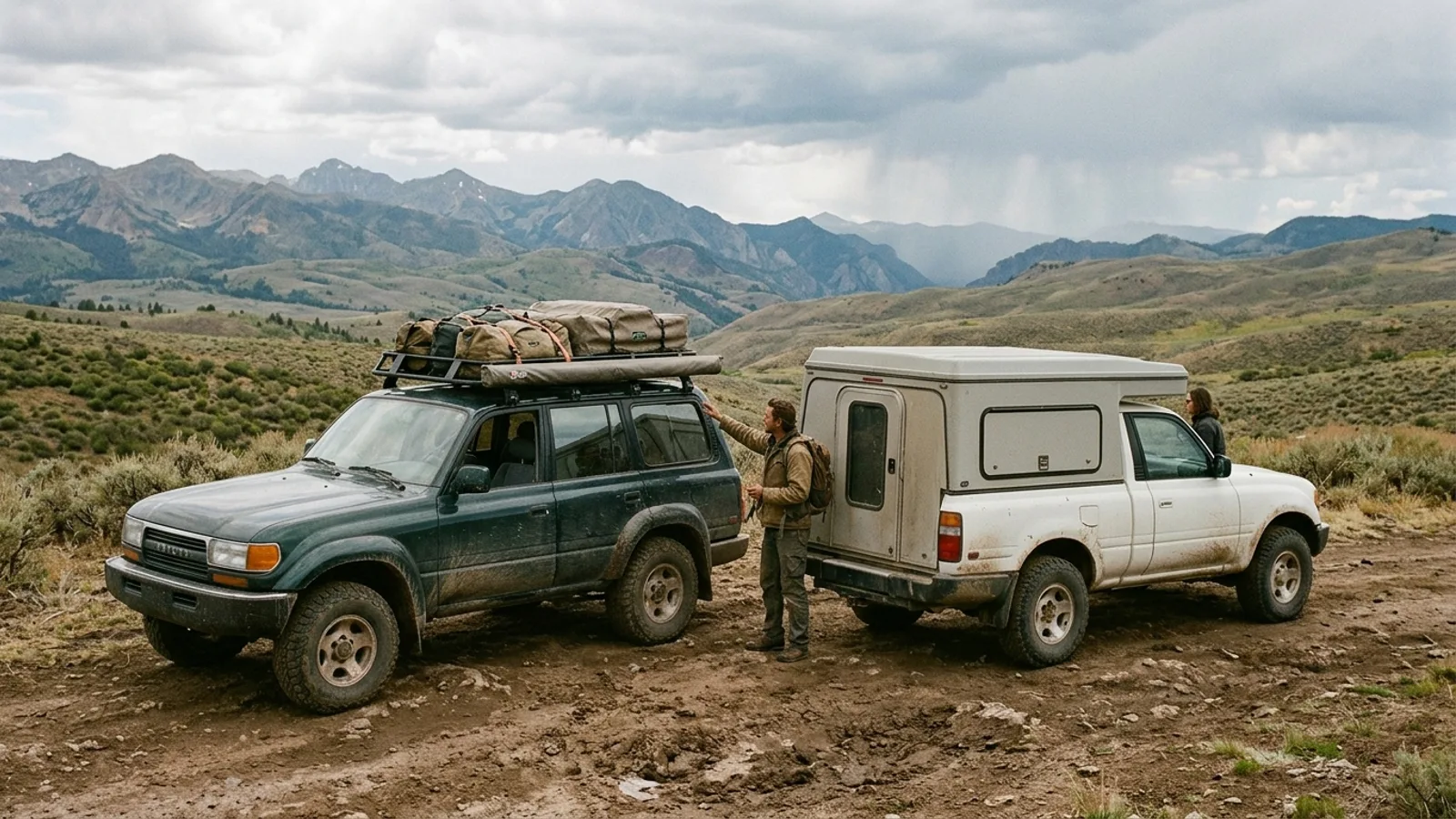
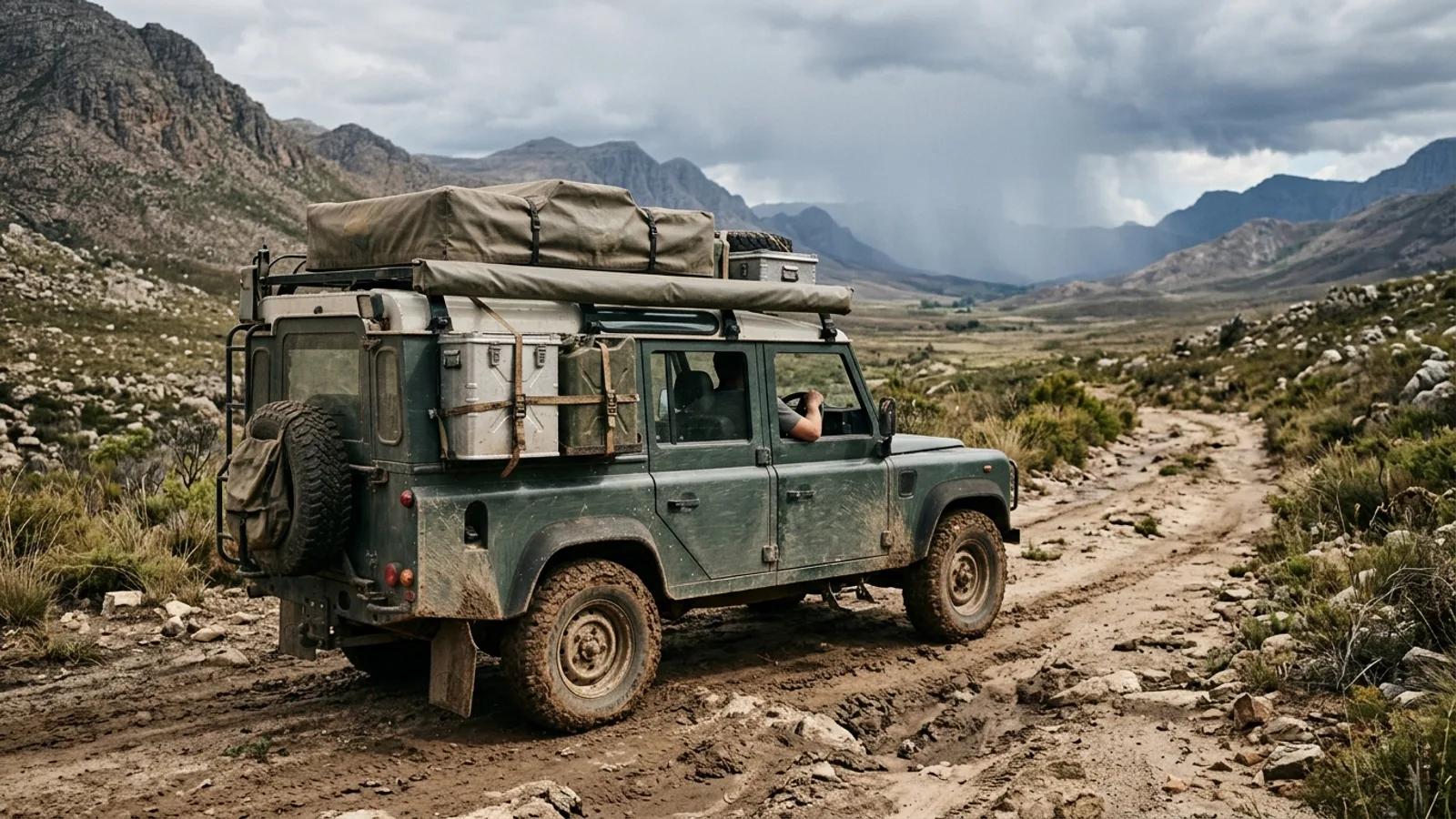
Overland camping means traveling by vehicle to reach remote or hard-to-access camping spots, then living out of that vehicle for several days or longer. The emphasis is on the journey itself: unpaved roads, dispersed campsites, and a level of self-sufficiency that goes beyond a typical car-camping trip near a campground with hookups.
It sits between backpacking and traditional RV travel. You carry your own water, food, and shelter like a backpacker would, but a vehicle lets you cover more ground and bring more gear and comfort items.
Choosing a Vehicle
Not every overland trip requires a heavily modified truck. Many forest roads and dispersed camping areas are accessible with any vehicle that has reasonable ground clearance and all-wheel or four-wheel drive. What matters most is matching the vehicle to the terrain you actually plan to drive.
- Ground clearance and tires: Rocky, rutted, or washboard roads reward higher clearance and tires suited to the terrain. Tire choice affects traction and puncture resistance more than almost any other single upgrade.
- Drivetrain: Four-wheel drive with low-range gearing helps on steep or loose surfaces, but knowing how and when to use it matters more than having the most capable setup.
- Weight and balance: Loading a vehicle with gear, water, and recovery equipment changes how it handles, especially off pavement. Keep heavy items low and centered, and know your vehicle's rated capacity before loading it heavily.
- Reliability and simplicity: In remote areas, a vehicle you understand and can do basic repairs on is more valuable than one with features you can't service yourself.
Before any trip, check fluid levels, tire condition and pressure, and brakes. A short shakedown drive on rough terrain close to home will reveal rattles or issues before you're far from help.
Core Gear Categories
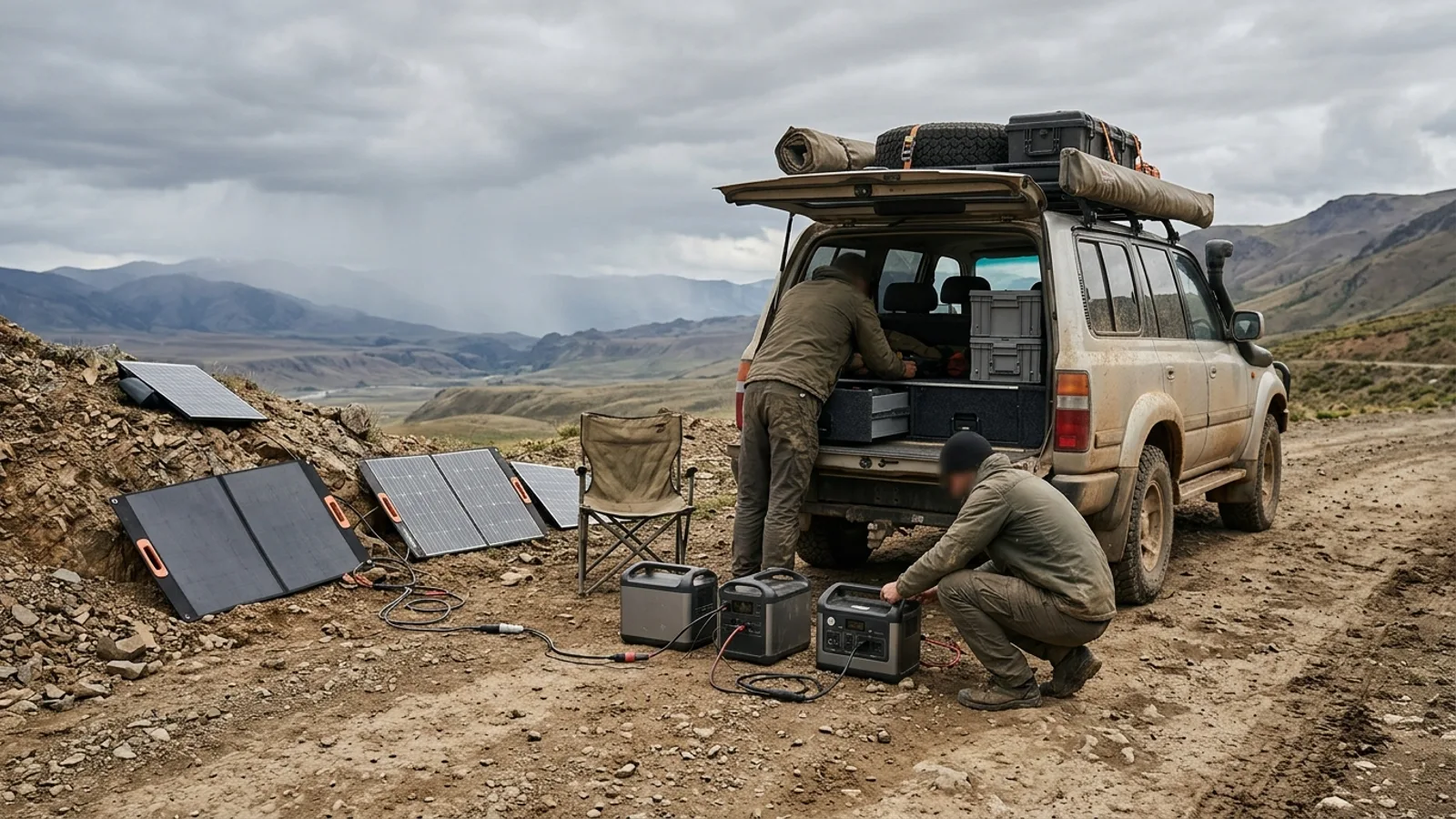
Overland gear generally falls into a few groups. Rather than chasing a long checklist, think through each category and pack for the specific trip length, climate, and terrain.
Shelter and Sleep
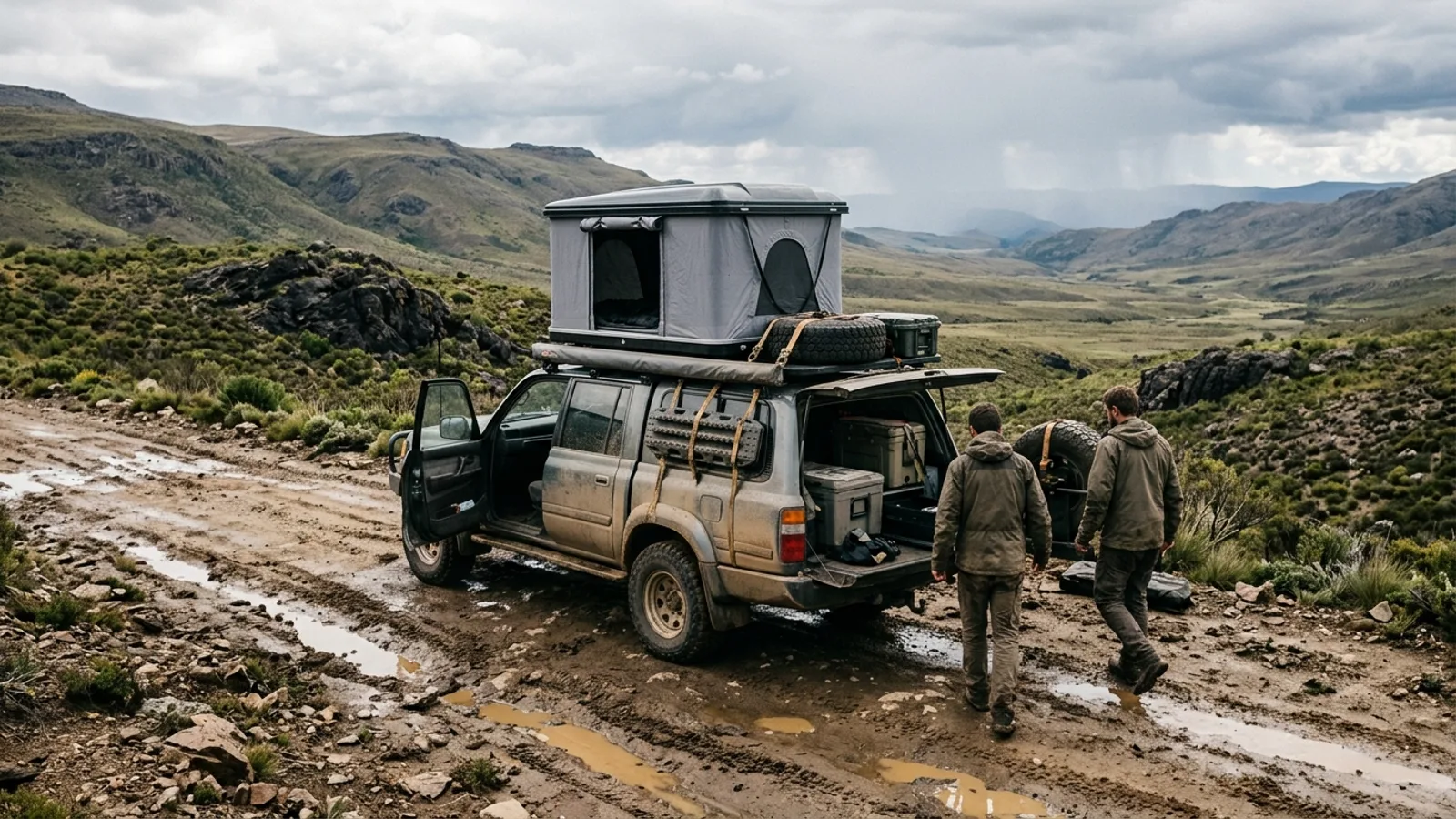
Options range from a ground tent to a rooftop tent to sleeping inside the vehicle itself. Each has tradeoffs in setup time, comfort, and how much space it takes up. Whatever you choose, test it at home first so you're not learning the setup in the dark or in bad weather.
Food and Water
Plan for more water than you think you'll need, and know where possible refill points are along your route, if any exist. A cooler or portable fridge extends how long fresh food stays safe to eat, but non-perishable staples remain the reliable backup if cooling fails or trips run long. Always have a way to purify water from natural sources as a contingency, even if you plan to carry all you need.
Navigation
Cell coverage disappears quickly outside of towns, so carry a paper map and compass as a non-electronic backup, and know how to use them. GPS apps and dedicated units are useful for real-time tracking, but batteries die and devices fail. Download offline maps before you lose signal, and tell someone your planned route and return date.
Communication
A satellite messenger or similar device that works without cell service is worth carrying in remote areas, primarily for emergency use. Know its limitations before you rely on it — some only send preset messages, others allow two-way texting.
Recovery Equipment
Getting stuck is a normal part of off-road travel, not a sign of failure. Useful items include a shovel, traction boards, and tow straps rated for your vehicle's weight. Learn basic recovery techniques before you need them; using a winch or strap incorrectly can be dangerous. If you're traveling solo, recovery becomes much harder, which is one reason experienced overlanders often travel in pairs or small groups.
First Aid
Carry a first aid kit sized for the group and trip length, and know how to use everything in it. In remote settings, help can be hours away, so a kit that covers common injuries — cuts, sprains, burns — matters more than one stocked for rare emergencies you're not trained to handle.
Clothing
Layering handles temperature swings between day and night, which can be significant at elevation or in deserts. Sturdy footwear, sun protection, and rain gear cover most conditions. Pack for the coldest and wettest scenario the season could reasonably bring, not just the forecast.
Choosing Where to Go
Public lands managed for multi-use recreation — including many national forests, BLM land, and some state-managed areas — typically allow dispersed camping and off-road travel on designated routes. Rules vary widely by location and season, so check current regulations for the specific area before you go, including any permits, fire restrictions, or route closures.
Good candidates for a first overland trip are areas with well-established, mapped routes and some cell coverage or ranger presence nearby. Save the most remote, technical routes for after you've built experience and traveled with others who know the area.
Overlanding vs. Traditional Camping
Traditional camping usually centers on a fixed site, often reached by paved road, with the vehicle as a supporting tool rather than a focus. Overlanding treats travel itself as part of the experience, frequently covering long distances over multiple days and changing campsites along the way.
This shifts the packing philosophy. Overlanders prioritize gear that's compact, durable, and quick to set up and break down, since they may be moving daily. Self-sufficiency is emphasized more heavily, since routes often pass through areas without services for extended stretches.
Safety and Etiquette
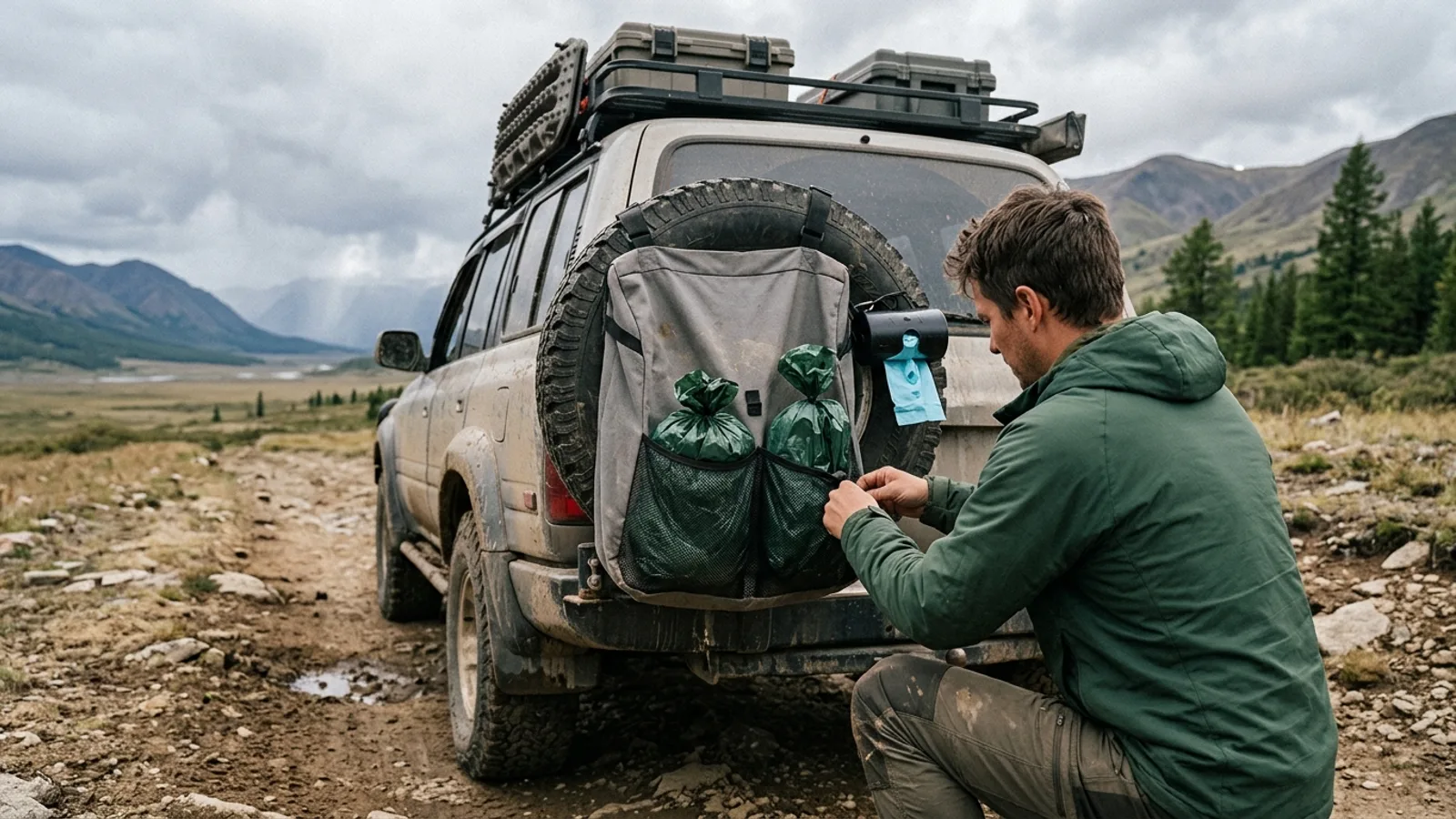
Leave No Trace principles apply fully to overland travel: pack out all trash, camp on durable surfaces, and keep campfires small and contained where they're allowed at all. Off-road travel adds another layer — stay on established routes to avoid damaging vegetation and soil, since off-route driving can leave scars that last for years.
Tell someone outside your group your route and expected return, and check in if plans change. Carry more water and fuel than the minimum estimate, since delays from weather, road conditions, or mechanical issues are common in remote travel.
When you meet other travelers on narrow routes, yield to vehicles heading uphill when possible, and slow down around hikers, cyclists, and wildlife. Respect any posted closures — they often protect sensitive habitat, cultural sites, or roads damaged by erosion.