Human and Pet Waste Disposal Bags for Overlanding and Backcountry Travel
Why Waste Disposal Matters Away From Toilets
Human and pet waste left in the backcountry doesn't just look unpleasant. It can contaminate water sources, introduce pathogens into soil, attract wildlife to trails and campsites, and take a long time to break down fully in dry or cold climates. In popular areas, the cumulative effect of many visitors skipping proper disposal can degrade soil chemistry and water quality faster than most people expect.
Overlanding and dispersed camping often put you far from vault toilets or trash service, so carrying out waste yourself is frequently the only responsible option. Many public lands now require it in certain zones, particularly alpine areas, desert canyons, and river corridors where waste doesn't break down quickly or where it washes directly into waterways.
How Waste Bags Work
Most commercial waste bag systems use a double-bag or gel-based design. An inner bag or pouch contains a powder that gels liquid, neutralizes odor, and slows decomposition so the waste stays contained without leaking. An outer bag provides puncture resistance and a secure seal for transport. Some systems are built around a portable toilet seat or frame; others are simple bag kits you can use squatting over the ground.
Bags marketed as biodegradable or compostable are worth understanding carefully. Most are only designed to break down in an industrial composting facility, not in a landfill, campsite, or home compost pile. Unless your waste system is specifically designed and permitted for burial or backyard composting, treat all human and pet waste bags as trash to be carried out and disposed of in regular waste bins, not buried, flushed, or left behind.
Choosing a System
Consider these practical factors rather than brand names:
- Capacity and trip length: Solo overnight trips need less bulk than multi-day group trips. Some systems are built for single use, others for repeated use over several days.
- Odor and leak control: Look for a gelling agent and a genuinely sealed outer bag, since thin bags without a real seal tend to leak or smell in a warm vehicle.
- Ease of use in the field: A rigid frame or seat is more comfortable for extended trips; a simple bag is lighter and packs smaller for backpacking or climbing where every ounce matters.
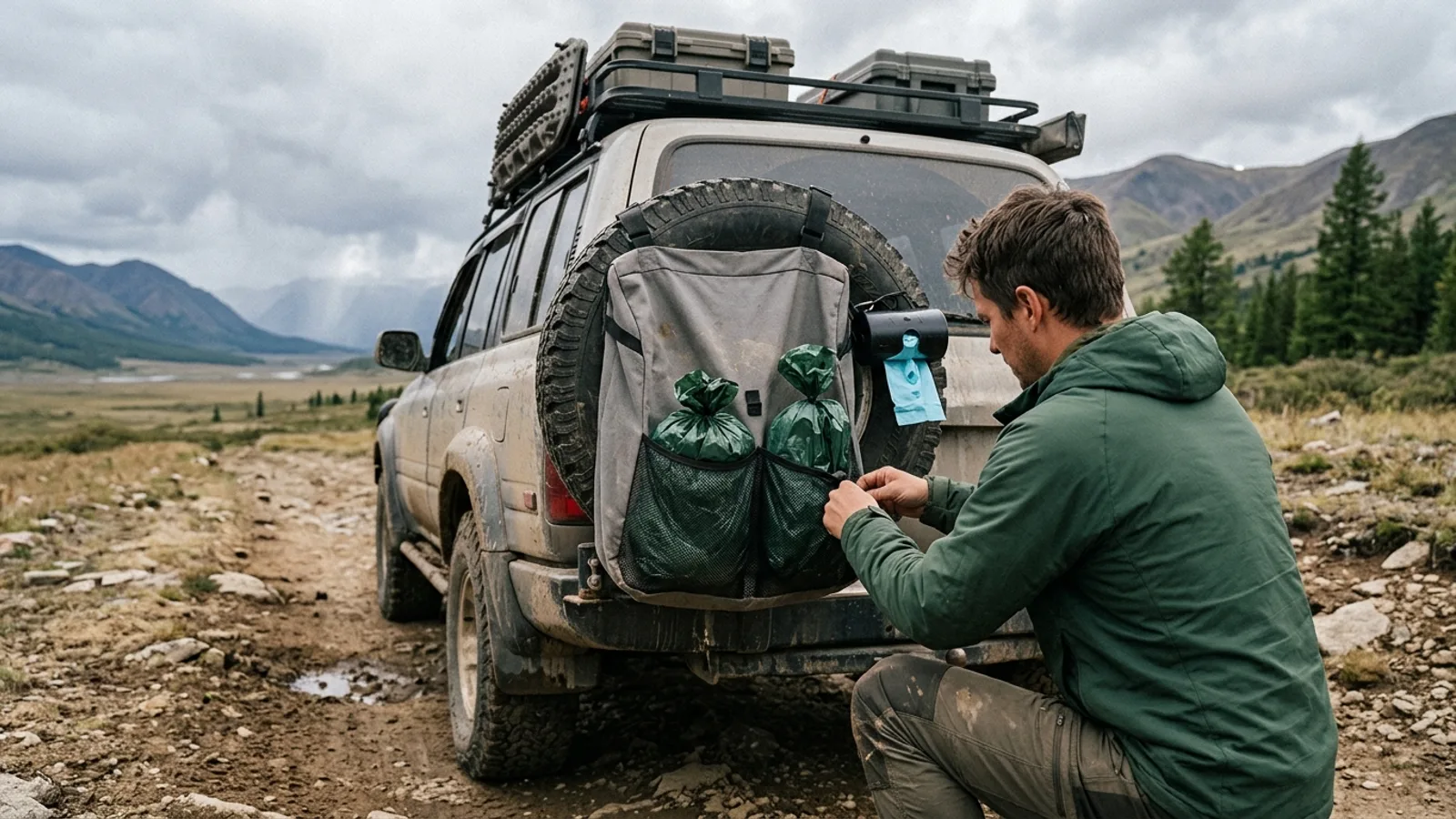
- Packability: For overlanding, a small rigid container or dry bag to store used waste bags until you reach a disposal point keeps odor and mess out of your vehicle.
Where This Applies
Waste bags are commonly required or strongly recommended in several settings:
- High alpine trails and summit routes above where soil and microbial activity can break waste down, especially on heavily trafficked peaks.
- Slot canyons and narrow desert washes where waste can wash downstream during flash floods and contaminate pools used by wildlife and other visitors.
- Big wall and multi-day climbing routes where there is no ground to bury waste and haul bags are often mandatory.
- Dispersed camping and overlanding sites without vault toilets, particularly on multi-day routes through arid or fragile terrain.
- River corridors managed under permit systems that require carrying out all solid waste.
Check the specific rules for wherever you're headed. Many parks and forests post waste disposal requirements on permit pages or trailhead signs, and requirements can differ significantly between adjacent land units.
Using and Disposing of Waste Bags Correctly
- Use the bag immediately after waste is produced, rather than waiting, to reduce odor and make sealing easier.
- Add the gelling agent if your kit includes one, then seal the inner bag fully before placing it in the outer bag.
- Store sealed bags in a dedicated container away from food and living space in your vehicle or pack, ideally with an odor-resistant lid.
- Dispose of sealed bags in standard trash receptacles at trailheads, ranger stations, gas stations, or campgrounds. These bags are designed for landfill disposal, not composting or recycling streams.
- Never flush waste bags down a toilet, even a vault or RV toilet. They can clog plumbing and septic systems.
- Never bury waste bags. The bag material won't break down at a useful rate, and burial defeats the purpose of containing waste in fragile soils.
Pet Waste Specifically
Pet waste carries its own bacteria and can affect wildlife behavior and water quality just as human waste does. The same carry-out principle applies: pick it up promptly, seal it well, and dispose of it in regular trash rather than leaving bagged waste on the trail "to grab later," which is a common source of litter. Avoid single-use plastic bags when better options exist, but prioritize actually carrying the waste out over the specific bag material.
Practical Takeaways
- Treat all waste bags, biodegradable or not, as trash for landfill disposal unless you know otherwise for your specific system.
- Match your system to trip length and group size rather than buying the most heavily marketed option.
- Always check local land management rules before you go, since waste requirements vary by park, forest, and even by trail.
- Store used bags securely to avoid odor and leaks, and dispose of them at the first opportunity in regular waste bins.