Fuel Planning and Storage for Overlanding Trips
Why Fuel Planning Matters
Overlanding often means covering long distances between fuel stops, sometimes on routes where a gas station might be closed, out of stock, or much farther away than a map suggests. Unlike a road trip on paved highways, you can't assume help or fuel is always within easy reach. Planning your fuel margin before you leave is one of the simplest ways to avoid getting stranded.
Calculating Your Range
Start with your vehicle's real-world fuel consumption, not the number on a window sticker. Off-road driving, heavier loads, higher tire pressure needs, and running accessories like fridges or winches all increase consumption compared to highway driving. A good rule of thumb is to assume your off-road, loaded fuel economy is meaningfully worse than posted highway figures, then build your range estimate around that more conservative number.
Once you know your adjusted consumption rate and your tank size, you can estimate your usable range. Then subtract a safety margin — many experienced overlanders reserve a portion of their tank, often around a quarter of total range, as a buffer they don't plan to use except in an emergency.
When routing through remote areas, note the distance to the next reliable fuel source, and treat any station marked on a map as unconfirmed until you can verify it's operating. Carry enough reserve to backtrack to a known source if a station turns out to be closed.
Carrying Extra Fuel Safely
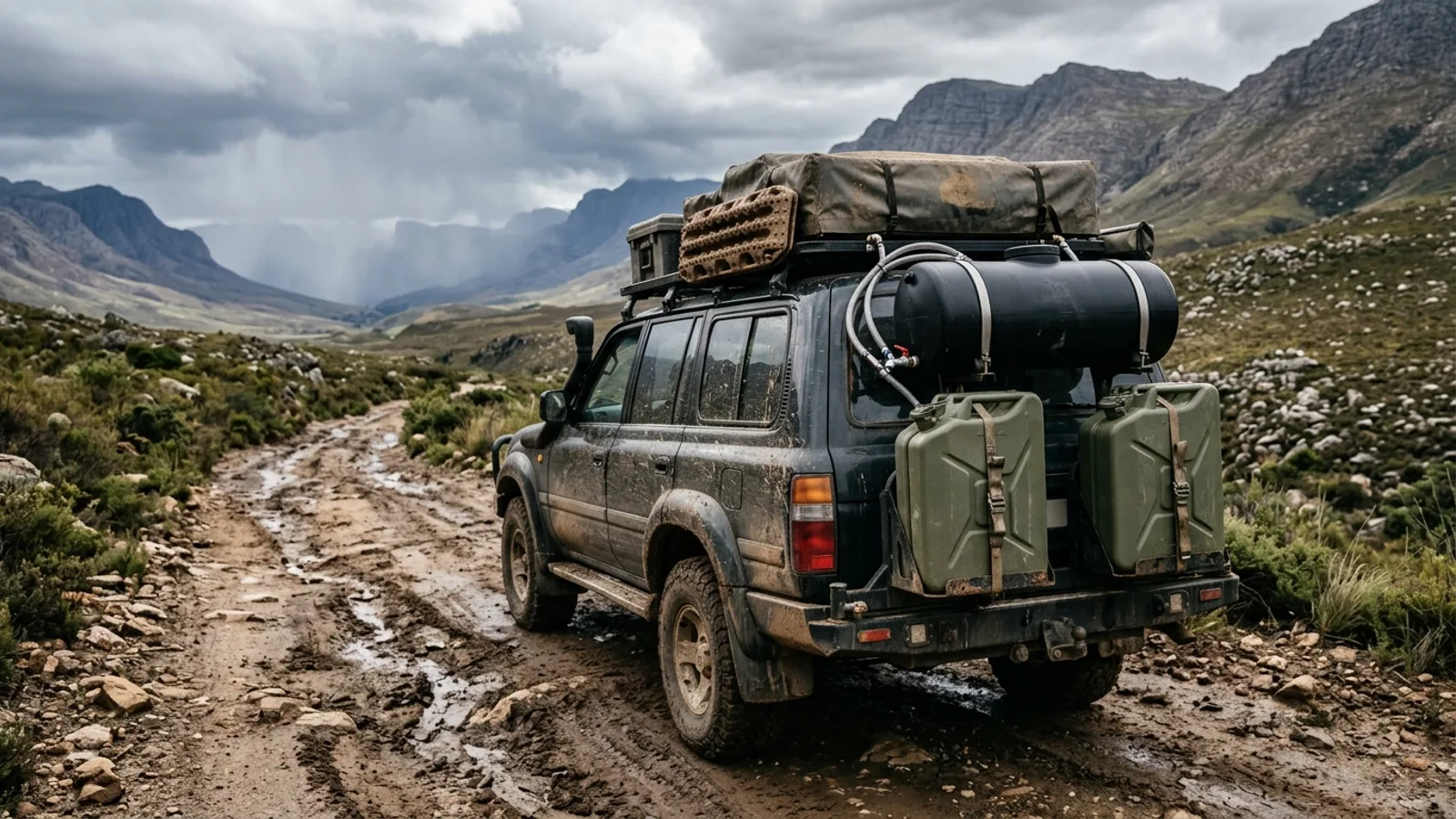
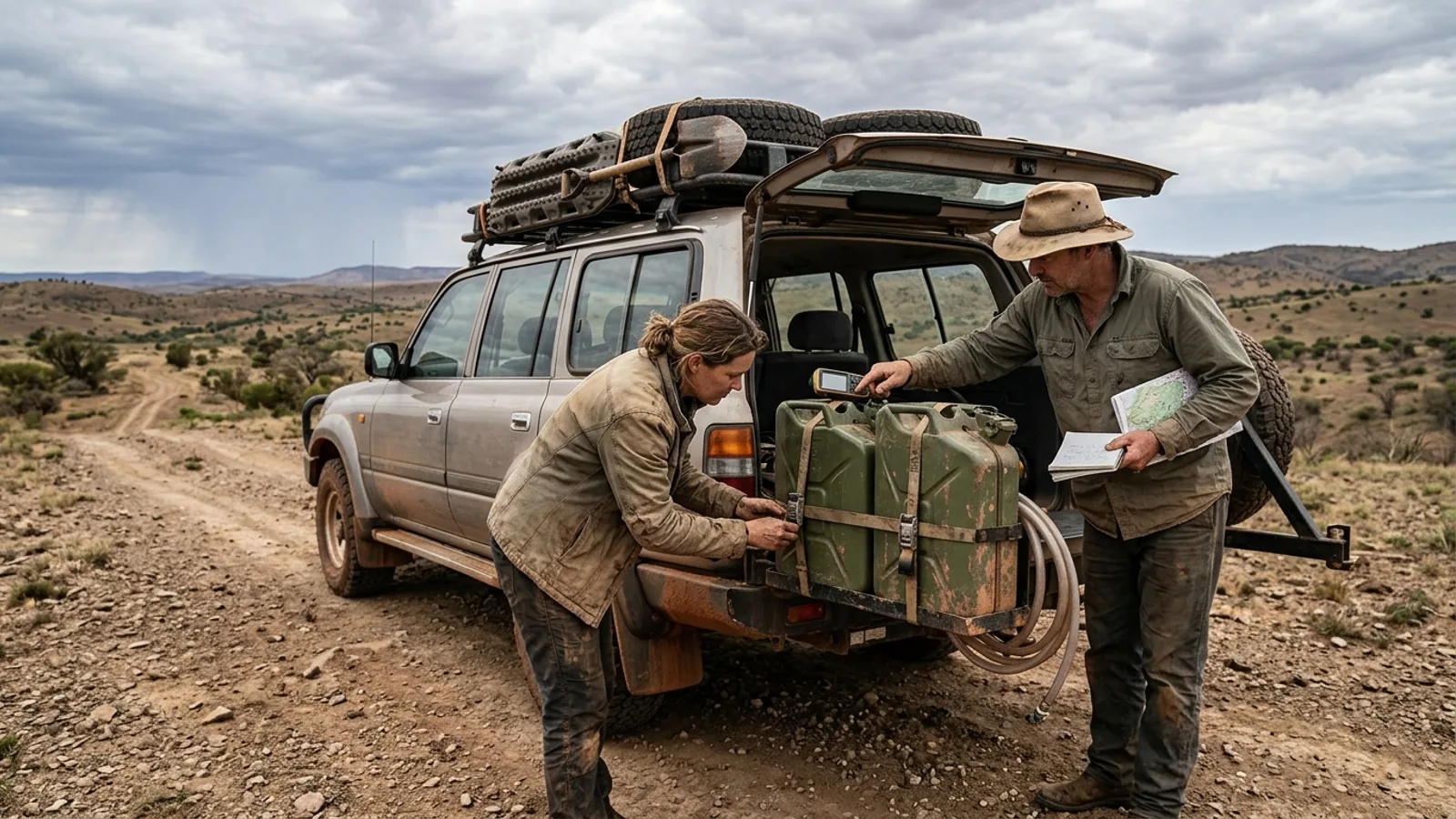
When your vehicle's tank isn't enough to cover a remote stretch, auxiliary containers fill the gap. A few practical principles apply no matter what container you choose:
- Use containers built for fuel storage. They're designed with proper venting, seals, and materials that resist fuel degradation over time. Repurposed containers not rated for fuel can fail, leak, or become brittle.
- Mount fuel securely and outside the cabin. Fuel should be carried outside the passenger compartment whenever possible, secured so it can't shift, puncture, or come loose during rough terrain.
- Keep fuel away from heat sources. Store containers away from the exhaust, engine bay, and direct sun exposure where practical.
- Label and rotate your fuel. Fuel degrades over time, so use older fuel first and don't let reserves sit unused for extended periods.
- Check local regulations. Some public lands, ferries, and border crossings restrict how much fuel you can transport or how it must be secured.
Rigid jerry-can-style containers remain the most common choice because they're durable and easy to inspect for damage. Modular stackable containers can be useful when roof or rack space is limited and you need to distribute weight across multiple smaller units rather than one large can. Motorcyclists and riders with limited storage often rely on smaller auxiliary bottles or soft-sided fuel bladders designed to mount to a bike frame or luggage system. Whatever you choose, test the mounting and check for leaks on a short trip before relying on it far from help.
Choosing a Vehicle for Overlanding
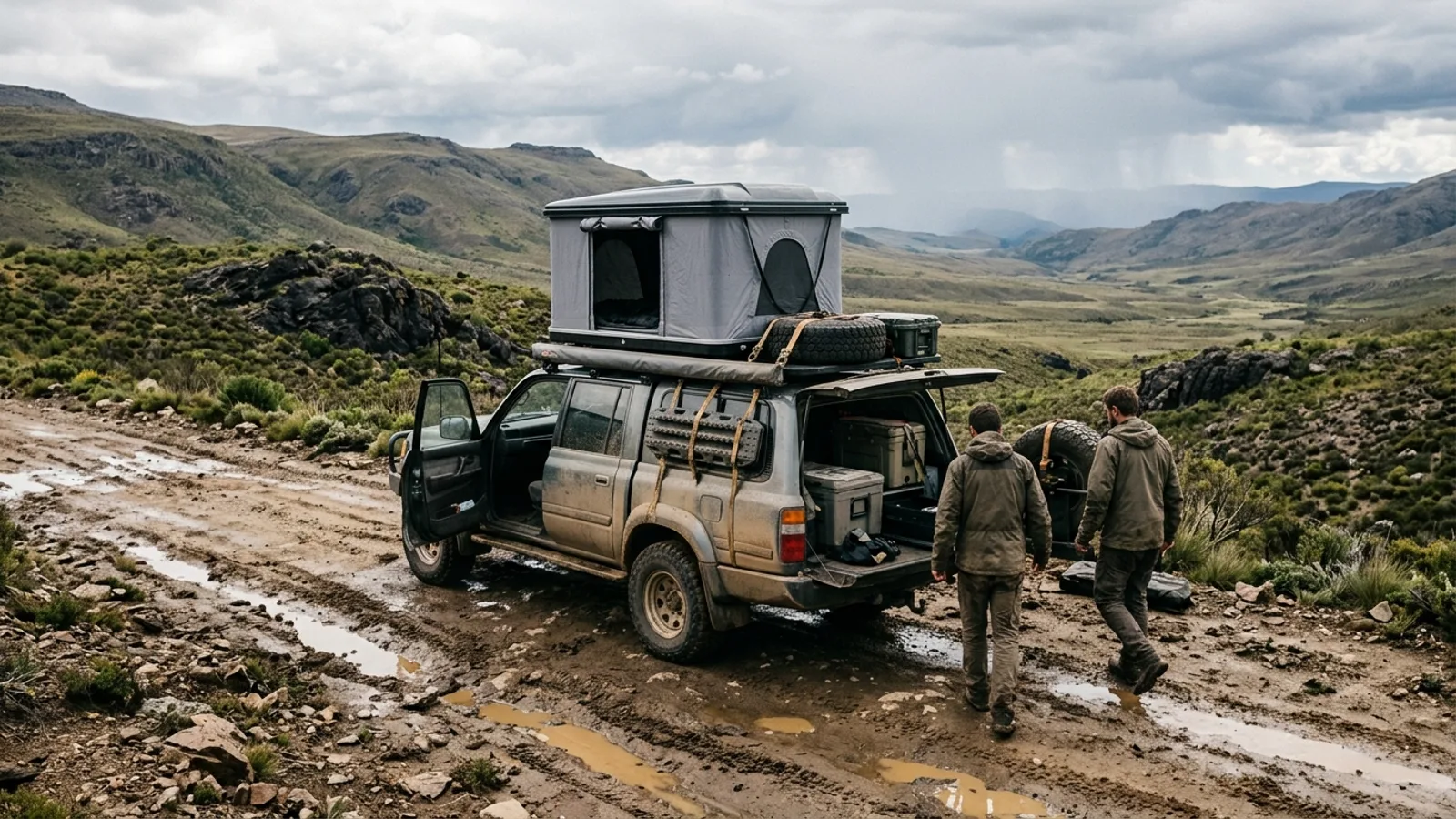
Fuel efficiency matters for overlanding, but it's only one factor. A vehicle also needs enough ground clearance, suitable tires, a strong enough suspension, and enough payload capacity to carry the gear, water, and fuel you plan to bring. A highly efficient vehicle that bottoms out on rough trails or can't carry your load isn't a good match.
Broadly, three types of powertrains show up in overlanding builds:
- Gasoline. Widely available, simple to service in remote areas, and the easiest fuel type to find replacement parts and mechanics for almost anywhere.
- Diesel. Often more fuel-efficient over long distances and can offer strong low-end torque useful for towing or climbing, though diesel availability and service options can be more limited in some regions.
- Hybrid and plug-in hybrid. Can reduce fuel consumption significantly in stop-and-go or lower-speed conditions, though electric range and charging options are irrelevant once you're off-grid, so these vehicles still rely on their gas engine for extended remote travel.
Whichever type you choose, prioritize a vehicle with a strong reliability record, readily available parts, and enough aftermarket support to add the storage, protection, and recovery gear overlanding requires.
Building Your Fuel Margin Into a Trip
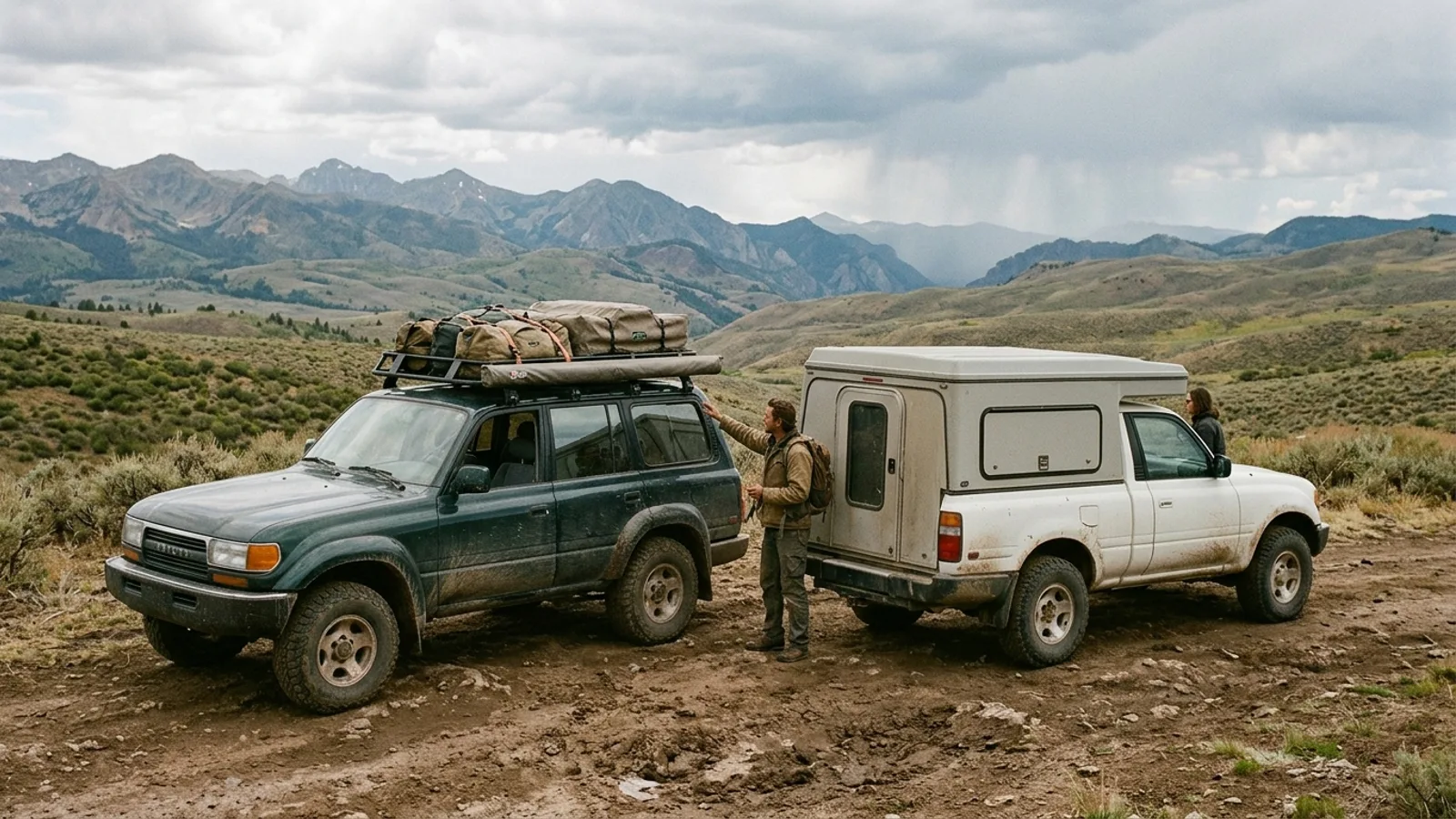
Before a remote trip, sketch out your route in segments between confirmed fuel points. For each segment, calculate the distance against your adjusted range, and identify whether you need auxiliary fuel to safely make the next stop with reserve to spare. Build in slack for detours, weather, or road closures that might add unplanned distance.
Tell someone your route and expected fuel stops before you leave cell coverage, and carry a way to communicate if you're delayed. Good fuel planning isn't about carrying the maximum possible amount of fuel — it's about carrying enough to match the real risk of the route you're driving.