Water Storage for Overlanding: A Practical Guide
Why Water Planning Matters
Water is the one supply that can end a trip early if it runs short. Unlike fuel, it can't always be found along the route, and unlike food, you can't safely go long without it. Planning water storage before a trip is one of the most important parts of preparing for remote travel.
In places without reliable access to potable water, everything from drinking and cooking to basic hygiene and vehicle needs depends on what you're carrying. Building in a margin for the unexpected — a delayed return, a detour, a breakdown — matters more than hitting an exact number.
Figuring Out How Much to Carry
A common starting point is to estimate water needs per person per day, then multiply by the number of people and the number of days, adding extra for cooking, cleaning, and any pets or animals along. Hot, dry, or high-altitude conditions increase consumption, as does strenuous activity like hiking or vehicle recovery work.
Other things worth factoring in:
- Group size and how many days between confirmed refill points
- Whether the route has any potential for delay (weather, road closures, mechanical issues)
- Climate and terrain — heat and elevation both raise water needs
- Water for the vehicle (radiator top-offs) separate from drinking water
Writing out a simple checklist before each trip — how much water, in what containers, and where it's stored in the vehicle — helps avoid gaps in planning and makes loading the vehicle faster.
Types of Water Storage Containers
Rigid Tanks
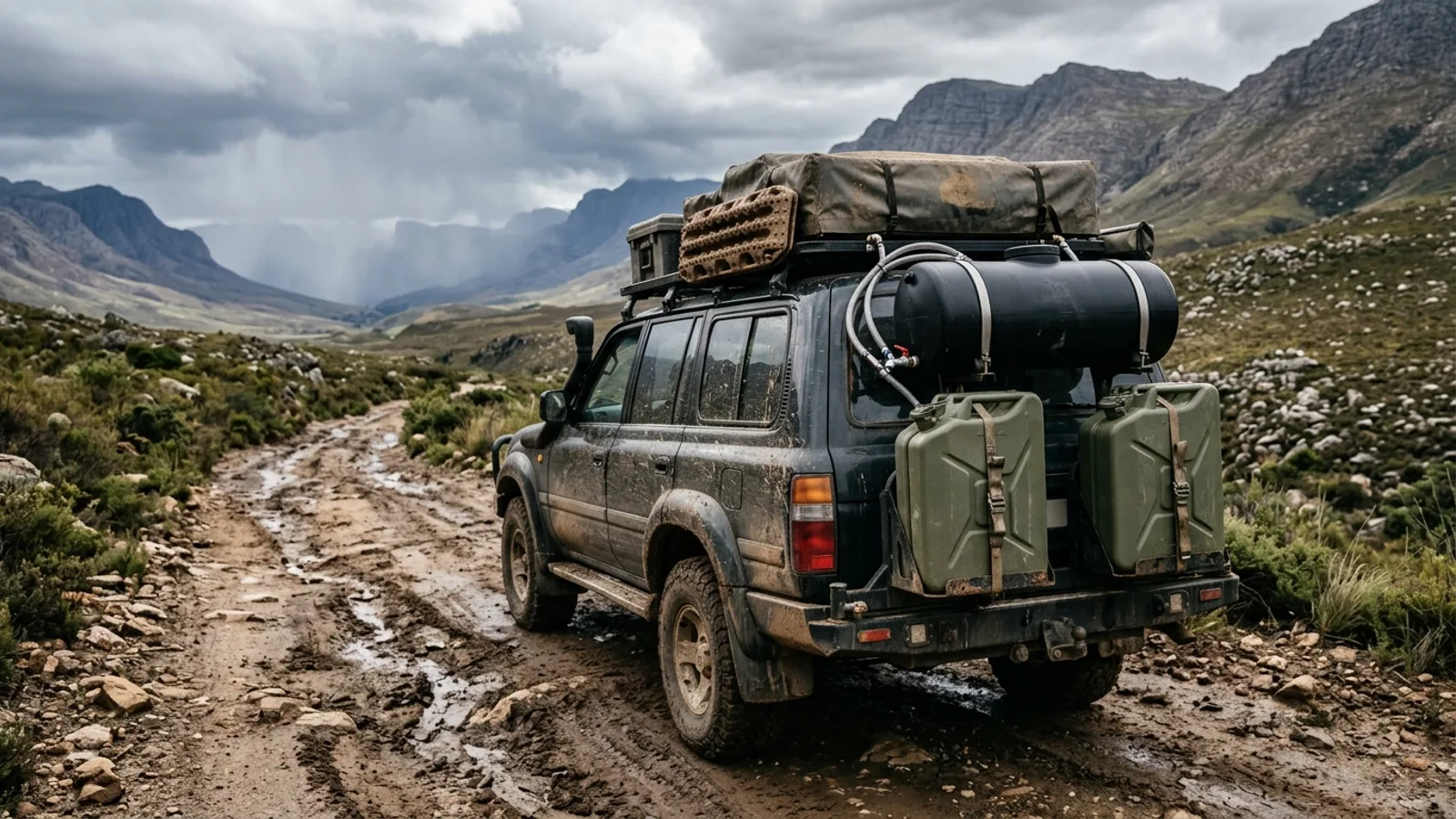
Rigid water tanks, whether mounted permanently or carried as removable units, offer the largest capacity for the space and tend to be the most durable option for rough roads. Look for food-grade construction and a wide fill opening that makes cleaning easier. Fixed capacity means you're carrying the same volume whether it's full or empty, so weight and placement matter for vehicle balance.
Collapsible Containers
Collapsible water containers fold flat when empty, which is useful for trips where you want backup capacity without dedicating permanent space. They are generally lighter than rigid tanks of the same volume but more vulnerable to punctures from sharp gear or rough handling, so they're best stored where they won't get crushed or snagged.
Jerry Cans
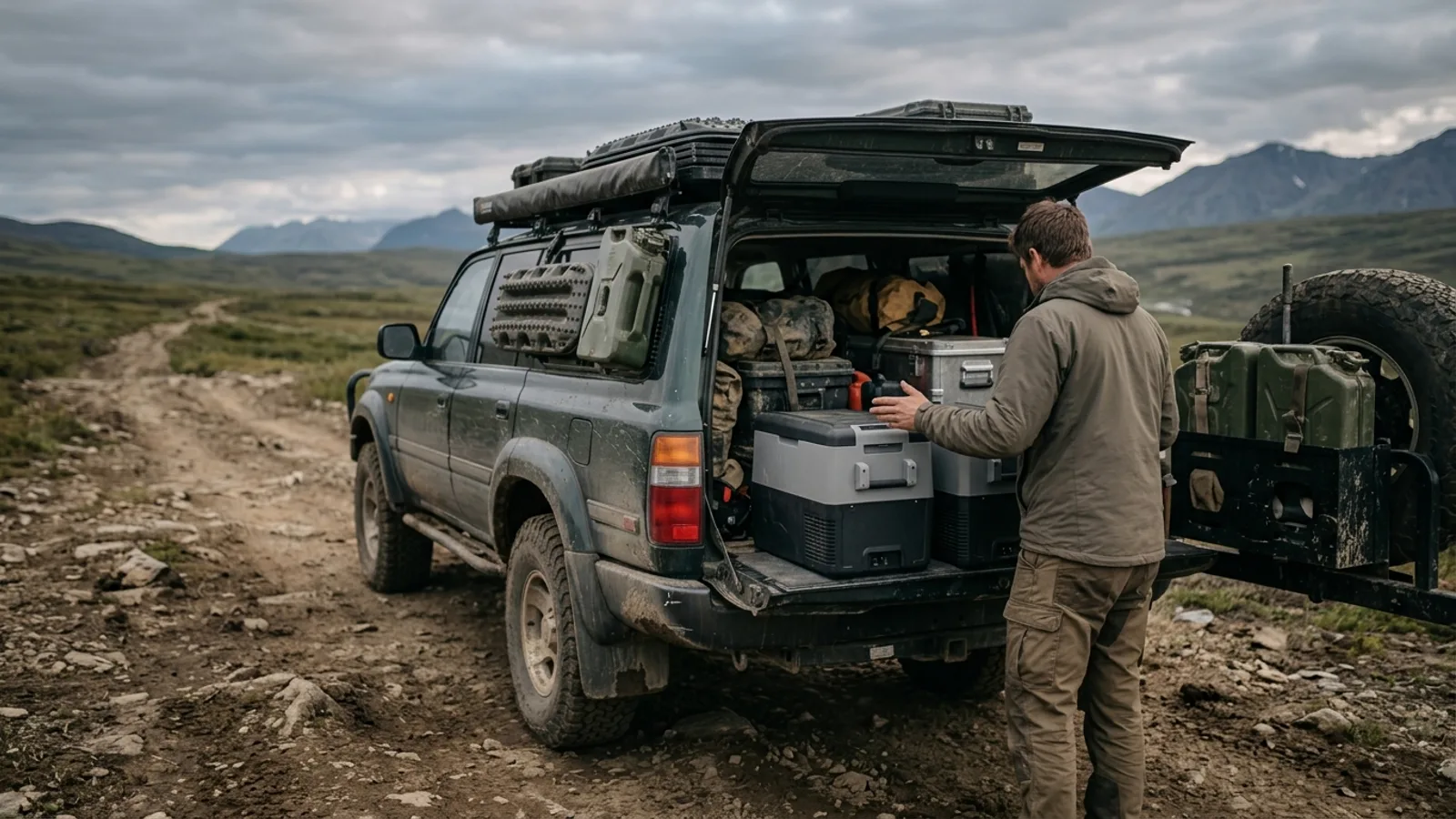
Jerry cans and similar rectangular containers are built for rough handling and stack efficiently, which makes them a practical choice for roof racks or cargo areas. Metal versions resist UV degradation better than plastic over years of use, though plastic is lighter. Either way, a secure, well-sealed cap is essential to prevent slow leaks over corrugated roads.
Most trips benefit from mixing container types: a main rigid or jerry can supply for daily use, plus one or two collapsible containers held in reserve.
Purifying and Filtering Water
Carrying enough stored water is only half the equation — being able to treat water from streams, lakes, or uncertain sources extends your range significantly.
Chemical Treatment
Purification tablets or drops are compact, lightweight, and require no equipment, making them a reliable backup method. They need contact time to work, and cold or cloudy water may need longer treatment times or pre-filtering to work effectively. Always follow the product's instructions for dosage and wait time rather than guessing.
Mechanical Filters
Filters physically strain out bacteria, protozoa, and sediment as water passes through a filtering medium. Pump filters, gravity filters, and straw-style filters all suit different use cases — pump filters for filling containers directly from a source, gravity filters for treating larger batches with no effort, and straw filters for individual emergency use. Filters generally don't remove viruses on their own, which matters more in some regions than others.
UV Purifiers
UV purifiers disrupt the DNA of microorganisms using ultraviolet light, treating water quickly without changing its taste. They require clear (non-cloudy) water to work properly and depend on battery power, so they work best as a secondary method alongside a filter or backup tablets rather than as your only system.
Combining methods — for example, filtering for clarity and taste, then treating chemically or with UV for pathogens — gives the most reliable protection when source water quality is unknown.
Managing Water Efficiently
Small habits add up over a multi-day trip. Using biodegradable soap, reusing water where it's still clean enough (dishwater for a final rinse of gear, for instance), and being deliberate about how much you pour rather than letting a spigot run all extend a limited supply.
Container hygiene is just as important as the water itself. Check containers periodically for cracks, cloudy residue, or off smells. Clean them with mild dish soap and rinse thoroughly — avoid strong cleaners that can leave a taste behind. Periodically sanitizing containers with a diluted bleach solution (rinsed out completely afterward) helps prevent bacterial buildup, especially in containers used for many trips.
Dispensing Water on the Go
How you get water out of a tank matters as much as how you store it.
Pump Systems
Manual or electric pumps draw water from a tank and deliver it through a spout or faucet, giving controlled flow for cooking or washing hands without tipping a heavy container. Electric pumps are more convenient but depend on a working power source; manual pumps have no such dependency and are worth having as a backup even if you run an electric system day to day.
Gravity-Fed Systems
Mounting a container above the point of use and running a hose or spigot down to it uses gravity to create flow, with no power or moving parts required. This is simple and reliable, but it depends on secure elevation and needs occasional checks of hoses and fittings for leaks.
Planning for Water Emergencies
Keeping a portion of your water supply set aside strictly as an emergency reserve — not touched for daily use — means you have a buffer if the trip runs longer than planned. Store it somewhere secure and easy to reach, separate from your everyday containers, so it's not accidentally used up early.
It's also worth carrying at least one backup purification method that doesn't depend on batteries or a power source — tablets or a basic mechanical filter both work well for this. If your primary system fails, this becomes your only way to safely use water from an unplanned source.
Before any remote trip, tell someone your route and expected return time. In genuine emergencies, that information matters as much as the water itself.