What Is Glamping? A Practical Guide to Luxury Camping
What Glamping Means
Glamping is short for "glamorous camping." It describes overnight stays in a natural setting that skip the parts of traditional camping most people find inconvenient: pitching a tent, sleeping on the ground, hauling gear, and using shared or no bathrooms. Instead, you get a real bed, weatherproof structure, and often electricity and plumbing, while still being surrounded by trees, water, or open landscape rather than a parking lot or a hotel hallway.
The category covers a wide range of comfort levels. Some glamping sites are a canvas tent with a real mattress and a shared bathhouse nearby. Others are fully furnished cabins with private bathrooms, heating, and a kitchen. What ties them together is the intent: keep you close to nature without asking you to rough it.
Where the Idea Comes From
People have combined mobility with comfort for a very long time — large decorated tents and portable dwellings have been used by traveling groups and military campaigns for centuries. The modern version, marketed specifically as "glamping," grew out of a broader shift in travel toward experiences that feel unique and photogenic rather than purely functional. Campgrounds, ranches, and private landowners began offering upgraded structures as an alternative to standard tent sites, and the term stuck as a way to describe that middle ground between camping and a hotel stay.
Why People Choose It
Glamping appeals to people who want time outdoors without the logistics of traditional camping: no gear to buy or pack, no learning curve for setting up a tent or cooking over a fire, and less worry about weather ruining the trip. It also works well for groups with mixed comfort expectations — one person's idea of a fun weekend might be someone else's idea of a hard pass, and glamping tends to narrow that gap.
It's also a low-commitment way to try being outdoors more. Someone who has never camped can spend a night near a lake or in a forest, use a real bathroom, and decide from there whether they want to invest in gear for more traditional trips.
Common Types of Accommodations
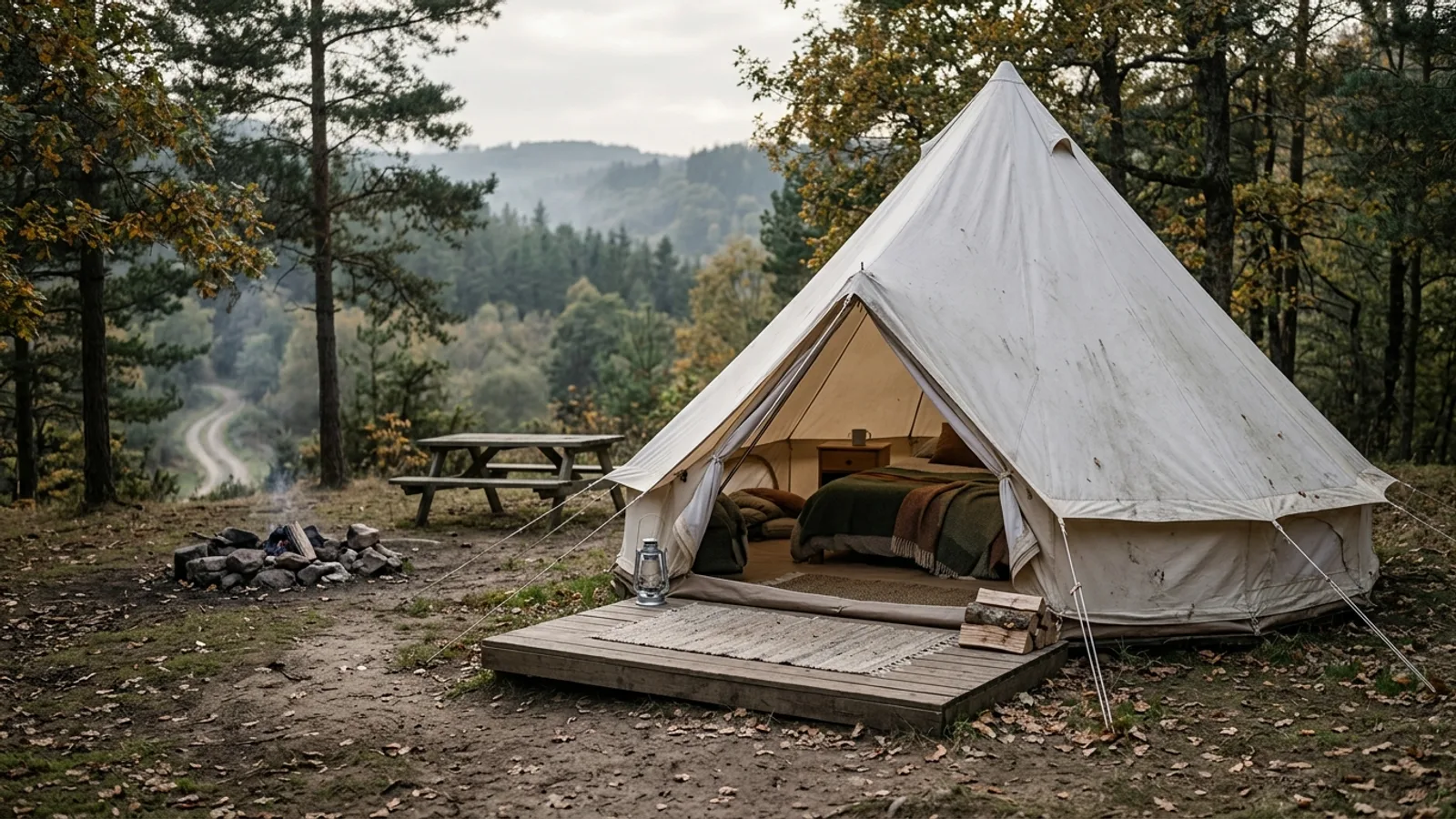
- Safari-style tents: Large canvas tents on raised platforms, usually furnished with real beds and sometimes a small bathroom or wood stove.
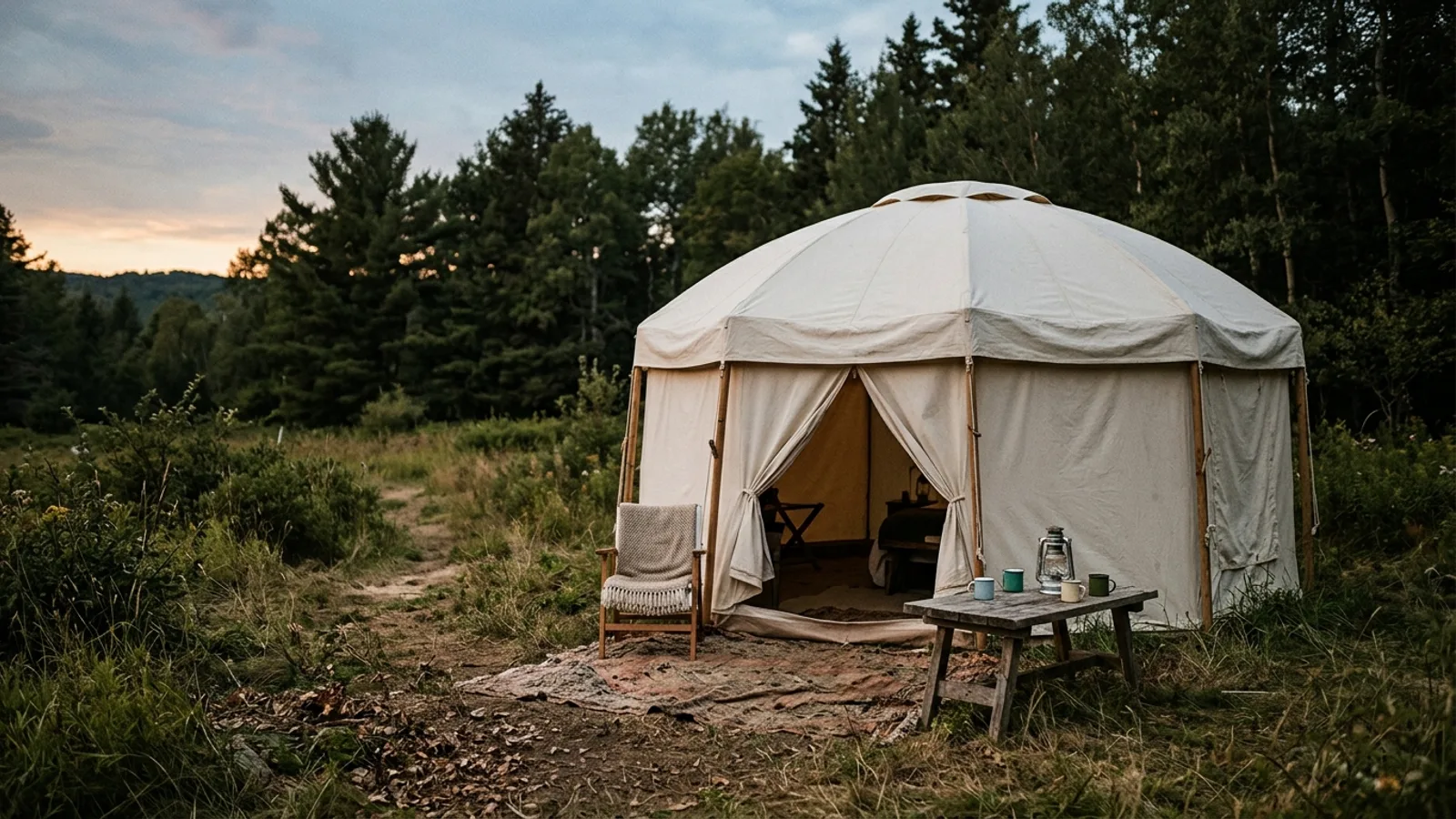
- Yurts: Round, structured tents with a rigid frame, often insulated well enough for cooler weather, with room for furniture and sometimes a kitchenette.
- Treehouses: Elevated structures built into or around trees, ranging from simple sleeping platforms to fully enclosed rooms with plumbing.
- Cabins: The most conventional option, offering four solid walls, insulation, and standard furnishings, sometimes with a rustic exterior to match the setting.
- Domes and unusual structures: Geodesic domes, converted rail cars, and other novelty builds show up at some sites, often with large windows for stargazing or scenic views.
Before booking, check specifically what's included — heating or cooling, a private bathroom versus a shared one, running water, and how far the structure is from parking. Listings can vary enormously even within the same category.
What to Expect in Terms of Amenities
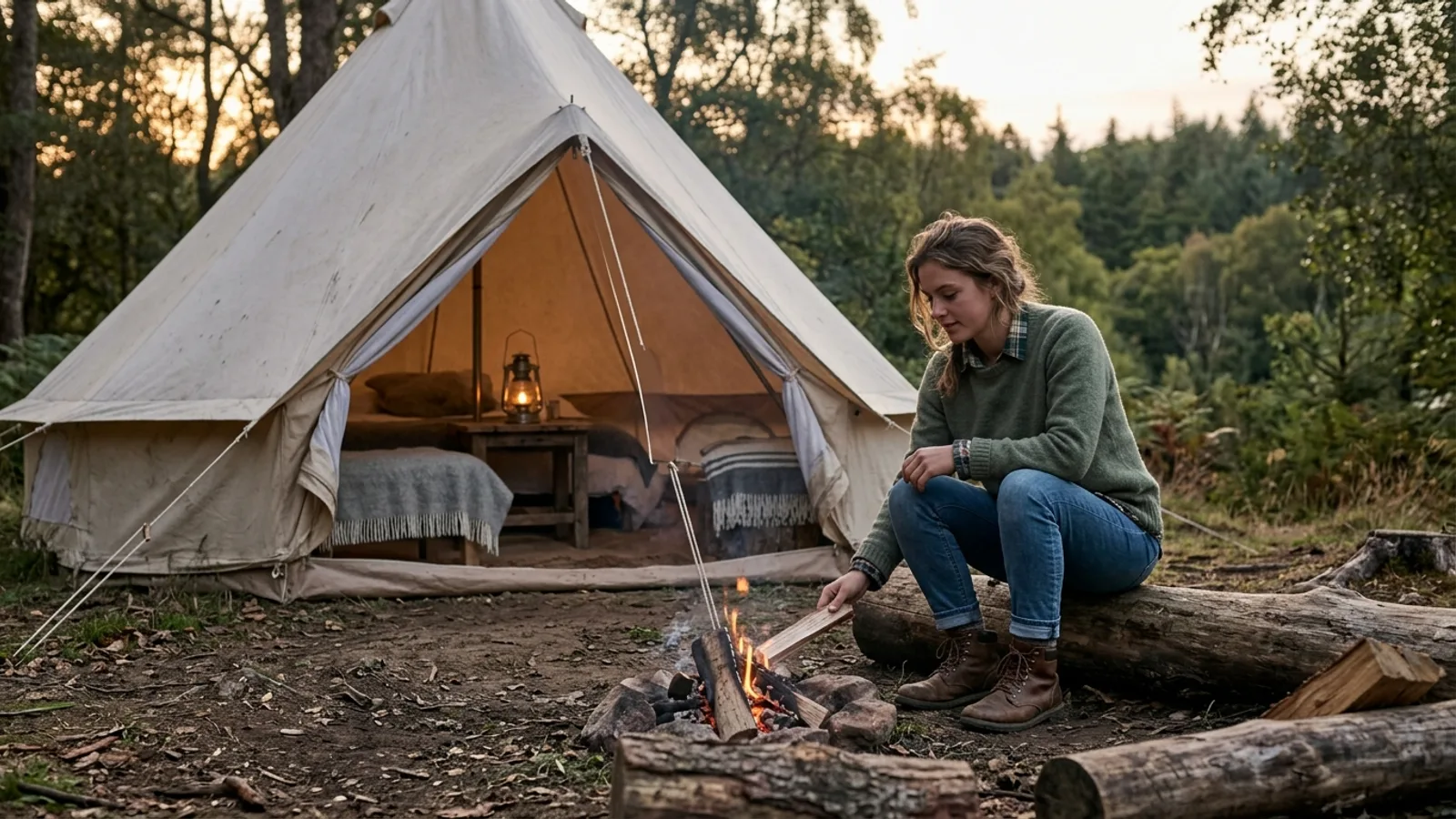
Amenities differ by site, but common features include a real mattress and bedding, some form of climate control, lighting and outlets, and either a private or shared bathroom with hot water. Higher-end sites may add a kitchen or kitchenette, a deck or porch, a fire pit, and sometimes a hot tub. Some properties also offer on-site dining, guided activities, or access to shared facilities like a pool.
The tradeoff for these comforts is usually price and availability — glamping accommodations are typically limited in number at any given property, and popular sites can book up well in advance, especially for weekends and peak seasons.
Planning a Trip
Choosing a Site
Think about what you actually want from the trip. If you want quiet and scenery, prioritize location and privacy over amenities. If you want a special occasion or an easy first outdoor trip, prioritize a private bathroom and climate control. Read recent guest reviews carefully, since conditions like insulation quality, noise from neighboring sites, and bathroom cleanliness vary a lot and are easy for listings to gloss over.
Confirm what's actually provided versus what you need to bring — some sites include linens and towels, others expect you to bring your own. Ask about check-in logistics too, since some glamping sites require a walk from a parking area with no vehicle access to the structure itself.
What to Pack
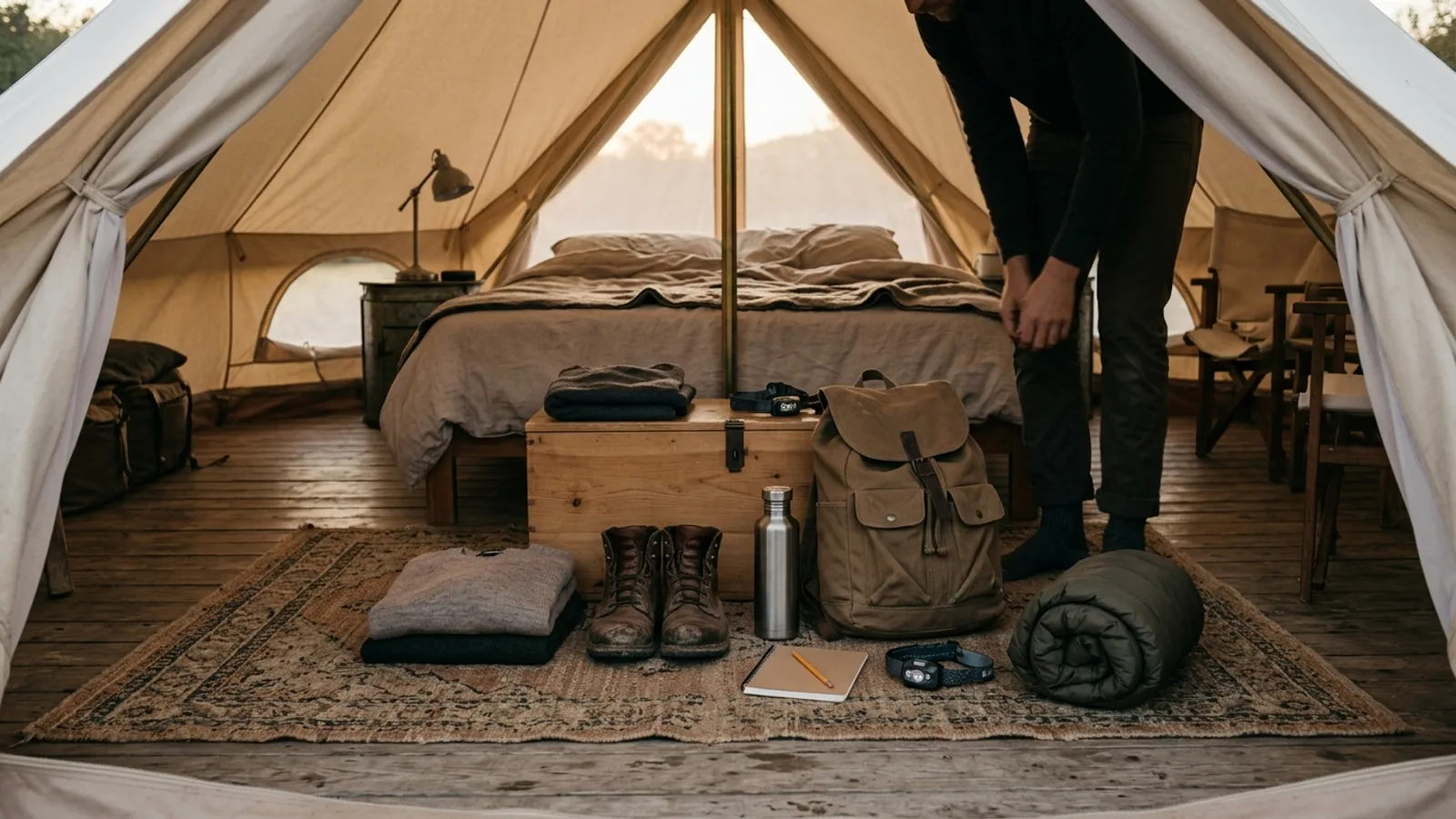
Even with a furnished structure, pack for the outdoors: layered clothing for temperature swings, sturdy shoes for uneven ground, a headlamp or flashlight for nighttime walks to a bathroom or fire pit, and any personal toiletries not provided on-site. If the site lacks power outlets or reliable cell service, bring a portable battery and let people know you may be hard to reach.
Check the weather forecast close to your trip date and pack accordingly — canvas tents and yurts can get cold at night even in mild seasons, and many don't have air conditioning for hot weather.
Making the Most of It
Build in unstructured time to actually be outside — a short hike, time by water, or simply sitting outside in the evening. The appeal of glamping is proximity to nature, and it's easy to spend the whole stay indoors enjoying the furnishings instead. If the site offers guided activities, local wildlife viewing, or stargazing, plan around those rather than treating the accommodation itself as the whole trip.
Finding Glamping Options Near You
Glamping sites exist near most major metro areas as well as inside or adjacent to many state and national parks. Searching by region along with terms like "glamping," "safari tent," or "yurt rental" will surface options, and park directories or booking platforms that list unique stays are a reliable way to compare what's available in a given area. When possible, look for sites within or bordering public land, since that generally means better trail access and fewer restrictions on nighttime activities like stargazing or campfires.
Thinking About Impact
Because glamping structures are more built-out than a backpacking tent, they can have a larger footprint on the land they sit on. Look for operators who describe how they manage water use, waste, and energy, and who limit the number of structures per site rather than maximizing capacity. Basic outdoor etiquette still applies: stay on marked paths, don't feed wildlife, pack out any trash the site doesn't handle, and keep noise down in shared or natural areas.
Is Glamping Right for You?
Glamping works well if you want the setting and quiet of the outdoors without the physical effort or gear investment of traditional camping. It's a strong option for special occasions, family trips with a wide age range, or anyone easing into outdoor travel. If your priority is remote backcountry access or minimal cost, traditional camping or backpacking will usually serve you better. Matching the format to what you actually want from the trip is the biggest factor in whether it feels worth it.