Glamping Packing List: What to Bring for a Comfortable Trip
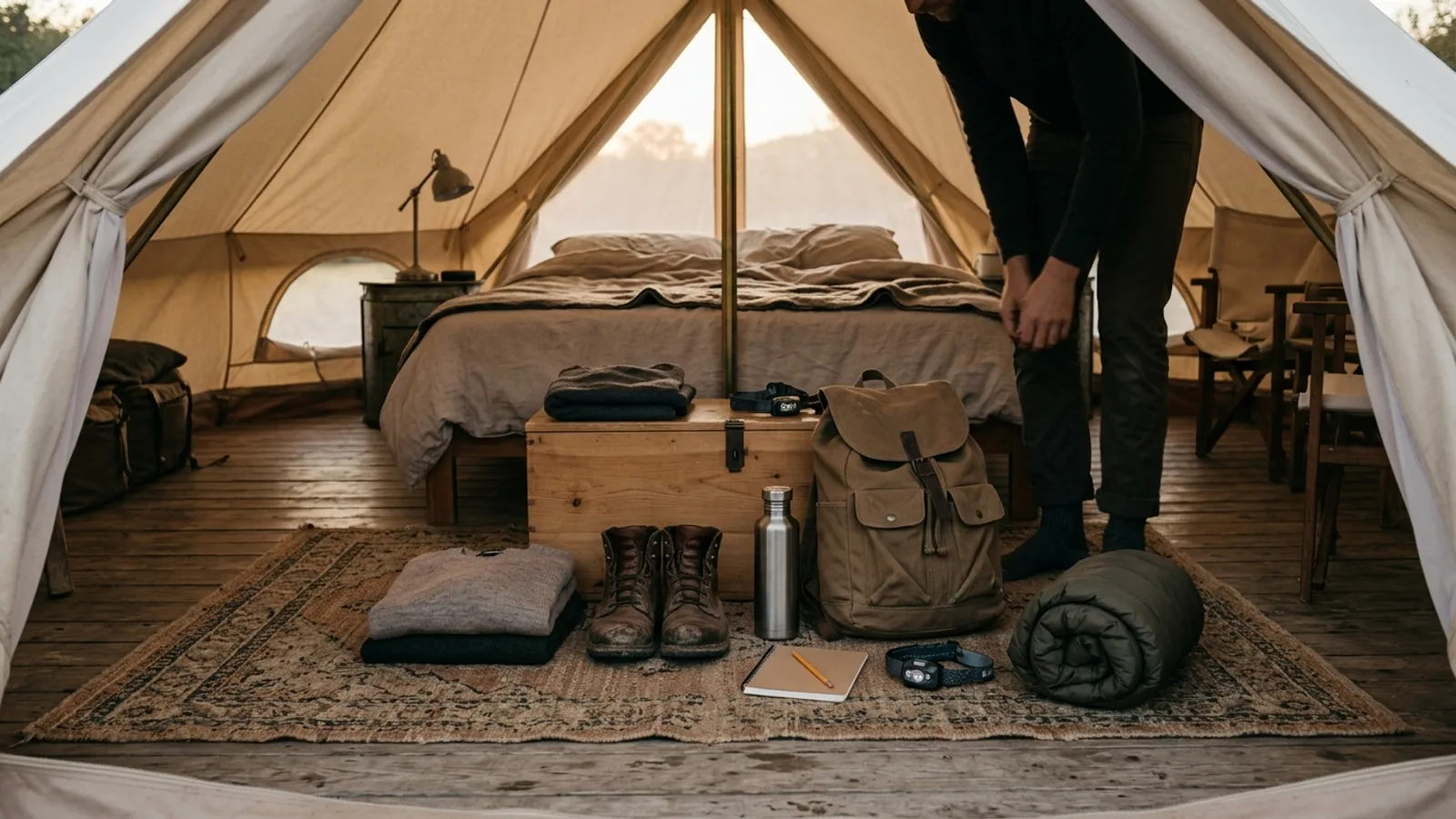
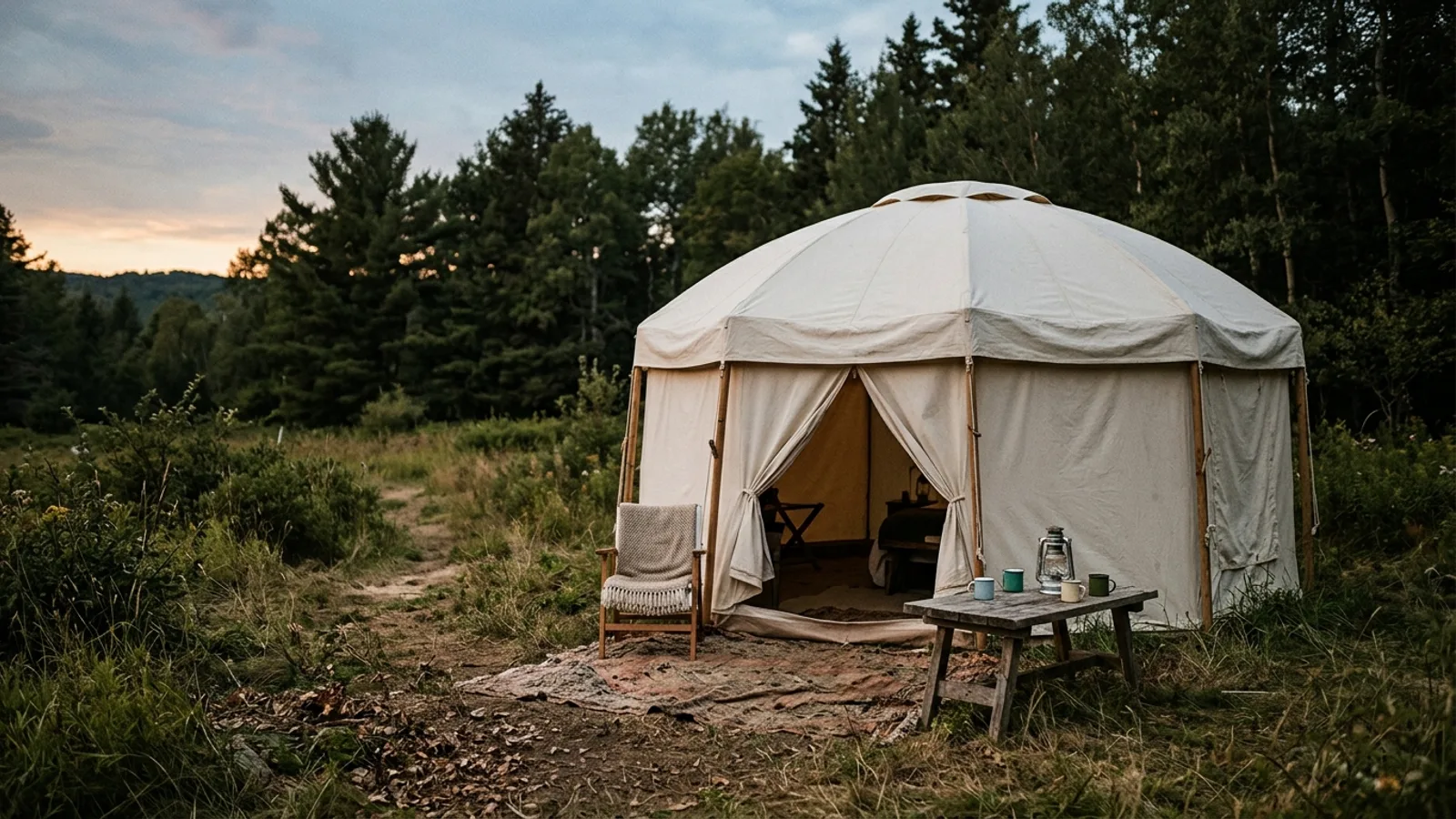
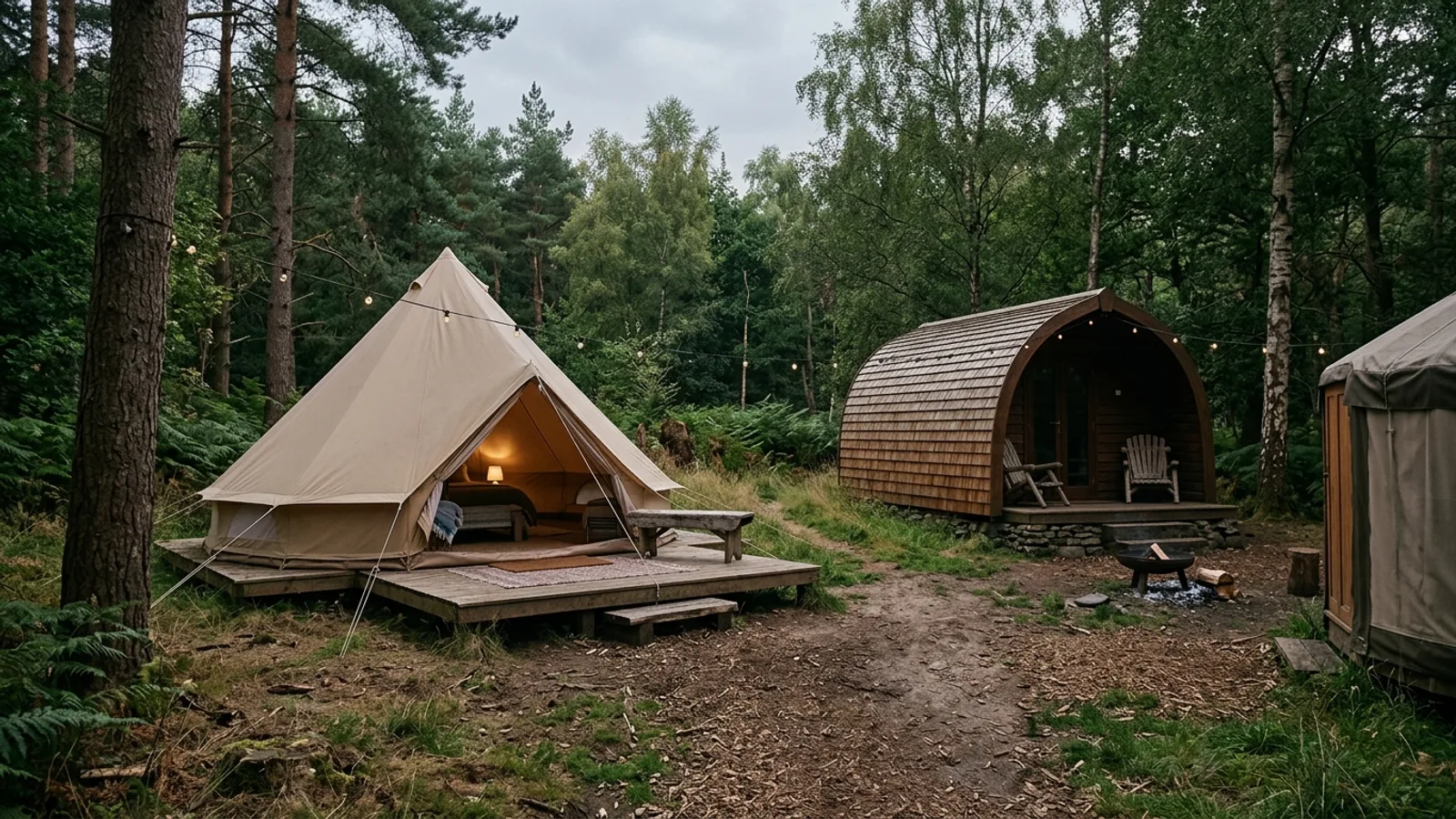
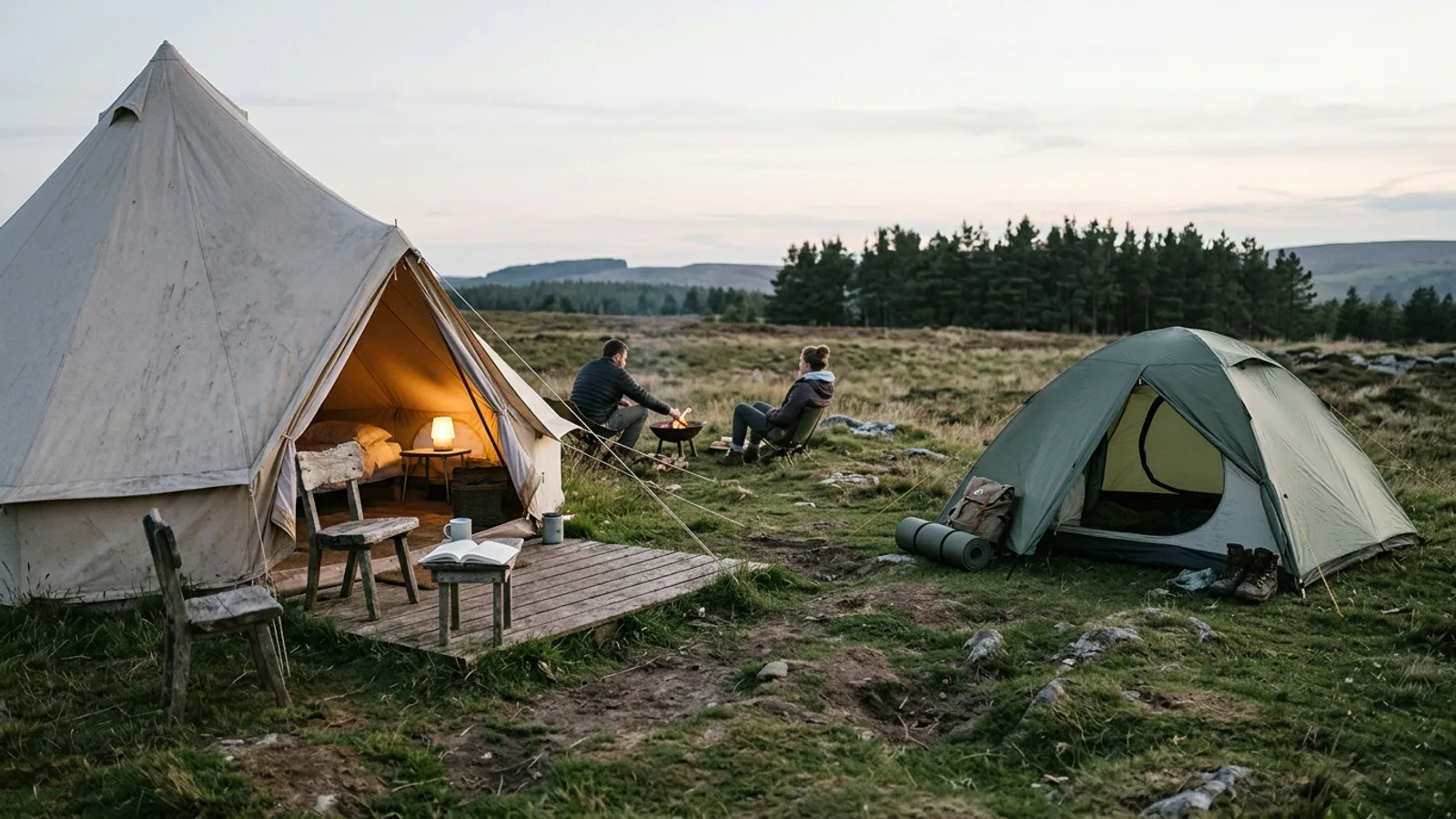
Glamping sits between a hotel stay and traditional tent camping. You're still outside, still dependent on what you bring, but the goal is comfort rather than minimalism. The packing list below is organized by category so you can adapt it to whatever kind of site you're heading to, whether that's a furnished platform tent, a yurt, or your own tent set up with extra comforts.
Shelter and Sleep
Even if your site provides a tent or structure, check in advance exactly what's included. Many glamping setups supply the shelter and a bed frame but leave bedding, pillows, and extra layers up to you.
- Bedding: Bring sheets sized for the mattress or cot you'll be using, along with a blanket or comforter suited to nighttime temperatures. Nights at elevation or near water can be much colder than daytime temperatures suggest.
- Pillows: A pillow from home packs down more than you'd expect and makes a real difference to sleep quality.
- Extra layer for cold snaps: A packable throw or sleeping bag liner adds warmth without taking up much space, useful if the weather turns colder than forecast.
Seating and Comfort
A folding chair with decent back support is worth the extra bulk if you're staying more than a night or two. Look for one that packs into a compact bag and can handle uneven ground.
An outdoor rug or mat placed at the entrance of your tent keeps dirt and moisture from tracking inside, and gives you a clean surface for bare feet.
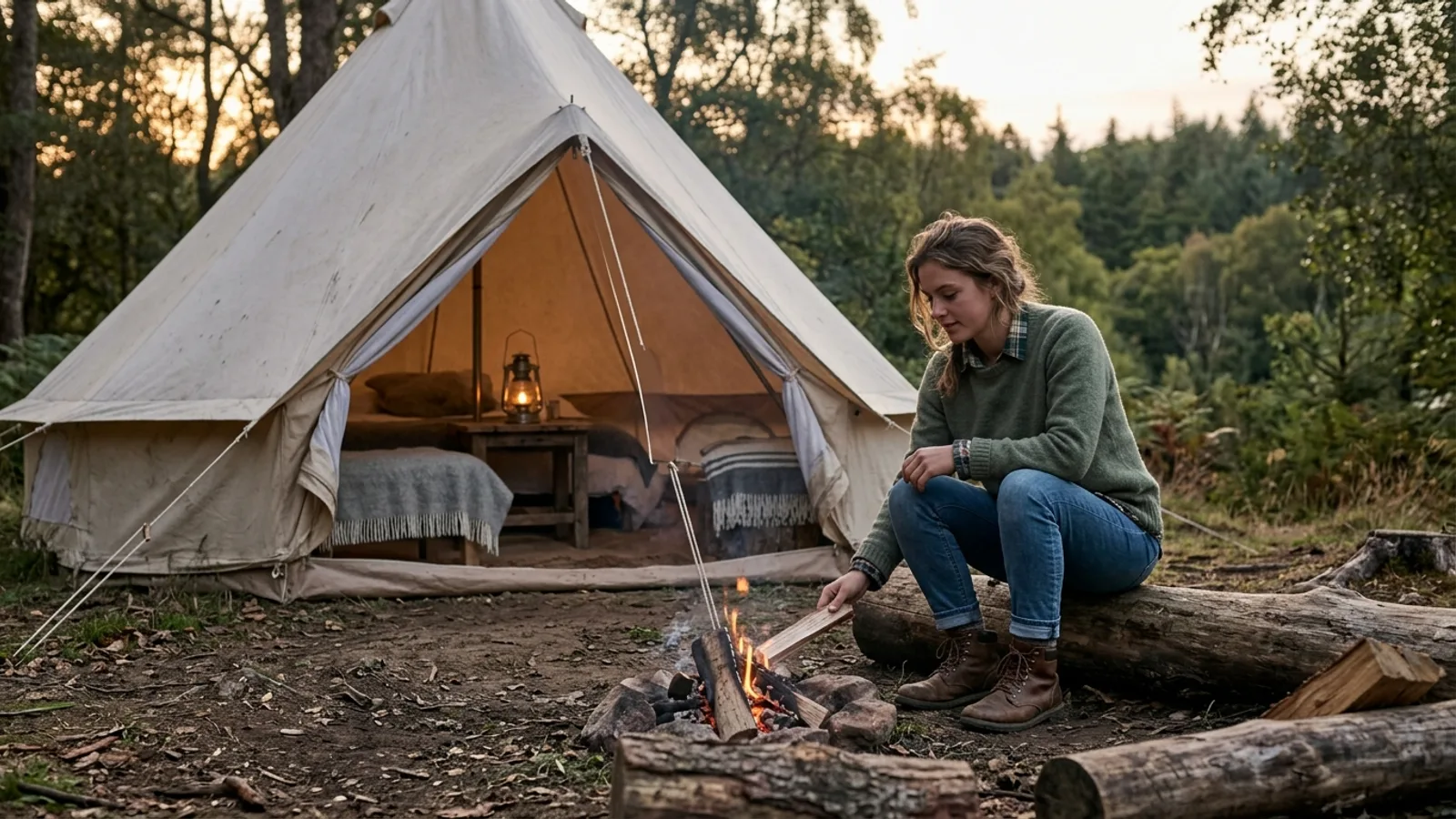
For lighting, battery-powered lanterns or string lights are safer than open flames inside or near fabric structures. Bring more battery power than you think you'll need, since cold weather drains batteries faster.
Managing Temperature
A small battery or rechargeable fan can make a real difference in warm, still air, especially inside a tent with limited airflow. In cooler conditions, a portable heater rated safe for enclosed spaces can help, but always follow the manufacturer's ventilation and carbon monoxide safety instructions, and never use a heater or open flame unattended or while sleeping.
Cooking and Food Storage
Outdoor cooking is one of the best parts of glamping, and a little preparation goes a long way.
- Cooking setup: A compact stove or portable grill, plus a small set of pots, pans, and utensils, covers most meals. A sharp knife, spatula, and tongs handle most prep and cooking tasks.
- Cooler: An insulated cooler with good sealing keeps perishables safe longer. Pack ice or reusable ice packs, and keep raw meat separated from other food to avoid cross-contamination.
- Storage: Resealable bags and containers keep food fresh and make packing out trash easier. Foil is useful for both cooking and quick cleanup.
- Seasoning kit: A small container with salt, pepper, and a couple of favorite seasonings or condiments upgrades simple camp meals without adding much weight.
Store all food securely, especially overnight. In many parks, proper food storage isn't just about pests — it's a safety requirement where wildlife is active.
Bathroom and Hygiene
Even at a well-appointed site, it helps to bring your own basics.
- Towels: Quick-drying towels are more practical than bulky bath towels and take up less space.
- Toilet paper: Worth carrying even if facilities are provided, and biodegradable options are a good choice if you'll ever need to use a backcountry setting.
- Portable shower: A solar or battery-powered shower is useful at sites without running water, letting you rinse off after a hike or swim.
- Toiletries: Travel-sized toothbrush, toothpaste, soap, shampoo, and deodorant cover the basics without excess bulk.
- Sunscreen: Reapply regularly during the day, even if it's overcast — UV exposure adds up outdoors.
Entertainment and Activities
Glamping leaves plenty of time for relaxing, so it's worth bringing something to fill it.
- Portable speaker: Useful for music around the site, but keep the volume considerate of neighboring campers and any quiet hours in effect.
- Outdoor games: Lawn games like cornhole or a simple frisbee pass the time well and don't require much setup.
- Hiking gear: If trails are nearby, bring sturdy footwear, a daypack, water, and a paper map or downloaded offline map, since cell service is often unreliable in park settings.
Final Checklist Tips
Before you leave, confirm exactly what your site provides versus what you need to bring — this varies enormously between glamping setups. Pack layers for temperature swings, secure food storage for wildlife safety, and enough lighting and power backup to get through an evening without a working outlet nearby. With those basics covered, the rest of the trip is really about enjoying the setting.