Dry Camping (Boondocking): A Practical Guide to Camping Without Hookups
What Dry Camping Means
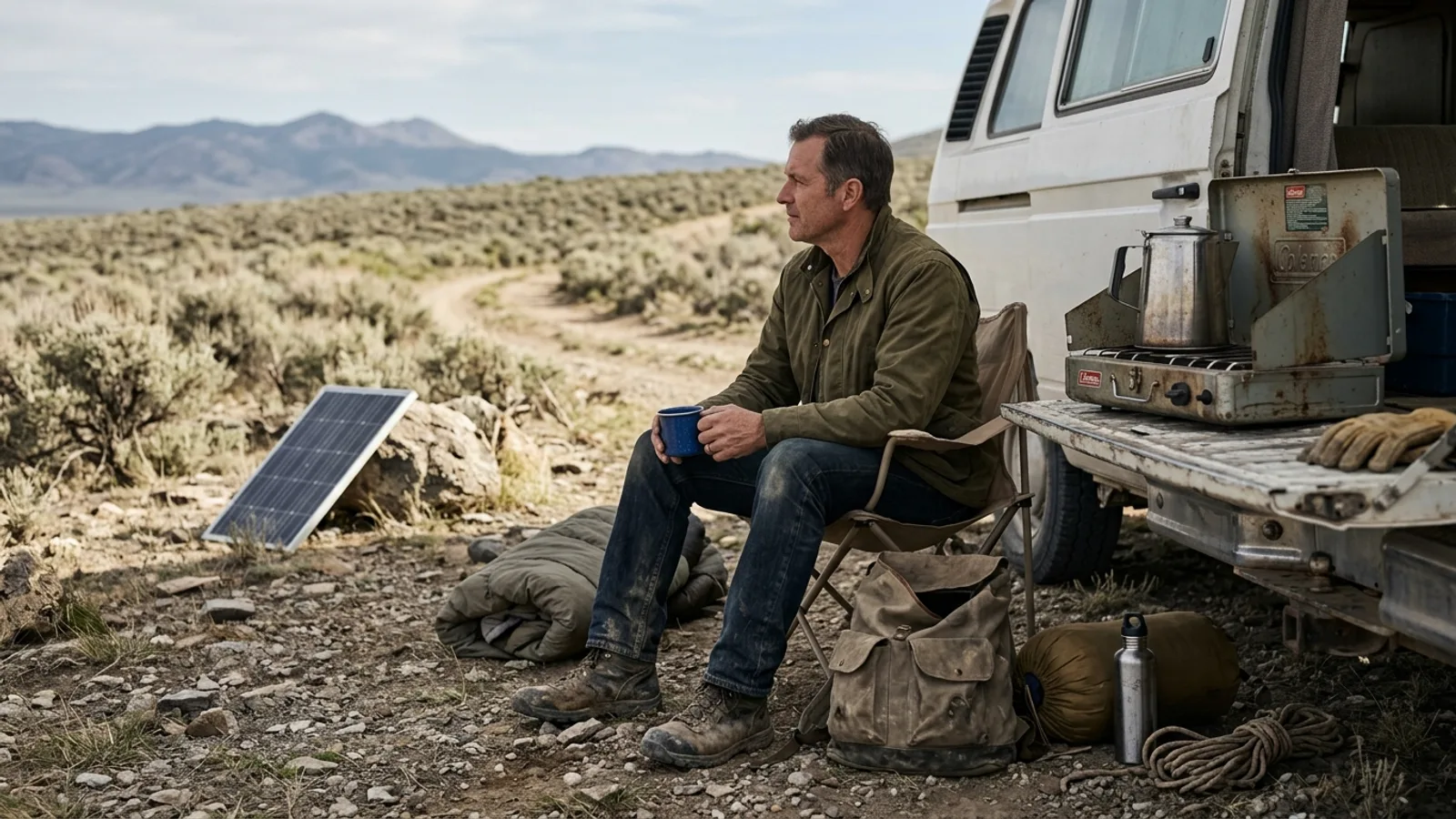
Dry camping is camping without hookups: no shore power, no piped water, no sewer connection. It applies to RVs, van conversions, truck campers, and tent camping in remote spots. Everything you use — water, power, light, refrigeration — comes from what you bring or generate yourself.
It's sometimes called boondocking, though that term usually refers more specifically to dry camping on public land away from developed campgrounds, often for free.
Why People Choose It
Dry camping opens up places a hookup-dependent trip never reaches: forest roads, desert flats, alpine trailheads, and quiet pull-offs far from crowded campgrounds. The appeal is usually some mix of the following:
- Access to quieter, more remote settings. Many of the best views and least crowded nights are in places without any infrastructure at all.
- Lower cost. Dispersed sites on public land are frequently free or low-cost compared with a full-hookup campground.
- Flexibility. You can often choose your own spot within a broader area rather than being assigned a numbered site.
- More space and privacy than a tightly packed campground loop.
The Trade-Offs
Self-sufficiency is the real cost of admission. Without hookups, you're managing a small closed system: a finite water supply, a finite power supply, and finite space for trash and waste. That takes planning, and it takes discipline once you're out there — most first attempts at dry camping fail not because of remoteness but because someone ran out of water or battery sooner than expected.
Rules also vary a great deal by land type and location. What's allowed on one stretch of public land may be prohibited a mile down the road, and enforcement, stay limits, and site conditions can change with the season. Always check current local rules before you go, since regulations are set locally and do change.
Preparing Your Vehicle and Gear
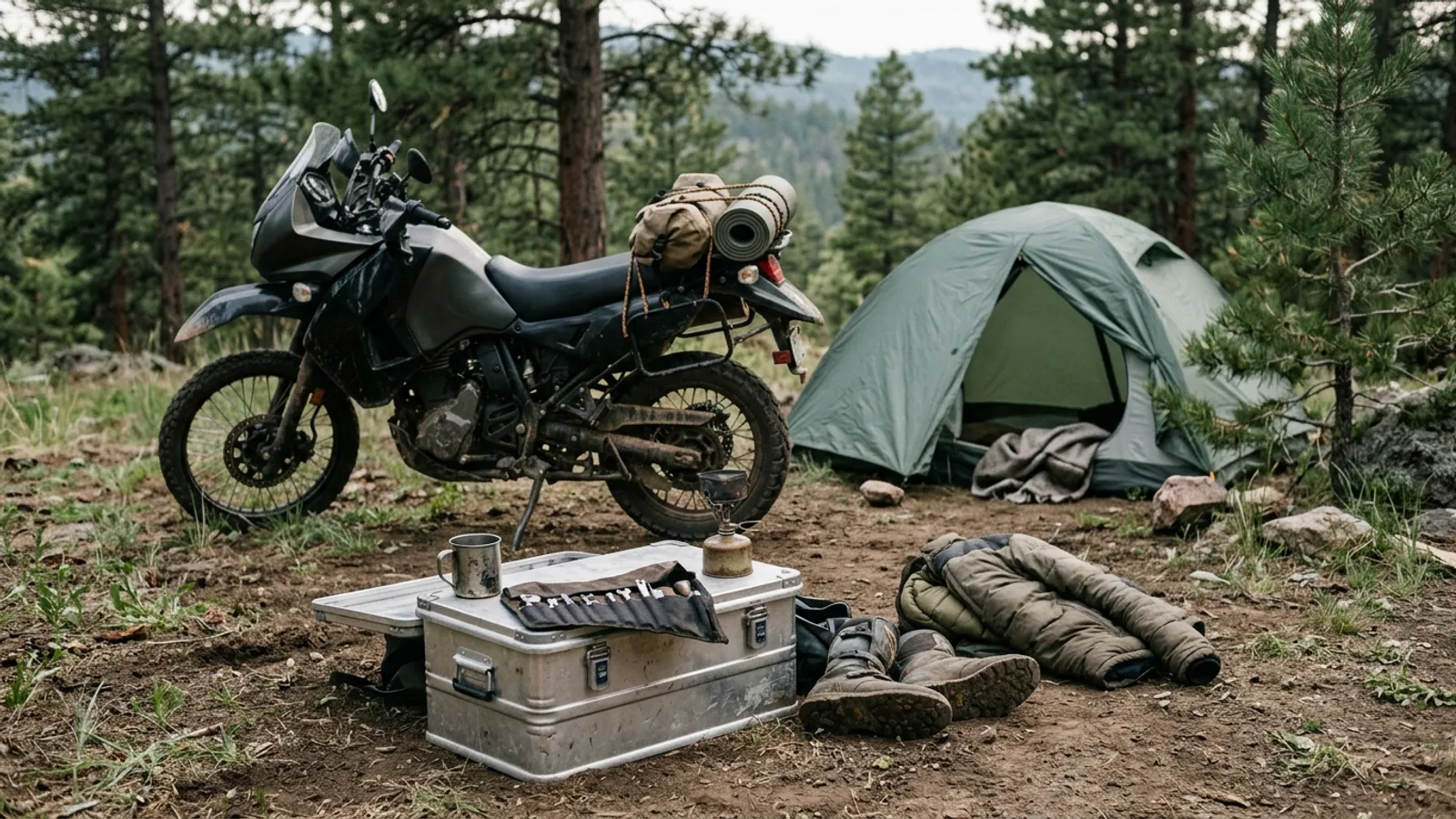
Before any dry camping trip, give your vehicle a real inspection: tires, brakes, fluid levels, and battery health. Remote roads are a bad place to discover a mechanical problem, and towing from a dispersed site can be difficult or impossible.
Core gear to plan around:
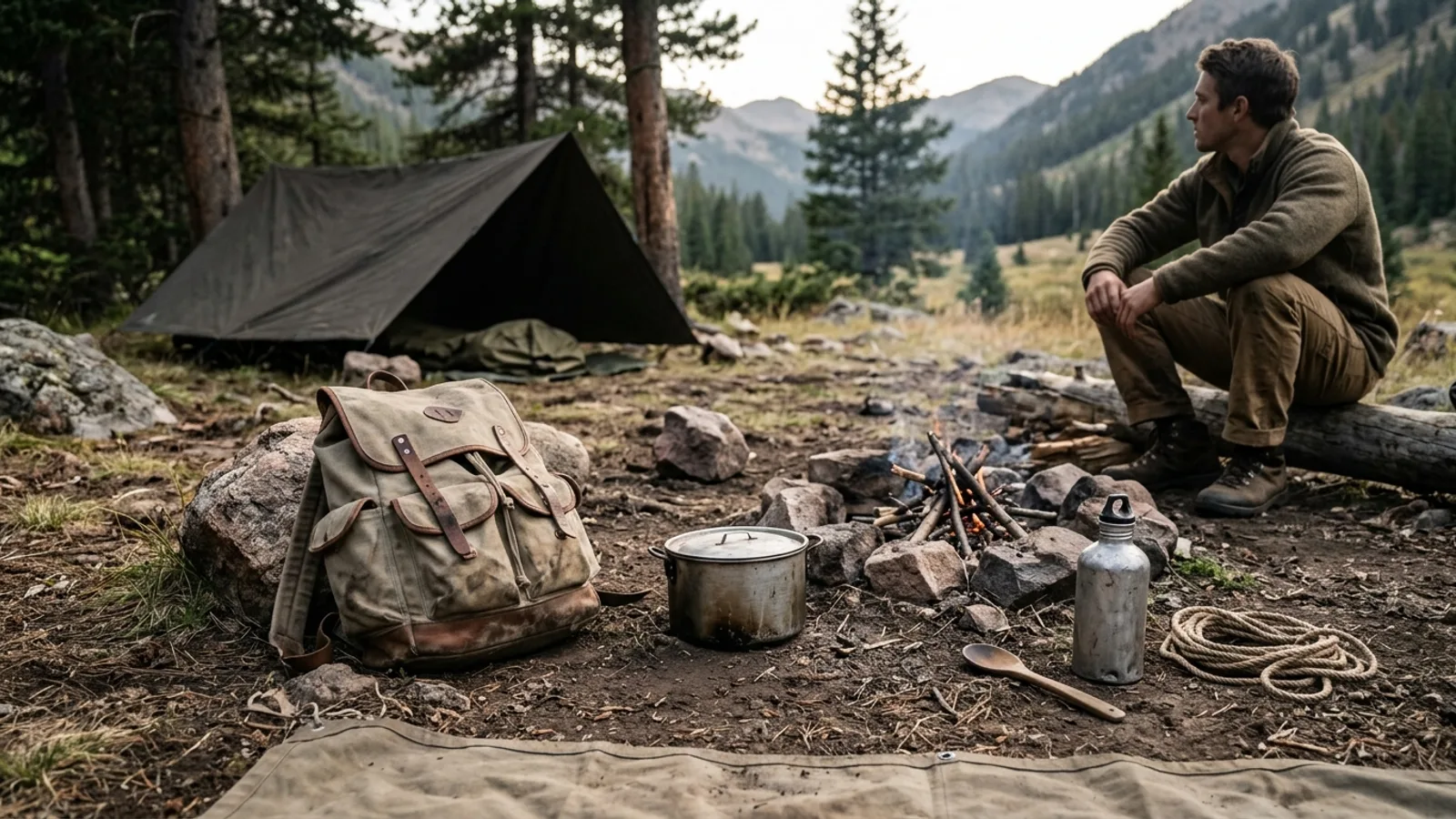
- A reliable way to cook without hookups (a camp stove or built-in propane system).
- A method for purifying or filtering water if you'll supplement your carried supply from a natural source.
- A power plan — house batteries, solar panels, or a generator — sized to what you'll actually run (lights, fridge, fans, electronics).
- Basic emergency supplies: flashlight or headlamp, spare batteries, a first-aid kit, and a way to signal for help if you have no cell service.
- A physical map of the area, since navigation apps can fail without a signal.
Managing Water and Food
Plan water use per person per day for drinking, cooking, and basic cleaning, then add a margin for the unexpected. Carrying separate containers for drinking water and general-use water lets you ration more precisely if a trip runs long.
Favor non-perishable or long-lasting food that needs minimal water and cleanup. A cooler with a well-planned ice or ice-pack rotation can extend how long fresh food lasts, but plan meals assuming refrigeration is limited.
If you expect to draw water from a stream, lake, or spring, treat it every time — filtration, chemical treatment, or boiling — regardless of how clean it looks.
Power Without Hookups
Match your power plan to your actual draw. A phone and a few LED lights need very little; a compressor fridge, fans, and charging multiple devices need considerably more. Solar panels work well for steady, quiet recharging in sunny conditions but underperform in shade, cloud cover, or short winter days. A generator can cover gaps but adds noise, weight, and fuel to manage, and many public lands and quiet-hours rules restrict when they can run.
Conserve deliberately: switch off lights and devices not in use, keep refrigerator openings brief, and know your battery's usable capacity rather than its full rated capacity.
Understanding Rules and Regulations
Where dry camping is allowed, and for how long, depends entirely on who manages the land:
- National forests and other multi-use public lands often allow dispersed camping outside of developed sites, typically with a maximum stay length and requirements to camp a minimum distance from water sources and roads.
- National parks generally restrict camping to designated campgrounds or backcountry zones; dispersed roadside camping is usually not permitted.
- State parks vary widely — some offer basic no-hookup sites within a developed campground, which isn't the same as dispersed boondocking.
- Private land requires the landowner's explicit permission; showing up and assuming it's fine is not acceptable practice.
- Business parking lots sometimes tolerate overnight RV parking, but this is at the discretion of the property and can change without notice — always ask first, and treat it as a place to sleep, not a campsite with amenities.
Because these rules shift and are set at the local level, confirm current regulations with the specific land manager or park office before relying on any particular spot.
Choosing a Location
Think about what you actually want from the trip. Deep public-land dispersed camping offers the most solitude but the least support — no water, no trash service, no help nearby. A no-hookup site inside a developed campground offers a middle ground: restrooms, sometimes potable water fill-ups or a dump station, and camp hosts, while still skipping the cost and clutter of full hookups. Matching the location to your water and power capacity, and to your comfort with being on your own, matters more than any specific place.
Leave No Trace Basics
Dry camping's freedom comes with more personal responsibility for impact, since there's no campground staff cleaning up after you. Camp on already-disturbed or durable surfaces rather than creating a new clearing. Pack out all trash, including food scraps. Manage human waste according to the land manager's guidance — this often means a portable toilet system or burying waste well away from water sources and trails. Leave the site in the same, or better, condition than you found it.
Tips for a Smoother Trip
- Arrive with margin. Carry more water, food, and power capacity than your trip length strictly requires.
- Scout before you commit. If a site looks questionable — soft ground, blocked exit, obvious flood path — move on rather than risk getting stuck.
- Arrive before dark whenever possible, especially somewhere new; it's far easier to judge a site and level your vehicle in daylight.
- Track your resource use daily — water level, battery percentage, propane — so you're never surprised.
- Have a backup plan. Know a second location or a way out if your first choice is full, closed, or unsuitable.