Fly Fishing for Beginners: Gear, Casting, and Reading the Water
Fly fishing differs from conventional fishing mainly in how the line and lure are delivered. Instead of a weighted lure pulling line off a reel, a heavier line is cast, and its weight carries a nearly weightless fly to the water. That single difference shapes everything else about the gear, the technique, and the way you approach a river or lake.
How Fly Fishing Works
A fly rod, reel, and line work together to cast an artificial fly that imitates an insect, baitfish, or other small prey. The angler casts by loading the rod with the weight of the line itself, moving it back and forth in a controlled arc until enough energy builds to send the fly toward the target. Once on the water, the goal is to make the fly drift or move the way real prey would, since fish key in on natural motion as much as appearance.
Essential Gear
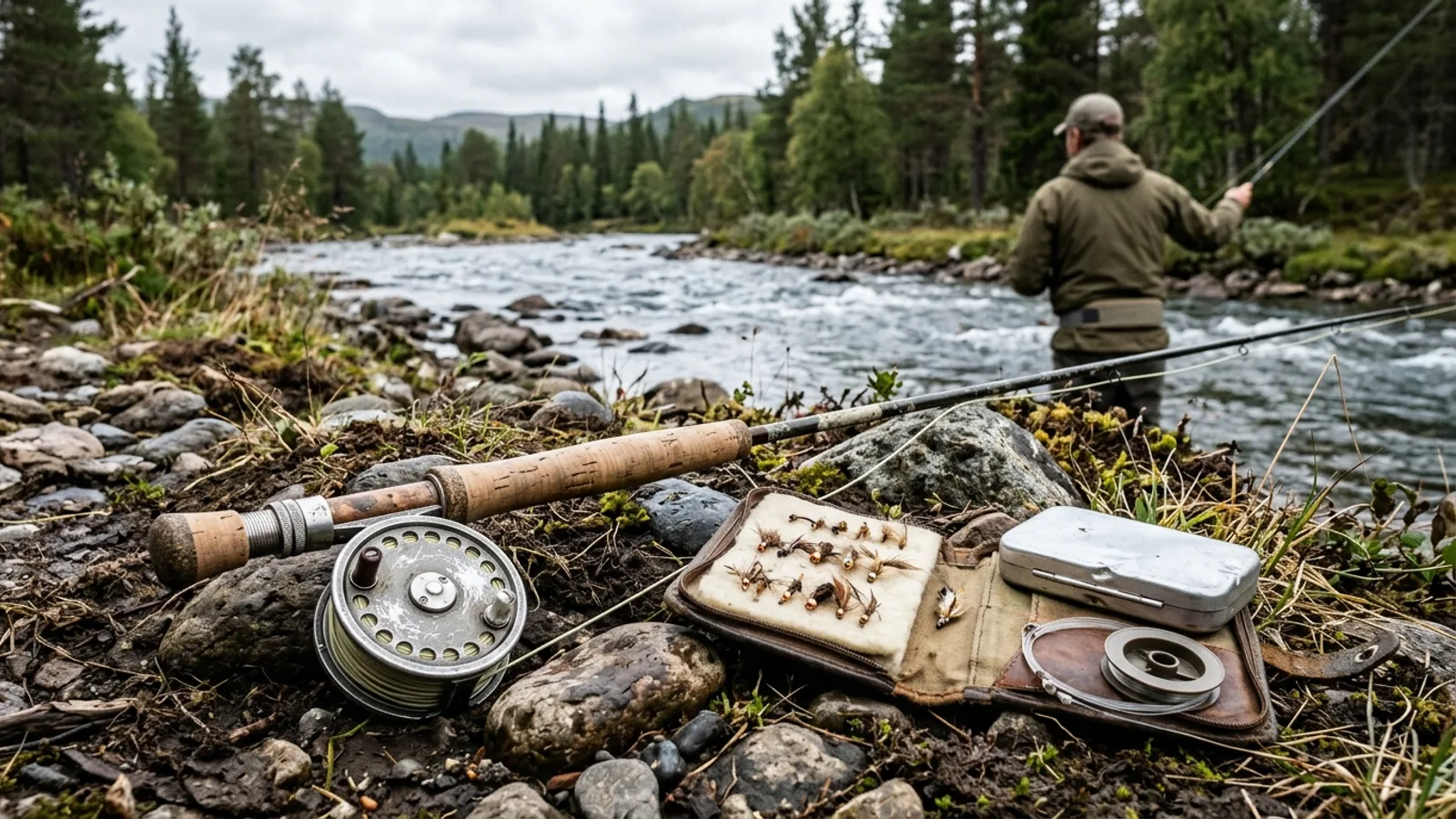
A basic setup has five parts, and understanding what each one does will help you buy sensibly and troubleshoot problems on the water.
Fly Rod
Rods are described by length and a "weight" number that must match your line weight. Lighter weights suit small streams and smaller fish; heavier weights handle wind and larger species. Most beginners do well with a mid-weight, medium-fast action rod, which balances forgiveness with enough stiffness to cast accurately.
Reel
For most freshwater fly fishing, the reel's main job is to store line and provide light drag when a fish runs. A simple, smoothly-functioning drag is more important than sophisticated features when you're starting out. Balance the reel's weight against the rod so the outfit doesn't feel tip- or butt-heavy.
Fly Line
Line weight should match the rod. Floating line is the standard choice for a first outfit, since it works in the widest range of conditions and is easiest to see and control. Sinking or sink-tip lines are more specialized tools you can add later.
Leader and Tippet
The leader is a clear, tapered length of line connecting the fly line to the fly; tippet is added at the terminal end and replaced as needed. Thinner tippet is less visible to fish but breaks more easily, so the choice is a tradeoff between stealth and strength that shifts with water clarity and target species.
Flies
Flies broadly fall into dry flies (fished on the surface), nymphs (fished below the surface to imitate immature insects), and streamers (fished actively to imitate baitfish or larger prey). Carrying a small, varied selection covering all three types will handle far more situations than a large collection of a single style.
Casting Basics
Good casting technique matters more than expensive gear for making fishing enjoyable.
- Grip: Hold the rod with a relaxed grip, thumb on top for leverage and control, rather than gripping tightly like a hammer.
- Line management: Keep slack line untangled and off the ground or bottom of the boat, since tangles are the most common source of frustration for new casters.
- Backcast and forward cast: Casting is a back-and-forth motion that keeps the line moving in tight loops. Let the line fully straighten behind you before starting the forward cast; rushing this step is the most common casting mistake.
- Timing over power: Distance comes from timing and a crisp stop at each end of the stroke, not from muscling the rod. Slow down and let the rod do the work.
- Mending: Once the fly is on the water, repositioning slack line upstream or downstream helps it drift naturally instead of dragging unnaturally, which fish notice.
Practicing on grass or a lawn, without a fly attached, is a good way to build casting rhythm before you're managing a fish, current, and gear all at once.
Reading Water and Choosing a Spot
Fish position themselves where feeding is easy and effort is minimized: seams between fast and slow current, undercut banks, behind boulders, and at the head or tail of pools. Watching the surface for rises, swirls, or small disturbances tells you where fish are actively feeding right now, which is more useful than any general knowledge of the species.
Before you fish a spot, confirm you have legal access and any required permit or license, and be aware that rules can vary by water body, season, and species. Wading anglers should also be deliberate about footing on slick or uneven streambeds, moving slowly and using a wading staff in faster or deeper water if needed.
Matching Flies to Conditions
Look at what's actually flying above the water or drifting in it, and choose a fly that's close in size, shape, and color rather than an exact match. Fish often respond more to a fly's silhouette and behavior in the water than to fine details. If nothing is visibly hatching, a searching pattern fished at different depths is a reasonable way to explore what fish are willing to take.
Presentation usually matters more than fly choice. A well-drifted, natural-looking fly in a mediocre pattern will often outfish a perfectly tied fly dragging unnaturally through the current.
Building Skill Over Time
Progress in fly fishing comes from time on the water more than from any single tip. Pay attention to what works, notice how fish respond to different retrieves or drifts, and adjust rather than repeating the same approach out of habit. Patience is part of the method, not just a virtue: fly fishing rewards careful observation of water, weather, and fish behavior over quick action.
Etiquette on the Water
Give other anglers plenty of room, especially if they were fishing a stretch of water first. Avoid walking through the water someone is actively fishing, and pass quietly and at a distance if you must move past them. Handle fish you intend to release gently and briefly, keeping them in or close to the water to improve their chances of survival. Leave the area as you found it, and pack out anything you brought in.