Motorcycle Camping: How to Pack Light, Smart, and Safe
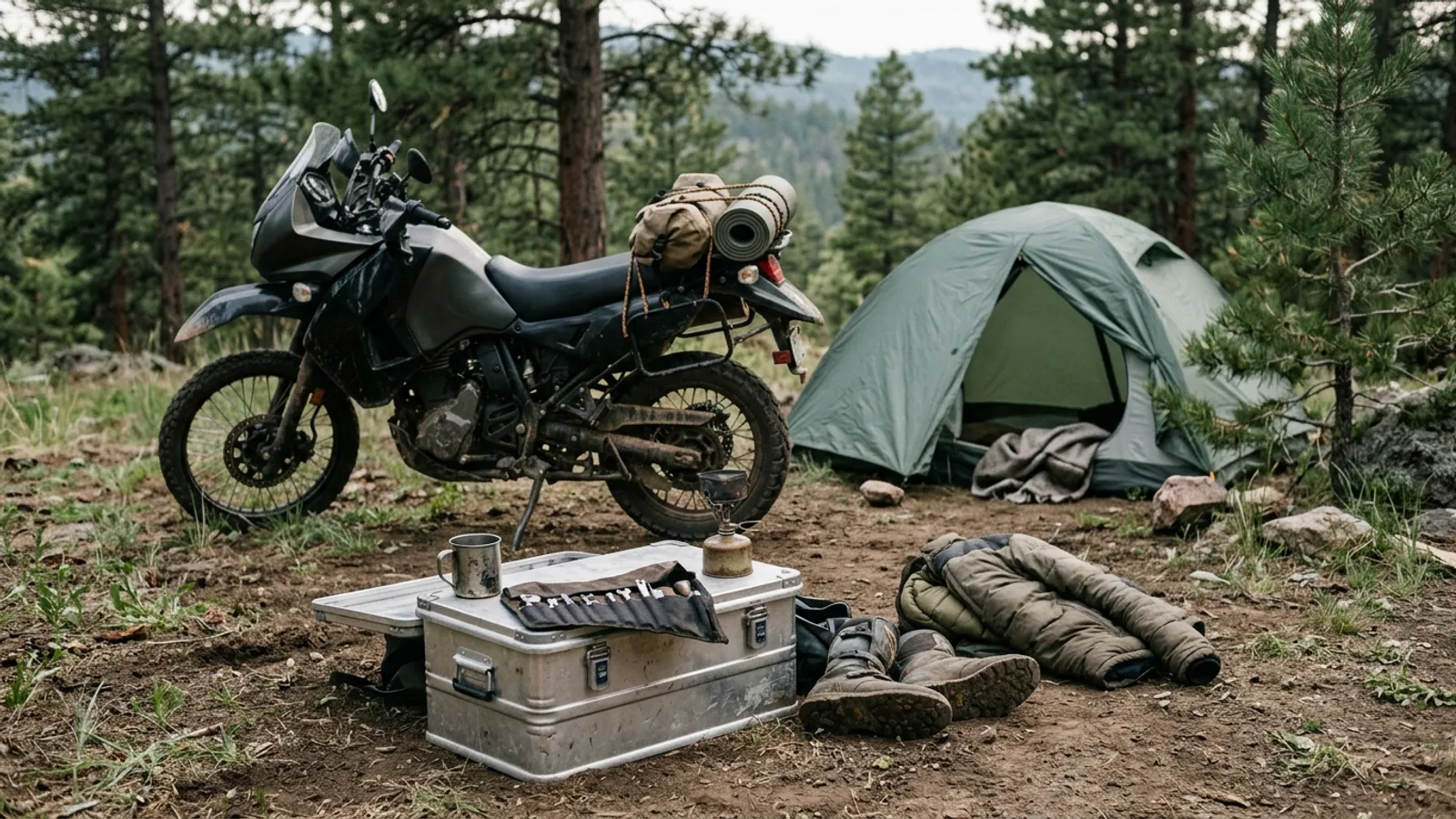
Motorcycle camping is a lesson in constraints. Unlike car camping, you can't overpack your way to comfort — every item has to earn its place in a saddlebag or strapped-down dry sack. The trick isn't finding more space; it's packing with a system so weight, balance, and access all work together.
Weight Distribution Comes First
How you load a motorcycle matters more than what you load. A bike that's top-heavy or unevenly loaded handles poorly, especially at low speeds, on gravel, or when you're tired at the end of a long day.
- Keep weight low and centered. Heavy items belong close to the bike's centerline and as low as possible, not stacked high on a rear rack.
- Balance side to side. If you're using saddlebags, aim for roughly even weight on each side so the bike doesn't pull in one direction.
- Keep the rear from getting too heavy. Overloading the tail can make the front end feel light and vague, particularly at highway speed.
- Secure everything twice. Straps loosen with vibration over hours of riding. Check tie-downs at fuel stops.
Riding Gear
Riding gear is safety equipment first and comfort equipment second, and it does double duty as your first layer of protection from weather.
- Jacket and pants: Abrasion-resistant materials with some degree of weatherproofing hold up better over a multi-day trip than casual riding wear. Ventilation matters as much as protection if you're riding in heat.
- Helmet: Fit is more important than any feature list. A helmet that doesn't fit correctly won't protect you as intended, no matter its rating.
- Gloves and boots: Look for grip, coverage, and some abrasion resistance. Ankle support on boots is worth prioritizing over pure comfort.
- Ear protection: Wind and engine noise over many hours can affect hearing over time. Foam earplugs are cheap insurance and pack down to nothing.
- Layering: Temperature swings between morning and afternoon riding are common. A packable base or mid-layer lets you adjust without carrying a second jacket.
Shelter and Sleep System
Your sleep system needs to be small, light, and fast to set up, since you'll often be pitching camp after dark or breaking it down in the cold before an early start.
- Tent: A compact, freestanding tent that pitches quickly is worth more on a motorcycle trip than one with a larger footprint or heavier pack size. Practice setup at home before you rely on it in the field.
- Sleeping bag: Choose insulation rated for the coldest temperature you realistically expect, not the average. It's easier to vent a warm bag than to add warmth to a cold one.
- Sleeping pad: Insulation from the ground affects warmth as much as the bag itself. An inflatable or compact foam pad that packs small is standard for motorcycle travel.
- Pillow: A small inflatable or compressible pillow takes up little room and noticeably improves sleep quality on multi-night trips.
Cooking and Food
Simple, packable cooking gear keeps you fed without eating up storage space.
- Stove: A small, single-burner stove that runs on a common fuel type is easiest to manage on the road, since fuel availability varies by location.
- Cookware: One pot that nests with a cup or bowl covers most trail meals. Collapsible or nesting designs save real space.
- Utensils and cleanup: A spork, a small knife, and a scrap of cloth or biodegradable soap for washing up are usually enough.
- Food storage: Keep perishables to a minimum unless you're carrying insulated storage. Sealed, crush-resistant containers protect food from both moisture and the jostling of the ride.
- Water: Carry more capacity than you think you'll need, especially in dry or remote terrain, and know before you leave whether you'll need to filter or treat water at your destination.
Storage Strategy
How you organize gear affects how enjoyable the trip is as much as what you bring.
- Hard or soft saddlebags carry the bulk of your gear and keep weight low and balanced.
- A tank bag keeps frequently needed items — phone, map, snacks — within reach without unpacking.
- A tail bag or dry sack on the back works well for lighter, less-needed items like sleeping gear.
- Waterproofing matters more than volume. Dry bags or liners protect electronics and clothing from rain and splash even if your outer luggage isn't fully waterproof.
- Pack by frequency of use. Items you need at a fuel stop or rain shower should be accessible without unpacking your whole load.
Personal Care and Extras
Small items make a real difference in comfort over a multi-day trip.
- Basic toiletries in travel sizes, plus any personal medications you rely on.
- A compact first aid kit covering minor cuts, blisters, and pain relief.
- Sun and insect protection — sunscreen and repellent take up little space and prevent bigger discomforts later.
- A headlamp is more useful than a handheld flashlight since it frees up both hands at camp.
- A multi-tool covers small repairs to gear or the bike itself.
- Quick-drying clothing reduces the amount of laundry or backup clothing you need to carry.
Packing Technique That Holds Up on the Road
Before you leave, do a short shakedown ride with your bike fully loaded. Weight that feels fine in the driveway can feel very different after an hour of highway riding or on a rough forest road. Adjust strap tension, bag position, and weight balance based on how the bike actually handles, not just how it looks packed.
Finally, plan for weather changes along your route. A route that starts warm and dry can end cold and wet within a single day, especially at elevation. Packing a rain layer and a way to keep your sleep system dry is worth the small extra weight.