How to Choose the Right Camping Blanket
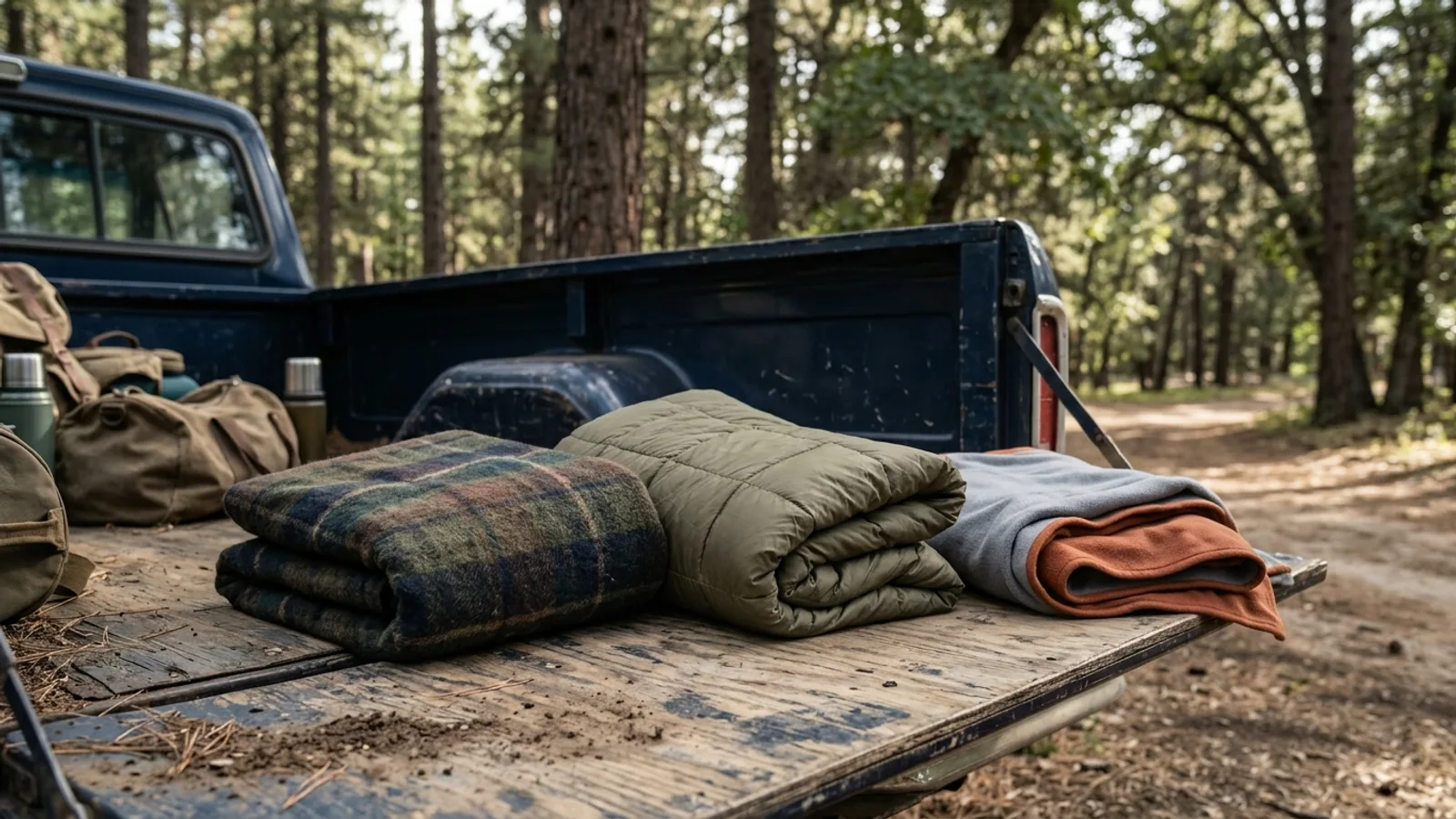
A camping blanket earns its keep in more ways than one. It adds warmth inside a sleeping bag on a cold night, gives you a clean spot to sit around the fire, doubles as a picnic or beach blanket, and can serve as an emergency layer if plans change. Choosing the right one comes down to matching material, insulation, size, and weight to how you actually camp.
Material
Wool is the traditional choice for good reason. It insulates even when damp, resists odor, and stands up to sparks near a campfire better than most synthetics. The tradeoff is weight: a wool blanket substantial enough to be warm is usually too heavy for backpacking.
Fleece and sherpa-lined blankets are soft, affordable to produce, and dry quickly, but they compress under body weight and lose some insulating power in very cold conditions. They work well as an added layer in a tent or for car camping where bulk isn't a concern.
Down provides the best warmth for its weight of any natural insulator, which makes it appealing for backpacking. It loses most of its insulating ability when wet, though, so it needs a waterproof or highly water-resistant shell and careful handling in humid or rainy conditions.
Synthetic insulation (often quilted between two layers of fabric) is the common backpacking-blanket choice. It's lighter than wool, keeps most of its warmth when damp, and generally costs less to maintain than down. It doesn't compress as small or last quite as long as high-quality down, but it's a practical middle ground for most trips.
Size and Weight
For backpacking, prioritize packed size and weight over coverage. A blanket that compresses into a stuff sack roughly the size of a water bottle and weighs well under two pounds won't be missed on the trail. For car camping or basecamp use, a larger, heavier blanket that can cover two people or double as a ground cover is more useful, since you're not carrying it far.
Think about how you'll actually use it: as a supplemental layer inside a sleeping bag, as outer bedding in a hammock or on a cot, or purely as a seat and picnic blanket. Each use case favors a different balance of size versus packability.
Insulation for Cold Weather
Warmth depends more on loft (the thickness of trapped air) than on material alone. A blanket that compresses flat when you sit on it will insulate poorly underneath you, which is why a sleeping pad or folded jacket under a blanket makes a noticeable difference on cold ground. Layering a blanket over a sleeping bag, rather than relying on it alone, is usually more effective than expecting one blanket to handle near-freezing temperatures by itself.
Water Resistance
A water-resistant backing or shell keeps morning dew, damp ground, and light drizzle from soaking through a blanket used outdoors. True waterproofing is rare in blankets and usually adds weight and cost. For most trips, a water-resistant underside paired with sensible use — not leaving it out uncovered in a downpour — is enough. If you expect sustained wet weather, plan on a dedicated rain shelter or tarp rather than relying on the blanket itself to keep you dry.
Durability and Care
Reinforced edges and tightly woven or ripstop fabrics resist snagging on rocks, branches, and campfire sparks. Wool tolerates the occasional stray ember far better than synthetic fabrics, which can melt or develop small holes if they get too close to open flame. Whatever material you choose, keep it a safe distance from the fire itself and treat any wool odor by airing the blanket outdoors for a day or two rather than trying to mask it.
Check care instructions before buying if easy washing matters to you. Some insulated blankets are machine washable; others require spot cleaning or air drying to preserve their loft and waterproof coatings.
Choosing for Your Trip
- Backpacking: prioritize a compressible, synthetic or down-insulated blanket with a stuff sack.
- Car camping or basecamp: a heavier wool or sherpa-lined blanket offers more comfort without a weight penalty.
- Multi-use (picnics, stadium events, beach trips): look for a water-resistant backing and a size generous enough for two people.
- Cold-weather trips: combine a blanket with a sleeping pad and bag rather than relying on the blanket alone for warmth.
Frequently Asked Questions
What's the warmest material for a winter camping blanket?
Down offers the best warmth-to-weight ratio, and wool performs reliably even in damp conditions. Synthetic insulation is a practical alternative when you want reasonable warmth without the moisture sensitivity of down.
Do camping blankets need to be waterproof?
Full waterproofing is uncommon and not always necessary. A water-resistant backing handles dew and light moisture; for real wet weather, pair the blanket with a tarp or shelter rather than expecting the blanket to keep you dry on its own.
Are packable blankets as warm as bulkier ones?
Packable blankets trade some warmth and durability for compressibility. They work well as a supplemental layer but usually aren't a substitute for a proper sleeping bag in cold conditions.
Is it safe to use a blanket near a campfire?
Wool is the most fire-resistant common blanket material and tolerates stray sparks better than synthetics. Keep any blanket a safe distance from open flame regardless of material, since sustained heat or direct contact can damage or ignite most fabrics.