How to Choose a Backpack Cooler for Camping
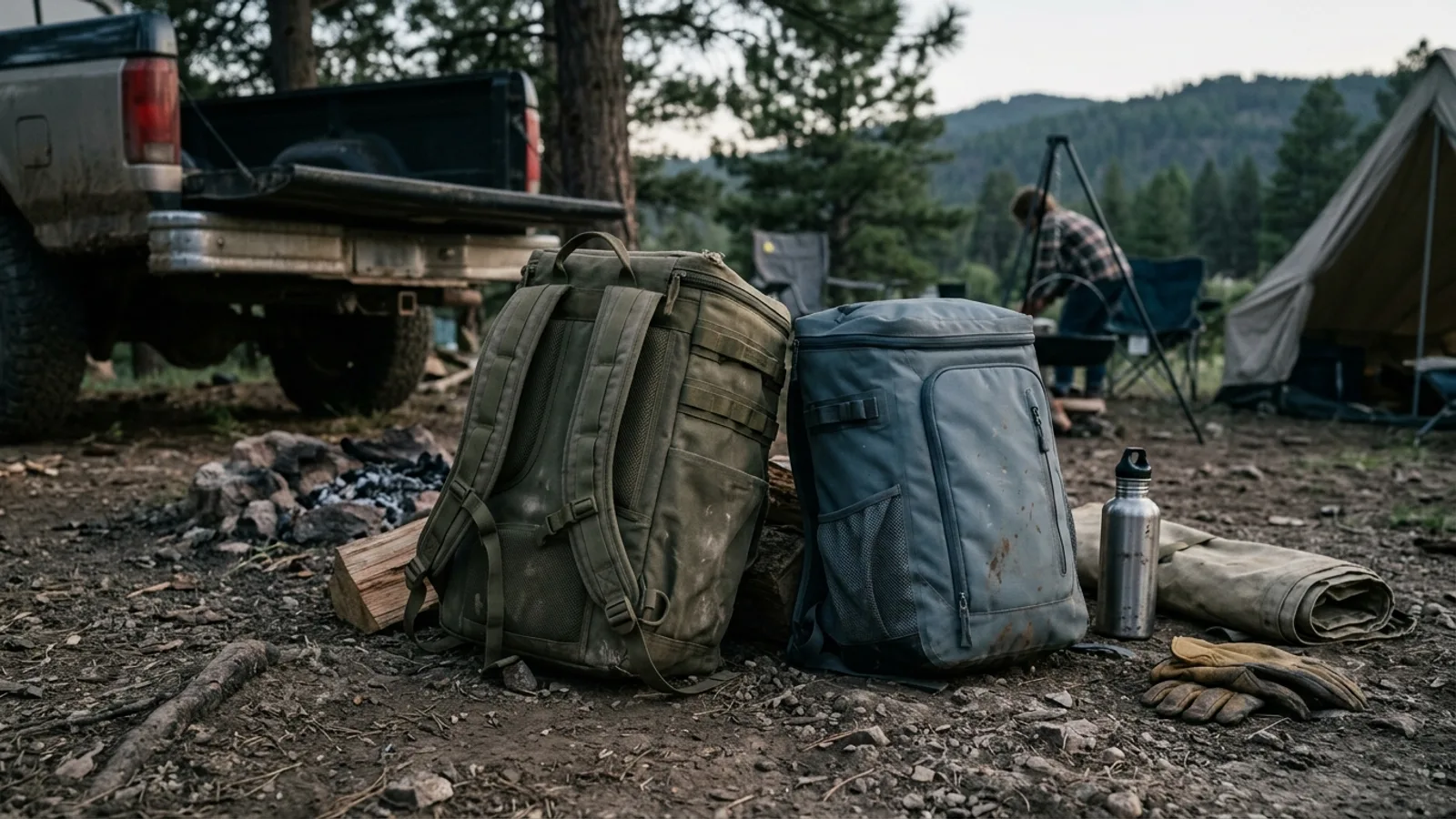
Why Consider a Backpack Cooler
Hard-sided coolers are excellent at holding cold temperatures, but they're awkward to carry any real distance. If your campsite requires a walk from the parking area, a trail hike, or a paddle to reach, a backpack-style cooler lets you carry food and drinks on your back instead of hauling a box by a handle. This frees your hands, distributes weight more evenly, and makes the whole process of getting provisions to camp much less of a chore.
The tradeoff is usually cooling duration. Soft-sided backpack coolers generally don't hold ice as long as heavily insulated hard coolers, so they work best for day trips or shorter overnight stays rather than extended trips where ice needs to last many days.
Insulation Quality
Most backpack coolers use closed-cell foam or foil-lined insulation sewn into the walls of a soft-sided pack. Thicker insulation holds cold longer but adds bulk and weight, so there's a real tradeoff between cooling performance and packability.
How you pack it matters as much as the cooler itself. Pre-chilling the cooler and its contents before loading, using block ice rather than loose cubes, and keeping the pack out of direct sun all extend cooling time significantly. A full cooler also stays cold longer than a half-empty one, since there's less air space to keep chilled.
Durability
Look at the fabric and the seams. Ripstop nylon or similar woven fabrics resist abrasion from rocks, branches, and rough loading better than lighter materials. Welded or heat-sealed seams tend to hold up better against leaks than stitched seams, since stitching creates small holes that can let moisture through over time.
Zippers are often the weak point on soft coolers. A zipper that isn't fully sealed can let cold air out and meltwater in, so if you're setting a cooler down on uneven ground, keeping it upright reduces the chance of leaks finding their way through the closure.
Capacity
Backpack coolers are often sized by how many cans they can hold, which gives a rough sense of volume but doesn't account for ice, food packaging, or bulkier items. When estimating capacity, plan for the ice itself to take up meaningful space, not just the food and drinks.
Matching capacity to the trip matters: an oversized cooler carried half-full wastes cooling efficiency and adds unnecessary weight, while an undersized one forces compromises on food or ice. For day hikes, a smaller pack is usually more comfortable; for basecamp use where the cooler stays at the campsite, a larger capacity makes more sense since you're not carrying it far.
Comfort and Carry
A loaded cooler can get heavy quickly, especially once ice is added. Padded, adjustable shoulder straps make a noticeable difference over any real hiking distance, and a padded or ventilated back panel helps if you'll be wearing it for more than a few minutes at a time.
A sternum strap or waist belt helps stabilize the load and shifts some weight off the shoulders, which is worth prioritizing if you expect to carry the cooler any real distance rather than just from a car to a picnic table.
Waterproofing
As ice melts, that water has to go somewhere. A fully waterproof liner and sealed seams keep meltwater contained inside the cooler rather than soaking through onto whatever it's set on or leaking into a car trunk or backpack. Roll-top closures, common on some soft coolers, tend to seal more reliably against leaks and moisture than zippers, though they can be slower to open and close.
If a cooler design isn't fully sealed at the closure, keeping it upright and avoiding overpacking (which strains seams and zippers) reduces the risk of leaks.
Additional Features Worth Considering
- Multiple compartments: Separating dry goods from ice-packed items keeps bread, chips, and other perishables from getting soggy.
- External pockets: Useful for keeping a phone, keys, or map separate from cold, wet contents.
- Collapsibility: Some soft coolers fold flat when empty, which is helpful for packing gear on the way out or storing the cooler at home.
- Buoyancy: A handful of soft-sided coolers are designed to float even when full, which can be a genuine advantage near water.
None of these features matter much if the core insulation and durability aren't solid, so treat them as tiebreakers between otherwise similar options rather than the main deciding factor.