Choosing a Solar Battery Setup for Camping
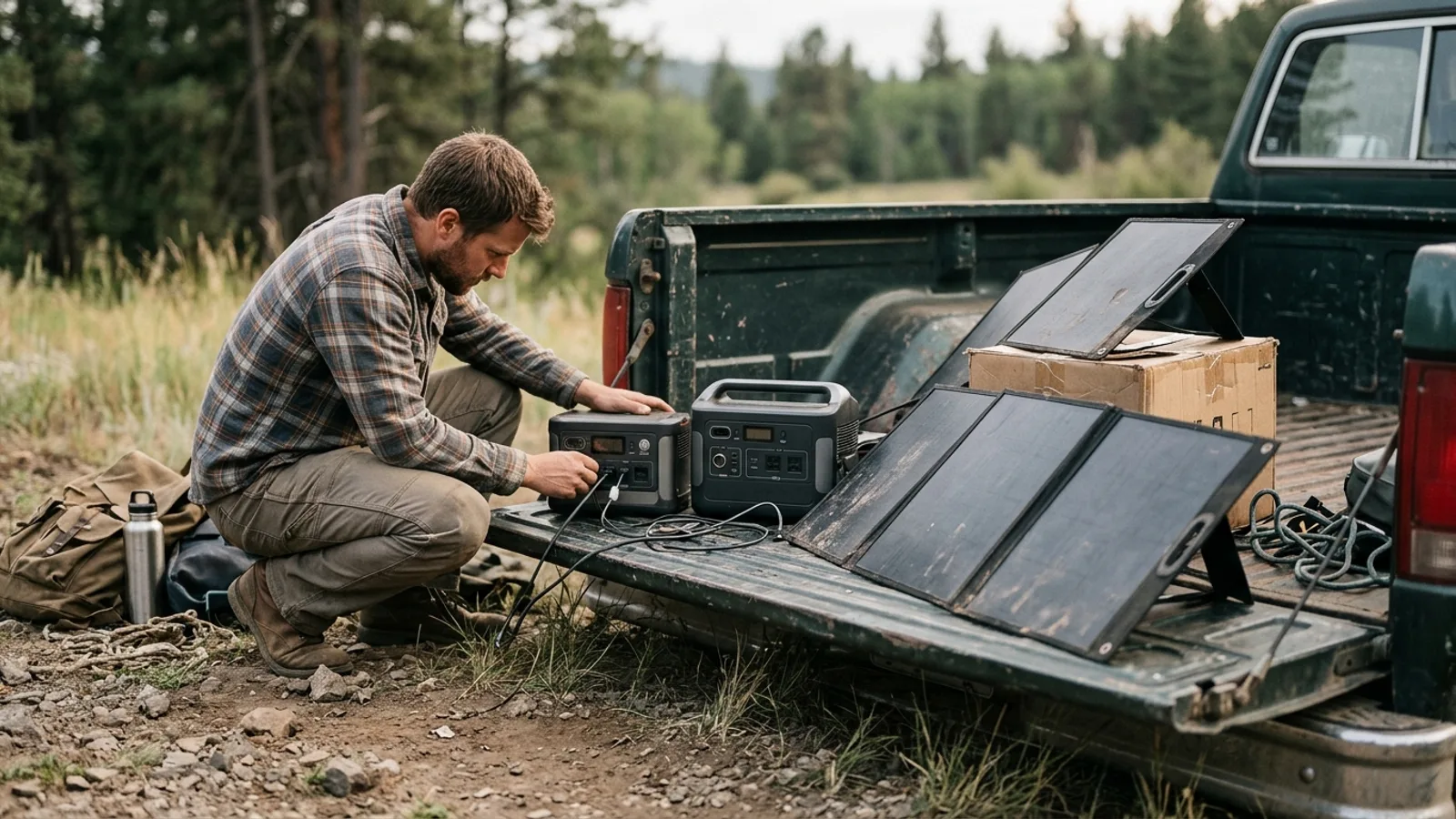
A solar-charged battery pack lets you keep phones, cameras, headlamps, and small electronics running on multi-day trips without relying on a vehicle or a wall outlet. Getting good performance out of one has less to do with brand and more to do with matching capacity to your actual needs and understanding how solar charging really works in the field.
How These Systems Work
A portable solar setup has two parts: a battery pack (often called a power station) that stores energy, and a solar panel that recharges it. The panel can also charge phones and small devices directly in a pinch, but its main job is topping off the battery pack over the course of a day.
Battery capacity is usually listed in watt-hours (Wh). This number tells you roughly how much total energy is stored, which you can compare against how much your devices draw to estimate how many charges you'll get. A phone typically uses somewhere in the range of 10-20Wh for a full charge, so even a modest battery pack can handle several days of phone and headlamp charging. Powering a laptop, a small cooler, or a camp fan will draw down capacity much faster.
Matching Capacity to Your Trip
Think about three things: how many devices you need to charge, how many days between opportunities to recharge, and how power-hungry those devices are. A weekend trip charging phones and a headlamp needs far less capacity than a week-long stay running a portable fridge.
It helps to slightly overestimate your needs. Cold weather reduces battery efficiency, cloudy days slow down solar recharging, and you'll often end up using devices more than planned. Building in a buffer of extra capacity is more useful than cutting it close.
Solar Panels: What Actually Matters
Panel output is rated in watts, but the number on the box is a best-case figure achieved under direct, unobstructed sunlight at an ideal angle. Real-world charging is almost always slower. Tree cover, haze, low sun angles in early morning or evening, and even a slightly dusty panel surface all reduce output.
To get the most out of a panel:
- Position it to face the sun directly and adjust the angle through the day if you can.
- Keep it in open, unshaded ground rather than propped against a tent in dappled light.
- Clean off dust or condensation, which can noticeably cut efficiency.
- Plan on it taking considerably longer than the rated "fast charge" time when conditions aren't ideal.
Foldable panels are convenient for backpacking because they pack flat, but they generally produce less power per pound than rigid panels used for car camping or basecamp setups.
Portability Versus Power
There's a direct tradeoff between capacity and weight. Small battery packs in the range of a pound or two are easy to carry but only suit light device charging. Larger units that can run small appliances weigh several pounds or more and are better suited to car camping, where you're not carrying it on your back.
If you're backpacking, prioritize a lightweight pack sized for your actual devices rather than the biggest capacity you can find. If you're car camping or staying at a fixed site, weight matters less and a higher-capacity unit gives more flexibility.
Ports and Compatibility
Look at what you actually need to plug in. Most trips only require a USB or USB-C output for phones and small electronics. If you plan to run larger devices, check that the pack has an AC outlet and that its rated output wattage can handle them — many small appliances draw more power at startup than while running, which can overwhelm an undersized power station.
Having multiple output ports lets you charge more than one device at a time, which is useful for groups, but doesn't affect total stored energy.
Charging Time and Realistic Expectations
Battery packs can typically be recharged faster from a wall outlet or vehicle outlet than from a solar panel alone. If you're relying entirely on solar power off-grid, expect a full recharge to take the better part of a sunny day, and longer in overcast conditions. Charging a battery pack partially throughout the day as you go is often more realistic than expecting one continuous full charge.
Care and Longevity
Battery packs last longer when they're not left fully drained or fully charged for extended periods, and when they're kept out of extreme heat. Avoid leaving a pack baking in direct sun or in a hot car trunk when it's not actively charging. Store it partially charged if it will sit unused between trips.
Basic Safety Notes
Keep any electronics, including battery packs and panels, dry and away from direct rain unless they're specifically rated for wet conditions. Charge and store batteries away from flammable materials, and never leave a charging setup unattended near an open flame or inside a sealed tent. If a battery pack becomes unusually hot, swollen, or damaged, stop using it.
Putting It Together
For most casual campers, a small-to-midsize battery pack paired with a foldable panel covers phones, lights, and cameras comfortably. For longer or off-grid trips, size up both the battery capacity and the panel wattage, and plan your charging around real sun exposure rather than the manufacturer's ideal numbers. The most reliable setup is one sized for what you'll actually use, not the largest one available.