Choosing a Bluetooth Speaker for Camping: A Practical Buying Guide
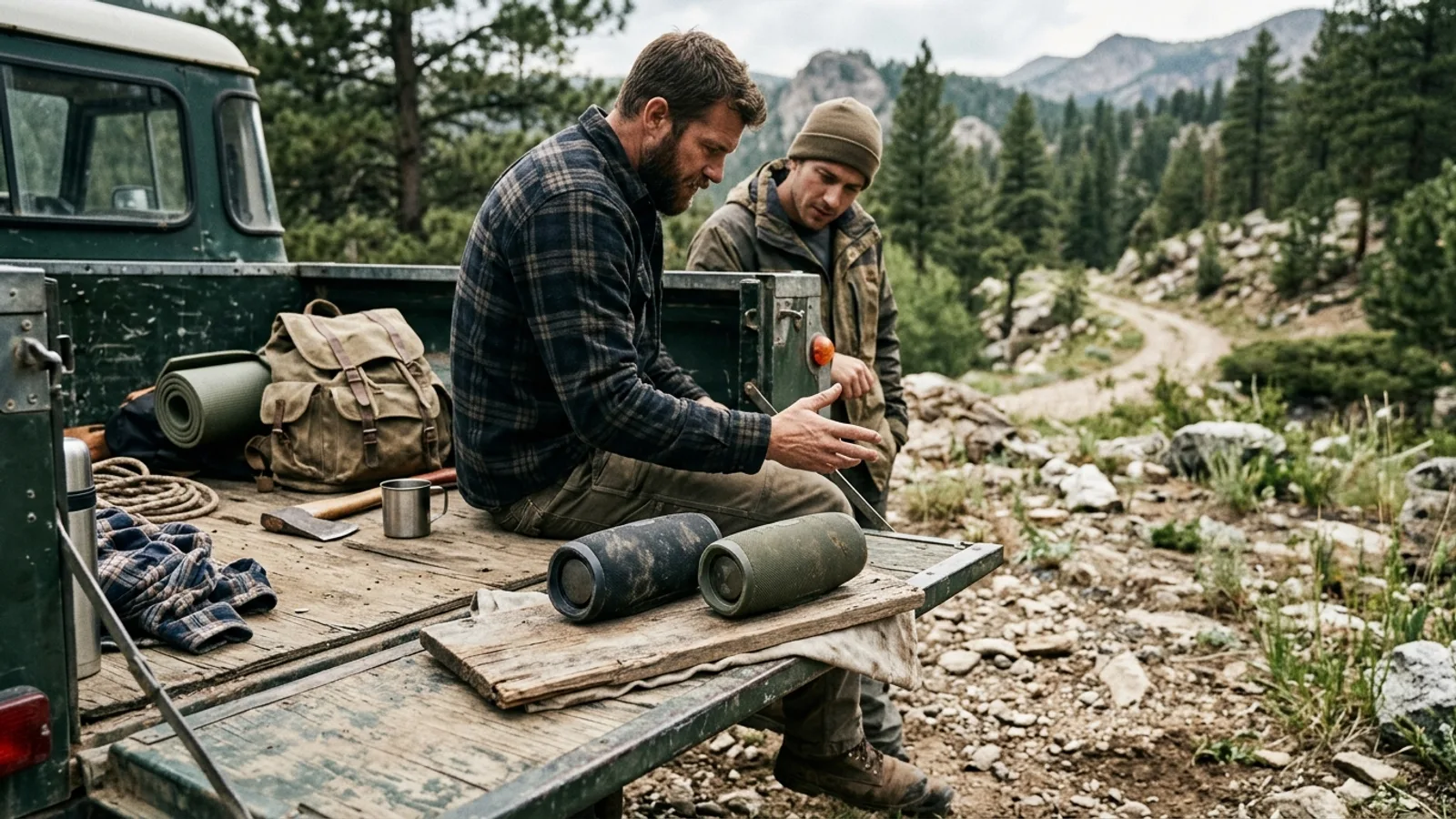
A Bluetooth speaker can be a welcome addition to a campsite, whether you want quiet background music while cooking dinner or something loud enough for a group gathered around a fire pit. But the features that make a speaker great in a living room don't always translate outdoors. Here's what to actually look for.
Portability
Weight and shape matter more than they seem to at first. A speaker that feels light on a store shelf can be an annoyance on a multi-mile hike. If you're car camping, size is mostly a non-issue and you can prioritize sound quality over compactness. If you're backpacking, look for something small enough to clip to a pack or slide into a side pocket, and be honest with yourself about whether you'll actually carry it once the trip gets hard.
Shape affects usability too. Cylindrical speakers often project sound in a wider circle, which suits a group sitting around a shared space. Puck-shaped or rectangular speakers may throw sound in a narrower direction, which is fine if everyone's facing the same way.
Durability
Outdoor conditions are harder on electronics than most indoor use. Dust, sand, dew, sudden rain, and the occasional drop are all realistic scenarios at a campsite. Look for a stated water and dust resistance rating rather than vague marketing language like "waterproof" or "rugged" on its own.
Ratings that start with "IP" followed by two numbers are the standard way manufacturers describe this. The first number covers dust resistance and the second covers water resistance. Higher second-number ratings mean the speaker can handle more than a splash — some are rated for full submersion for a limited time, which is useful near lakes, rivers, or heavy rain, while lower ratings are really only meant for light rain or spray.
A rubberized or reinforced housing helps with drops, and a speaker with a built-in handle or carabiner clip is easier to secure to a pack, tent line, or picnic table so it doesn't end up on the ground in the first place.
Battery Life
Manufacturer battery estimates are usually measured at moderate volume and without extra features like lights running. Real-world playtime at higher volume, especially outdoors where sound disperses more than indoors, tends to be shorter. If you plan to run a speaker for a full day at a campsite, look for a stated battery life comfortably longer than the time you'll actually use it, and treat the number on the box as a best case rather than an average.
If your campsite has no power source, consider whether the speaker can be recharged from a portable battery pack you're already carrying, since many now share the same charging cable standard as phones and other small electronics.
Sound Quality
Sound outdoors behaves differently than sound indoors. Without walls to reflect noise back, outdoor listening tends to feel thinner and less bassy than the same speaker would sound in a room. A speaker that seems bass-heavy in a store may sound balanced once you're outside, and one that sounds fine indoors may feel weak outdoors.
Pairing two compatible speakers for stereo sound, when supported, can noticeably improve fullness and volume for group settings, at the cost of carrying twice the gear. For solo use or quiet moments, a single small speaker is usually plenty.
Connectivity and Range
Bluetooth range figures are typically measured in open, unobstructed conditions. In practice, trees, terrain, tents, and other people can shorten the effective range meaningfully. If you plan to stream from a phone left at a campsite while you wander nearby, expect the real usable distance to be shorter than the stated maximum.
Newer Bluetooth versions generally offer more stable connections and faster pairing, but any recent version is likely to work well for casual outdoor use. It's more important to check that the speaker pairs easily and reconnects automatically to a previously paired device, since fumbling with settings at a campsite is more annoying than it sounds.
Extra Features Worth Considering
- Built-in lights: Some speakers double as ambient lighting or a weak lantern. Handy for atmosphere, but don't rely on one as your primary light source for navigating a dark campsite.
- Floating design: Useful if you're near water, since a speaker that floats is much easier to recover than one that sinks.
- Multi-speaker syncing: Nice for larger group events, but more speakers paired together generally means more opportunities for connection issues, so treat this as a bonus rather than a must-have.
A Practical Approach
Match the speaker to the trip. For backpacking, prioritize low weight and a secure clip point over sound quality. For car camping or a group site, a slightly heavier speaker with fuller sound and a longer battery life is usually the better trade-off. In either case, a solid water-resistance rating and a way to physically secure the speaker will save more trips than any single spec on a features list.
Finally, keep volume considerate of other campers and wildlife. Sound carries much farther outdoors at night than most people expect, and many parks and campgrounds have quiet hours or noise expectations worth checking before you arrive.