Fishing for Beginners: Gear, Techniques, and Getting Started
Choosing a Rod and Reel
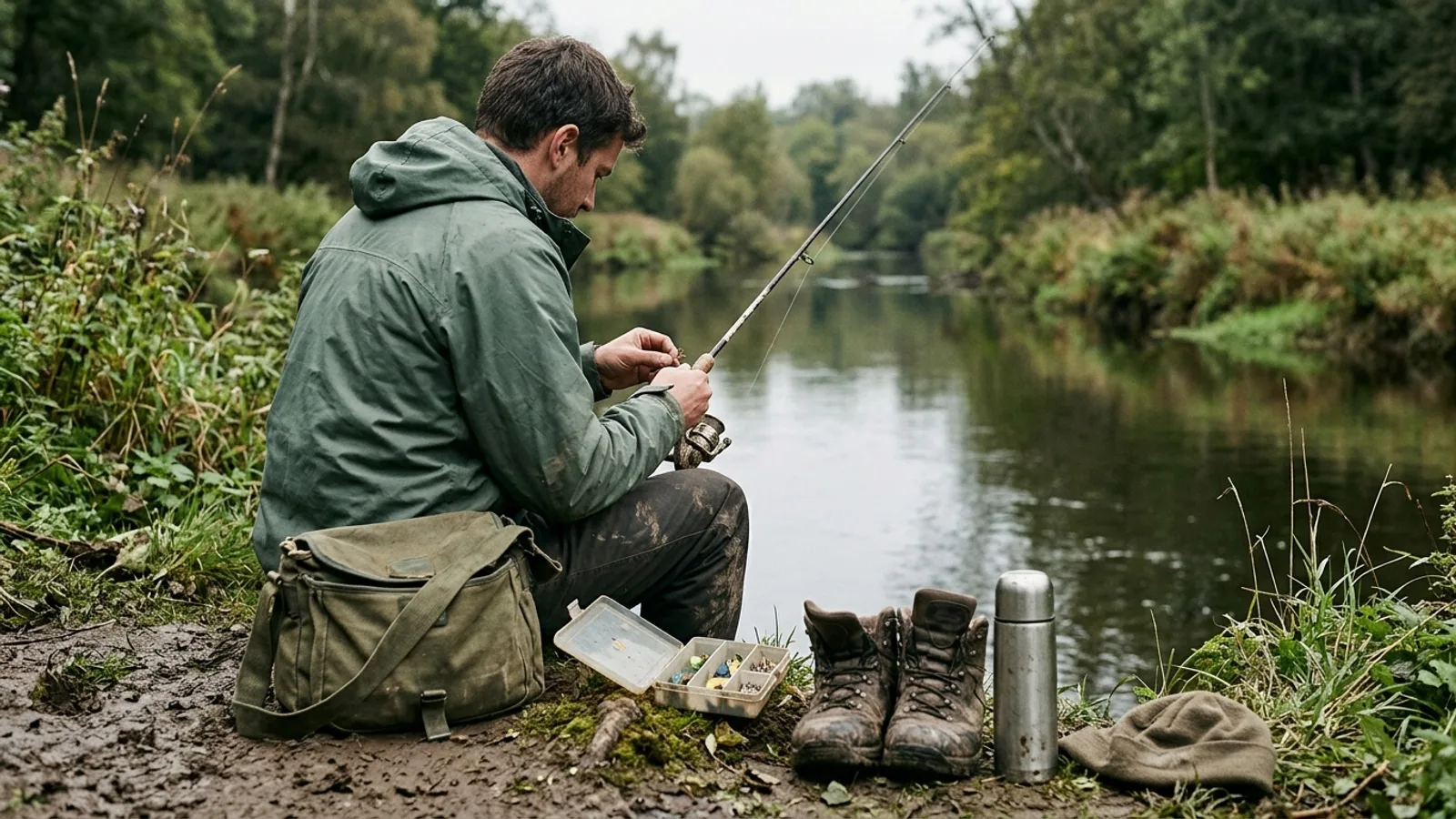
For most beginners, a medium-light or light-power rod with a fast action offers the best balance of sensitivity and versatility. A fast-action rod bends mainly near the tip, which makes it easier to feel bites and set the hook without overpowering lighter lines.
Pair this with a spinning reel rather than a baitcasting reel. Spinning reels are far more forgiving for new anglers because they resist backlash (the tangled "bird's nest" that baitcasting reels can produce) and are easier to cast accurately with practice.
When testing a reel, check that the drag turns smoothly. Drag is the resistance that lets a fish pull line without snapping it, and a jerky or sticky drag can cost you a fish that would otherwise be landed.
Selecting Fishing Line
Monofilament line is a solid choice for beginners. It stretches slightly under pressure, which helps absorb the sudden jolts of a fighting fish, and it's straightforward to tie into strong knots.
Line strength is usually described in pound test, an estimate of how much straight pull the line can handle before breaking. Lighter line (roughly in the range used for panfish and trout) is easier to cast and less visible to fish, while heavier line is better suited to larger or harder-fighting species. Match your line weight to the fish you expect to catch and the rod you're using — a rod rated for light line can be overloaded by line that's too heavy.
Inspect your line periodically for nicks, fraying, or stiffness, especially near the last few feet where it takes the most abuse. Retie and trim back damaged sections before they cost you a fish.
Understanding Hooks and Floats
Hook choice depends on the bait and the fish you're targeting.
- Baitholder hooks have small barbs on the shank that help keep soft bait, like worms, from sliding off. These work well for a wide range of panfish and trout.
- Aberdeen hooks are made of thinner wire, which allows for easy penetration and gentler handling — useful for lighter-biting fish and situations where you want to release fish unharmed.
- Circle hooks are shaped so that a fish is likely to be hooked in the corner of the mouth rather than deeper, which reduces injury and makes catch-and-release safer. They're commonly used for bottom fishing and larger species.
Floats (or bobbers) suspend bait at a chosen depth and signal a bite when they dip or vanish. A slip float can slide freely along the line until stopped by a small knot or bead, which lets you fish effectively at greater depths without the casting difficulty of a fixed float set far up the line.
Why Fishing Pliers Matter
A basic pair of pliers is one of the most useful tools in a tackle box. They let you remove hooks safely, especially from fish with sharp teeth or spines, without putting your fingers at risk. They're also useful for crimping split shot weights onto your line and for cutting wire or heavier line cleanly.
Look for pliers with a comfortable, non-slip grip and corrosion-resistant construction, since they'll often get wet or salty. Keep them attached to yourself or your gear with a lanyard so they don't end up at the bottom of the lake.
Building a Basic Lure Collection
You don't need dozens of lures to start catching fish. A small, versatile selection covers most situations:
- Spinners — lures with a rotating blade that flashes and vibrates in the water, effective for trout, bass, and panfish in moving or still water.
- Minnow-imitating jerkbaits or floating plugs — long, slender lures that mimic small baitfish, useful for bass, trout, pike, and walleye.
- Soft plastic swimbaits or shad-style lures — designed to imitate wounded or fleeing baitfish, effective for a range of predatory species.
Experiment with retrieval speed and depth. Often the presentation matters more than the exact lure pattern.
Essential Fishing Knots
A handful of reliable knots will cover nearly everything a beginner needs:
- Improved clinch knot — a standard, dependable knot for tying hooks, lures, and swivels to your line.
- Palomar knot — simple to tie and very strong, especially useful with braided line or small hook eyes.
- Uni knot — versatile and adaptable to a range of terminal tackle.
Practice these knots at home before you're on the water, ideally until you can tie them without looking. A knot tied under time pressure, in low light, or with cold hands is far more likely to fail.
Getting Started with Freshwater Fishing
Check local regulations before you fish. Most areas require a fishing license for anglers above a certain age, and rules on size limits, bag limits, and permitted gear vary by location and by species. Regulations exist to keep fish populations healthy, so it's worth a few minutes to look them up.
Beyond your rod, reel, line, hooks, and lures, a few extras make a fishing trip smoother: a small tackle box, a container for live bait if you're using it, a pair of pliers, sunscreen, and a way to carry water.
Practicing Catch and Release
If you plan to release a fish, minimize the time it spends out of the water and out of the fight. Use wet hands or a wet net to handle it, avoid squeezing its body, and support it horizontally rather than hanging it vertically by the jaw for large fish. Remove the hook gently, and if it's swallowed deeply, cutting the line close to the hook is often safer for the fish than forcing it out. Let the fish recover in the water, upright and swimming under its own strength, before letting go.
Fishing Safety
- Fish with a companion when possible. An extra set of hands and eyes helps in an emergency, especially near water with currents or slippery footing.
- Handle hooks with care. Be especially cautious when casting, removing hooks, or storing rigged rods, since barbed hooks can be difficult to remove from skin.
- Give other anglers space when casting. Look behind and around you before every cast, particularly with lures or weighted rigs.
- Wear a properly fitted personal flotation device when fishing from a boat, kayak, or canoe, and consider one near fast-moving or deep water even from shore.
- Practice good conservation habits. Pack out all line, hooks, and trash, avoid disturbing streambanks and vegetation, and follow local guidance on invasive species, such as cleaning gear between different bodies of water.
Final Thoughts
Beginner fishing gear doesn't need to be complicated. A simple rod and reel, a few reliable hooks and lures, a handful of solid knots, and attention to safety and regulations will cover the vast majority of freshwater fishing situations. The rest comes with time on the water.