Cowboy Camping: Sleeping Without a Tent Under the Open Sky
What Cowboy Camping Is
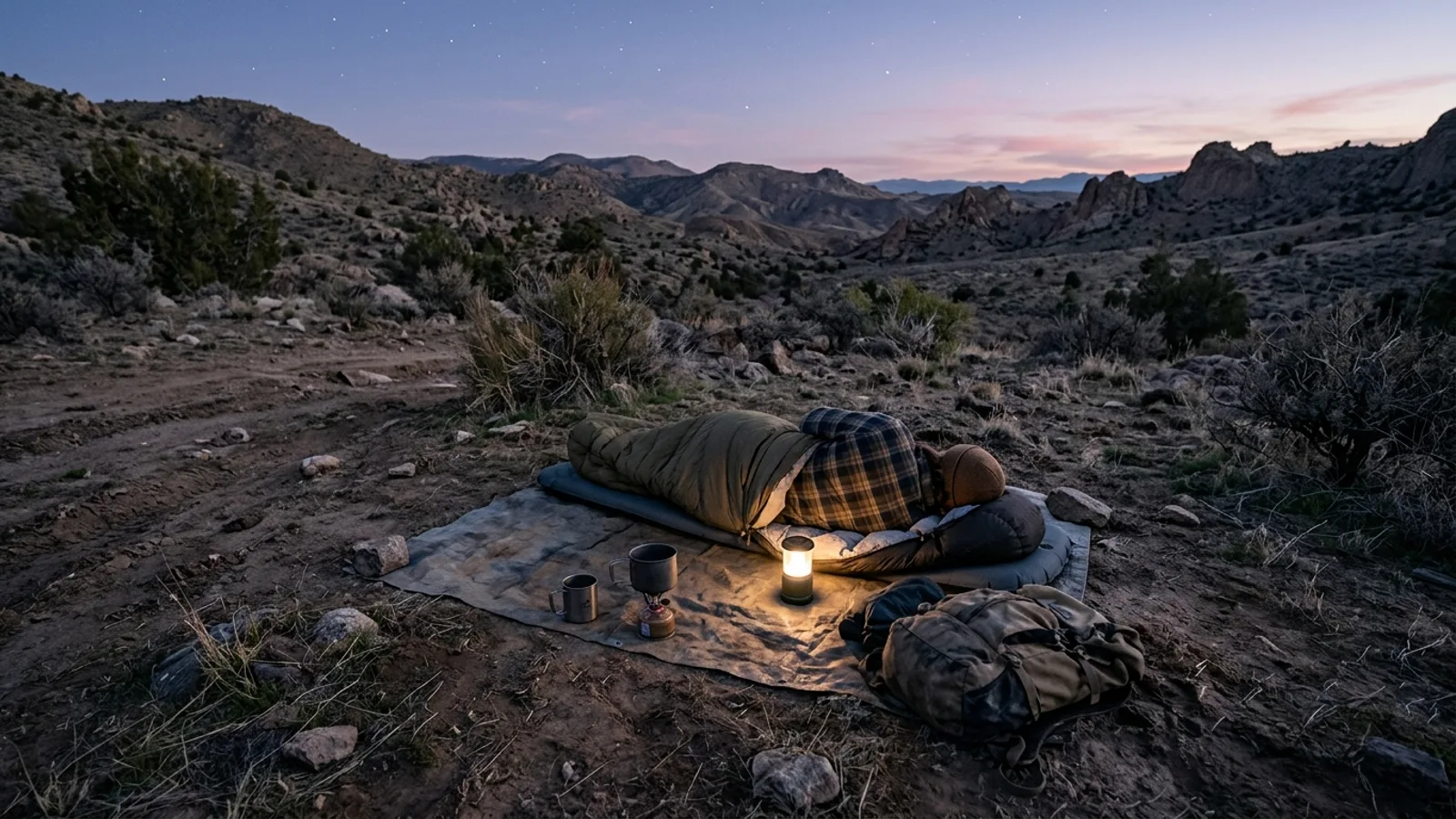
Cowboy camping means sleeping outside without a tent. You lay a groundsheet or bivy, a sleeping pad, and a sleeping bag directly on the ground and sleep under the open sky. There's no rainfly, no poles, no walls between you and the surroundings.
It grew out of ranch and trail traditions where carrying a shelter wasn't practical. Today it's used by backpackers who want to cut weight, by anyone who wants a clearer view of the stars, and by people who simply prefer the feel of sleeping outdoors without fabric overhead.
Why People Choose It
The main draw is direct contact with the environment. You can watch the sky as you fall asleep, hear the wind and wildlife without a tent wall muffling the sound, and wake up already outside instead of unzipping into the day.
It also simplifies the trip. There's no shelter to pitch or pack, which saves time at both ends of the day and reduces what you have to carry. For backpackers, cutting a tent from the pack list is one of the more meaningful weight savings available without spending money on lighter gear.
The tradeoff is exposure. You give up the tent's protection from wind, rain, condensation, and insects, so cowboy camping works best when conditions are stable and you're comfortable adapting if they change.
Where It Makes Sense
Cowboy camping is best suited to dry climates, clear forecasts, and terrain without heavy insect pressure. Desert basins, alpine meadows above the treeline, and open ridgelines are classic settings, mainly because they combine good stargazing with low humidity and few biting insects.
It's not a fit everywhere. Always check the rules for the specific land you're on. Many public lands allow dispersed camping without a tent, but some parks and wilderness areas require an enclosed shelter, restrict camping to designated sites, or have their own rules about how far you must be from trails, roads, and water sources. When in doubt, contact the managing agency for the area before you go.
If you're on private land, get permission first. On any land, follow Leave No Trace principles: camp on durable surfaces, avoid trampling vegetation, and leave the site as you found it.
Choosing a Campsite
A good cowboy camp site shares most of the same qualities as a good tent site, with a few extra considerations:
- Flat, clear ground. Look for a spot free of rocks, roots, and slope so you're not fighting the terrain all night.
- Away from drainage lines. Avoid low spots and dry creek beds where water could pool or flow if rain arrives unexpectedly.
- Some wind break, without blocking the sky. A rock outcrop, low ridge, or line of trees can cut wind without covering your view.
- Distance from water sources. Camp a good distance back from lakes, streams, and springs, both to protect the area and because wildlife often travels along water corridors at night.
- Away from game trails and animal sign. Scan the area for tracks, scat, or worn paths before settling in.
Check the weather forecast carefully before committing to go without a shelter, and have a backup plan, such as a lightweight tarp, in case conditions shift overnight.
Should You Bring a Backup Shelter?
Many experienced cowboy campers still carry a small tarp or bivy sack, even if they don't plan to use it. It adds little weight and gives you an option if wind or rain moves in.
A full tent makes more sense when insects are heavy, rain is likely, or you want privacy and a sealed-off space to store gear. Cowboy camping makes more sense when the forecast is settled, bugs are minimal, and you want the lightest, simplest setup possible.
Neither approach is inherently better — the right choice depends on the conditions you expect and how much risk you're comfortable carrying if the weather doesn't cooperate.
Sleeping Pads: Foam vs. Inflatable
Whichever shelter approach you choose, a sleeping pad is not optional for cowboy camping. It insulates you from the ground, which pulls heat away from your body far faster than cold air does.
Foam pads are simple and rugged. They don't puncture, need no setup beyond unrolling, and keep working even if damaged. They're bulkier to carry and generally less cushioned than inflatable options.
Inflatable pads pack down small and tend to offer more cushioning, which matters on uneven or rocky ground. They require a few minutes to inflate and can lose air if punctured, so a repair method is worth carrying.
Many people carry a thin foam pad underneath an inflatable one when camping directly on rough or rocky ground, since the foam adds a layer of puncture protection as well as extra insulation.
Handling Weather
Without a tent, you're more exposed to temperature swings, wind, and moisture. A few habits reduce the risk:
- Check the forecast right up until you leave cell service, and watch the sky for changes once you're out.
- Pick a site with some natural wind protection, but avoid low ground where cold air and moisture settle overnight.
- Keep a lightweight tarp or bivy accessible, even if you don't expect to need it.
- Expect dew or light condensation on your bag in humid conditions, and consider a bivy sack or waterproof cover if that's a concern.
Wildlife Awareness
Sleeping without walls means being more mindful of wildlife than you might be in a tent, though the core precautions are the same ones that apply to any backcountry trip.
- Store food, cooking gear, and anything scented well away from your sleeping area, using whatever method is recommended for the region you're in.
- Keep your sleeping area clear of food smells on your gear and clothing.
- Check the ground and nearby brush before laying out your pad, particularly in regions with snakes or insects.
- Learn what wildlife is active in the area you're visiting and follow local guidance on encounters — recommendations vary by region and by animal.
Getting Started
If you're new to cowboy camping, try it first somewhere familiar and easy to reach, ideally with mild weather and low bug activity. That gives you a low-stakes way to learn how you sleep without a tent, what gear you actually need, and whether it's a style you want to use more often on longer trips.