How to Make Coffee While Camping: Methods Compared
Good camp coffee comes down to matching the method to the trip. Weight, cleanup, and how much control you want over strength all point toward different tools. Here's how the main options actually work in the field.
Instant Coffee
Instant coffee is the lightest and simplest option. The grounds are already water-soluble, so there's no filter, no steeping equipment, and almost no cleanup — just hot water and a stir.
Quality varies a lot between products, and some are noticeably smoother than others, so it's worth trying a few at home before relying on one for a multi-day trip. Because it packs flat and weighs almost nothing, instant coffee is a solid choice for backpacking, where every ounce matters.
Coffee Bags
Coffee bags work like tea bags: drop one in a cup, add hot water, and let it steep to the strength you like. There's no separate filter or brewing device to carry or clean.
You can make your own version by spooning ground coffee into a paper filter and tying it off with kitchen string or dental floss. This gives you control over the amount and roast without needing to pack pre-made bags.
The main tradeoff is flavor control. Steeping grounds directly in water — rather than pouring water through them — tends to produce a flatter cup, and oversteeping can turn it bitter. Pulling the bag out as soon as it reaches your preferred strength helps.
Single-Serving Pour-Overs
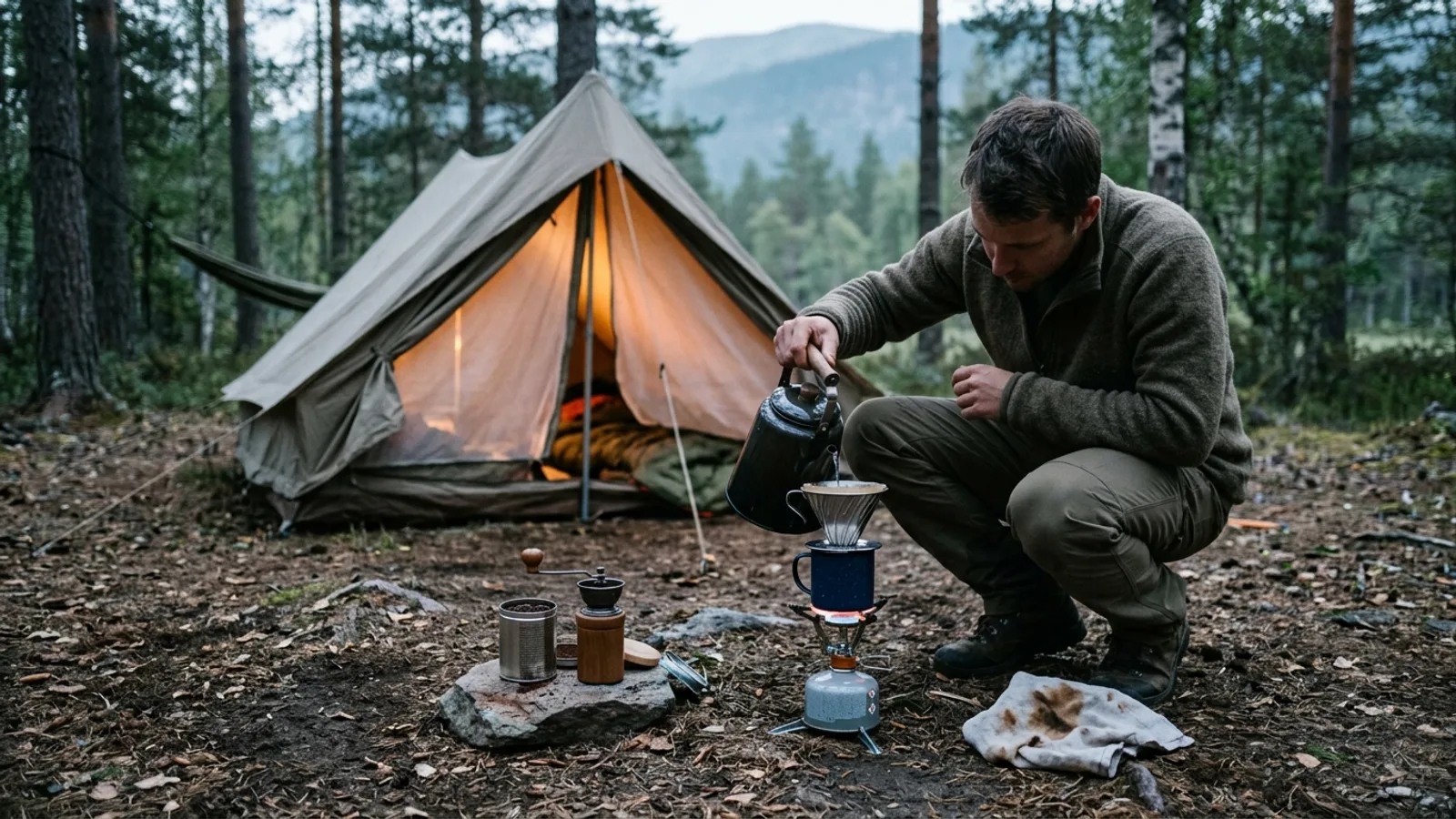
These are small paper or fabric filter cones, pre-filled with ground coffee, that fold out and hook onto the rim of a mug. They pack flat and add minimal weight, making them a good middle ground between instant coffee and a full pour-over setup.
To use one: unfold the dripper over your cup, pour a small amount of hot water over the grounds and let them sit briefly so they release trapped gas, then continue pouring slowly in stages. This gives a cleaner, more aromatic cup than steeping methods, since the water passes through the grounds rather than sitting with them.
Cowboy Coffee
Cowboy coffee just means boiling grounds directly in water, then letting them settle before drinking. It needs almost no gear beyond a pot and heat source, which is why it has stayed popular for as long as people have camped near open fires.
A workable starting ratio is about one tablespoon of coarsely ground coffee per six ounces of water, adjusted to taste. Boil the water, remove it from heat, stir in the grounds, and let it sit for a few minutes off the heat so the grounds sink. Pour slowly and stop before you reach the sediment at the bottom.
Some campers add crushed eggshell to the pot, which is a traditional trick some believe helps grounds settle and mellows bitterness, though it isn't necessary for a good cup.
Campfire Brewing Tips
- Use a coarser grind than you would for a drip machine — fine grounds escape through most spouts and filters and end up in the cup.
- Pull the pot off direct flame once it reaches a boil; a hard rolling boil for several minutes will over-extract and taste burnt.
- Letting the pot rest for a minute or two before pouring gives grounds time to settle to the bottom.
- A clean bandana or cotton cloth can work as an improvised filter in a pinch — pour the coffee through it into your cup.
- If you're brewing directly over an open fire rather than a camp stove, keep the pot handle turned away from the flame and use a glove or cloth to move it; handles and lids get hot fast.
Percolators
A percolator cycles boiling water up through a tube and back down through a basket of grounds, repeating until the coffee reaches the desired strength. It produces a strong, full-bodied cup and works well over a campfire or camp stove since there's no paper filter to burn or blow away.
Percolators are heavier and bulkier than other camp coffee options, and they take longer to brew, so they suit car camping or established campsites more than backpacking. Watching for the coffee color in the glass knob on top is the usual way to judge when it's ready — pull it from the heat once it looks dark enough rather than letting it continue percolating, since over-percolating makes coffee bitter.
Compact Press-Style Brewers
Small manual coffee presses that combine steeping and filtering in one device are popular for camping because they're compact, quick, and produce a clean cup without a paper filter. Hot water and grounds steep briefly in a chamber, then a plunger pushes the brewed coffee through a fine filter into your cup.
These devices are easy to pack, simple to clean with a splash of water, and give more control over strength than steeping methods, making them a good option for anyone who wants pour-over quality without the folding filter setup.
Choosing a Method
For backpacking or ultralight trips, instant coffee or a single-serving pour-over will save the most weight and cleanup. For car camping where weight isn't a concern, a percolator or a French press–style brewer gives a richer, more traditional cup. Cowboy coffee is worth knowing regardless, since it needs no special equipment at all — just a pot, water, and heat.