How to Clean and Care for Your Tent
Why Tent Care Matters
A tent takes a beating from dirt, sap, sand, UV light, and moisture. None of these will destroy it overnight, but left unaddressed they break down fabric coatings, corrode zippers, and invite mold. Most tent failures come from slow neglect rather than one bad trip. A few minutes of care after each outing keeps the fabric waterproof, the zippers smooth, and the whole shelter smelling like nylon instead of a gym bag.
Cleaning a Tent After a Trip
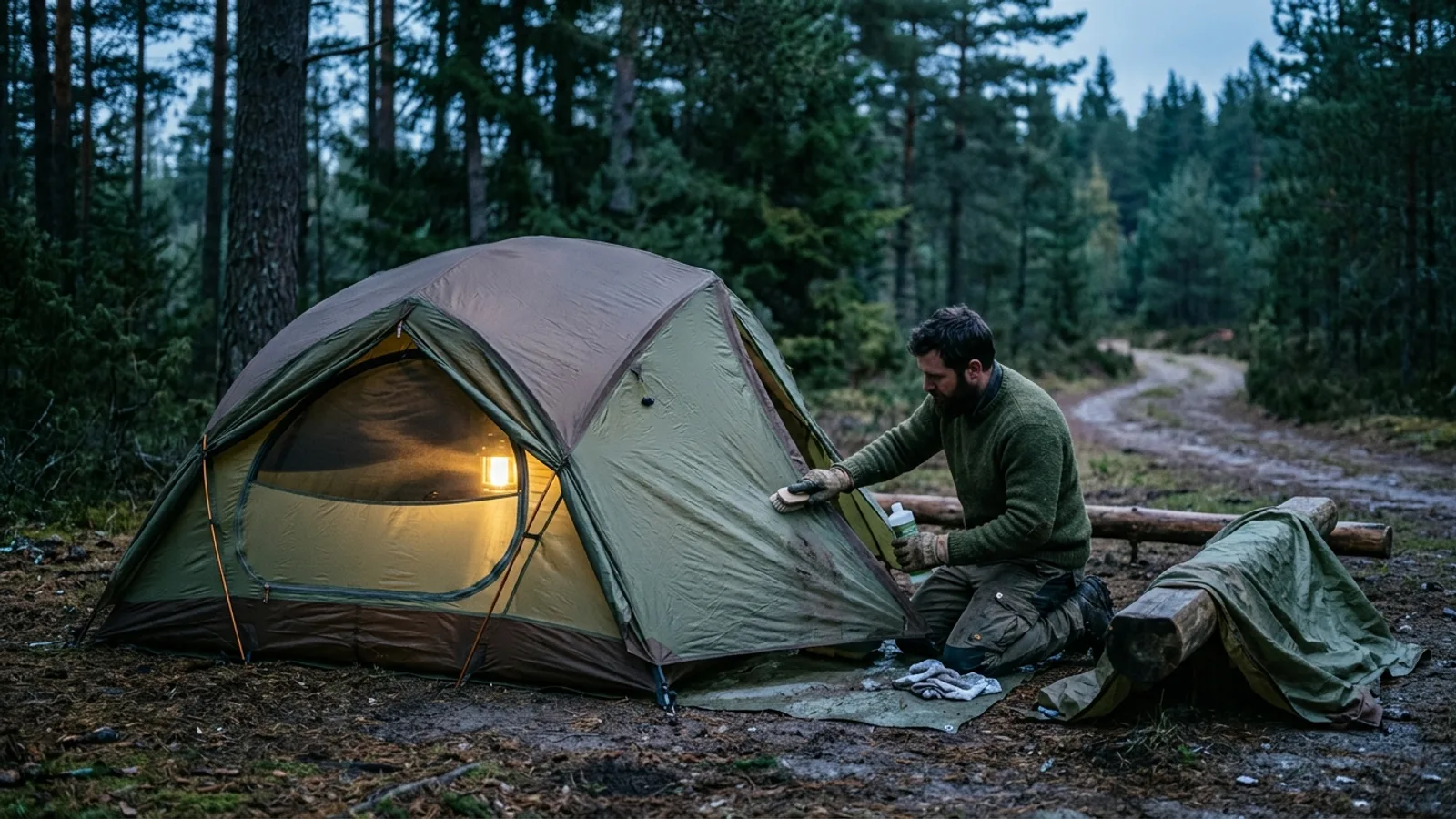
Set the tent up or lay it out flat somewhere you can reach every panel — a yard, garage, or large indoor space works. Shake out loose dirt, sand, and leaves first, then wipe down the floor and walls.
For actual washing, use plain water and a soft sponge or cloth. If soap is needed, choose a small amount of a mild, non-detergent soap and work it in gently on stained or grimy spots. Harsh detergents, dish soap, and all-purpose cleaners strip the waterproof coating over time and should be avoided.
Never put a tent in a washing machine or dryer. Agitation and heat can delaminate coatings, break seam tape, and weaken the fabric. A car wash sprayer is also too forceful. Hand cleaning is slower but far gentler on the materials.
Rinse with a light spray from a hose or a bucket of clean water, keeping pressure low so you don't stress the seams. Make sure all soap residue is rinsed away, since leftover soap can attract dirt and degrade coatings faster.
Caring for Zippers
Zippers are usually the first thing to fail on an aging tent. Brush grit out of the teeth with a soft brush before it gets ground in, and work the zipper slowly rather than forcing it if it snags. A silicone-based zipper lubricant applied occasionally keeps the pull sliding smoothly and reduces wear on the teeth. Avoid petroleum-based lubricants, which can degrade fabric and coatings nearby.
Drying and Storage
A tent must be completely dry before it goes into storage, even if it looks dry on the outside. Trapped moisture in seams, corners, or the floor is enough to start mildew within a day or two. Pitch the tent or hang it in a shaded, well-ventilated spot until every layer — including the rainfly and any groundsheet — is dry to the touch and cool.
Once dry, store it loosely in a breathable bag rather than compressed tightly for long periods; constant compression can weaken coatings and creases over time. Keep it in a cool, dry place out of direct sunlight — a closet or climate-stable storage area works better than a hot attic, garage, or damp basement, all of which encourage mold or coating breakdown.
When to Clean Your Tent
- After camping in rain, mud, sand, or near saltwater, since these residues cling to fabric and can accelerate wear.
- Any time you see visible dirt, stains, spilled food, or notice a musty smell.
- Before long-term storage, even if the tent looks clean, since hidden moisture or residue can cause problems while it sits unused.
- Before a big trip, so you start with fully functioning zippers, a fresh-smelling interior, and dry, supple fabric.
Frequency depends on how often you camp and in what conditions. Frequent users in dusty or wet climates will want to clean more often than someone who camps a few times a year in mild weather.
Preventing Damage in the Field
Good habits at the campsite reduce how much cleaning your tent will ever need. Choose a level site free of sharp rocks or roots, and use a footprint or ground tarp sized to fit under the tent floor without extending beyond it — an oversized footprint can funnel rainwater underneath rather than away.
Keep shoes and muddy gear outside or in a vestibule rather than tracking them across the tent floor. Close zippers fully when not in use to keep grit out of the tracks, and avoid stuffing gear against the mesh panels, since sustained pressure can stretch or tear them.
Basic Repairs That Extend Tent Life
Small issues are easiest to fix before they grow. A zipper that skips or gaps can often be helped with lubricant or by gently realigning the slider over the teeth; if that fails, a replacement slider is usually simpler than replacing the whole zipper.
Seam sealer can be reapplied to worn seam tape to stop pinhole leaks, and small tears in the fabric can be patched with repair tape made for outdoor gear. Addressing these issues promptly prevents a minor repair from turning into a reason to replace the tent entirely.
Frequently Asked Questions
What's the safest way to clean a tent?
Hand wash with water and, if needed, a small amount of mild non-detergent soap, using a sponge or soft brush. Rinse gently and air dry fully before storing.
Why does regular cleaning matter so much?
It prevents mold and mildew, keeps zippers and seams functioning, and preserves the waterproof coating — all of which directly affect how long the tent lasts and how well it performs in the field.
How often should a tent be cleaned?
Clean it after exposure to rain, sand, or saltwater, whenever it's visibly dirty or smells musty, and always before long-term storage or a major trip.
What's the single best habit for extending a tent's life?
Making sure it's completely dry before it's packed away. Moisture trapped in storage is the most common cause of mildew and fabric breakdown.