Wilderness Camping: A Practical Guide to Planning, Setup, and Safety
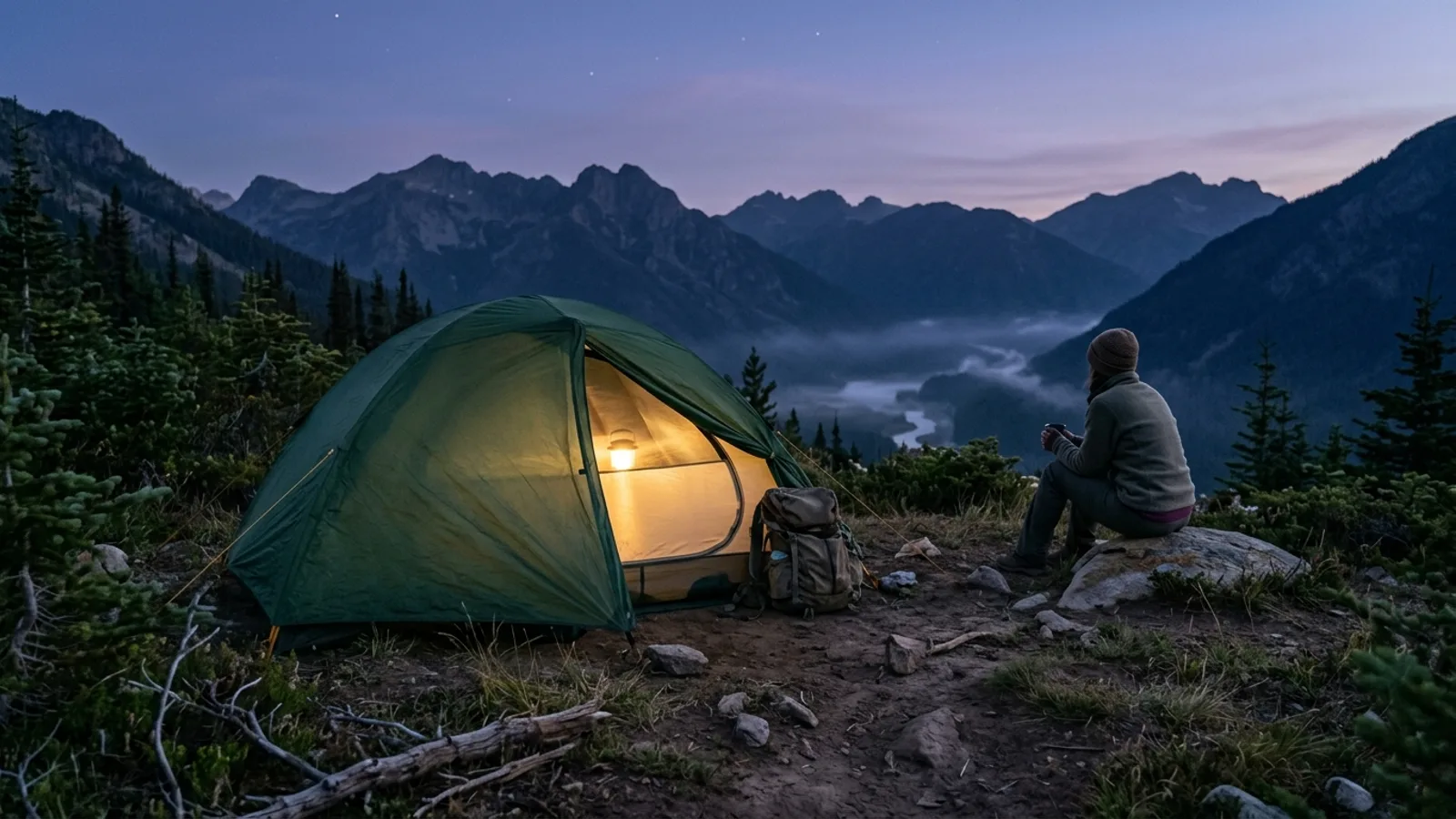
Planning Your Trip
Good camping trips are won or lost before you leave home. Check the weather forecast for your dates, know the sunrise and sunset times, and understand what facilities (if any) exist at your destination — water, restrooms, trash service. Many wilderness sites have none of these, so plan to pack out everything you bring in.
Tell someone who isn't coming with you where you're going and when you expect to be back. This single habit does more for your safety than almost any piece of gear.
If you're camping somewhere that requires a permit or reservation, secure it well ahead of time, especially during busy seasons. Popular sites can fill up fast.
Choosing a Campsite
Once you're in the area, look for a site that checks these boxes:
- Level ground: A flat spot free of rocks and roots means better sleep and less gear damage.
- Distance from water: Camp near enough to water for convenience, but well back from the banks — flash floods and rising water are real risks, and many land managers require a minimum setback.
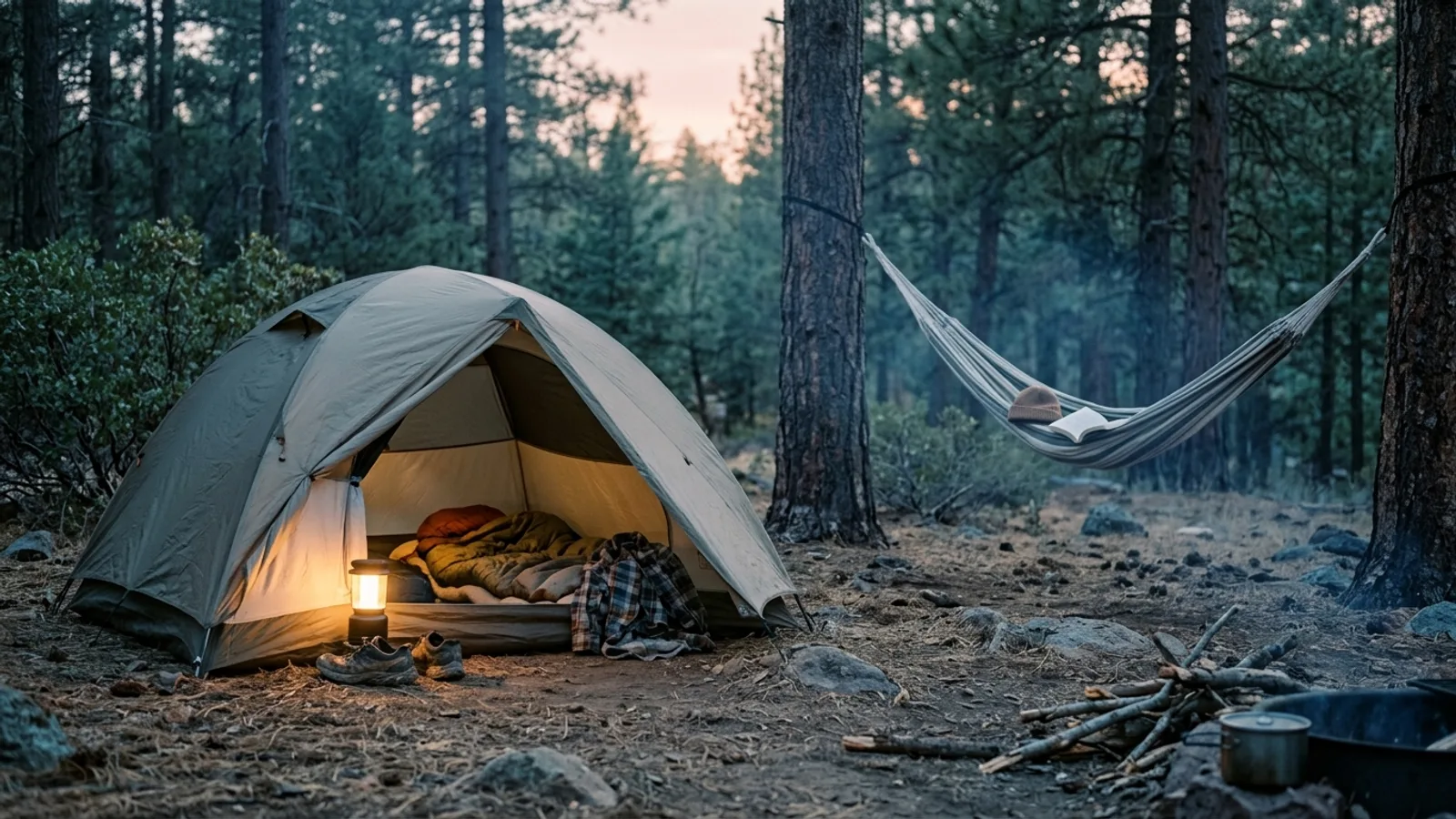
- Natural windbreak: A stand of trees or a rise in terrain can cut down on overnight wind, but avoid camping directly under dead branches or unstable-looking trees.
- Sun and shade balance: Morning sun helps dry out dew-soaked gear; afternoon shade keeps a tent from overheating. Weigh this against the season and climate.
Avoid low spots where water could pool if it rains, and never camp in a dry creek bed.
Setting Up Your Tent
Basic tent setup follows the same steps regardless of size or style:
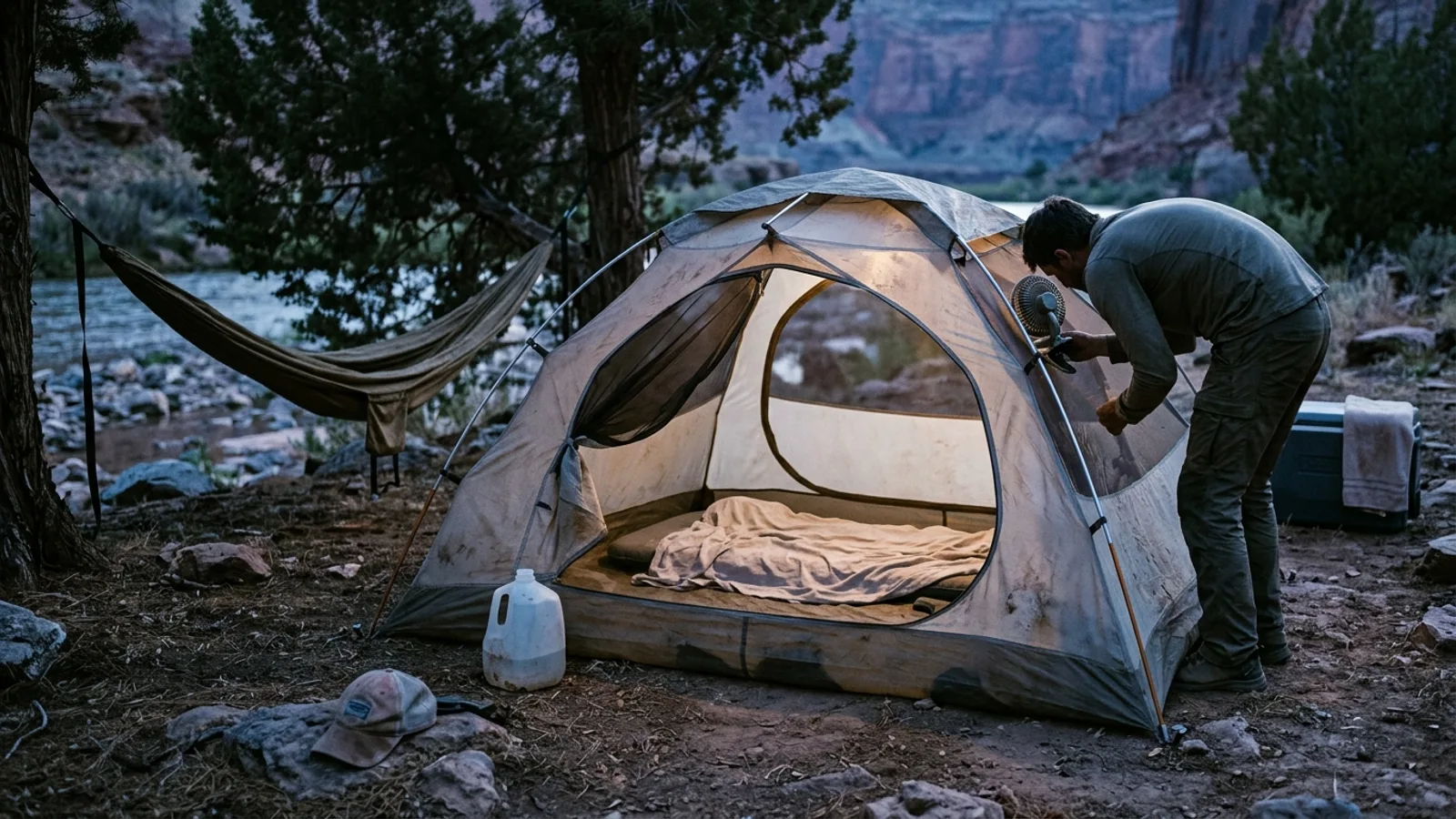
- Lay a footprint or tarp sized to match your tent floor. This protects the tent floor from moisture and abrasion.
- Position the tent body on top, oriented so the door faces away from prevailing wind if possible.
- Assemble and insert the poles according to the tent's design, then attach the tent body to the poles.
- Add the rain fly if your tent has one, aligning it with the doors and securing all clips or straps.
Stake out the tent using stakes angled roughly 45 degrees away from the tent for maximum holding power. Tension the rain fly evenly so it doesn't sag or flap — proper tension sheds rain and resists wind far better than a loose setup.
In exposed or rocky terrain where stakes won't hold, weigh down the tent's corners and guy lines with heavy rocks instead.
Water Safety Near Camp
Camping near a lake, river, or coastline adds a lot to a trip, but water changes conditions quickly and deserves caution.
- Swimming: Only swim in areas known to be safe, and be aware that even calm-looking water can have strong currents or sudden drop-offs. Cold water can impair swimming ability faster than most people expect.
- Paddling: Wear a properly fitted life jacket any time you're in a canoe, kayak, or similar craft, regardless of swimming skill.
- Fishing: Check local regulations and licensing requirements before you cast a line; rules vary widely by location and species.
Check with local rangers or site managers about current water conditions before planning any water activity — conditions can change daily with rain, snowmelt, or tides.
Campfire Evenings
A campfire is one of the simplest pleasures of camping, but it comes with responsibility. Only build fires where permitted and in an existing fire ring when one is available. Keep a way to extinguish the fire — water or dirt — within reach at all times, and never leave a fire unattended.
Beyond the practical side, fire time is where camping trips tend to make their best memories: telling stories, roasting food over the coals, singing, or simply lying back and watching the stars once the flames die down. A headlamp or flashlight makes it easier to move safely around camp once it's dark.
Exploring on Foot
Hiking from camp, even a short walk, is a good way to see more of an area without breaking down your site. Stick to marked trails to protect vegetation and avoid getting lost, and carry basic supplies — water, a map, and a way to signal for help — even on short walks.
Photography, birdwatching, and geocaching are all low-effort ways to add purpose to a walk and slow down enough to notice details you'd otherwise miss.
Useful Technology, Used Wisely
A phone with offline maps downloaded ahead of time is one of the most useful tools you can bring, since cell service is unreliable or absent in many wilderness areas. Location-sharing apps and satellite communicators can help others find you in an emergency, and are worth carrying if you're heading somewhere remote.
That said, part of the appeal of wilderness camping is the break from constant connectivity. If you have signal and don't strictly need it, consider leaving devices off — many campers find it makes the trip more restful and memorable.
Packing Essentials
A dependable checklist prevents the classic camping regret of missing something essential. At minimum, plan for:
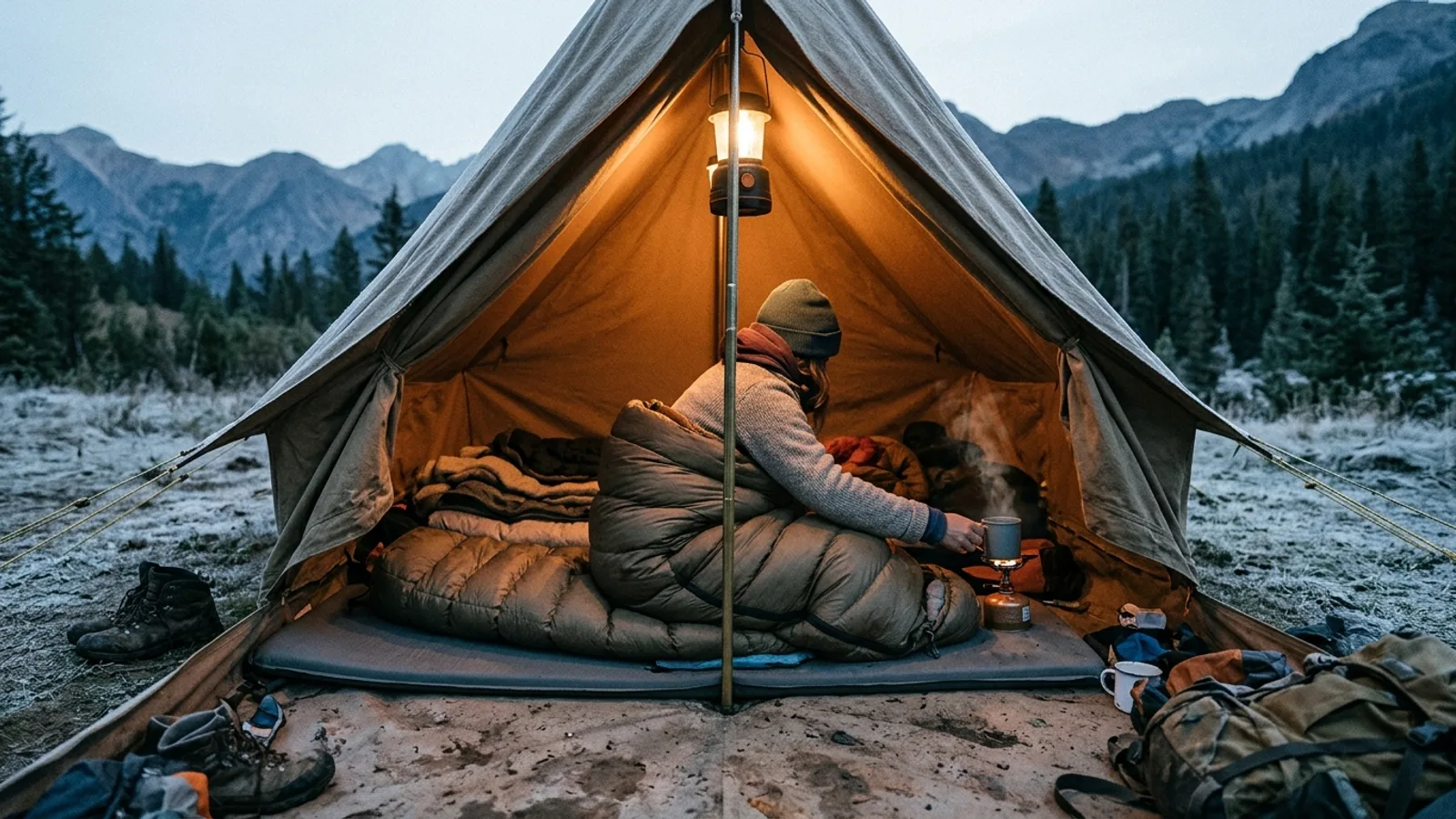
- Shelter and sleeping gear suited to the expected temperature range
- A reliable light source with backup batteries
- Enough water or a way to filter/treat water on site
- Food that doesn't require refrigeration, stored to avoid attracting wildlife
- A basic first aid kit
- Weather-appropriate clothing, including a layer for unexpected cold or rain
- Navigation tools that don't depend on a cell signal
Adjust the list based on your specific site, group size, and season. Renting or borrowing gear is a reasonable way to try camping before investing in your own equipment.