Bushcraft Camping: Core Skills, Gear, and How to Get Started

What Bushcraft Camping Is
Bushcraft camping focuses on using knowledge and simple tools to meet your basic needs in the outdoors, rather than relying on prepackaged convenience. It draws on traditional woodcraft: building shelter from natural materials, making and managing fire, finding and treating water, and reading the landscape. Most people practice it as a skill-building hobby layered on top of ordinary camping rather than a full break from modern gear.
The appeal is less about roughing it and more about competence. The more of these skills you genuinely have, the less gear you need to carry, and the more comfortable you become making decisions in unfamiliar terrain.
Core Techniques to Learn
Firecraft
Reliable fire starting is the single most useful bushcraft skill. Learn to build a proper tinder bundle from dry, fine material, and practice with a dependable ignition source such as a ferro rod before attempting friction methods like a bow drill, which take real practice to master. Always check local fire restrictions, and never leave a fire unattended.
Shelter Building
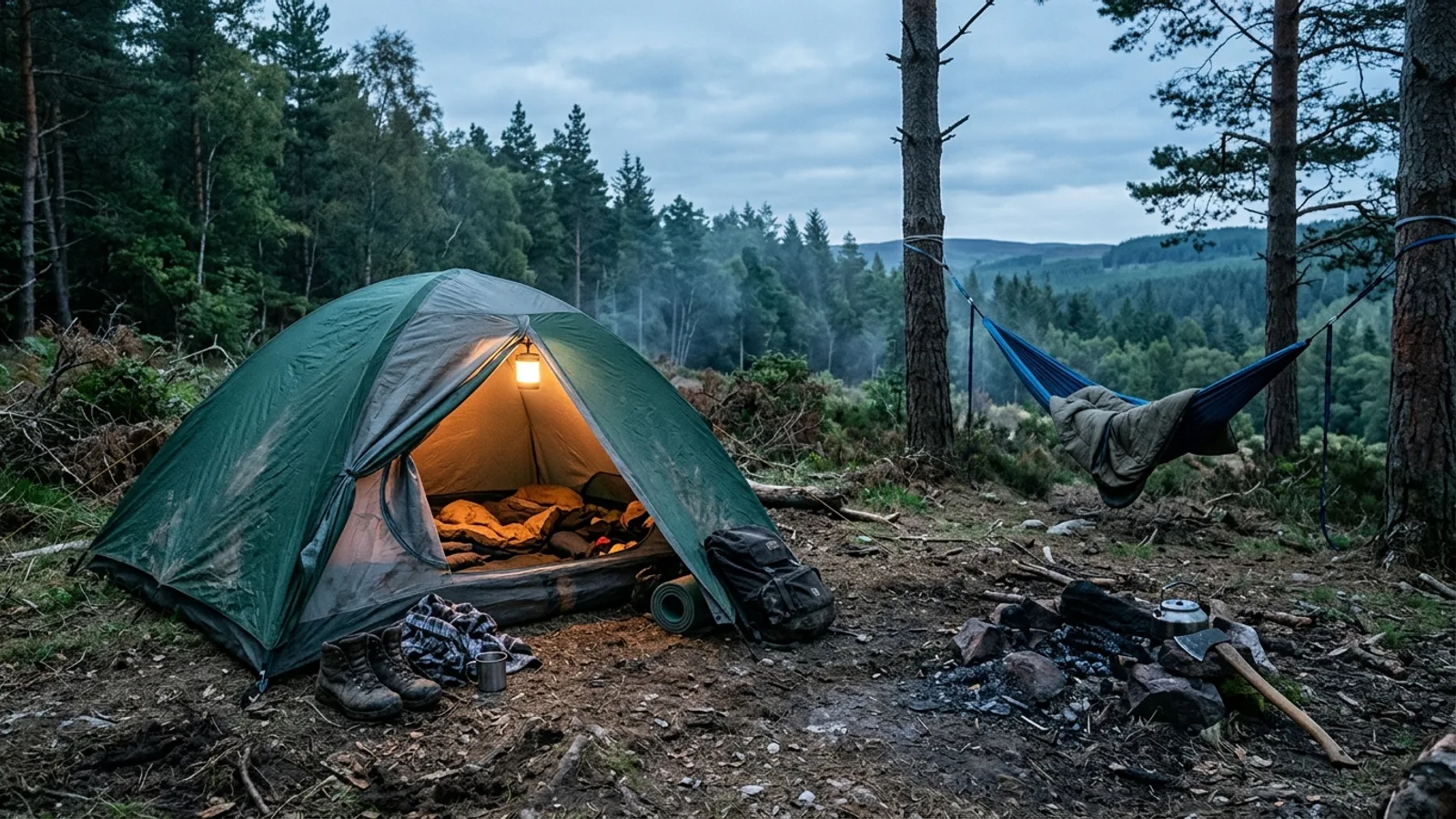
A shelter's main job is to protect you from wind, rain, and heat loss to the ground. Simple lean-to and debris shelters can be built with cordage, a tarp, and materials found on site, but even experienced campers usually carry some kind of manufactured shelter as a backup. Learning a handful of secure knots — a taut-line hitch, a bowline, and a clove hitch — covers most shelter and gear needs.
Water Sourcing and Purification
Locate moving water when possible, as it's generally cleaner than stagnant sources, though no untreated natural water source should be considered safe to drink. Boiling is the most dependable purification method; filters and chemical treatment are useful alternatives, each with different tradeoffs in speed, taste, and what they remove. Carry more than one method if you're depending on natural water sources.
Navigation
A map and compass remain the most dependable navigation tools because they don't depend on batteries or signal. Learn to orient a map to true north, take a bearing, and follow it. Natural navigation cues — sun position, star patterns, prevailing wind direction — are useful supplements but shouldn't be your only method in unfamiliar terrain.
Foraging
Identifying edible plants safely takes real study; guidebooks specific to your region and, ideally, guided instruction are far more useful than general rules of thumb. Never eat anything you can't identify with confidence, since many edible plants have toxic look-alikes. Forage lightly and follow local regulations, as many parks restrict or prohibit removing plants.
Campsite Selection
Choose flat, elevated ground away from dead trees, cliff edges, dry creek beds that can flash flood, and obvious game trails. Look for proximity to water, natural windbreaks, and enough clearance overhead. Always check whether backcountry camping requires a permit and follow any site-specific rules.
Knife Skills
A fixed-blade knife is the most versatile bushcraft tool, used for carving, food prep, and fine shelter work. Learn to baton wood safely, keep your blade sharp, and always cut away from your body. A sharp knife used with deliberate technique is safer than a dull one.
Essential Gear
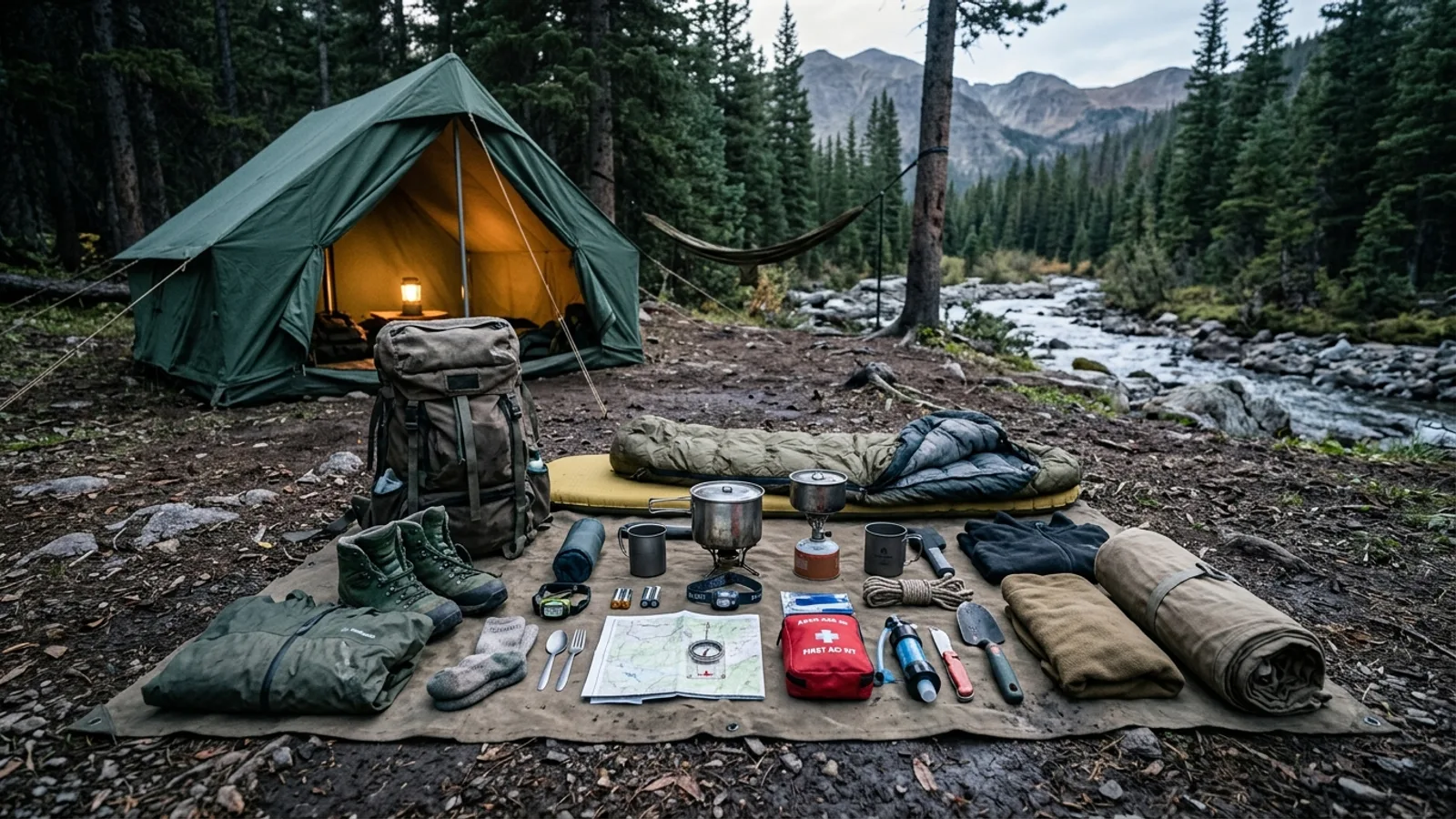
- Knife: A sturdy, fixed-blade knife suited to carving and general cutting tasks.
- Fire-starting tools: A dependable ignition source as a backup to any friction method, plus dry tinder kept in a waterproof container.
- Shelter system: A tarp, lightweight tent, or hammock setup along with cordage.
- Water container and purification method: A durable bottle plus at least one reliable way to treat water.
- Cookware: Lightweight, packable pots or a single pot capable of boiling water.
- Navigation tools: A map and compass, with a GPS device or app as backup.
- First aid kit: Stocked for cuts, blisters, insect bites, and any personal medical needs.
Prioritize gear you understand how to use and maintain over gear that simply looks rugged. Fewer, well-chosen tools that you can repair or improvise around are more valuable than a large kit you haven't practiced with.
Tips for Beginners
Start Small
Practice individual skills — fire starting, knot tying, shelter building — in a backyard or local park before combining them on an overnight trip. Comfort with one skill at a time builds real confidence faster than trying everything at once in the field.
Know Before You Go
Research the terrain, weather patterns, wildlife, and any permit requirements for wherever you're headed. Tell someone your route and expected return time.
Carry Layered Redundancy
Bring more than one way to start a fire, purify water, and navigate. Redundancy costs little weight and covers for gear failure or lost items.
Respect the Land
Follow Leave No Trace principles: pack out what you pack in, minimize your impact on vegetation and soil, and leave natural materials for others and for wildlife. Many of the best places to practice bushcraft skills stay open to the public because campers treat them carefully.
Where to Practice
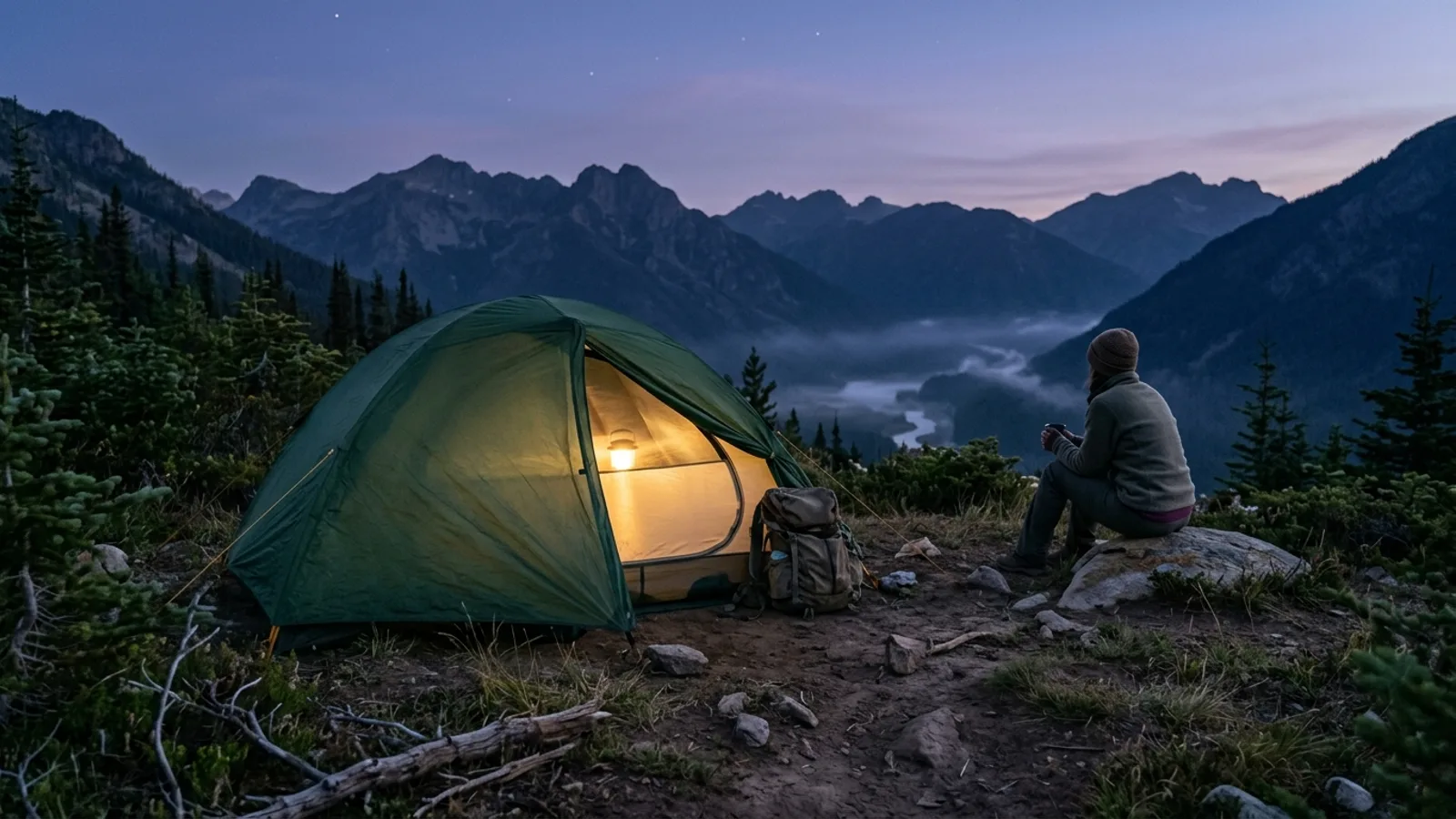
You don't need true wilderness to build these skills. National forests, state parks with backcountry zones, and public land with dispersed camping allowances are all good places to start, provided you check current regulations on fires, foraging, and camping locations. As your skills and confidence grow, you can look toward more remote and rugged terrain — mountain ranges, boreal forest, or moorland environments all test different aspects of bushcraft in useful ways.