Camping for Beginners: A Practical Guide to Your First Trip
Start With Car Camping
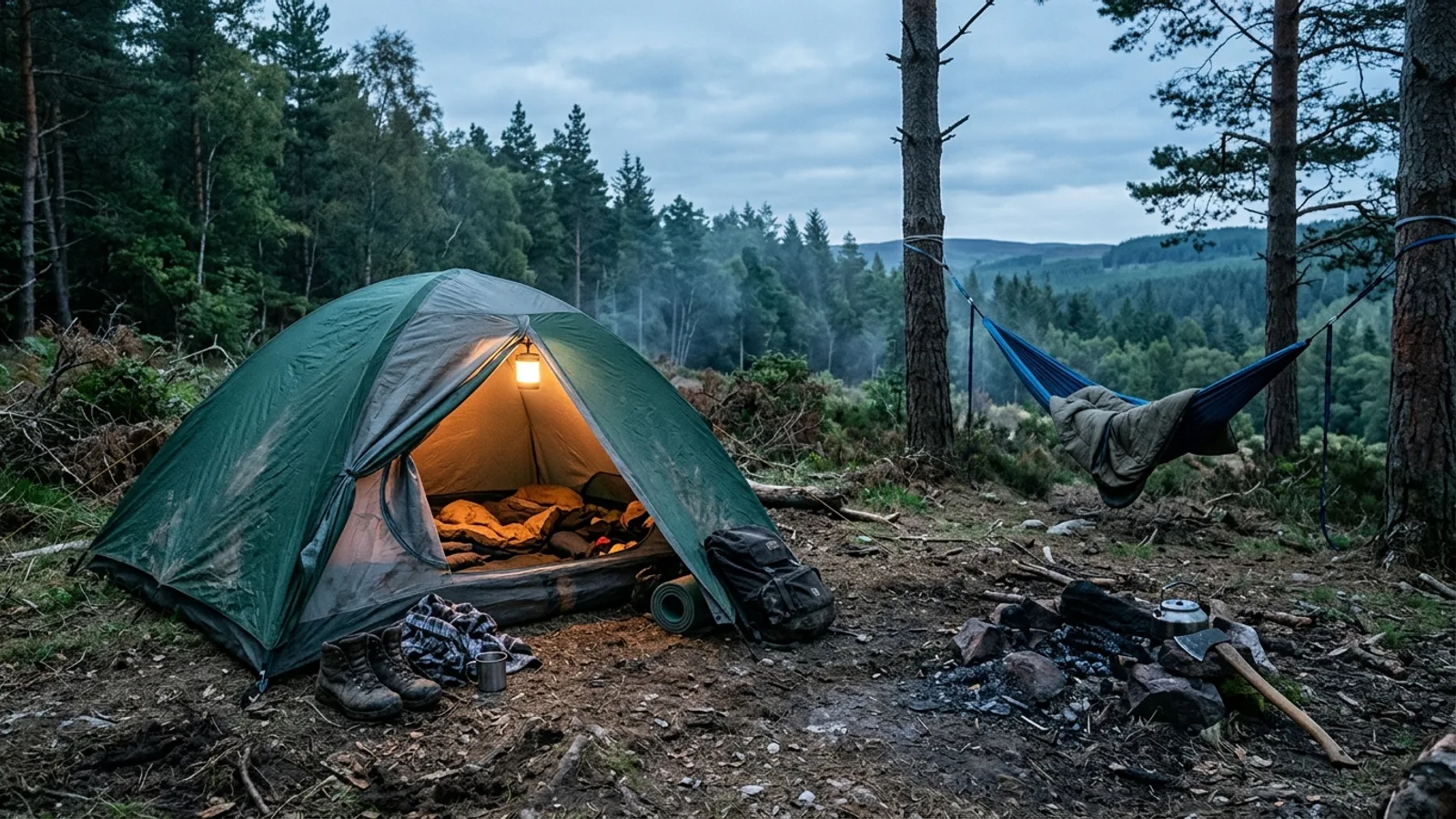
For a first trip, camp somewhere you can drive right up to your site. Car camping lets you keep extra water, food, and clothing within reach, and it means a mistake in packing isn't a crisis. Once you're comfortable with the basics, you can consider hiking in to more remote sites.
Choosing a Campground
Pick a site based on how far you're willing to drive, what season it is, and what amenities matter to you. A campground with restrooms and potable water simplifies your packing list considerably. If you're camping with others for the first time, choosing a spot close to home reduces the stakes if something goes wrong and you need to leave early.
Reserve ahead of time where possible. Many popular campgrounds fill up, especially on weekends and during warmer months. Once you have a reservation, review the campground's specific rules: some restrict campfires, generators, or pets, and many have quiet hours.
Check the Weather — and Have a Backup Plan
Look at the forecast in the days leading up to your trip, and check again the morning you leave. Mountain and desert weather can shift quickly, and forecasts for remote areas are often less reliable than for cities. Pack for conditions somewhat worse than predicted, and know your options for cutting the trip short if severe weather moves in.
Core Gear Checklist
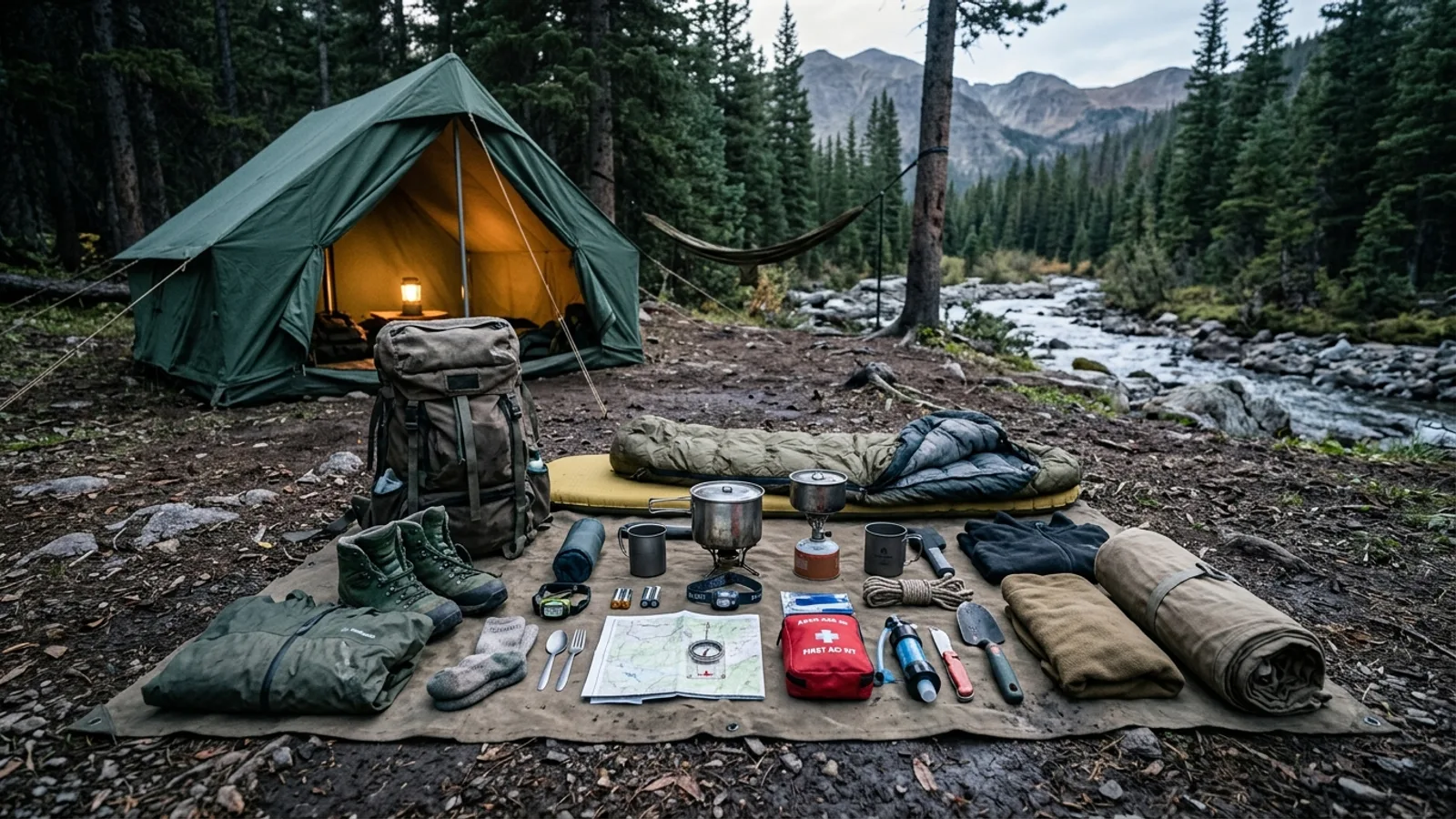
- Tent, with all stakes, poles, and guy lines
- Sleeping bag rated for the expected low temperature
- Sleeping pad, for insulation as much as cushioning
- Camp stove and fuel, plus a lighter or matches
- Cookware, a mug, and basic utensils
- Headlamp or flashlight with spare batteries
- Water containers and a way to treat water if the source isn't potable
- First aid kit
- Extra layers, including something warm and something waterproof
- Insect repellent and sun protection
- Trash bags for packing out what you bring in
Build this list around your specific trip. A weekend at a drive-up site in mild weather needs far less gear than a cold-weather or backcountry trip.
How to Pitch a Tent
Set up your tent at home at least once before your trip. Learning the pole configuration and stake pattern in your living room is far easier than figuring it out for the first time as it gets dark.
At the campsite, look for level, durable ground — established tent pads are ideal. Avoid low spots where water will pool if it rains, and don't pitch under dead branches or near a lone tall tree in exposed terrain, since both pose a falling or lightning risk.
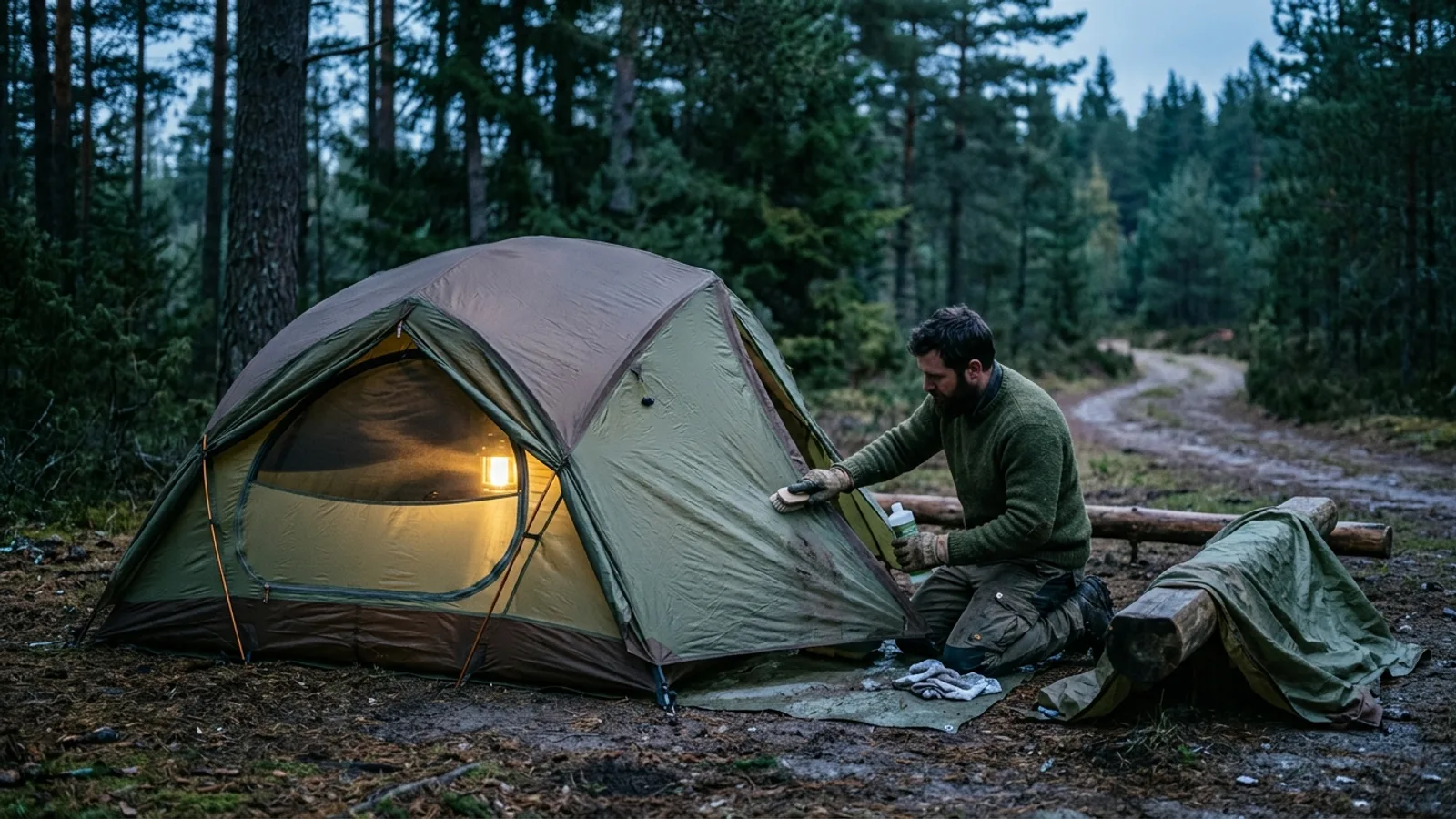
Clear the ground of sticks and rocks before laying out the tent floor. Stake out the corners first, angling stakes away from the tent so they hold under tension, then attach the poles and raise the tent body. A groundsheet or footprint under the tent floor protects it from abrasion and adds a barrier against ground moisture.
Guy lines matter more than most beginners expect — they keep the tent stable in wind and improve airflow, which reduces condensation inside.
Tents vs. Cabins, RVs, and Glamping
A tent is the most flexible and least expensive way to camp, and it gets you closest to the outdoors. Cabins and yurts offer a solid roof and walls, which some beginners find reassuring, especially with kids. RVs add the convenience of a kitchen and bathroom on wheels but require more planning around size, hookups, and driving. Glamping setups provide a furnished tent experience with fewer of the logistics.
None of these is more "legitimate" than another — pick based on your group's comfort level, budget for gear, and how much you want to handle yourself versus have handled for you.
Food and Water
Plan simple meals that use few ingredients and minimal cleanup. One-pot meals, foil packet cooking over coals, and pre-chopped ingredients all cut down on time and mess at the site. Perishable food should stay in a cooler with enough ice to last the trip; pack it so raw meat can't drip onto other food.
Bring more water than you think you'll need, especially in hot or dry climates or at elevation. If you're relying on a natural water source, treat it with a filter, purifier, or by boiling — don't assume it's safe just because it looks clear.
Store all food and scented items (toiletries, trash) securely at night, away from your sleeping area. In bear country, this usually means a hard-sided container or a proper hang; check what's required at your specific location.
Leave No Trace
Pack out everything you bring in, including food scraps and toilet paper. Stick to established trails and campsites rather than creating new ones. If you have a campfire, keep it in a designated ring, keep it small, and make sure it's fully out — cold to the touch — before you leave or sleep. Where fires are restricted, respect the restriction; conditions that lead to a ban are usually serious.
Basic Safety Practices
Tell someone outside your group where you're going and when you expect to be back. Carry a first aid kit and know how to use what's in it. In areas without cell coverage, consider a satellite communicator or personal locator beacon for emergencies.
Store food away from your tent to avoid attracting wildlife, and keep a clean camp generally — spilled food and dirty dishes are the main reason animals wander into campsites. Learn what wildlife is common in the area you're visiting and how to respond if you encounter it.
Dress in layers so you can adjust to temperature swings between day and night, and know the basic signs of hypothermia and heat-related illness so you can catch problems early in yourself or others.
Getting Comfortable
Your first trip doesn't need to be perfect. Expect to forget something, misjudge the weather, or take longer than expected to set up camp — these are normal parts of learning. Each trip after that gets easier, and you'll develop your own sense of what gear you actually use versus what you can leave behind.