Glamping Tents Explained: Styles, Features, and How to Choose
What Is a Glamping Tent?
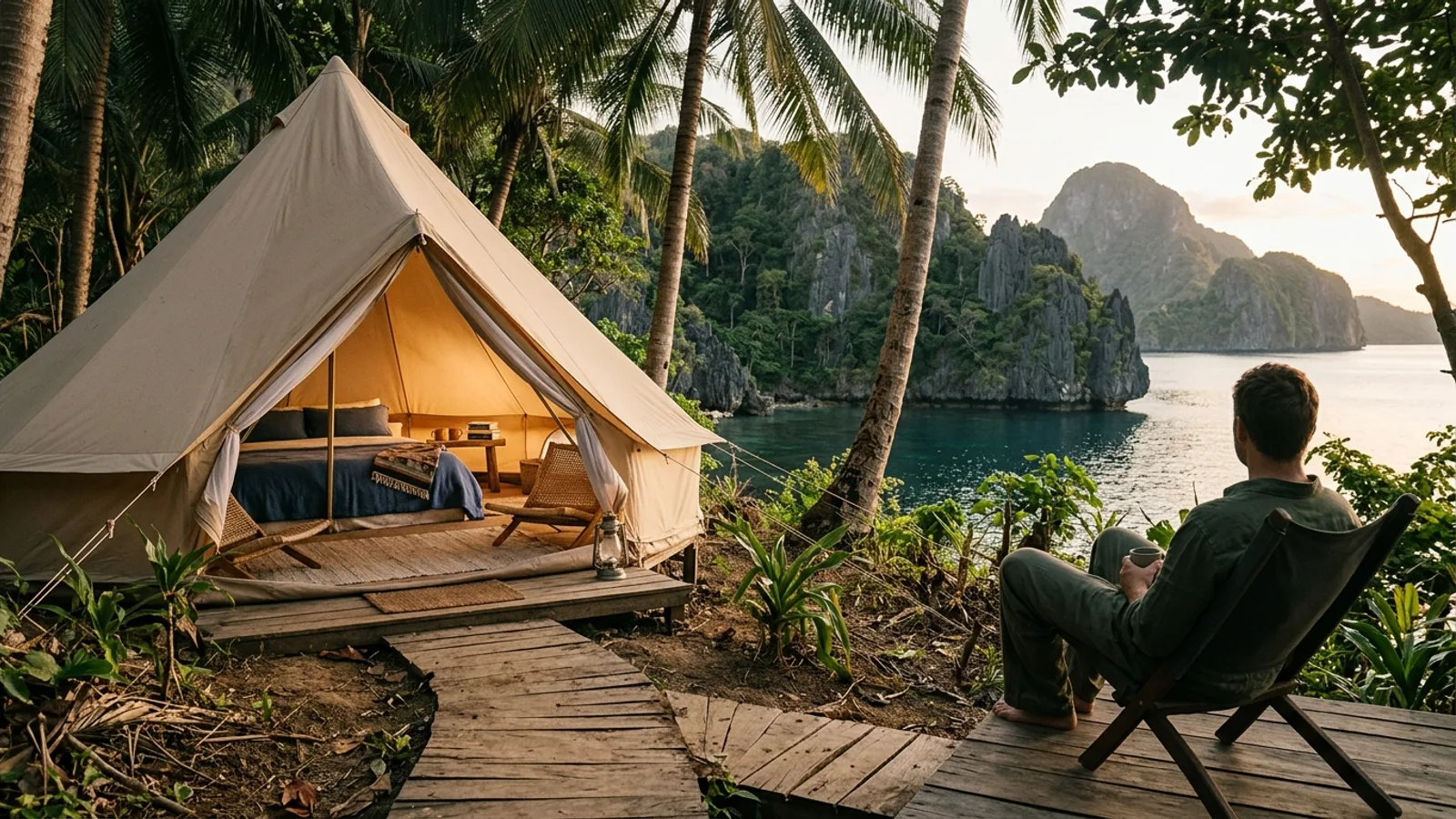
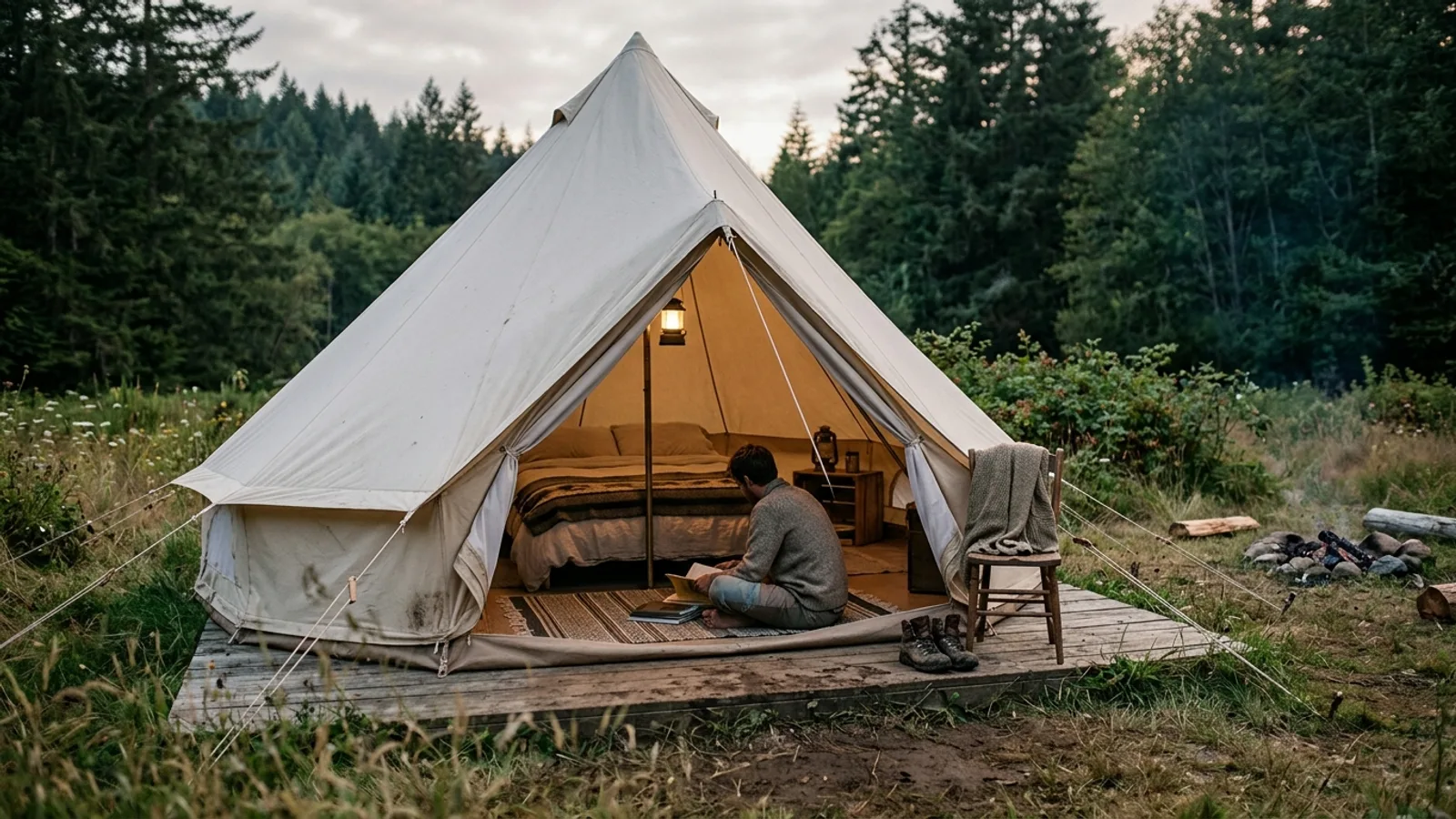
A glamping tent is built for comfort as much as shelter. Instead of a minimal nylon dome you crawl into for sleep, glamping tents are tall enough to stand in, furnished with real beds or frames, and often set up as semi-permanent structures at a campground or private property rather than packed in and out on your back.
The line between "glamping" and "camping" isn't fixed. What defines the category is intent: these tents are designed to be lived in comfortably for days, with attention to furnishing, insulation, and layout rather than pure portability.
Common Styles of Glamping Tents
Safari-Style Tents
Rectangular canvas tents with high peaked or ridge roofs, screened windows, and enough floor space for a bed frame, seating, and storage. They usually stay in one place for a season or longer and are supported by a wood or metal frame rather than flexible poles.
Yurts
Round structures with a lattice wall frame and a domed roof, originally developed as portable dwellings in Central Asia. Modern glamping yurts are usually set on a permanent platform, with thicker insulated walls than a typical tent, which makes them more comfortable across a wider range of temperatures.
Treehouses
Not technically tents, but often grouped with glamping because they offer the same trade: shelter and comfort with a strong connection to the surrounding landscape. Elevated platforms mean less flat ground disturbance and a different vantage point on the forest around you.
Geodesic Domes
Built from a network of triangular panels, dome tents are structurally strong for their weight and shed wind well because there are no large flat surfaces to catch it. Clear panels or skylights are common, letting in daylight and stargazing views without a fully open roof.
Canvas Bell Tents
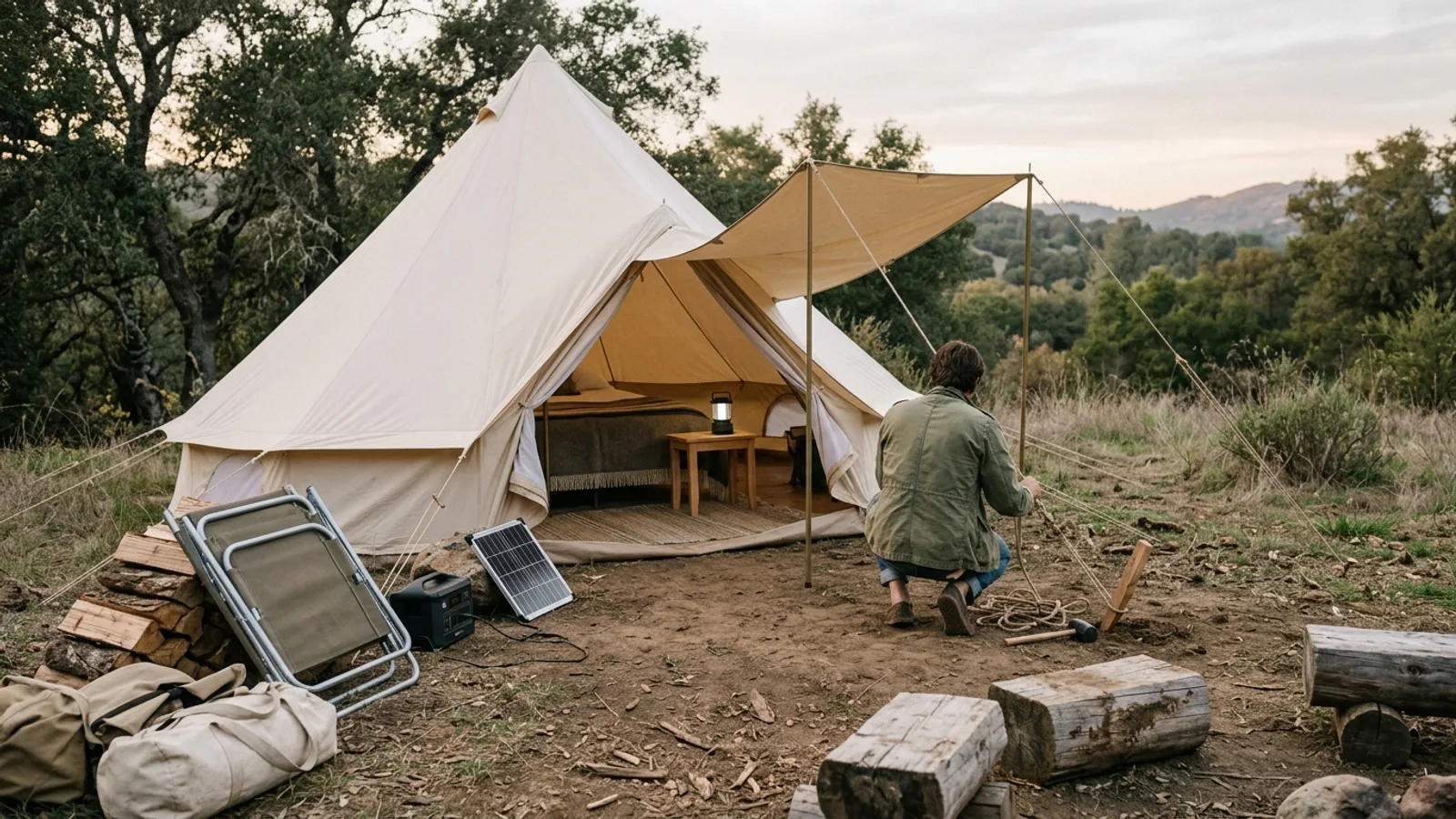
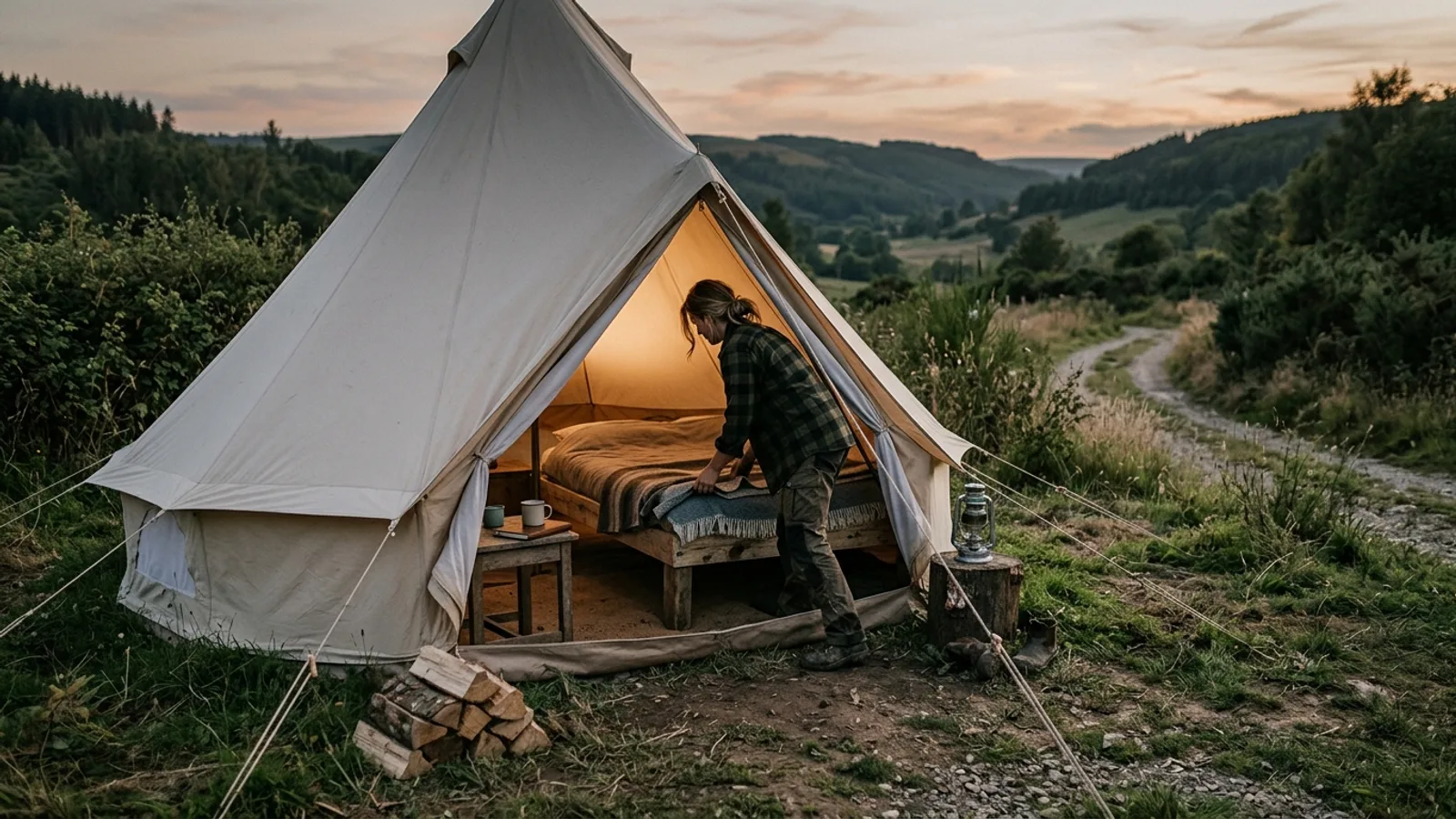
A single center pole and a round floor plan give bell tents a simple, classic profile. They're lighter and easier to move than safari or yurt structures, which makes them common both at fixed glamping sites and for people setting up their own semi-permanent camp.
How to Choose a Glamping Tent
Size and Layout
Decide how the space needs to function before looking at square footage. A tent for two adults sleeping is very different from one that also needs a sitting area, a work table, or room for kids' cots. Measure or picture your furniture inside the footprint, not just the number of people it can technically sleep.
Weather Resistance and Materials
Canvas breathes well, resists condensation better than synthetic fabric, and holds up to UV exposure over time, which is why it's the standard material for structures left up for a season. Synthetic fabrics are lighter and often less expensive to replace but can trap more moisture inside. Whatever the material, check that seams are sealed, the roof has enough pitch to shed rain, and guy lines or a frame can handle wind in the area you're using it.
Insulation and Climate Control
A tent's comfort range depends more on its wall thickness and ventilation than on its style. Look for adjustable vents or windows for airflow in heat, and consider whether the structure supports a safe heating method for cold-weather use. Any heating source inside a tent needs to be rated and installed for that purpose — improvised heating is a real fire and carbon monoxide risk.
Amenities
Bed frames, real mattresses, interior lighting, and a covered entry area all add comfort without adding much complexity. Attached bathrooms or kitchens are common at established glamping sites but are a much bigger undertaking to set up yourself, since they involve plumbing and code considerations.
Style
Once size and durability needs are met, style is a matter of preference. A rustic canvas silhouette, a rounded yurt, or a modern dome will all shelter you equally well — choose the one that fits how you want the space to feel.
Practical Considerations Before You Book or Buy
- Check what's actually included — some glamping sites provide bedding and power, others expect you to bring your own.
- Ask about temperature control if you're traveling in shoulder or winter season; not every tent is insulated for cold nights.
- If you're setting up your own semi-permanent tent, check local rules on structures, fire pits, and length of stay before committing.
- Consider ground conditions and drainage — even a well-built tent will be miserable on a site that floods after rain.
Why People Choose Glamping
Glamping trades some of the minimalism of traditional camping for comfort: a real bed, more headroom, and often a shorter list of gear you need to bring yourself. It's a good option for travelers who want time outdoors without the full logistics of backcountry camping, or for extending a trip into seasons where a lightweight tent wouldn't be comfortable.