Glamping in El Nido: What to Expect and How to Plan Your Stay
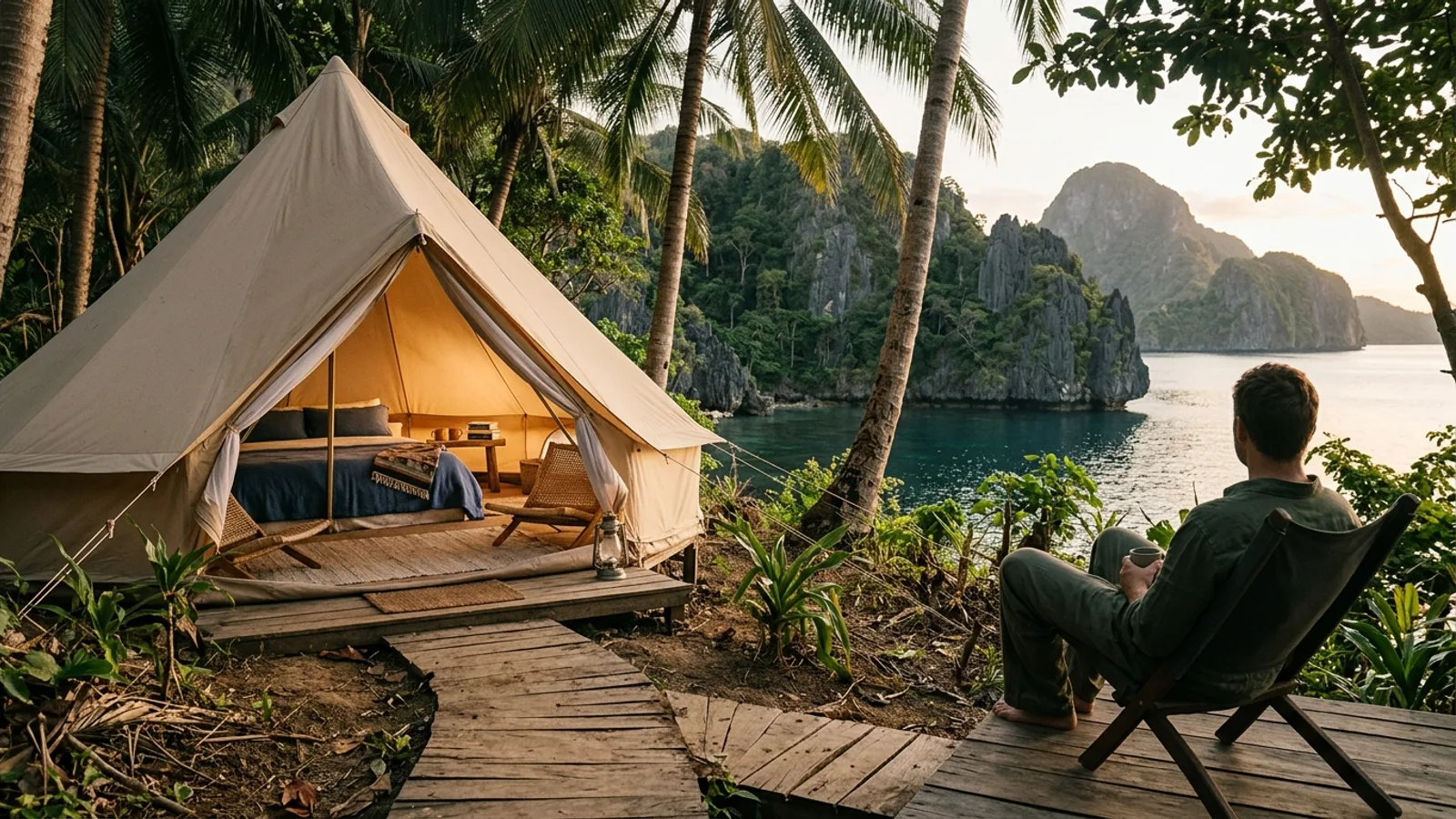
El Nido, on the northern tip of Palawan, is known for limestone cliffs, hidden lagoons, and some of the clearest water in Southeast Asia. Glamping has become a popular way to experience this landscape, offering a middle ground between a basic tent and a full resort. Here's what to know before booking a glamping stay in the area.
What Glamping in El Nido Typically Offers
Glamping properties in El Nido usually consist of elevated tents, treehouse-style structures, or bamboo villas set into hillsides or jungle clearings. The appeal is being close to nature without giving up a real bed, private bathroom, or electricity. Many sites are built on slopes with views over the coastline or surrounding forest, so expect stairs and uneven terrain between your accommodation and common areas.
Because these properties sit within a fragile coastal and karst ecosystem, construction tends to be lighter-footprint than standard hotel development: raised platforms, natural materials, and limited land clearing. This also means fewer amenities than a conventional resort — don't expect elevators, extensive climate control, or large pools everywhere.
Choosing an Accommodation Style
Options generally fall into a few categories:
- Elevated tents or "nests" — canvas or fabric structures on wooden platforms, often with screened openings for airflow and views.
- Treehouse-style units — built higher off the ground, usually smaller, and popular for the sense of seclusion.
- Bamboo or timber villas — larger, more solidly built, sometimes with private outdoor terraces or plunge pools.
Think about mobility and climate tolerance when choosing: treehouse units often mean more steps and less insulation from heat, while villas offer more comfort at the cost of some of the "camping" feel.
Getting to the Beaches and Water
Most glamping sites in El Nido are a short walk, tricycle ride, or boat transfer from the main beach and boat-launch areas. Because El Nido's coastline is a mix of open sea and sheltered bays, some properties can arrange direct boat pickup rather than requiring a walk into town. Confirm transfer logistics in advance, especially if you're arriving with luggage or during rainy conditions when paths can be slippery.
Outdoor Activities to Plan For
Island Hopping
El Nido's island-hopping tours are typically grouped into standard routes, each visiting a different combination of lagoons, beaches, and snorkeling spots. Boats leave in the morning and return in the afternoon. Bring reef-safe sun protection, a dry bag for electronics, and cash for park or environmental fees collected at various stops.
Snorkeling and Diving
The waters around El Nido have healthy coral coverage in many spots, along with sea turtles and reef fish. Snorkeling gear can usually be rented locally or is included on boat tours. If you dive, confirm operators follow standard certification and safety protocols, and check conditions with them directly, since visibility and currents vary by season and site.
Kayaking
Kayaking through mangroves and calm bays is a quieter way to see the coastline and is accessible to most fitness levels. Early morning paddles tend to have the calmest water and best chances of spotting birds and marine life.
Hiking and Nature Walks
Inland trails lead through jungle and up to viewpoints over the bay. Trails can be steep, humid, and exposed to sun, so start early, carry water, and wear shoes with real grip rather than sandals.
Rest and Downtime
Many glampsites build in quiet spaces — hammocks, open-air decks, or yoga platforms — for slower days between activities. Given the heat and humidity, planning at least one low-key day into a multi-day stay is worth it.
Food and Dining
On-site restaurants at glamping properties often lean toward Filipino cuisine using local seafood and produce. Look for dishes like kinilaw (a citrus-and-vinegar marinated raw fish, similar in spirit to ceviche), kare-kare (a peanut-based stew), and halo-halo (a mixed shaved-ice dessert) as good ways to sample regional flavors without leaving the property. If you have dietary restrictions, it's worth confirming in advance, since remote locations may have limited substitution options.
Eco-Friendly Practices to Look For
Because El Nido's ecosystem is sensitive, many glamping operators build sustainability into daily operations rather than treating it as an add-on. When researching a property, it can help to ask about:
- Energy sources (solar power is common in remote or off-grid sites)
- Waste and water management, including whether single-use plastics are minimized
- Sourcing of food and staffing from local communities
These practices benefit both the environment and the experience — off-grid power and composting systems tend to mean quieter, lower-impact stays overall.
Practical Tips for Visitors
- Pack light, breathable clothing and a rain layer — weather can shift quickly even in dry season.
- Bring a headlamp or flashlight; lighting on paths between tents and common areas can be minimal at night.
- Cash is often needed for local fees, small purchases, and tipping, since card access can be unreliable in remote areas.
- Book activities like island hopping a day ahead when possible, as tours depend on weather and group sizes.
Is Glamping in El Nido Right for You
Glamping suits travelers who want to be close to nature and outdoor activity without sacrificing a comfortable bed and private bathroom. It's less suited to anyone needing step-free access, strong climate control, or resort-level amenities. For most visitors, the tradeoff is worth it: waking up to jungle sounds and ocean views, with the comforts of a real room just a short walk from the beach.