Glamping 101: How to Plan a Comfortable Outdoor Stay
What Glamping Actually Means
Glamping blends outdoor scenery with the comforts you'd expect indoors: a real bed, weather protection, and often electricity or plumbing. Instead of pitching your own tent and cooking over a fire, you stay in a fixed or semi-permanent structure that someone else has set up and maintains.
The appeal is straightforward. You get the change of scenery, the quiet, and the access to trails or water that draws people outdoors, without needing your own gear or camping skills. It suits travelers who want to unplug without giving up a comfortable night's sleep.
Choosing a Destination
Start with the landscape you actually want to wake up to. Forest, desert, coastline, and mountain settings each come with different weather patterns, insect activity, and seasonal considerations, so think about when you're traveling as much as where.
Once you've settled on a region, look closely at what's nearby. Proximity to hiking trails, a lake or river, or a visitor center with ranger programs can shape your days as much as the accommodation itself. Check how far the site is from the nearest town, since some glamping locations are remote enough that you'll want to bring extra supplies.
Read recent guest reviews carefully. They tend to reveal practical details — noise levels, insect problems, road conditions, cell signal — that listing photos won't show you.
Types of Glamping Accommodations
Safari-Style Tents
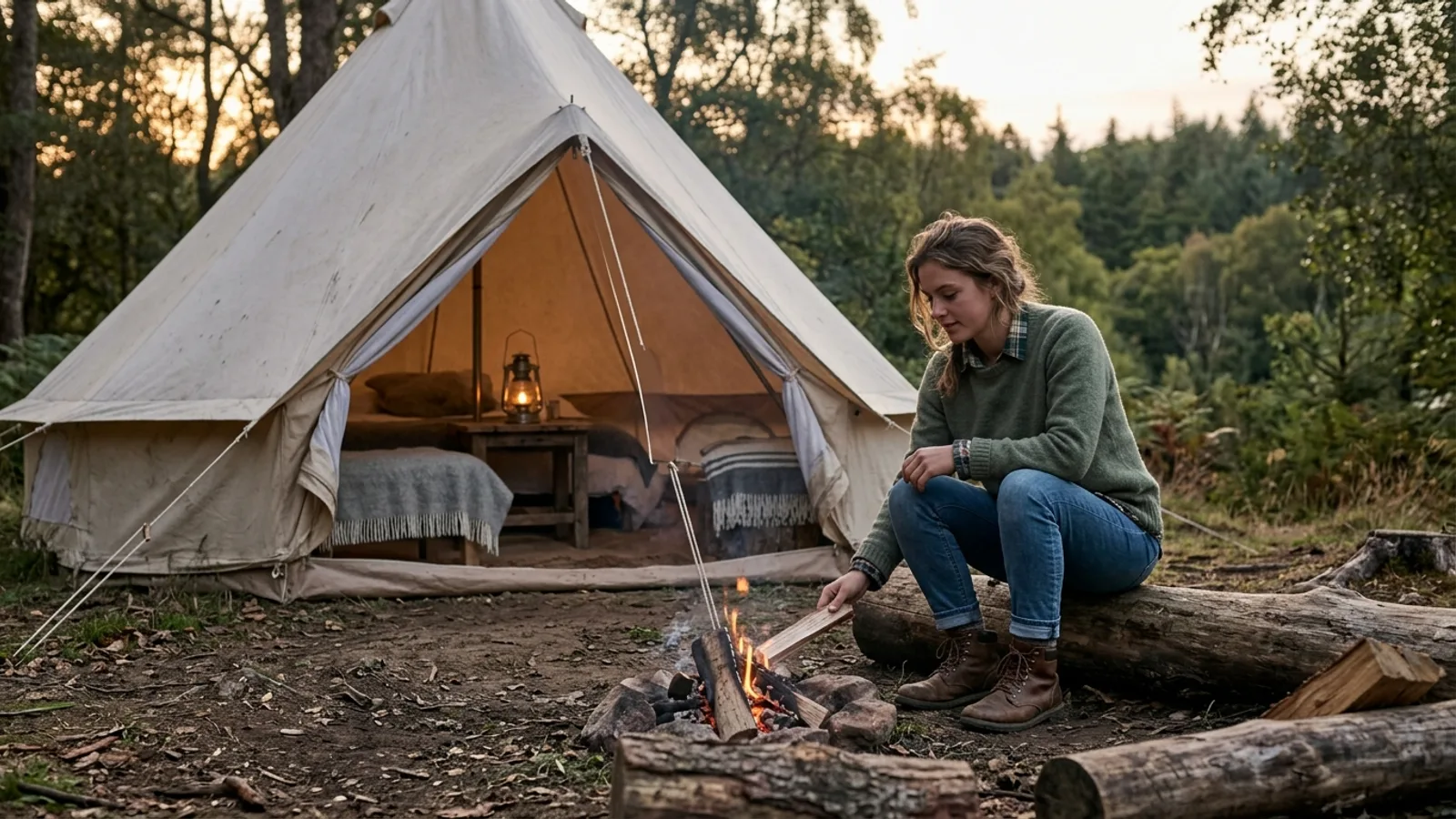
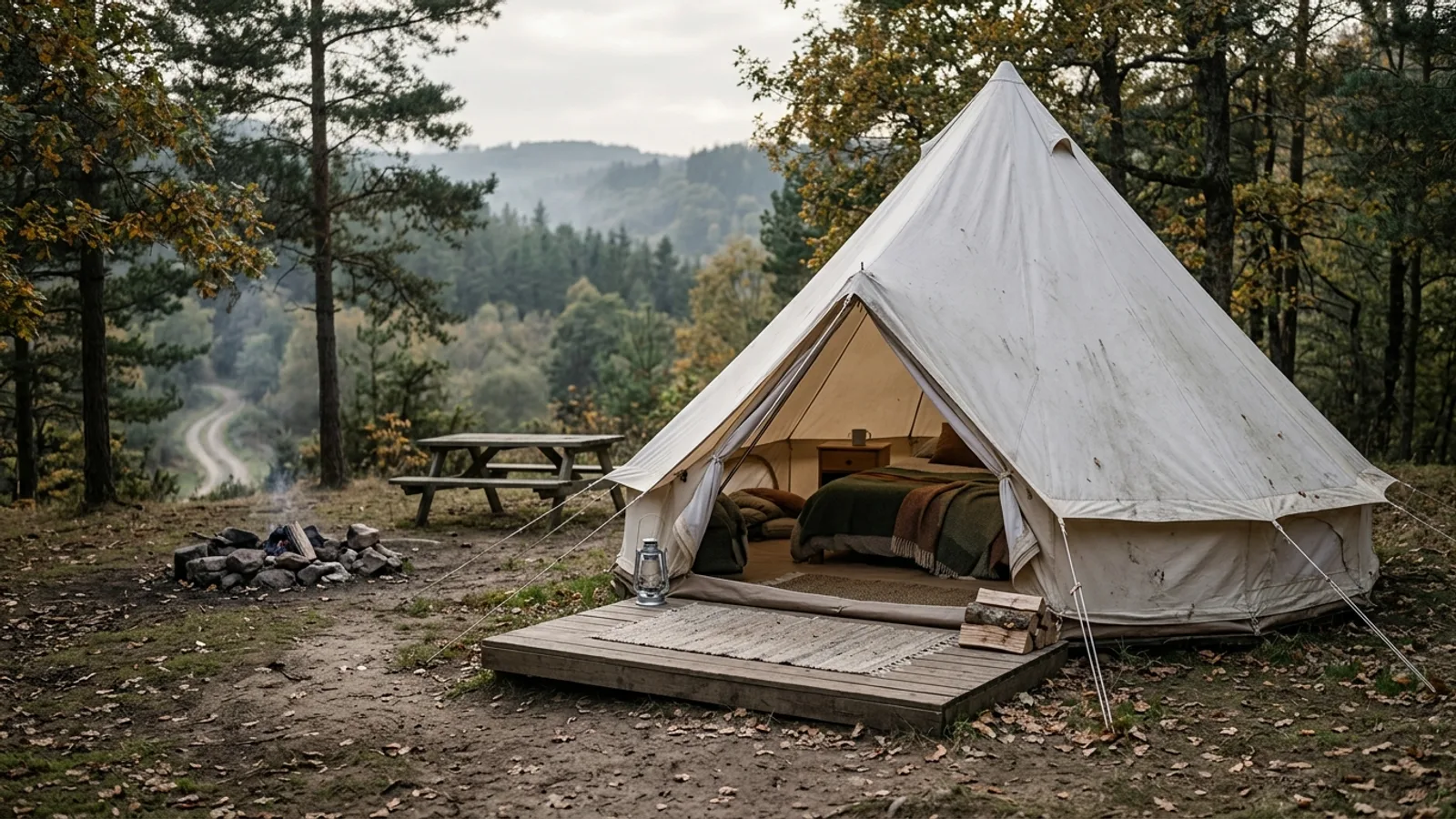
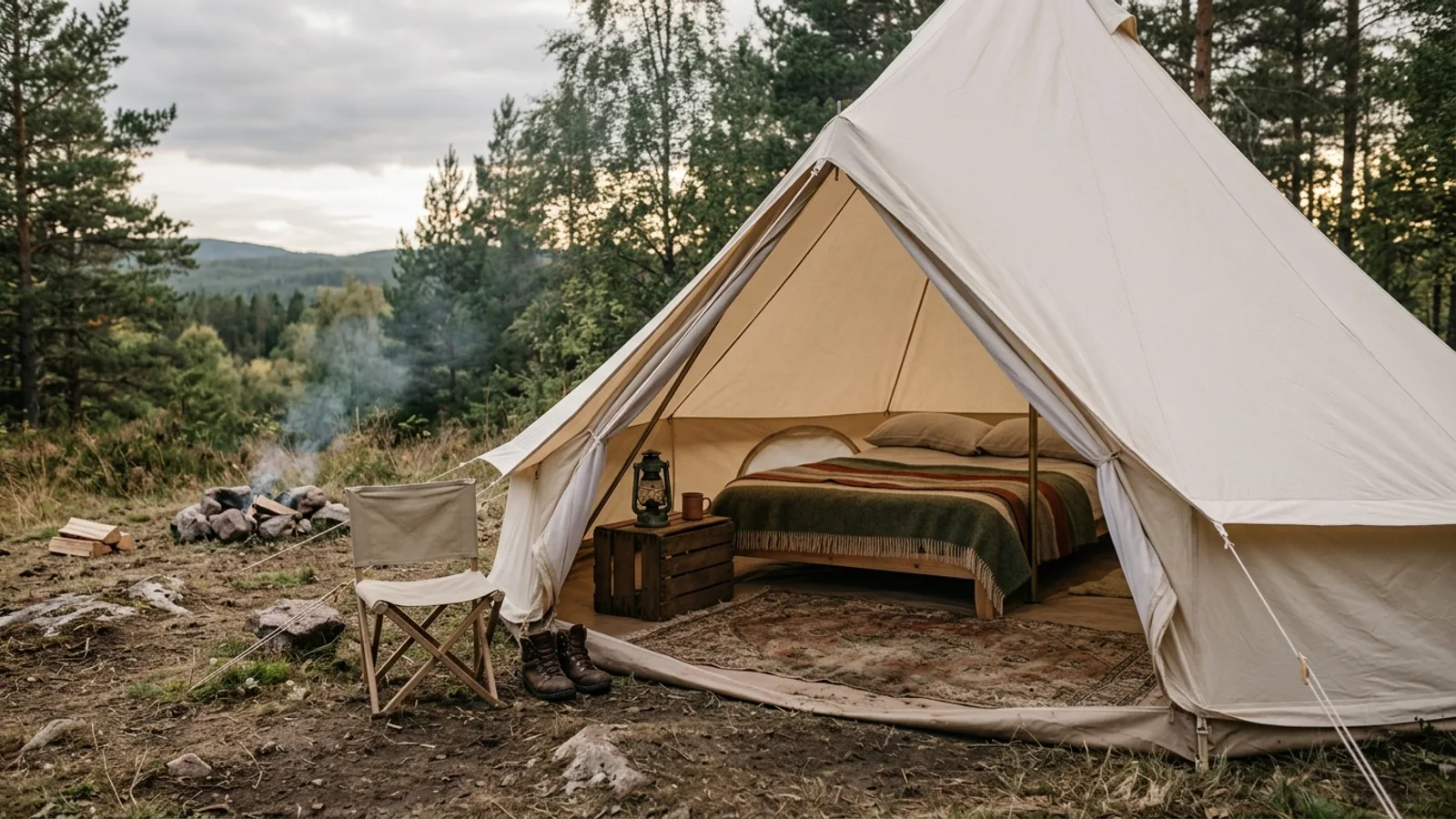
These are large canvas tents built on raised platforms, usually with real beds and sometimes a private bathroom. They let in natural light and outside sound, so they suit travelers who want to feel close to nature without sleeping on the ground.
Cabins and Eco-Lodges
Small cabins or lodges built with sustainability in mind — solar power, water-saving fixtures, locally sourced materials — offer more insulation and privacy than a tent, which matters in colder or wetter climates.
Treehouses
Elevated stays built into or around trees offer a distinctive view and a sense of seclusion. Access usually involves stairs or a ladder, so consider mobility needs and how you'll get luggage up.
Yurts
These round, tent-like structures usually have a solid floor, sturdy walls, and enough room for a bed frame and furniture. Many include heating, which makes them a practical choice in cooler seasons.
What to Pack
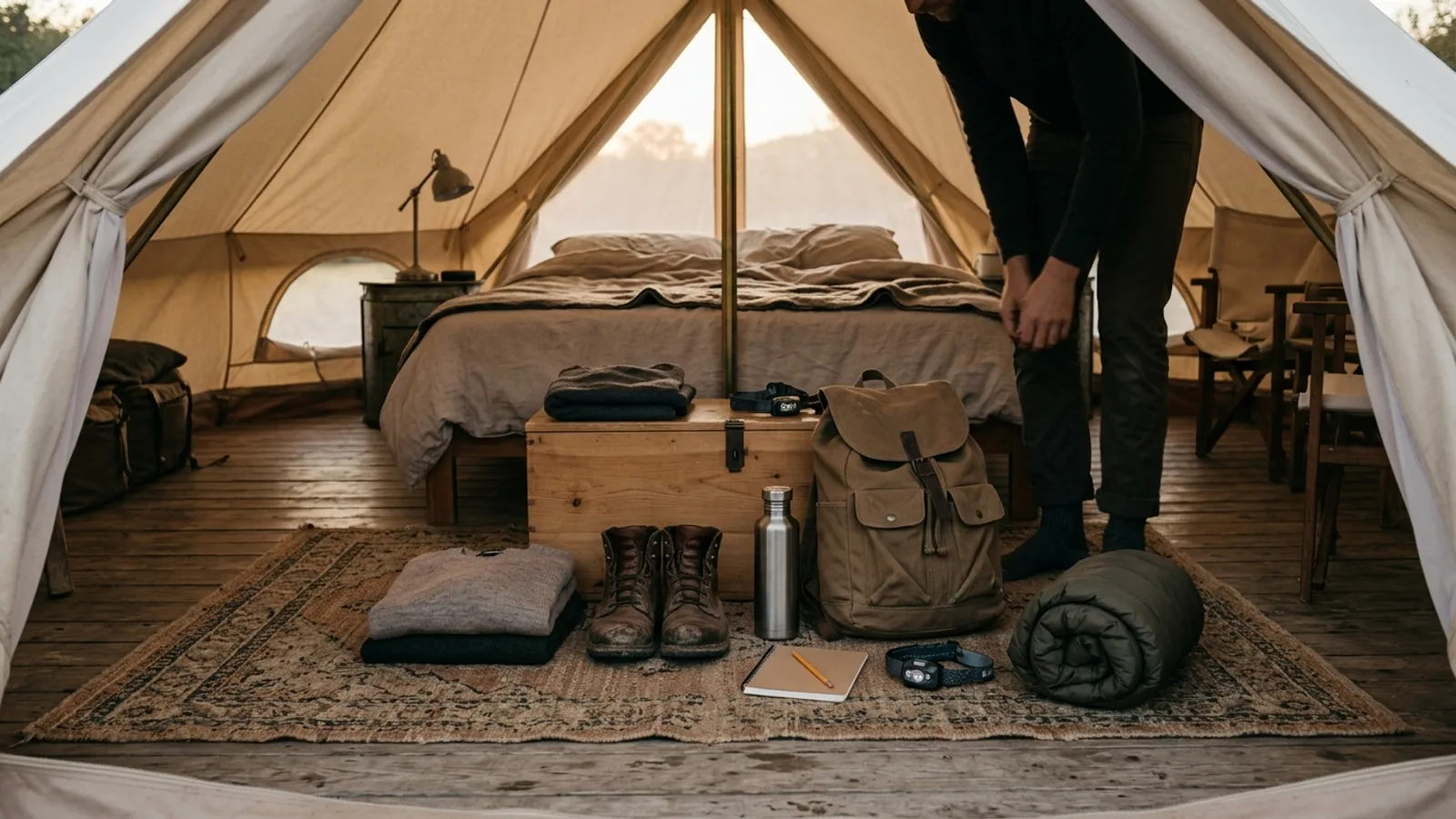
Even with a furnished structure, a few items make a real difference in comfort:
- A headlamp or lantern for paths and outdoor bathrooms after dark
- Layered clothing, since temperatures can swing sharply between day and night in most outdoor settings
- A refillable water bottle and a way to purify water if the site is remote
- Insect repellent and sun protection appropriate to the season
- A basic first-aid kit for minor cuts, blisters, or bites
- Any personal bedding or pillow if you're particular about sleep comfort, since amenities vary by site
Pack light but don't skip weather protection — a rain layer and sturdy footwear cover most situations even at accommodations with amenities.
Making the Space Your Own
Small touches can make a rented space feel more personal without adding bulk to your luggage. Battery-powered string lights are lightweight, don't require an outlet, and instantly warm up a seating area. A soft throw blanket or a couple of outdoor cushions make a bare porch or deck usable for reading or relaxing outside after dark.
If the site allows it, natural additions — a few cut flowers in a jar, pinecones or stones gathered on a walk — tie the space to its surroundings without any planning ahead of time.
What to Do While You're There
Glamping works well as a base for activity, not just relaxation. Depending on the setting, that might mean hiking, paddling, wildlife watching, or simply sitting outside long enough to notice birds and stars you'd miss elsewhere. Ask on arrival about ranger-led programs, marked trails, or areas best avoided due to wildlife or terrain.
Balance activity with downtime. Many people over-plan a glamping trip and end up rushing between activities instead of enjoying the slower pace that drew them outdoors in the first place. Building in unstructured time — for a nap, a slow breakfast outside, or watching the light change — is often what people remember most.
A Few Practical Reminders
Confirm what's actually included before you arrive: bedding, towels, cooking facilities, and bathroom access vary widely between properties advertised as glamping. Check the cancellation and weather policies, since remote sites can be affected by conditions that close roads or trails with little notice.
Respect any rules around campfires, wildlife, and noise — they exist to protect both the setting and the experience for other guests. And always let someone know your general plans if you're heading into a remote or unfamiliar area, even for a short walk from your accommodation.