Why You See Pink Flamingo Lawn Ornaments in RV Parks and Campgrounds
A Familiar Sight on the Road
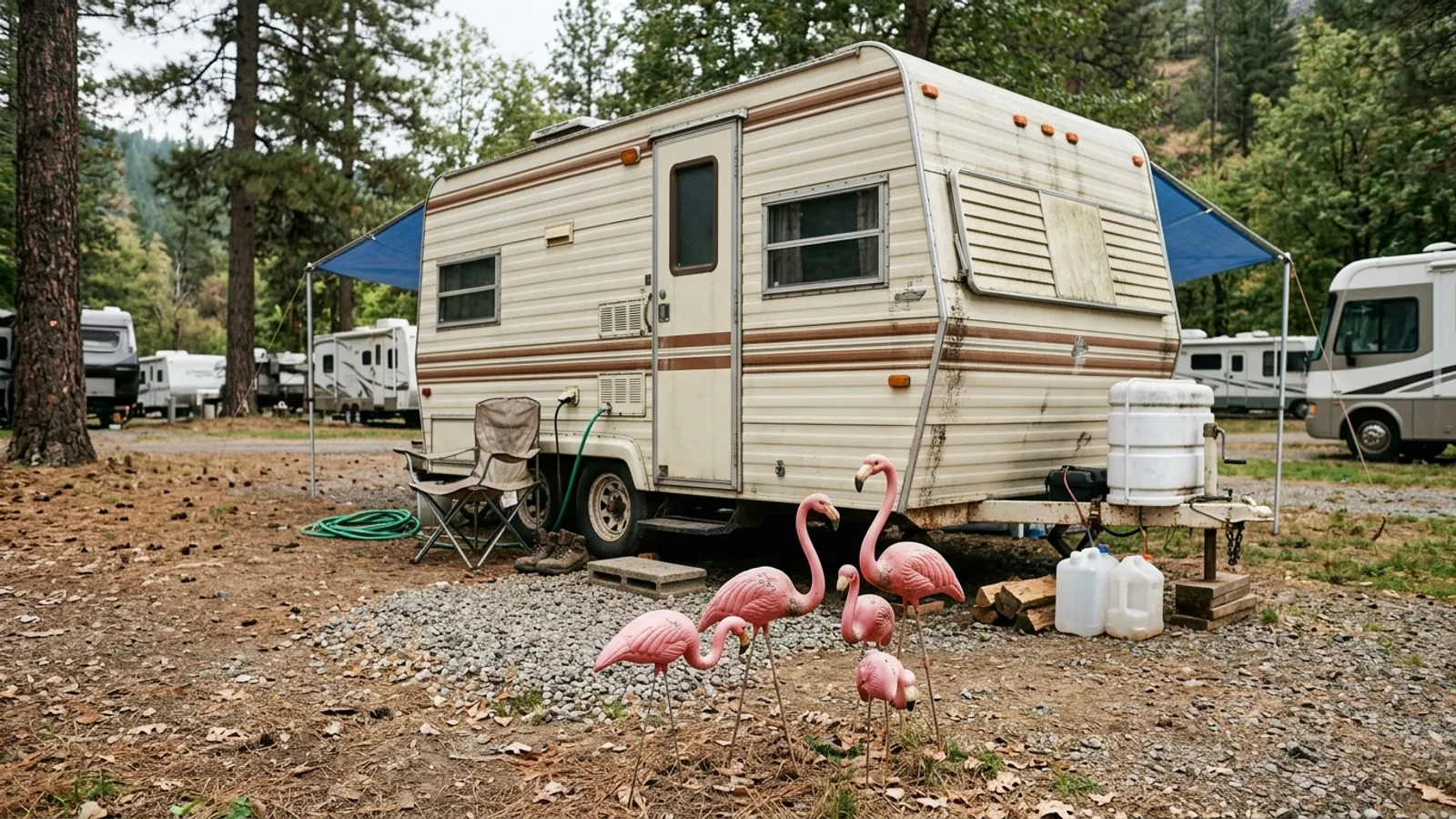
Walk through almost any RV park or campground and you'll spot at least one pair of plastic pink flamingos staked into the ground beside a rig. They show up on lawns, picnic tables, and even hitched to the front of a trailer like a hood ornament. For most RVers, they're simply decoration — a cheerful, low-effort way to mark a site as "occupied" and add some color to a gravel pad. But the flamingo has a longer backstory than most people realize, and understanding it explains why the bird has become such a fixture of camping culture.
Where the Pink Flamingo Lawn Ornament Came From
The plastic pink flamingo lawn ornament traces back to mid-20th-century American suburbia, when tropical and exotic imagery became a shorthand for leisure and postwar prosperity. Flamingos, palm trees, and tiki motifs showed up on everything from cocktail napkins to lawn furniture. The birds were bright, inexpensive to manufacture, and instantly recognizable — everything a suburban lawn decoration needed to be.
Because they were mass-produced and widely adopted, flamingos quickly became associated with a certain kind of unpretentious, working- and middle-class taste. Design critics of the era often dismissed them as kitsch. That reputation stuck for decades, and it's part of why the bird still reads as slightly tongue-in-cheek rather than serious decor.
From Kitsch to Camp Icon
Starting in the 1960s and 70s, the flamingo's meaning began to shift. Countercultural and camp aesthetics embraced exactly the kind of "tacky" objects that earlier generations looked down on, and the flamingo became a knowing wink rather than an earnest attempt at elegance. Filmmakers and artists working in this vein leaned into the flamingo as a symbol of embracing bad taste on purpose — turning it into a statement about not taking suburban conventions too seriously.
That sensibility carried the flamingo into mainstream pop culture, where it settled into its current role: a nostalgic, slightly campy symbol of fun, travel, and not sweating the small stuff. That's the spirit most RVers are tapping into when they set one out at their site.
What Flamingos Actually Signal in RV Parks Today
In the vast majority of RV parks, a flamingo means exactly what it looks like: a cheerful decoration. Long-term and seasonal campers especially like flamingos and similar lawn ornaments because they personalize a site, help people find "their" spot in a large park, and give the space a sense of home even when it's temporary.
You'll sometimes hear claims online that flamingos, pineapples, or other lawn decorations are secret signals for a particular adult lifestyle. This idea circulates periodically on social media, but there's no reliable, verifiable evidence that it reflects how most campers actually use these decorations. Treat viral claims about secret "codes" in campgrounds with skepticism — a flamingo on a lawn is, overwhelmingly, just a flamingo on a lawn. If you're ever unsure about the norms or culture at a specific park, the simplest approach is to ask the campground host or read the park's posted rules rather than rely on rumor.
Other Popular RV Site Decorations
Flamingos aren't the only way RVers personalize their sites. Common alternatives include:
- Route-themed signs celebrating a favorite highway or road trip.
- Garden gnomes, wind chimes, and solar lights for a homier feel after dark.
- Nature-inspired touches like potted plants, birdhouses, or pinecone wreaths.
- State or location markers, such as small flags or plates representing places visited.
These items serve the same basic purpose as the flamingo: they make a temporary site feel personal and help neighbors strike up conversation.
Flamingo Etiquette for Campers
If you want to bring your own flamingos or other lawn ornaments on the road, a few practical habits go a long way:
- Check your specific park's rules — some limit decorations to keep sites tidy or to comply with fire lanes and utility access.
- Keep ornaments within your site boundary so they don't create a tripping hazard for neighbors or park staff.
- Secure lightweight decorations well; wind at open, exposed campgrounds can turn a loose flamingo into debris fast.
- Pack them in before you leave — abandoned lawn ornaments are a common source of litter at campgrounds.
Ultimately, the pink flamingo's staying power in RV culture comes down to what it's always represented: a bit of color, a bit of humor, and a reminder that camping doesn't have to be taken too seriously.